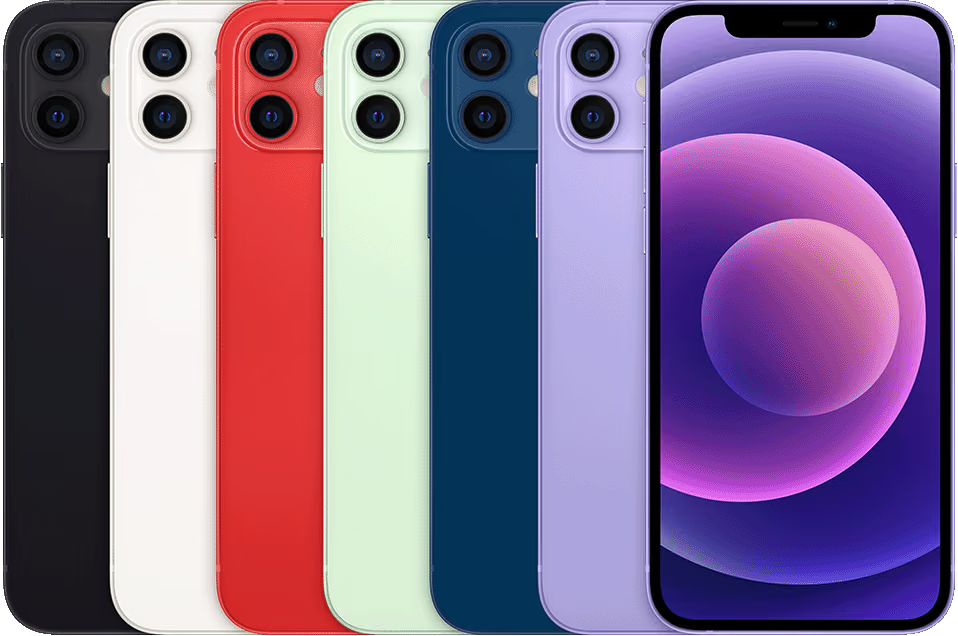
The iPhone 12 made an OLED screen and MagSafe part of the regular model
The 6.1-inch iPhone 12 was a good place to start if you liked the regular iPhone 11 and wanted a sharper, higher-contrast display. The screen, a lighter design and a simpler way to put the phone on a compatible charger were important within minutes. The new 5G radio was more dependent on where you lived and what you did away from Wi-Fi. The Pro supplied another camera and material choices. The regular model had plenty to decide on without assuming the Pro’s lenses belonged to it.
Quick verdict
Retail release in the United States · Archive date
The 12 suited someone who stood to use the sharper display and a more convenient charging setup, even if local 5G was still uncertain.
Best for: A buyer moving from an older LCD iPhone whose most common work fit the same daily size and a two-camera phone.
Main benefit: The OLED became an improvement you could see each day without having to spend extra for the iPhone 12 Pro.
Biggest drawback: The box had a USB-C to Lightning cable and no power adapter. The real accessory cost depended on what you already carried.
Reviewed version: The 6.1-inch iPhone 12 sold in the initial October 2020 US retail wave. It had two rear cameras and started at 64 GB.
Compatibility: Its 5G support depended on bands, carrier, plan and address. A MagSafe or Qi charger and a USB-C power adapter were extra unless you owned compatible equipment.
Review context: I evaluate the documented retail hardware and the software available in its release window. Regional variants and software changes are identified where they affect the verdict.
I owned the iPhone 12 as part of having every iPhone. This retrospective is about the US retail model available October 23, 2020. The iPhone 12 Pro became available that day too. The iPhone 12 mini and Pro Max had a November retail date, which changes what you could actually compare in the first weeks of the regular model. Apple’s iPhone 12 and 12 mini release details
The screen was a difference you could compare on the spot
Apple moved the regular phone from a 6.1-inch LCD to a 6.1-inch OLED. It made a difference when something bright and something genuinely dark needed to appear in the same frame. It also offered finer space for letters and the outlines of detailed content at the same diagonal. A screen upgrade like this can matter to a buyer who uses the phone for reading and work more often than to somebody whose main use is taking a call. Opening an ordinary page gives a faster answer than trying to judge the most dramatic HDR demo in a store.
Related reading

The dimensions changed too. The edges became flatter and Apple specified a lighter body than the iPhone 11. A lighter phone helps when you keep it in front of a page for a few minutes or have to move it to take a picture. How the edges rest in your fingers is separate from the weight. Case fit also changes the result. The front Ceramic Shield was part of Apple’s drop performance comparison, while the rear glass still mattered when you chose how to protect and carry the device.
The useful test involved a phone doing several jobs in a regular setting. Read a little, make a short reply and put the phone away. It can show you which of the two changes you value more. If the new display is mainly for watching an occasional film, the extra stability of a place to rest it can be another improvement. If it is for comparing small details at work, the density may be one you see every day.
A magnetic charger had to fit a real place in the day
MagSafe placed magnets behind the phone to line up with a compatible charger and to support a new group of cases and mounts. That reduces some of the guesswork of putting a smartphone onto a charging surface. It can make a difference if you set the phone down frequently and want to know that the charger and phone are in the right place. The ability to charge still requires a power source and compatible equipment. The new connection does not shorten a cable on the other side of it.
Apple included a USB-C-to-Lightning cable and left the charging brick out of the regular box. A previous adapter with a USB-A port could take one of your existing appropriate cables, while the included cable called for a USB-C supply. I would have thought about the accessories I already used before comparing the upfront price of a new charger and case. A person with an established Qi pad might make good use of the phone with fewer changes than somebody building a new desk and car charging setup.
At launch the MagSafe charger was an optional unit. Compatibility and charge speed varied by accessory and conditions. A good use of it might be remembering where the phone rests during a few small stretches of work. Someone who held a device through an hour-long conversation had reasons to keep a cable available. These are practical differences you can observe in your own setup.
Related reading

5G and the camera had more than one kind of gain
Apple introduced 5G on all four models. US bands and service availability depended on carrier, model and location, and the use of the fastest advertised connection required specific conditions. Somebody who moved a lot of files with established coverage could benefit. Someone regularly at home or on ordinary LTE might see more of the display and camera differences. I would have rated the ability to connect on the places you visited before assuming how much more useful the phone would be outside.
The regular 12 kept two rear views, a Wide and an Ultra Wide. Apple made Night mode available on more of the camera system than before. That gave the wider view a reason to be tried outside ideal daylight, particularly for a stationary subject. A longer exposure can still require steadier handling or a patient subject. Somebody who needed a tighter optical view from farther away had a clear reason to compare the 12 Pro. Adding a longer camera is a different gain from improving colour or exposure in the same view.
Compare the rails with your own case
Keeping the phone on a stand can make the new flat rails a minor consideration. When you take it out of a pocket ten or twenty times, the place where your fingers meet the rails matters more. A thick case also changes how a charging accessory attaches. I would have tried my regular grip first, added the case I intended to carry, and tried setting and lifting the phone from its new charger. What should come out of that is a clear picture of whether the display, shape and charging make an ordinary task better. Network coverage could then be assessed at a real address.
My verdict on the regular 12
I would have chosen the iPhone 12 for someone who wanted OLED and the lighter 6.1-inch shape, especially if compatible charging already fitted their setup. Someone with a good iPhone 11 could compare the same small tasks and decide whether the display and other hardware changes came up often enough. The iPhone 12 Pro was a separate choice for a buyer who used the third lens or other photography tools. The iPhone model timeline records when these October and November models actually became available and keeps the regular 12 tied to the changes that mattered on its own.
What worked
The OLED became an improvement you could see each day without having to spend extra for the iPhone 12 Pro.
The flatter frame gave a different grip at 6.1 inches. Night mode reached the Ultra Wide and front cameras as well as the main camera.
What bothered me
The box had a USB-C to Lightning cable and no power adapter. The real accessory cost depended on what you already carried.
Neither a fast network nor the best available wireless charging rate followed automatically from plugging in a device marked 5G or MagSafe.
Who should not buy it
A buyer dependent on a dedicated Telephoto or holding out for the more pocketable November mini.
Alternatives I would consider
iPhone 12 Pro. It adds Telephoto and LiDAR in basically the same screen size, with different storage and camera provisions. Read my iPhone 12 Pro review.
Evidence and sources
The release date refers to general availability in the named market. The archive filing is ten days later. Feature assessments are editorial judgments based on the documented retail model.
Features, compatibility and rated figures from the maker are manufacturer information. My opinions are identified in the review.
Conclusion
Some buyers would get more day-to-day value from the 12's display and charging features than from the 5G radio alone. Add the right capacity and equipment to the price.
One email a week with practical Mac workflows, useful comparisons and honest tech recommendations.