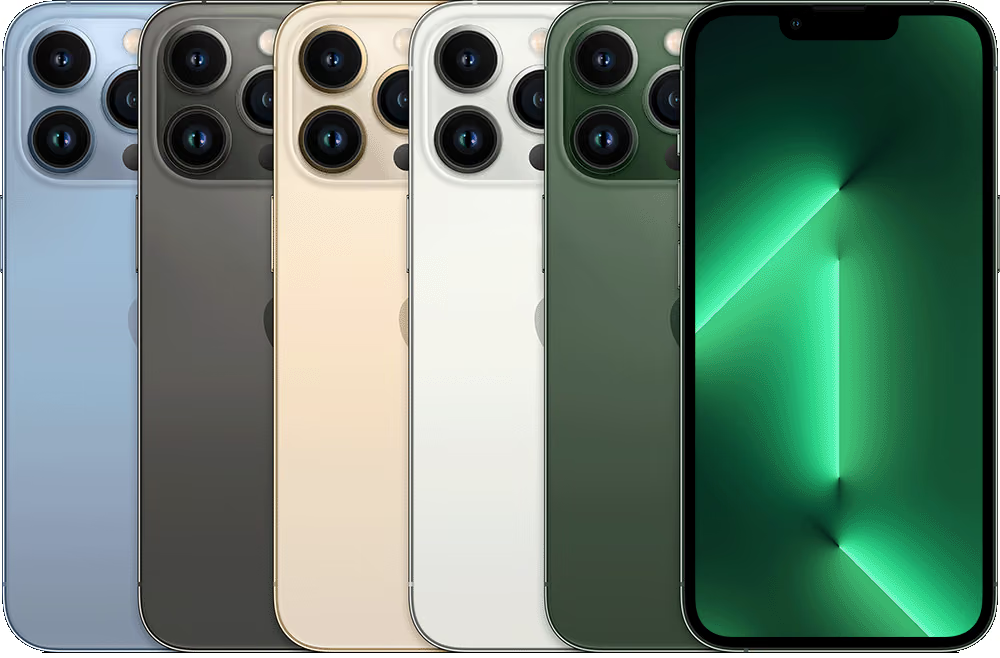
The iPhone 13 Pro made macro and a faster display part of the smaller Pro
The iPhone 13 Pro gave buyers three useful new ways to judge a phone with a familiar 6.1-inch diagonal. Scrolling made the adaptive refresh rate visible. Pointing the camera at something quite close showed what the new macro support could do. Standing in the right place for a portrait or another subject showed how its new telephoto fit that photographer’s work. The frame size and heft were a distinct choice. The larger Pro Max shared the camera capabilities, so an interested photographer could compare how to carry the phone without first giving something up.
Quick verdict
Retail release in the United States · Archive date
It was a sensible launch purchase for someone who wanted the macro or longer camera view and regularly interacted with a display that benefited from the higher rate.
Best for: A buyer who regularly alternated close details and more distant framing, and could take advantage of smooth scrolling without carrying the larger model.
Main benefit: A new focusing Ultra Wide enabled useful macro shots and the adaptive display made an improvement visible while scrolling.
Biggest drawback: The steel phone was heavier than the iPhone 13, and the initially missing ProRes could change which capacities were sensible for later workflows.
Reviewed version: The 6.1-inch US iPhone 13 Pro sold on September 24, 2021, with three rear cameras and a 128 GB opening configuration.
Compatibility: It used iOS 15, MagSafe and Lightning. The full set of rear cameras matched the larger Pro Max, and ProRes arrived later in software.
Review context: I evaluate the documented retail hardware and the software available in its release window. Regional variants and software changes are identified where they affect the verdict.
I owned the 13 Pro as part of having every iPhone. This review looks at the September 24, 2021 US retail release. The other 13 models arrived on the same day, offering a 6.1-inch regular phone, a small mini and the larger Pro Max as direct alternatives. Apple’s September iPhone 13 Pro and Pro Max launch
The screen upgrade mattered while something on it moved
ProMotion gave the screen an adaptive range up to 120 Hz. A frequent scroll from a message to something earlier in the conversation shows why it can be pleasant. You can follow more of the motion when a useful word moves past. The display also adapts to slower uses. Someone mainly reading a stationary page may care more about brightness and clarity than the difference during movement. I would have repeated the same regular task several times, then used both the 13 and the Pro in a way that stopped moving. That helps put the smoothness in proportion.
Related reading

A new high rate matters differently depending on what the app and system choose for an action. It does not tell someone that every piece of video or interactive content will take on the headline figure. A buyer who used movements in a particular app at work had a practical reason to try it directly. It was a fairly easy display improvement to demonstrate and could make a good launch reason to choose a Pro, particularly if reading and working on it itself were major uses.
The stainless-steel model also brought more weight than the basic 13. The right size and the right daily feel are connected. The two phones could look like similar choices on a display shelf and feel different while being carried through the day. A person who wanted the sharper response during frequent movement might be willing to make that trade. A person mainly interested in the camera had a reason to compare how steadily they could hold the full setup.
Macro offered a view the earlier Pro could not offer in the same way
The new Ultra Wide camera could autofocus at close range, enabling macro capture. It gave the phone a better way to see a small detail without pushing it outside the camera’s useful focus. Try a mark on a small object, a flower detail or the point where two pieces of a thing join. A close photograph helps if the detail is the part somebody else needs to see. It is also easily made worse by blocking light or moving the camera a little while holding it so near to the subject.
The practical difficulty changes when the phone moves close enough to alter the camera’s view. It takes attention to framing and light to make otherwise helpful hardware reliable. I would have compared a frame from close up and another with more of the surroundings. The macro view is sometimes exactly what you need. The wider view can make it easier to identify where the detail comes from. Both were worth having available on a phone whose three rear cameras supplied several working distances.
The newer telephoto gave a 3x view relative to the main camera. Buying it made sense if you regularly had a subject too far away to choose the closer wide composition. Inside a small room you might prefer the wide view and its ability to include an extra person or show something nearby. I would have evaluated both distances and the new macro use before deciding whether the physical effort of carrying a more substantial camera phone was worth it.
Related reading

Storage and the available recording formats had to go together
Apple showed support for ProRes as an upcoming software feature in the launch materials. The reason to choose the hardware in the first week would have been the available cameras and already usable recording functions. A buyer who intended to use ProRes after its release had reason to check storage and their editing setup. The required format and where it would go next are more helpful for deciding which capacity you need than knowing you plan to shoot a lot of video in general.
Cinematic mode had a reason to try the moment when a scene could benefit from a change in attention from one person to another. The effect and maximum format at launch were distinct from making a normal video, and either could suit a different output. I would have tried a shot that was worth changing afterward before deciding to make the new mode a regular camera choice.
When a close frame needs a reference alongside it
Macro can make a screw thread or a torn seam easier to see. A set of two pictures can make the information more useful. First show the whole object and where to find the part, then move in until the camera shows the detail clearly. See whether a colleague who did not hold the object could locate the detail from those two frames. This was a concrete way to decide if the new focusing range justified a Pro purchase. When the output only needed the first image, there was rarely a reason to chase the closest possible view.
My verdict on the smaller 13 Pro
I would have bought the 13 Pro for somebody who wanted the macro or longer view and someone who could use a smoother display regularly. The regular iPhone 13 was a strong choice if those things did little for the work you did and you liked the same diagonal in a lighter body. The 13 Pro Max had the same rear cameras and a different reason to choose it. The iPhone model timeline keeps that comparison tied to the September release when either size offered the same generation of camera capabilities.
What worked
A new focusing Ultra Wide enabled useful macro shots and the adaptive display made an improvement visible while scrolling.
The Pro shared its full rear camera setup with the Max, so a buyer could use actual size and battery needs to decide between them.
What bothered me
The steel phone was heavier than the iPhone 13, and the initially missing ProRes could change which capacities were sensible for later workflows.
The 3x option could be hard to compose in a small room, and the recorded result still depended on lighting and whether the subject moved.
Who should not buy it
Someone satisfied with the regular 13's main and ultrawide views, especially when a lighter build mattered through the day.
Alternatives I would consider
iPhone 13 Pro Max. The bigger model has the same rear cameras and a larger battery rating. Compare how you carry the larger screen before paying more. Read my iPhone 13 Pro Max review.
Evidence and sources
The release date refers to general availability in the named market. The archive filing is ten days later. Feature assessments are editorial judgments based on the documented retail model.
Features, compatibility and rated figures from the maker are manufacturer information. My opinions are identified in the review.
Conclusion
The most practical case came from uses you could see right away. Try the camera distances and the screen with an ordinary activity, then price storage separately.
One email a week with practical Mac workflows, useful comparisons and honest tech recommendations.