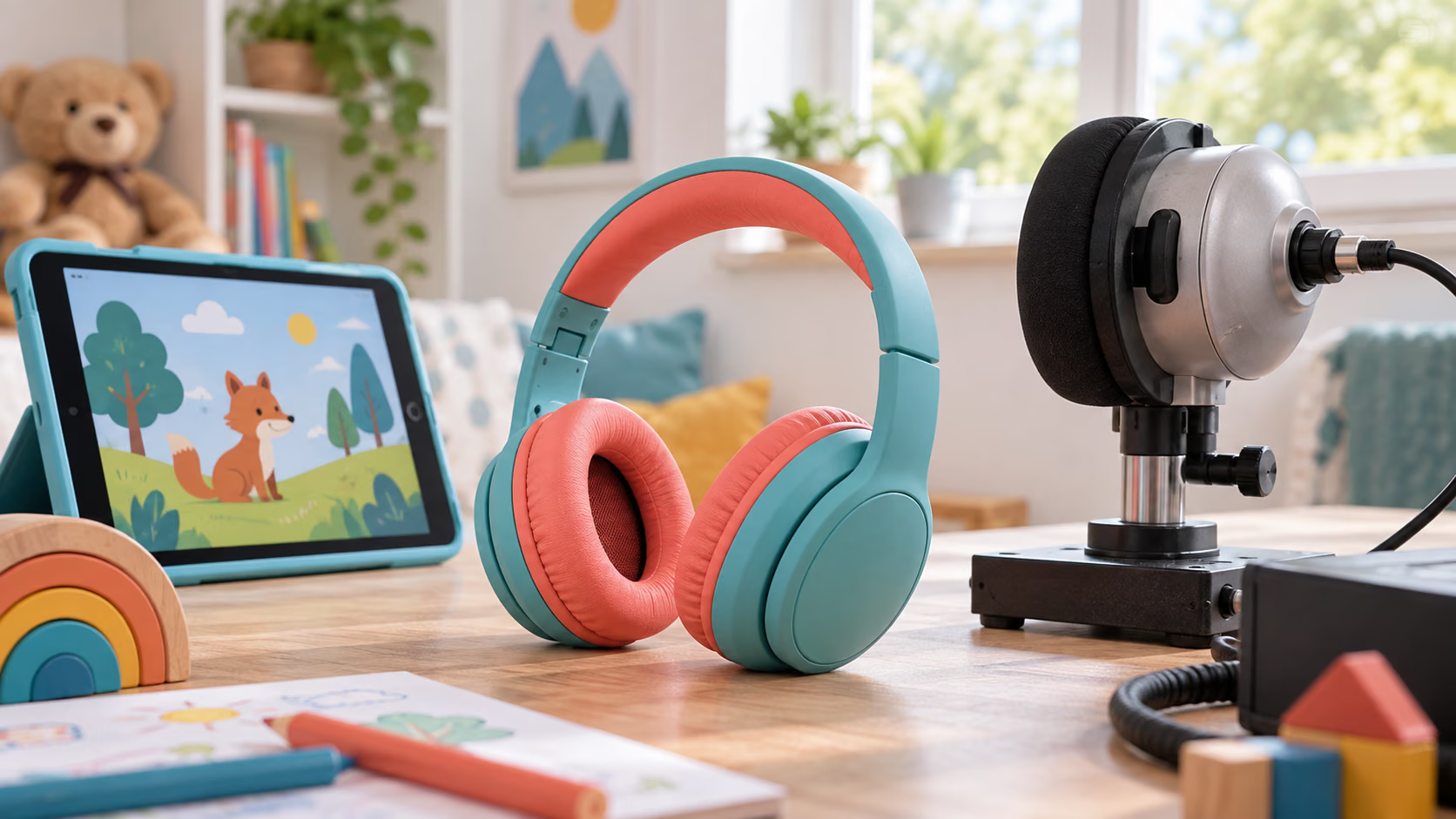
Children’s headphones are often judged by the wrong person. An adult tries them for a minute, decides that the volume seems reasonable and hands them over. The child then uses them for an entire film, in a noisy car or aircraft, with a different device and a different source level.
That is why the most important feature of the iClever BTH12 is not the coloured lighting or the long battery claim. It is the selectable volume ceiling. The current official specification lists 74 and 85 dBA modes, giving a parent a conservative default and a louder option for difficult environments.
A limit is still not a guarantee of harmless listening. Sound exposure combines level and duration, fit changes what reaches the ear, and wired mode may behave differently from Bluetooth. The BTH12 is useful because it provides a physical boundary. Parents still need to choose the lower setting, check it after pairing and control listening time.
The current product is 74 and 85 dBA
Some older shop descriptions and customer text mention a 94 dB mode. The current iClever BTH12 page lists 74/85 dBA volume limited hearing protection, Bluetooth 5.2, an 800 mAh battery and up to 85 hours of playback with the lights off.
That discrepancy makes model and revision checking essential. Use the label on the box and the included manual, not a marketplace title copied from another region or production run. If the controls described by the manual do not match the headphones, stop and identify the exact revision before relying on the limiter.
The BTH12’s two current modes have a sensible division of labour. Seventy four dBA is the everyday choice for a child in a reasonably quiet room. Eighty five dBA gives more headroom when background noise makes speech difficult, but it should not become the permanent default just because it sounds more exciting.
The decibel scale is logarithmic. An increase of 3 dB doubles sound energy, even though it does not sound twice as loud. The 11 dB gap between the BTH12’s modes is therefore substantial. It should be treated as a change in exposure, not as a minor step on a normal volume control.
A volume ceiling is only one half of safe listening
The World Health Organization explains that hearing risk depends on intensity, duration and frequency of exposure. Its safe listening standard uses a child mode reference of 75 dB for 40 hours per week. WHO’s current guidance also gives 80 dB for 40 hours per week and about 85 dB for 12 hours 30 minutes per week as examples of the relationship between level and time.
These are exposure models, not a personal medical diagnosis. Individual sensitivity, other noise during the week and the accuracy of the device all matter. A child who attends loud events or spends hours in noisy transport already has exposure outside the headphones.
Related reading
The practical conclusion is straightforward. Select 74 dBA for normal listening, keep sessions finite and include quiet breaks. Use 85 dBA only when necessary, then shorten the session. If a child reports ringing, muffled hearing, pain or persistent difficulty hearing speech, stop headphone use and seek advice from a qualified clinician.
Do not solve road or aircraft noise by continuously increasing volume. Well fitting ear cups help, but BTH12 is not advertised as active noise cancelling. In a very loud environment, quieter content, a break or appropriately selected hearing protection may be safer than asking entertainment headphones to overcome the cabin.
The limiter should be checked after every unusual connection
The BTH12 supports wireless and wired use. Those paths may not share exactly the same gain structure, so a responsible setup checks both rather than assuming the displayed mode governs everything equally.
Start with Bluetooth. Select the lower limit according to the manual, play familiar speech and raise the phone or tablet volume gradually. The headphones should remain intelligible without becoming startling at the source’s maximum setting. Confirm the mode again after switching the headphones off and on.
Then connect the 3.5 mm cable to every device likely to be used. A tablet, aircraft entertainment system and game controller can produce different analogue levels. Begin at minimum source volume and increase slowly while an adult wears the headphones. If the wired path bypasses the electronic limiter on the particular revision, the source volume becomes the safety control.
Avoid improvised splitter chains and headphone amplifiers. They complicate channel balance and can raise available voltage. A simple direct connection is easier to understand and supervise.
Also test notifications and calls. A system tone or incoming call may be mixed at a level different from media. Disable unnecessary alerts on a travel tablet and check game chat separately from game sound.
Measuring headphone level is harder than a phone app suggests
A phone microphone held beside an ear cup cannot verify a headphone’s dBA limit. The acoustic seal, coupler shape and microphone calibration determine the result. Professional and standards based measurements use an ear simulator or appropriate acoustic coupler, a calibrated microphone and defined signals.
That does not make home checks pointless. A repeatable comparison can catch a gross fault or a setting that failed to persist. Use the same content, source, volume position and physical placement for both modes. The 85 dBA setting should be clearly louder than 74 dBA. Left and right channels should sound balanced, without rattling or sudden level jumps.
Do not publish the number from an uncalibrated setup as an absolute sound pressure level. Its value is relative. If one pair is dramatically louder than another under identical conditions, investigate. If reliable verification is required for a child with hearing sensitivity, an audiologist or acoustic laboratory has the right equipment.
The product’s dBA wording also matters. A weighting approximates human hearing sensitivity and reduces the influence of very low frequencies. Music is dynamic, so the measurement window and test signal affect the reported value. One peak, one average and a weekly sound dose answer different questions.
Fit changes comfort and effective isolation
The BTH12 is an over ear design with padded cushions and an adjustable headband. On a small child, however, an adult sized definition of over ear may still place part of the cushion on the ear. That pressure becomes noticeable during a film even when the first five minutes feel comfortable.
Adjust the headband symmetrically. Check that the cups cover the ears without folding them and that the headband does not slide when the child looks down. Glasses can break the seal and create a pressure point. Earrings, hearing devices and hair accessories need their own clearance.
Ask specific questions after twenty minutes. Does the top of the head hurt? Are the ears hot? Is one side pressing more? A child may tolerate discomfort to keep watching and give only a vague answer when asked whether everything is fine.
The clamp has to balance two requirements. Too loose and outside noise enters, encouraging higher volume. Too tight and the headphones will not be worn. The adjustable frame also has to survive being opened by small hands. Teach the child to remove the headphones by holding both cups rather than pulling one side.
For siblings, reset the fit and volume mode for each user. A setting suitable for an older child is not automatically suitable for a younger one.
Related reading
Sound quality should favour speech and calm listening
Children’s headphones do not need exaggerated bass or sparkling treble to feel impressive in a shop. They need clear speech at the lower volume setting.
Use spoken content as the first test. Dialogue should remain understandable without pushing the source to maximum. Then try music with acoustic instruments and a game with sudden effects. Listen for harsh upper frequencies, boomy bass that masks words and distortion near the limiter.
Channel balance is important for learning material. Centre vocals should sound centred. Reverse the headphones to distinguish an ear difference from a hardware imbalance. If the image moves with the headphones, the pair may be faulty.
The built in microphone is suitable for basic calls and school use, but room noise and Bluetooth profiles can reduce quality. Make a test recording at the desk where it will be used. Confirm that the app has selected BTH12 as its microphone and that playback quality does not collapse unexpectedly when the microphone becomes active.
Lighting is decoration. It can make the headphones appealing to a child, which has practical value, but it also consumes energy and can distract in a classroom. The official 85 hour playback claim is explicitly with lights off. Treat any illuminated runtime as a separate case.
Battery claims need a household definition
The listed 800 mAh battery and up to 85 hours of playback suggest that BTH12 should last through several journeys. Runtime depends on volume, lighting, Bluetooth radio conditions, calls, temperature and standby behaviour.
Rather than trying to reproduce a laboratory number, record ordinary use. Charge fully, note the date, keep lights in the intended state and log approximate listening hours until the low battery warning. Repeat once. That produces a useful household expectation and reveals whether standby drain is material.
Test the low battery warning with the child present. It should be understandable without being frightening or excessively loud. Confirm whether the headphones can play while charging and whether that is appropriate for the supplied instructions. Never let a child use a damaged cable or charge unattended in bedding.
USB-C is convenient, but the connector needs strain relief. Inspect it after travel. If the socket becomes loose, the enclosure swells or the battery becomes unusually hot, stop using the headphones.
For storage, switch them fully off rather than leaving them paired in a bag. Fold according to the manual and avoid placing heavy objects on the hinges.
Controls must work without adult interpretation
A child should be able to pause content, adjust ordinary volume within the chosen ceiling and identify left and right without entering a configuration mode accidentally.
Walk through every button. Short press and long press actions often differ. Show the child the safe commands and keep mode changes as an adult task. After a week, ask the child to demonstrate pause and power off. That is more reliable than assuming the explanation was remembered.
Pair only the devices actually used. Bluetooth reconnection becomes confusing when headphones jump to a nearby phone instead of the travel tablet. Remove obsolete pairings and rename the device clearly where the operating system allows it.
Check maximum range in the real home, but teach the child to keep the source nearby. Range marketing is irrelevant if a wall causes broken audio and the listener responds by increasing volume.
Sharing the headphones needs a reset routine
Shared headphones collect more than Bluetooth pairings. Ear pads hold heat and skin contact, the headband position changes, and the louder mode selected for one journey can remain active for the next child.
Wipe the surfaces according to the manual and let the cushions dry before storing them. Do not spray liquid into the driver cloth, microphone or controls. Inspect the cable, hinges and pad seams after a school trip, when damage is more likely to be hidden in a bag.
Related reading
At every handover, restore the lower 74 dBA mode, reset the headband and start the source volume low. Pair only after the child is wearing the headphones correctly. This takes less than a minute and turns the safety setting into a routine rather than a fact everyone assumes somebody else checked.
If one child needs a consistently different level or fit, separate headphones may be simpler. Labelling the case can prevent a carefully configured pair from following the wrong device or user.
Price and alternatives
iClever currently lists the BTH12 at $39.99 in the United States, although stock, colour and regional pricing vary. At this level the useful comparison is not adult sound quality. It is limiter design, fit, durability, replacement support and whether Bluetooth and wired modes both suit the intended source.
Passive wired children’s headphones remove battery maintenance and pairing. They can be the simpler school choice when the tablet provides reliable volume control. Active noise cancelling children’s models may reduce the urge to raise volume in transport, but cost more and still require sensible duration.
An adult headphone with a phone’s software limit can offer better sound, yet the setting may be changed or reset. The BTH12’s dedicated modes create a visible household rule. That simplicity is its advantage.
Verdict
The iClever BTH12 is a sensible low cost pair of children’s headphones when the current 74 dBA mode is used as the default. The 85 dBA option is useful for occasional noisy environments, not as proof that unlimited listening is safe. The long quoted battery life, wired backup and approachable design make it practical for travel and shared devices.
I would verify the exact revision, test limiter persistence after power cycles, compare Bluetooth with every wired source and watch a full session for pressure around the ears. I would also turn the lights off unless the child genuinely values them.
Buy BTH12 for a child who needs straightforward wireless headphones with a conservative ceiling and adult supervision. Choose something else if active noise cancellation, a locked parental control, independently documented acoustic testing or repairable batteries are requirements. Most importantly, treat the limiter as a useful guard rail. It cannot replace lower volume, quiet breaks and attention to the child’s own response.
One email a month: new articles, reviews and the upcoming live webinar + free recording. No spam, unsubscribe anytime.