Fire Emblem Engage interests me because a powerful move can create a problem as well as solve one. Reaching farther is useful, but arriving alone is another matter. I like a tactics game that makes me consider the position left behind after an impressive action. A good turn should be more than the largest damage number I can produce right now.
Quick verdict
I would choose Engage for turn-based tactics where changing a unit’s partner can change the plan for a whole turn.
Best for: Players who enjoy grid battles, comparing unit roles and making powerful abilities work together.
Main benefit: Emblem Rings change mobility and skills, creating combinations beyond a simple equipment stat increase.
Biggest drawback: Those options add planning and preparation, and someone wanting a heavily branching story should compare other Fire Emblem entries.
Fire Emblem Engage — standard Nintendo Switch physical edition
Amazon US · US
Check price and availability: Fire Emblem Engage — standard Nintendo Switch physical edition at Amazon USAffiliate link. As an Amazon Associate I earn from qualifying purchases.
Reviewed version: Fire Emblem Engage — standard Nintendo Switch physical edition
Compatibility: Original Nintendo Switch physical game. Check the exact platform edition before purchase; separate Switch 2 editions, upgrade packs and expansion passes are different offers.
Review context: I assess the standard Switch edition, documented Emblem combinations, movement choices, difficulty settings and the separate paid expansion.
The selected product is the standard physical Nintendo Switch game, released on 20 January 2023. Its central idea is pairing characters with Emblems from earlier Fire Emblem games. I would choose it for someone who enjoys planning a group on a grid, rather than assume that familiarity with one returning character is the main reason to buy.
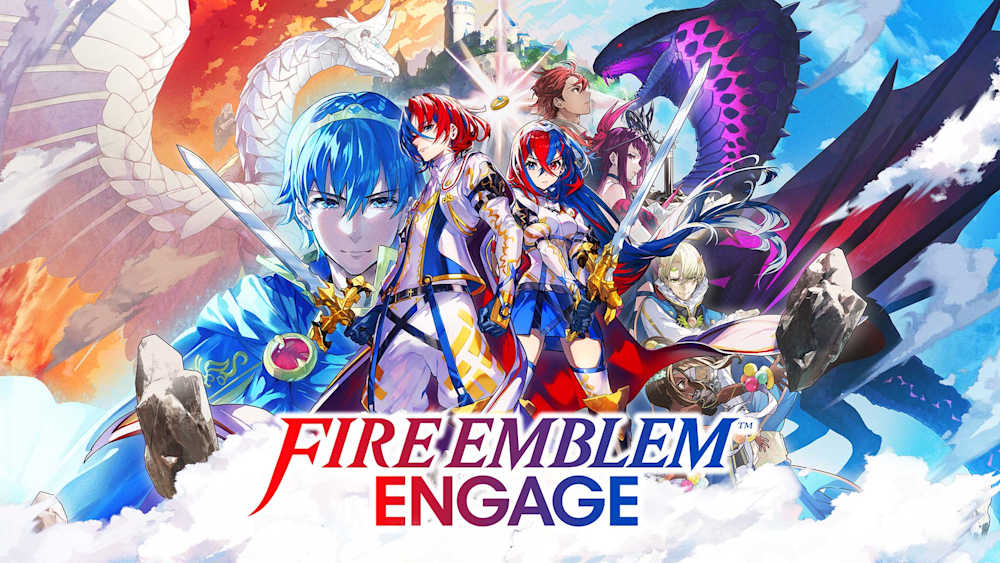
Product images: Nintendo promotional artwork and official screenshots.
Related reading

More movement is not automatically a better position
In the developer interview, Nintendo and Intelligent Systems discuss Sigurd’s extra movement and Celica’s teleporting as changes that affected the tactical design. Those are concrete abilities to build a plan around. A unit can reach somewhere that its normal movement would not allow.
I like the question that follows: should it? Getting to an opponent can be only the first part of a turn. The rest of the group may need to reach the same area, cover another route or remain able to help. A spectacular move becomes more interesting when it has to fit the next position of the whole team.
That is the sort of decision I would want from Engage. It gives the new power a use beyond bypassing a difficult square. The attraction is not simply that the player can do something unusual; it is that the unusual option can make an old situation worth considering again.
The basic match-ups still matter
The developers describe the returning weapons triangle: swords beat axes, axes beat lances, and lances beat swords. I like starting from a relationship that is easy to explain. A new player has something concrete to look for before thinking about every ring, skill and possible combination.
A simple relationship does not make a whole battle simple. It gives the player one useful question inside a larger situation. The favourable weapon match-up still has to be weighed against location and what the group is trying to protect. That is why I find turn-based tactics appealing: the time between actions can be used to inspect the consequences.
I would learn that foundation before trying to imitate an advanced build. It is easier to understand the value of an unusual combination when the ordinary problem is already clear. Otherwise, an apparently clever solution can become a sequence copied from someone else without the satisfaction of knowing why it works.
Related reading

A partner can change a familiar unit
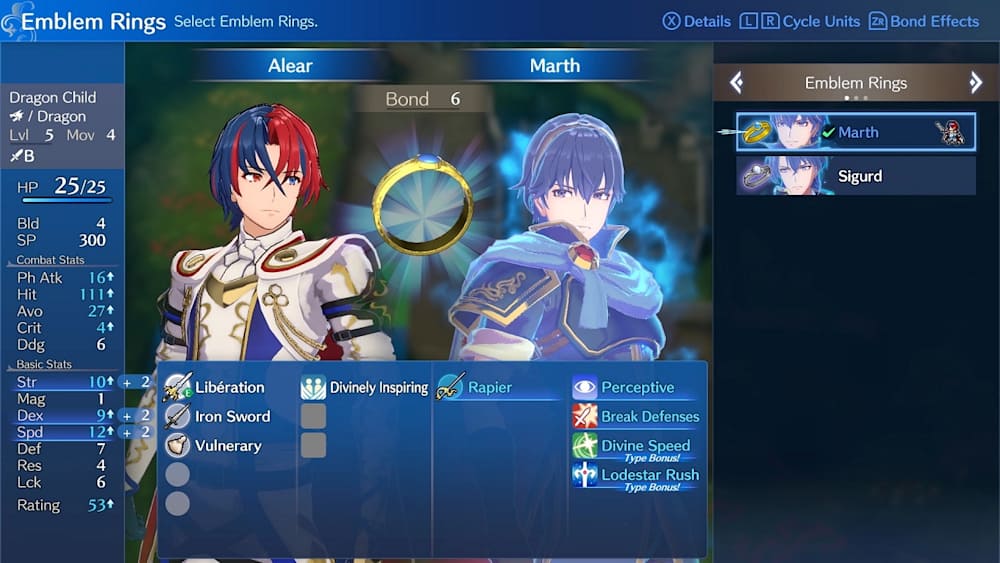
Nintendo’s game page describes Emblem Rings as a way to use heroes’ weapons and skills. I like that the familiar unit remains part of the choice. Pairing can suggest a different role for someone already in the group, rather than always replacing that person with the newest arrival.
For me, that creates a more personal kind of preparation. A favourite character can be considered in terms of what the team needs, not only which portrait I like. The interesting question is what a pairing allows that was awkward before. A change is worth making when I can describe its purpose.
I would keep that process manageable. Comparing two promising combinations is useful; feeling obliged to inspect every possible pairing before the next battle is not how I would want to spend an evening. The game’s breadth is attractive when it gives a player choices, rather than making every choice feel like an obligation to optimise perfectly.
The bright presentation is a deliberate invitation
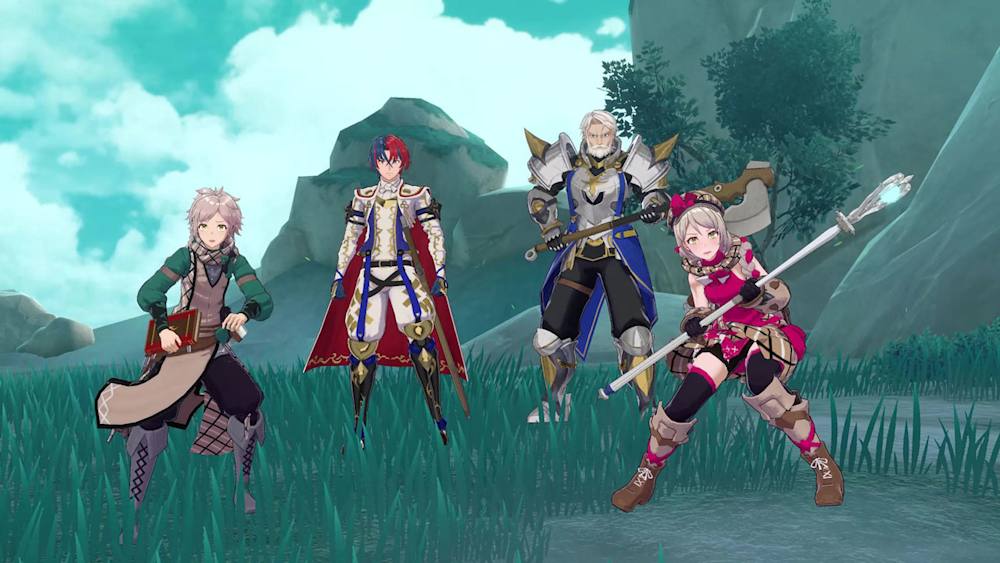
The visual-design discussion explains the attention given to character appearance. The official images make the result clear: bright colours, strongly distinguished characters and a more flamboyant presentation than a plain military board.
I like a tactical game that is willing to look inviting without pretending the decisions underneath are trivial. A readable character identity can help a player keep track of a growing cast. It also gives the preparation screens something more personal than a row of anonymous pieces.
The style will not suit everyone, and that is a fair part of the buying decision. Someone who wants a restrained visual tone should look closely at the official footage. I would not dismiss the tactics because the cast is colourful, but I would not tell a buyer to ignore a style they will be seeing throughout the adventure either.
Preparation has its own place
Somniel is the base between battles, with activities for preparation and relationships. I like having a recognisable place to reconsider the group after seeing what a battle asked of it. A change made there can answer an actual problem from the last encounter, rather than a theoretical concern in a menu.
That quieter structure is also worth explaining to someone mainly interested in the board. This is not only a series of isolated puzzles. There is a cast and a place around the battles. Whether spending time there sounds welcome should be part of choosing Engage over a different strategy game.
Related reading

Choose the consequences that suit the evening
The documented options include different difficulty levels and Classic or Casual rules for fallen characters. I appreciate treating those as choices about the desired experience. A player can want thoughtful turns without wanting a lost character to make the whole evening feel spoiled.
My reason to choose Engage is the potential for a small change in pairing or position to open another plan. My reservation is the preparation those possibilities invite. For someone who enjoys that thought before acting, the rings give the tactical board a clear new source of ideas.
What worked
The weapons triangle gives the basic match-ups a clear relationship before Emblem abilities complicate the board.
Different difficulty levels and Classic or Casual options let the consequences be considered separately from the visual style.
What bothered me
Moving farther can create a worse position if the rest of the group cannot follow. Power does not remove the need to inspect the next enemy turn.
Who should not buy it
I would not choose it for a player who dislikes preparing a party or mainly wants the branching-school-story structure of Three Houses.
Alternatives I would consider
Fire Emblem: Three Houses. I would compare Three Houses when the school setting and story routes are the stronger attraction.
Xenoblade Chronicles 3. I would choose Xenoblade when I want a party adventure with real-time positioning instead of turns on a grid. Read my Xenoblade Chronicles 3 review.
Evidence and sources
The linked publisher sources explain the game design and edition history. My recommendation is an editorial judgement; product images and edition listings provide the supporting reference material.
Nintendo: original Switch game, features and release
Nintendo and Intelligent Systems: designing tactical freedom
Features, compatibility and rated figures from the maker are manufacturer information. My opinions are identified in the review.
Conclusion
I would buy Engage for its tactical combinations and the different roles Emblems make possible. The standard game is the starting offer; the separate Expansion Pass is an additional decision rather than something implied by the box title.
Fire Emblem Engage — standard Nintendo Switch physical edition
Amazon US · US
Check price and availability: Fire Emblem Engage — standard Nintendo Switch physical edition at Amazon USAffiliate link. As an Amazon Associate I earn from qualifying purchases.
One email a week with practical Mac workflows, useful comparisons and honest tech recommendations.