A game for the family console is a gift for more than one person, and that is where it usually goes wrong. The box says two players, and then one child holds the hero while the other gets a helper. A good family game is one whose roles you understand before the wrapping comes off: who plays, who helps, and how much skill it asks from the youngest person on the sofa.
These ten games all have a review on this blog. The order runs from the easiest to share to the most specialised. It starts with bright platform games that welcome a second or fourth player, passes through slower and solo adventures, and ends with games built around reading, planning, creating and dungeon puzzles. All ten reviews are research-based assessments from Nintendo’s product pages, developer interviews and official screenshots. They are buying views, not reports of my own play sessions.
Disclosure: The Amazon links in this guide are affiliate links. As an Amazon Associate I earn from qualifying purchases.
1. Super Mario Bros. Wonder: the easiest evening to share
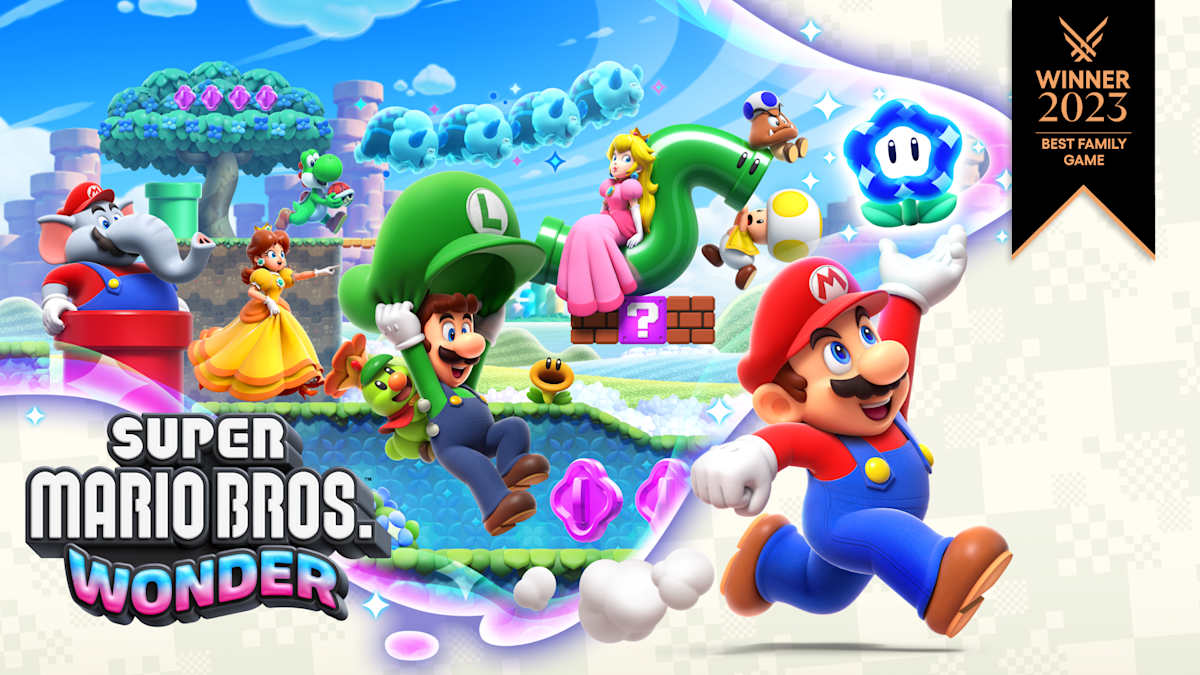
The list opens with the game that asks the least explanation. Super Mario Bros. Wonder is a side-scrolling Mario with local play for up to four people, and its Wonder Flower changes the rules of a course while you are in it. Badges alter abilities separately from the character, so choosing Peach does not lock anyone into one movement style. According to Nintendo, Yoshi and Nabbit avoid damage.
Easier characters do not remove every obstacle, though. It still asks for timed jumps, so it suits a child who enjoys trying again. Count extra controllers into the cost, and check the box name, because Nintendo also sells a separate Switch 2 edition. My full review has the reasoning, and the game is on Amazon.
Related reading

2. Kirby and the Forgotten Land: a soft landing in 3D
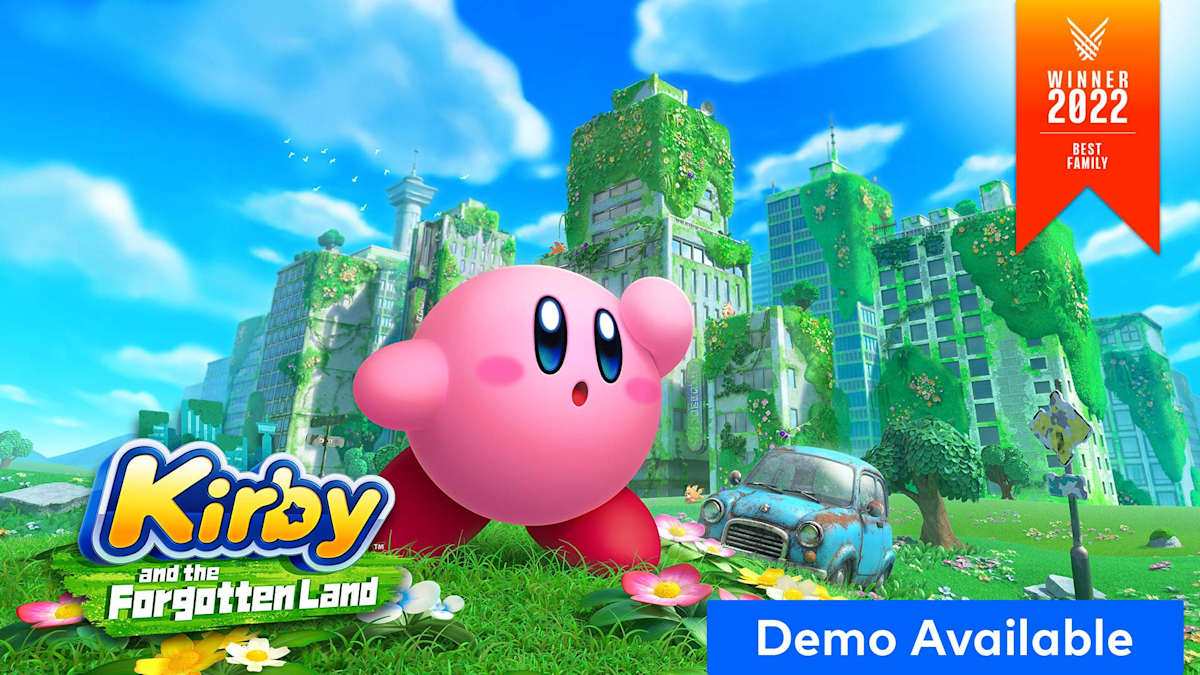
Kirby takes the same friendliness into three dimensions. This was the main series’ first fully 3D platformer, and its Mouthful Mode lets Kirby stretch around a car or a vending machine and use it. A Spring-Breeze difficulty mode lowers the pressure, and Nintendo offers a demo, which beats guessing from the colour of the box.
The catch sits in the two-player label. The second player controls Bandana Waddle Dee, not a second Kirby, so settle that before giving it to two children who both want the pink one. The later Switch 2 Edition is a separate package, so check the listing. Here is my Kirby review and the game on Amazon.
3. Captain Toad: Treasure Tracker: puzzles the size of a shoebox
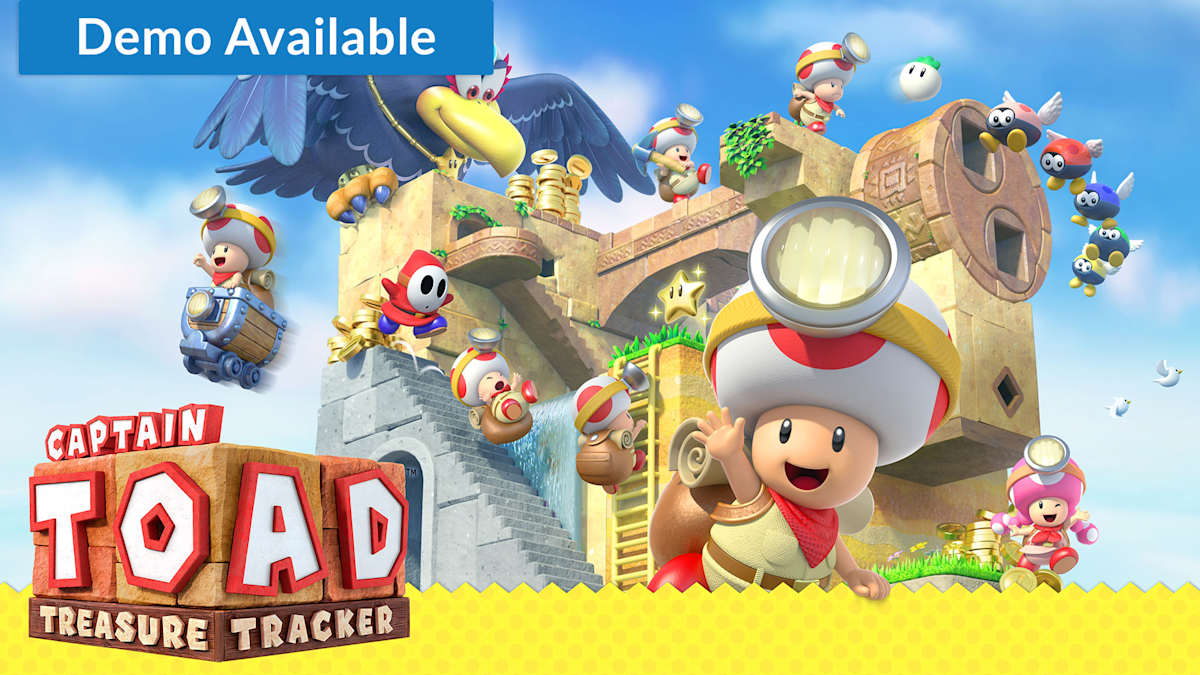
After two games about moving, here is one about looking. Captain Toad: Treasure Tracker is built from compact courses with hidden Super Gems and Power Stars, where turning the view is part of finding the route. A stage is small enough to consider as a whole, which suits a patient child.
That calm is also the limit. Someone who wants fast action or a long journey across a large map may find these scenes too contained, however much they like Mario characters. Shared play is described on Nintendo’s current page together with features added through software updates, so check those instructions before buying it mainly for two. The Captain Toad review explains more, and the Switch version is on Amazon.
4. Yoshi’s Crafted World: cardboard, wings and two Yoshis
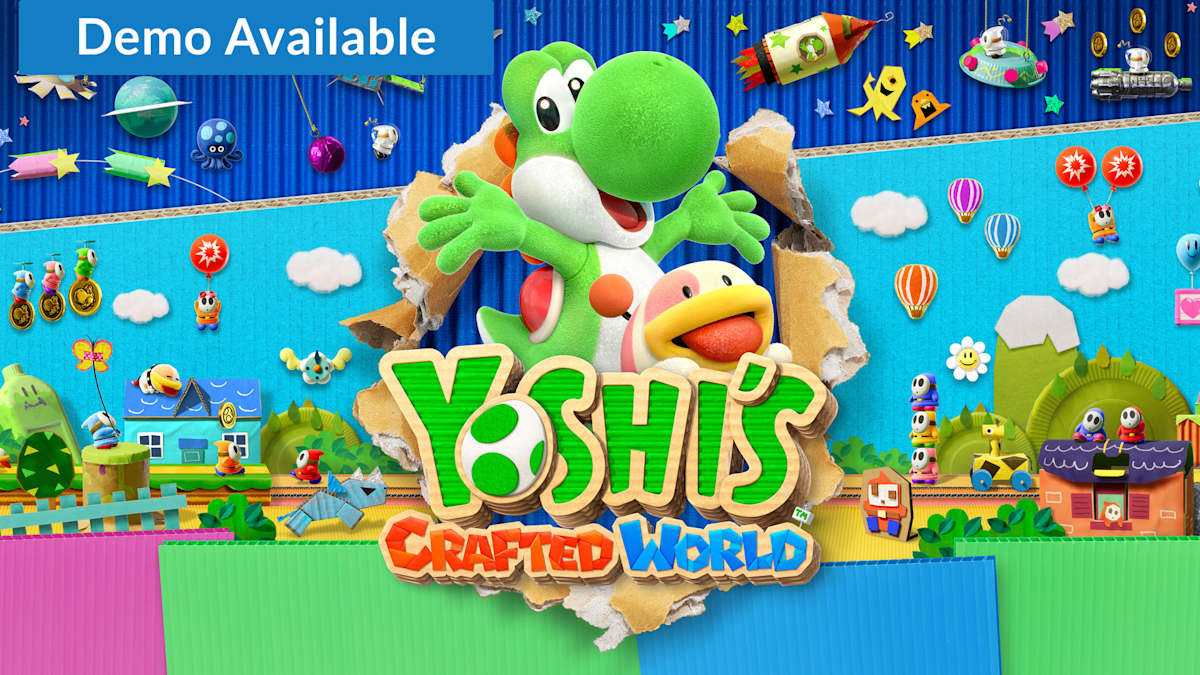
Yoshi combines the two previous ideas, gentle platforming with a reason to search every corner. The world is made of boxes, paper and other everyday materials, and stages can be approached again from the other direction. Nintendo documents Mellow Mode, which gives Yoshi wings for a more forgiving run, and local co-op with a second Yoshi, so both players get the same role.
Collecting everything takes far more searching than reaching the end, and I would not turn missing items into homework for a child. Co-op still needs coordination. It is not for someone seeking a demanding challenge. There is a demo to try first. Read the Crafted World review, then see it on Amazon.
5. Princess Peach: Showtime: one player, many costumes
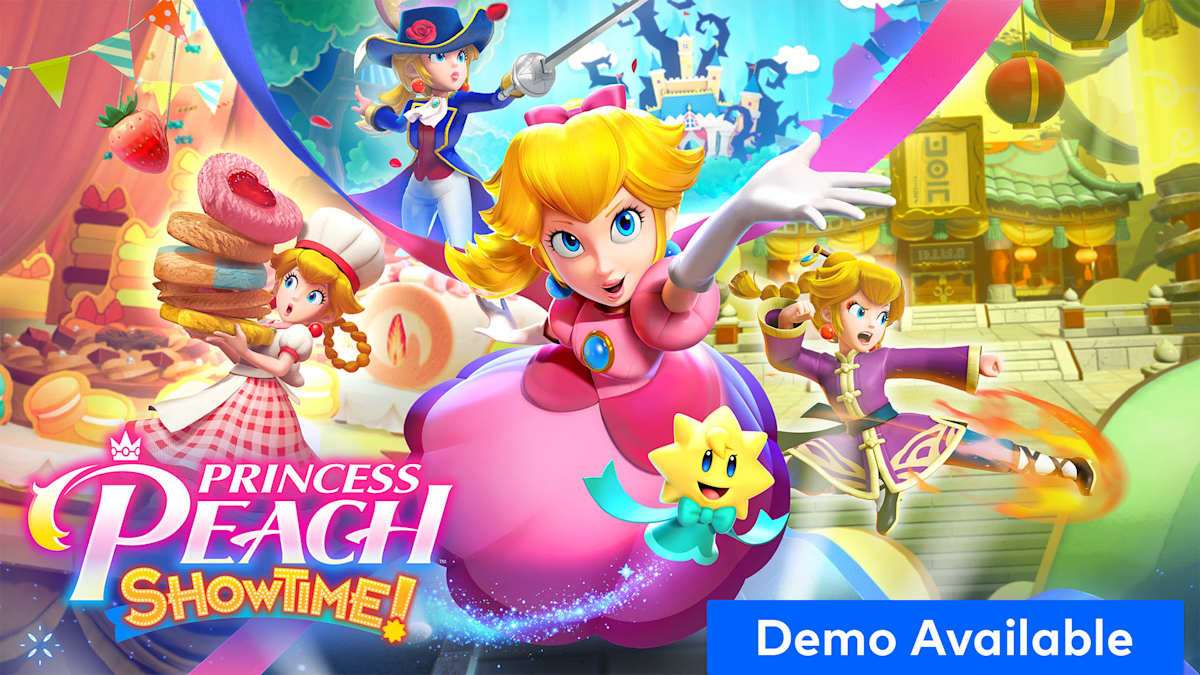
The fifth pick is the first one meant for a single child. In Princess Peach: Showtime, a theatre setting gives each costume its own job: swordfighter, detective, figure skater, pastry chef. It fits someone who likes dress-up, theatre and trying a new small activity instead of mastering one hard system.
Say clearly that it is a single-player game, because a household used to colourful Nintendo boxes may expect a second controller to work. The variety has a cost too. Timed baking, investigating and fighting ask different things, and no single role goes very deep. Nintendo’s free demo covers two plays and is the sensible first step. My Showtime review says who I would buy it for, and the game is on Amazon.
Related reading

6. Super Mario 3D World + Bowser’s Fury: two adventures, two rules
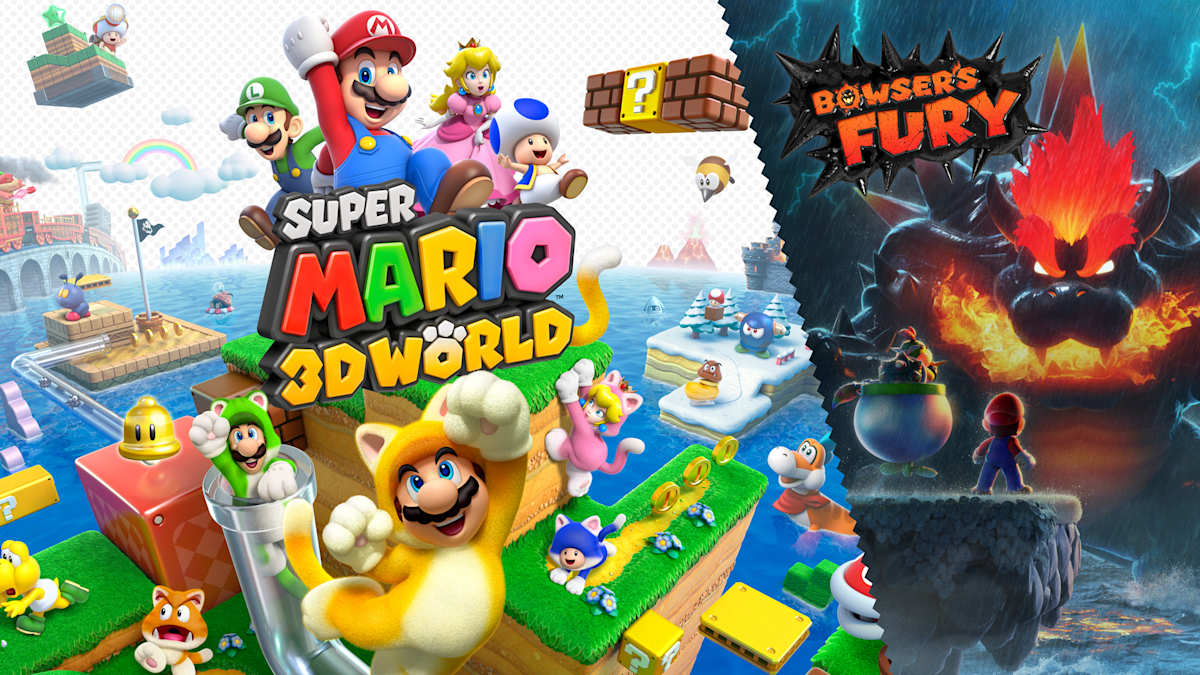
For the household that found Peach too solitary, this box brings everyone back. Super Mario 3D World is a set of compact 3D courses to tackle together, with cat abilities from the Super Bell and characters that differ, such as Luigi’s higher jump and Peach’s brief float.
The second half follows different rules. In Bowser’s Fury, a connected island adventure, the second player helps as Bowser Jr., which is not the equal arrangement of 3D World. Players also compete for a score in the main game, and not every group enjoys that. Anyone uncomfortable judging depth may prefer the side view of Wonder. Details are in the 3D World review, and the package is on Amazon.
7. Paper Mario: The Origami King: a story for a reader
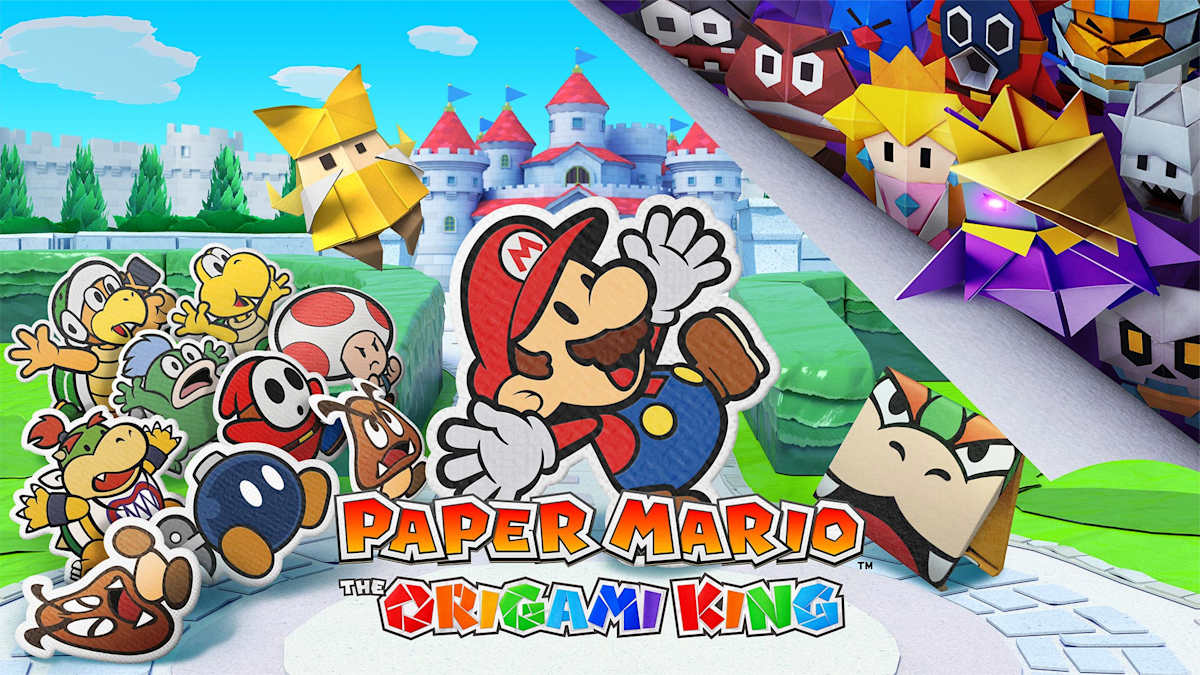
From here the list becomes more specialised, starting with a game for a child who reads happily. Paper Mario: The Origami King is a single-player, comedy-led adventure in which Mario and his companion Olivia face King Olly’s folding plans. Paper is more than a look here. At set points the 1,000-Fold Arms let the player pull and peel the scenery, and battles ask you to line enemies up on rings before attacking.
Those ring battles decide the purchase. A player who enjoys arranging a small puzzle will welcome them, and one who mainly wants to explore may find the repetition tiring. Written dialogue carries much of the appeal, and there is no local co-op. See the Origami King review or the game on Amazon.
8. Pikmin 4: planning with a rescue dog
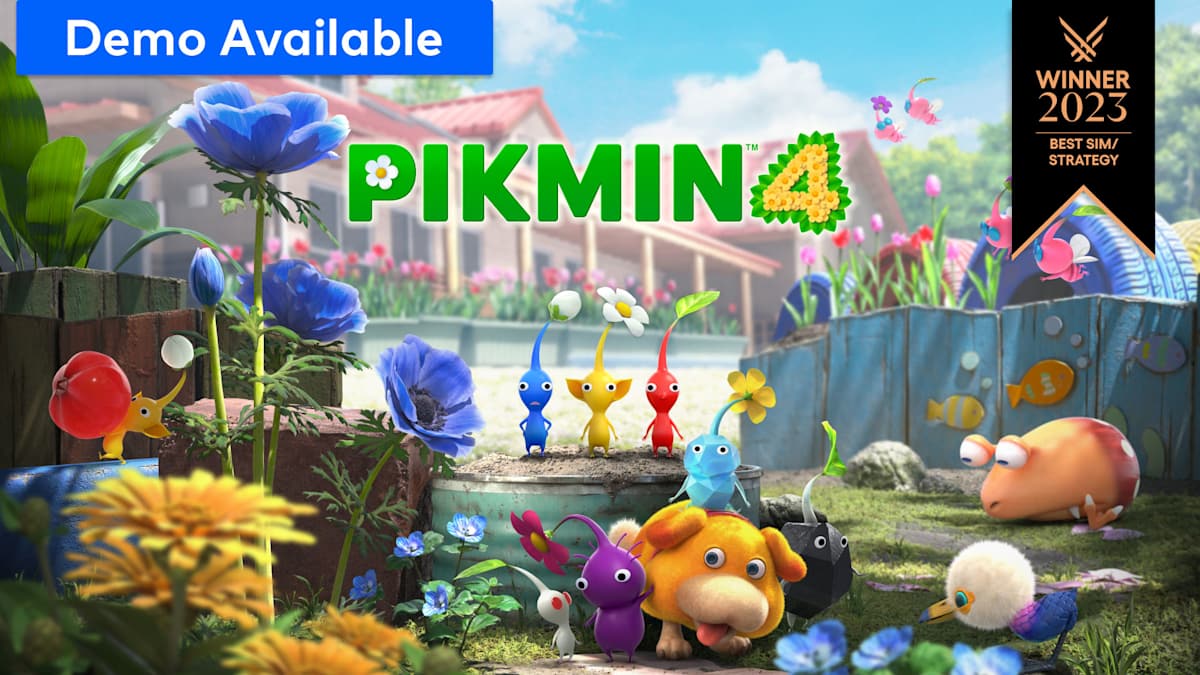
Pikmin 4 keeps the puzzle thinking and replaces the story with planning. Nintendo calls the idea Dandori, thinking ahead and using time well. You direct a small crowd of Pikmin and Oatchi, a rescue dog who can be ridden and given work, through a garden where a bench looks enormous.
The cute look hides some responsibility. Pikmin must be kept safe at night and can be lost, which is worth knowing for a child who is sensitive to creatures getting hurt. Story co-op gives the second player only a pointer to help with items and attacks, not a second explorer. The free demo carries its save data into the full game. More in my Pikmin 4 review, with the game on Amazon.
9. Super Mario Maker 2: for the child who builds
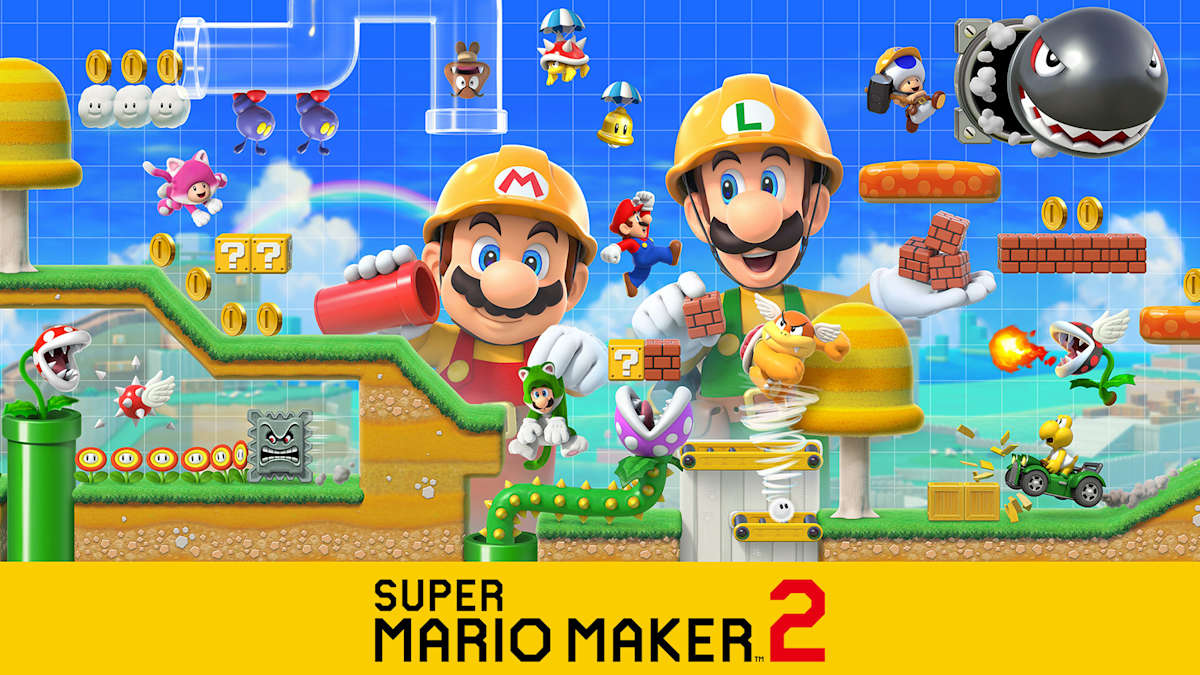
Where Pikmin asks for a plan, Super Mario Maker 2 asks for an idea. Its Course Maker lets a player place an obstacle, test the jump and hand the controller to someone else. Nintendo lists more than 100 built-in Story Mode courses as a place to start, and two people can build a course together on one system. It suits a child who likes showing a creation to the family.
Two conditions apply. Course World, sharing and online multiplayer are tied to a Nintendo Switch Online membership, so add that to the budget if the community catalogue is the attraction. An editor also asks the player to supply an intention, and someone who wants a guided adventure will be happier with Wonder. The Mario Maker 2 review covers both, and the game is on Amazon.
Related reading

10. Zelda Link’s Awakening: a small island, alone
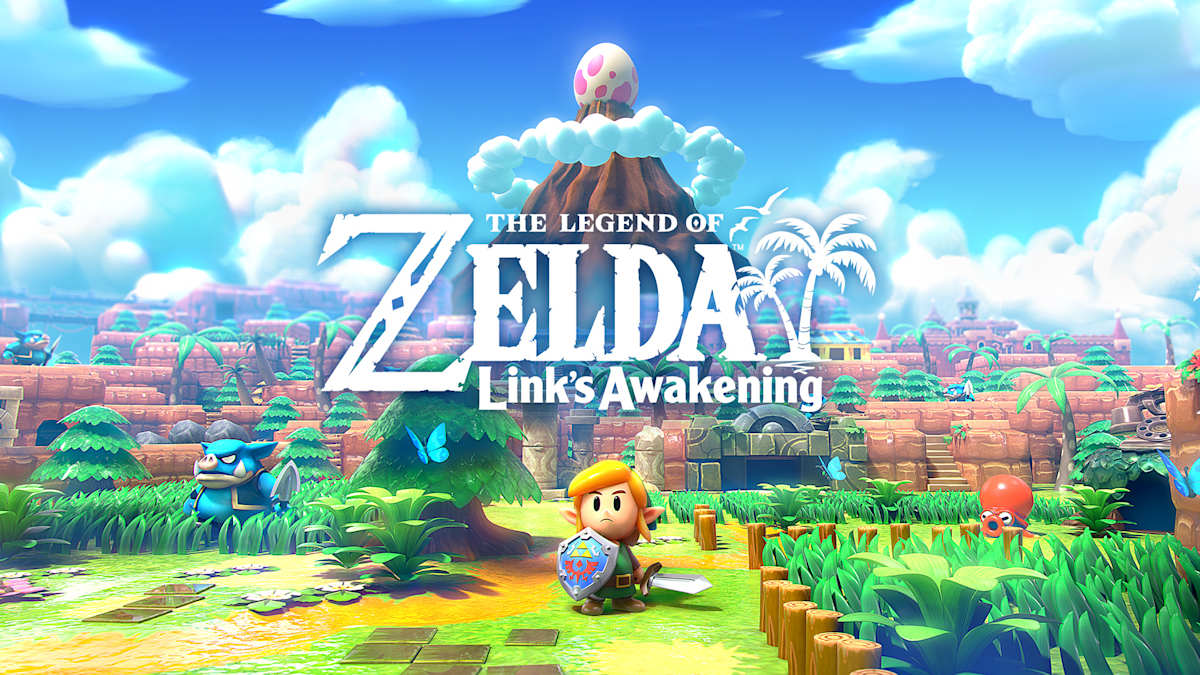
The last pick is the most traditional adventure of the ten and the least shared. The Legend of Zelda: Link’s Awakening, the Switch remake, puts Link on Koholint Island with dungeons to solve and tools that turn an old barrier into a new path. The island has clear edges, which makes it a more bounded Zelda than the wide-open ones.
It is a solo game with no simultaneous co-op. Its older structure expects the player to tolerate some uncertainty about the next step, and that can feel restrictive to someone who wants open-ended freedom. Chamber Dungeons let you arrange collected rooms, but that is not a full creation tool. My Link’s Awakening review says who it suits, and the remake is on Amazon.
How to choose
Count the players first. For a family that wants everyone on the sofa at once, Super Mario Bros. Wonder is the simple answer, and Super Mario 3D World + Bowser’s Fury is the next step when the group is comfortable in 3D. For two children who need equal roles, Yoshi’s Crafted World is the safer choice than Kirby and the Forgotten Land, which fits better when an older sibling or a parent is glad to help. For a child who plays alone, think about temperament: Princess Peach: Showtime for the one who loves costumes, Paper Mario: The Origami King for the reader, Pikmin 4 for the planner, and Super Mario Maker 2 for the one who would sooner build than follow.
One practical Christmas note. Check the delivery date and the return window before ordering, and read the listing for the exact edition and console, because several of these games now exist in more than one version. Where Nintendo offers a free demo, trying it with the child is the cheapest test there is, as long as it does not spoil the surprise.
More gift guides from this series: if someone on your list would prefer music to Mario, see 10 wireless headphones for every kind of listener.
One email a week with practical Mac workflows, useful comparisons and honest tech recommendations.