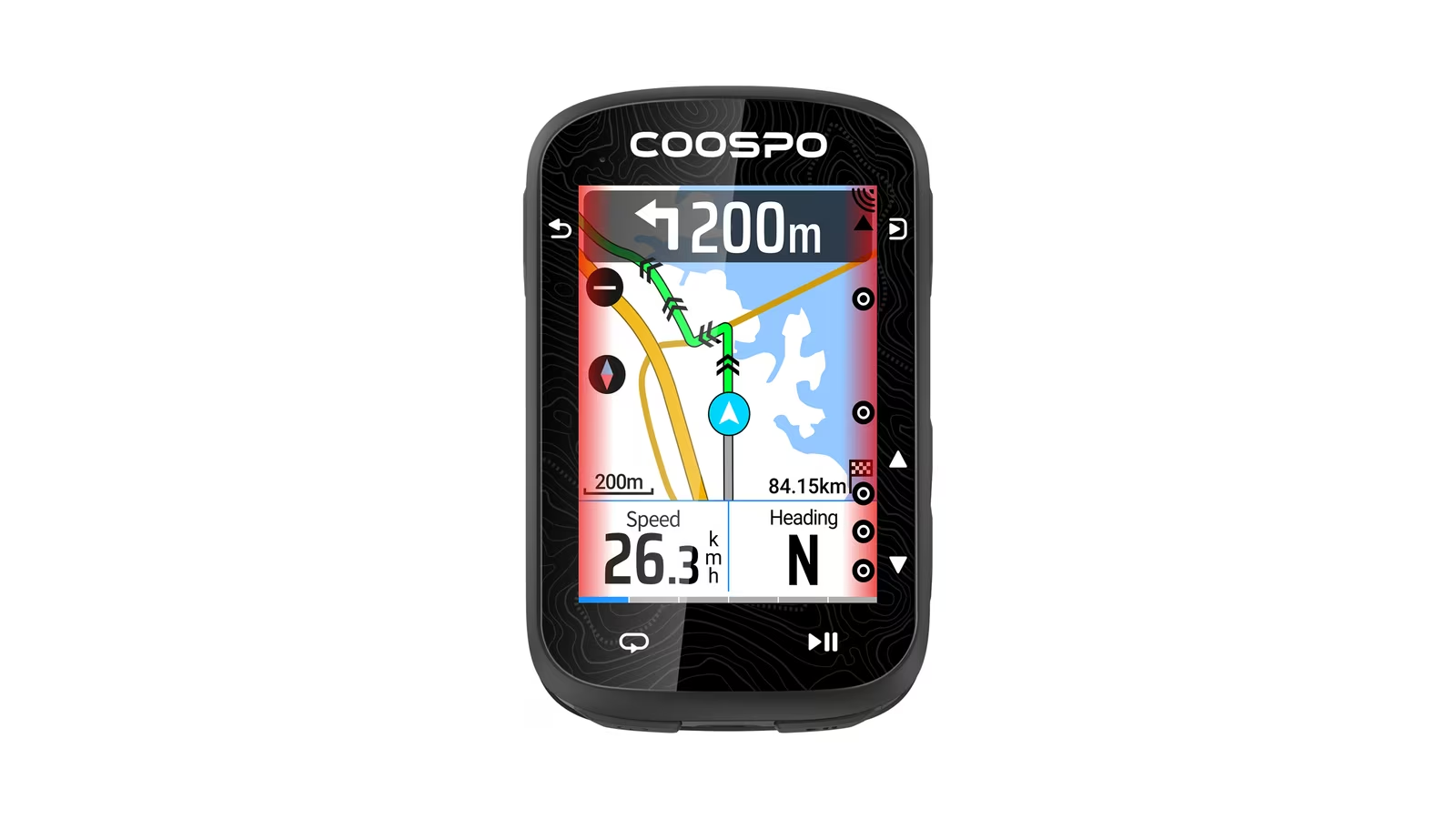
Two numbers decide whether a bike computer deserves the stem: how long it runs and how well it knows where it is. Everything else, from the colour of the map to the number of data fields, sits on top of those two. The COOSPO CS600 makes clear claims on both. COOSPO rates it at 36 hours with GPS from a 1090 mAh cell, and gives it a receiver that tracks five satellite systems on a u-blox chipset.
Those claims deserve a careful reading, because the published specification says a lot about how the unit behaves on a long ride and a little about where its limits are. The CS600 comes out of that reading as a well-judged computer. It pairs a colour touchscreen with a sensible power strategy, supports the sensors most riders already own, and costs a fraction of the premium names. COOSPO’s own store listed it at $120.89 against a regular price of $164.89 when checked.
The hardware on the stem
COOSPO’s product page gives the body as 84 x 53 x 18 mm and 69 g, with a 2.4 inch colour touchscreen, a USB-C charging port and 8 GB of storage. COOSPO’s comparison table adds six function buttons, IPX7 water resistance, an operating range of -10 to 50 °C and a barometric altimeter. The box holds the unit, a USB-C cable, a basic mount, a screen protector, two rubber rings, a rubber mat and an anti-lost tether.
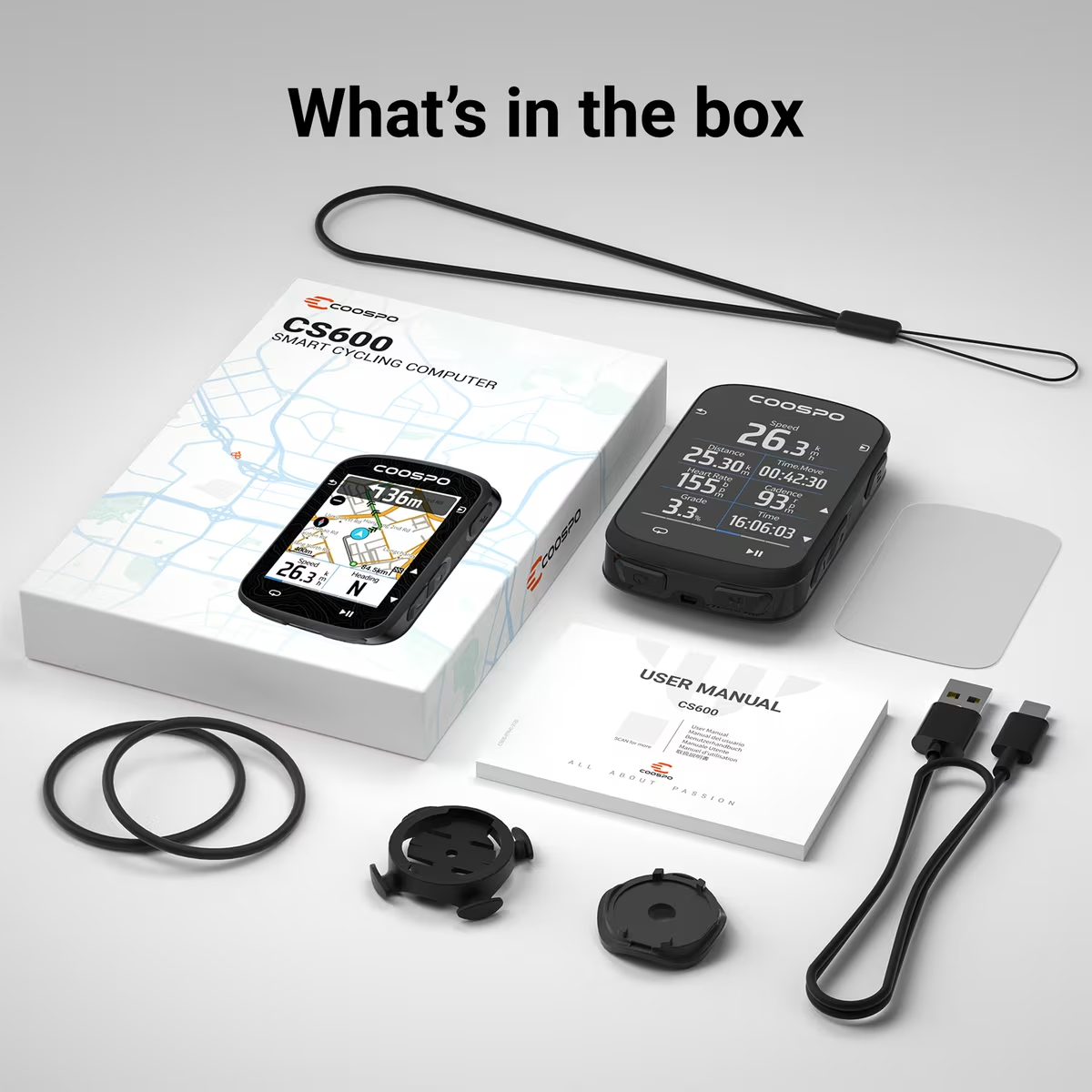
The six buttons matter as much as the touchscreen. Touch is convenient for panning a map at a café stop. Physical buttons are what a rider reaches for in rain, in thick winter gloves and at speed, when a precise tap on glass is the last thing anyone wants to attempt.
The same table describes the data layout: up to nine pages with one to eight fields each, drawn from more than 150 available parameters. That is enough to build a sparse page for racing, a dense one for training and a simple one for commuting, and to switch between them without opening a phone.
Related reading
A transflective screen is a battery decision
COOSPO calls the display a transflective LCD on the product page, and its introduction article describes a “semi-reflective, semi-translucent TFT screen”. A transflective panel uses ambient light to show the image, so in daylight the backlight has little work to do. That design is the main reason a colour computer can quote a battery figure in the tens of hours, and COOSPO markets the screen as sunlight readable for the same reason.
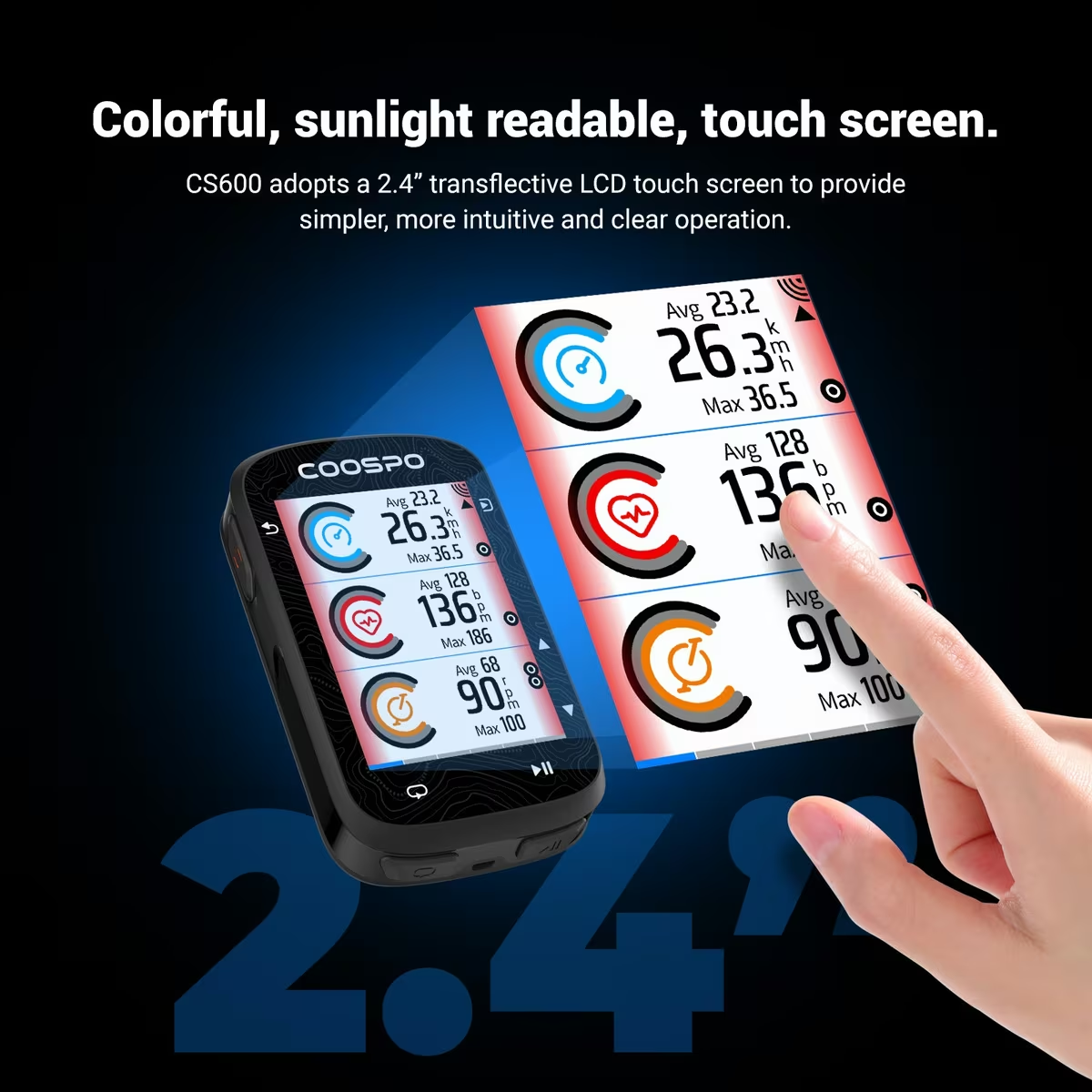
The backlight is managed automatically by a light sensor, according to the specification table, and the introduction article adds day and night display modes that switch at local sunrise and sunset. The light sensor is the part that matters for the battery claim, because it lets the unit use only as much backlight as the conditions call for. A ride that starts before dawn or runs into the evening will lean on the backlight far more than a summer afternoon.
Reading the 36 hour claim
COOSPO rates the CS600 at “36 hours with GPS” from its built-in 1090 mAh battery, and at “up to 36 hours of continuous use” in the introduction article, with a full charge in two hours over USB-C. COOSPO does not break that figure down by navigation, backlight level or number of connected sensors. The sensible reading is that it describes recording a ride with satellite positioning active in favourable conditions.
The specification also tells you what draws power beyond that baseline. Map navigation redraws a colour map as you move. The backlight works harder at night. Each ANT+ or Bluetooth sensor holds a radio link open, and a radar tail light keeps its link busy whenever traffic approaches. Expect a ride with the map on screen, a power meter, a heart rate strap, a radar and a night section to finish below the headline number, and a daytime ride on the data pages with a single speed sensor to finish much closer to it.
What the figure supports is planning. Even with generous margins for navigation and lights, 36 hours leaves room for very long days in the saddle, and a two hour charge means an evening on the same USB-C charger as a phone is enough to start the next morning full.
COOSPO also lets you power the unit off mid-ride and resume the same activity later, “whenever you’re ready” in the product page’s words. For multi-day routes this matters as much as the battery rating, because a computer that is switched off overnight inside an open activity spends nothing while you sleep.
Five constellations and what they do for accuracy
COOSPO states that the CS600 uses a u-blox chipset and supports GPS, GLONASS, Galileo, BeiDou and QZSS. Tracking several constellations raises the number of satellites in view at any moment. Under open sky that mostly shortens the time to a first fix. Under trees, between tall buildings and in steep valleys, where much of the sky is blocked, more usable satellites give the receiver better geometry to work with, and that is where track quality is usually won or lost.
The comparison table also lists offline ephemeris. Ephemeris is the orbital data a receiver needs before it can compute a position. Holding it on the device lets the CS600 start with that data already in hand instead of collecting it from the satellites, which is what makes a quick start at the trailhead possible.
COOSPO does not say whether the receiver is single band or dual band. Dual band receivers, which combine the L1 signal with L5 or E5a, are better at rejecting reflected signals in cities and canyons, and they appear on several premium computers. Because the CS600’s specification does not claim it, it is not a feature to buy this unit for. The case for the CS600 rests on the multi-constellation support it does claim.
Two further features address specific accuracy problems. Tunnel Distance Compensation keeps the ride’s distance continuous when the signal disappears, and COOSPO says improved positioning reduces track drift after leaving a tunnel. Elevation comes from the barometric altimeter rather than satellite height alone. Barometric sensors follow small changes in gradient far better than GNSS altitude, which is the least precise part of any satellite fix, although they also respond to weather-driven pressure changes over a long day.
Related reading
Maps, routes and climbs
The CS600 stores offline maps that COOSPO says include cycling paths, footpaths and forest trails. Maps are downloaded by region from COOSPO’s map download page and copied over USB into the CS600/Maps folder, after which the unit loads the map for the current location. A firmware update described in the introduction article added highlighted bike paths and compatibility with third-party Mapsforge maps. The second feature is a welcome surprise for anyone who already keeps Mapsforge files for other devices.
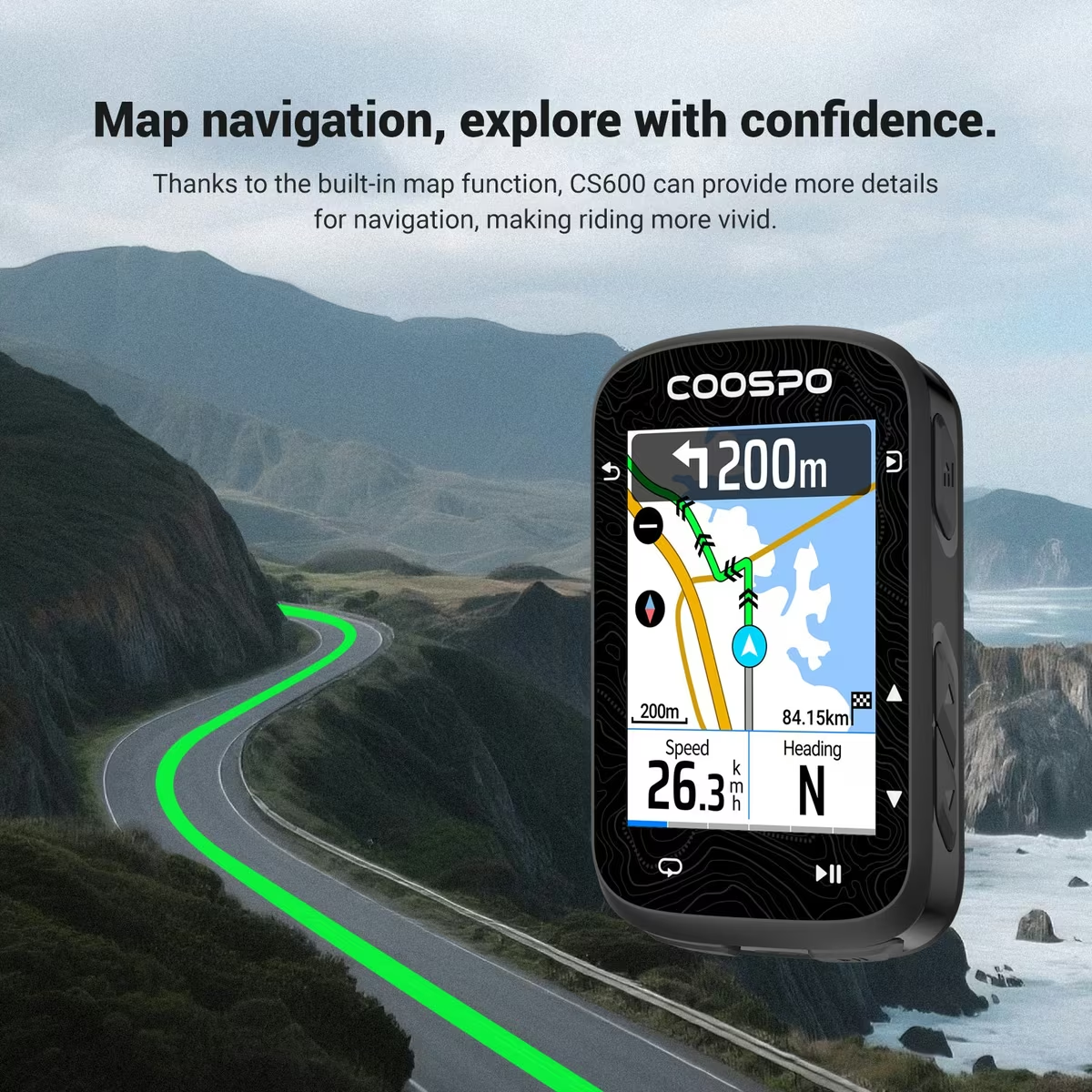
Navigation follows a GPX route. COOSPO’s product FAQ describes three ways to get one onto the unit: turn a previous ride into a route, import a GPX file from another app through CoospoRide, or copy it over USB into the Course folder. The firmware adds off-route alerts with a buzzer. COOSPO does not describe automatic rerouting, so the CS600 is best treated as a route follower. Plan the ride on a desktop or in an app, load it, and let the computer tell you when you leave the line.
Climb Planning shows climb information during the ride for climbs longer than 500 m with an average grade above 3%, according to the product page. On a hilly route, that is the feature that helps pace an effort instead of guessing how much of the hill remains.
Sensors over ANT+ and Bluetooth
The comparison table lists both ANT+ and Bluetooth, and the product page names speed, cadence, heart rate and power sensors, plus smart trainers, electronic shifting, radar tail lights, e-bikes and smart bike lights. The introduction article sums this up as up to nine sensor types.
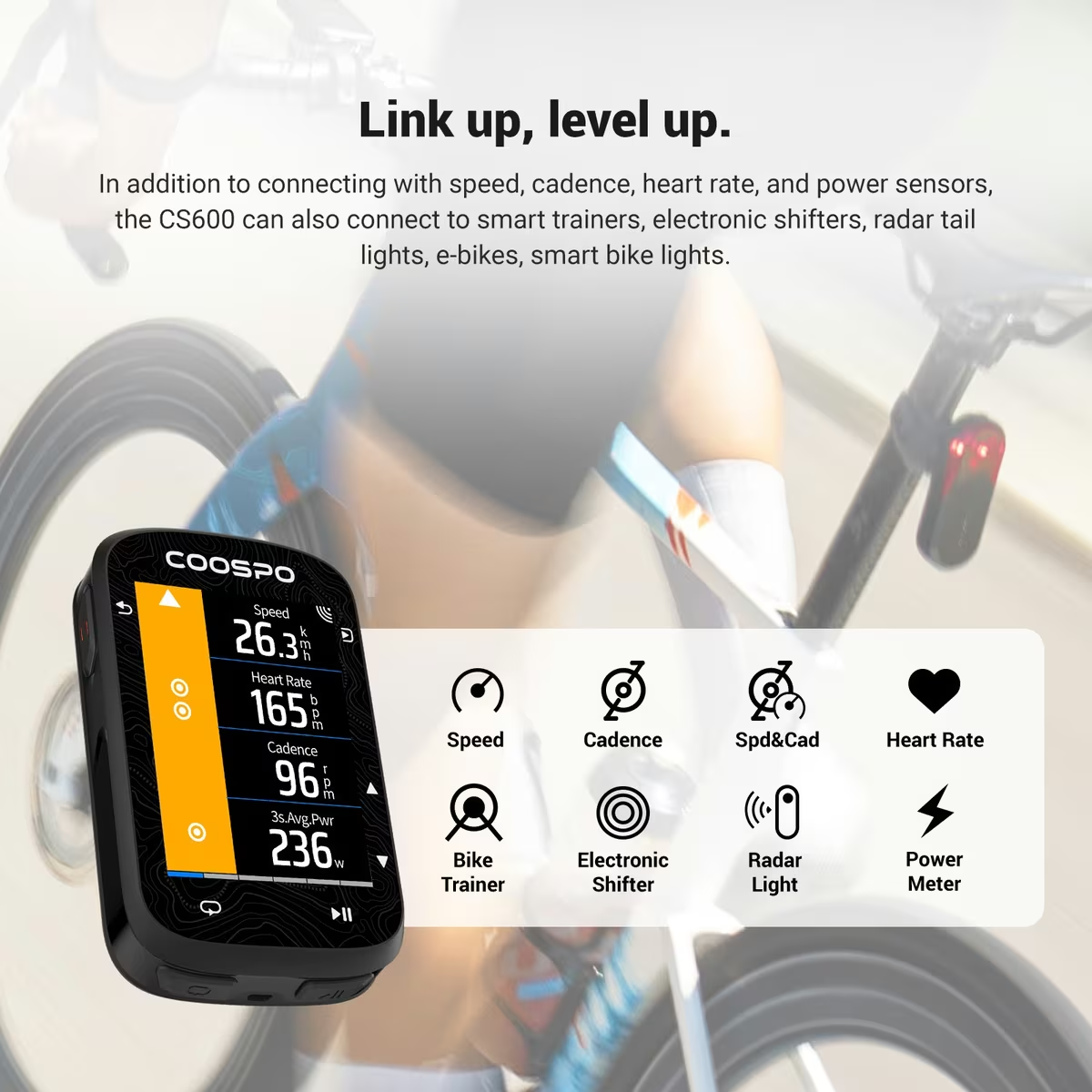
Dual protocol support matters for riders with a drawer of mixed hardware, because it removes the question of which radio a given sensor speaks. The one exception in COOSPO’s own table is radar, which is listed as ANT+ only. Anyone with a Bluetooth-only radar light should check before buying.
Indoor riding is covered by an indoor mode and the smart trainer compatibility listed in the table. COOSPO does not name the trainer control protocol, so buyers who want the head unit to set trainer resistance during a workout should confirm it for their trainer.
Training, the app and your data
COOSPO has put more training depth into the CS600 than the price suggests. The unit can estimate FTP on its own, import up to 100 structured workouts in the ANT+ standard workout format, and run goal modes such as covering a distance within a time limit or at a target average speed. TrainingPeaks workouts sync once the account is authorised in the COOSPO app.
CoospoRide is the companion app for iOS and Android. COOSPO’s app page lists ride review, GPX import, course creation and structured training, and says it connects with Strava, Komoot and TrainingPeaks for activity sync. The app can also turn a phone into a cycling computer on its own, which is handy for a second bike.
For a technical reader the storage format is the pleasant detail. Rides are stored as FIT or GPX files, and the unit’s storage is reachable over USB as well as through the app. Those are the formats training platforms and analysis scripts already read, so ride data is never locked inside one vendor’s software.
Related reading
The interface is available in English, German, Spanish, French, Italian, Dutch, Portuguese, Russian, Korean, Japanese and simplified Chinese, and COOSPO offers a one year global warranty.
Who should buy something else
Riders who depend on automatic rerouting after a wrong turn, or who want a receiver with a stated dual band specification for dense city riding, should look at premium units and accept their price. Anyone with a Bluetooth-only radar needs to confirm compatibility first. COOSPO describes the included mount only as a basic mount, so owners of an existing out-front mount should check the interface before assuming it fits. For everyone else, the CS600 covers the features most riders use every week.
Verdict
The COOSPO CS600 is an excellent bike computer at a price that makes the premium brands look expensive: $120.89 on COOSPO’s store when checked, against a regular $164.89. It gets runtime and positioning right, and its honest limits sit in what COOSPO does not claim. The CS600 did everything I asked of it, and it has earned a permanent place on my bars.
Why I recommend it
- A colour screen built around the battery. The transflective touchscreen uses ambient light and a light sensor manages the backlight, which is how a colour unit can be rated at 36 hours with GPS from a 1090 mAh cell.
- Five satellite systems. The u-blox receiver tracks GPS, GLONASS, Galileo, BeiDou and QZSS, with offline ephemeris for a quick start. Elevation comes from a barometric altimeter.
- Buttons for rain and gloves. Six physical buttons sit beside the 2.4 inch touchscreen, so wet weather and thick winter gloves do not force a precise tap on glass.
- The sensors you already own. ANT+ and Bluetooth cover up to nine sensor types, from power meters to smart trainers and electronic shifting.
- Nothing locked in. Offline maps load over USB, a firmware update added Mapsforge support, and rides are stored as FIT or GPX.
Why it may not be for you
- A route follower, not a router. Off-route alerts sound a buzzer, but COOSPO does not describe automatic rerouting.
- No stated dual band. COOSPO does not say whether the receiver is single or dual band, so it is not the unit to buy for rejecting reflected signals in cities and canyons.
- Radar over ANT+ only. COOSPO’s own table lists radar as ANT+ only. A Bluetooth-only radar light needs checking first.
- 36 hours is the favourable case. The figure is not broken down. The map on screen, several sensors, a radar and a night section will all pull a ride below it.
- Details left unstated. The included mount is described only as basic, and COOSPO does not name the protocol for setting trainer resistance.
For riders who follow planned routes, own a drawer of mixed ANT+ and Bluetooth sensors and ride long days, the CS600 covers the features used every week. Riders who depend on automatic rerouting after a wrong turn, or who want a stated dual band receiver for dense city riding, should look at premium units and accept their price.
Product images: COOSPO.
One email a month: new articles, reviews and the upcoming live webinar + free recording. No spam, unsubscribe anytime.