I find the Behringer U-PHORIA UMC22 interesting when the recording task is small and clearly defined. One microphone and an instrument can be a complete creative starting point. An interface does not need to look like a studio control room to give those sources a sensible route into a computer.
Quick verdict
I would shortlist it for the focused role described here.
Best for: One microphone, an instrument or that deliberately chosen pair of sources.
Main benefit: A planned microphone-and-instrument session gets a small physical interface with direct monitoring.
Biggest drawback: The two input paths are not two microphone preamps, and the complete current driver and headphone arrangement still needs planning.
Behringer U-PHORIA UMC22, one microphone/line and one instrument input
Amazon US · US
Check price and availability: Behringer U-PHORIA UMC22, one microphone/line and one instrument input at Amazon USAffiliate link. As an Amazon Associate I earn from qualifying purchases.
Reviewed version: Behringer U-PHORIA UMC22, one microphone/line and one instrument input
Compatibility: The exact UMC22, supported host and USB data connection, suitable microphone and instrument cables and documented phantom-power requirements. Do not transfer UM2 or UMC202HD specifications.
Review context: I assess source count, gain controls, direct versus software monitoring and a saved recording workflow without claiming measured noise or latency.
I would choose it after writing down what must be recorded at the same time. The UMC22 has two input paths, but that does not mean it has two equivalent microphone inputs. That distinction matters more to a successful purchase than a broad claim about how many channels appear in the name.
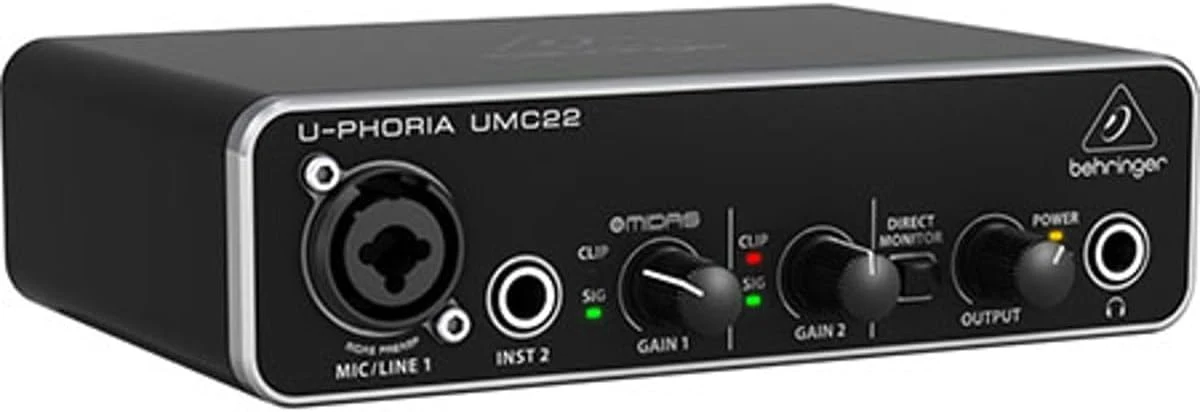
One microphone path and one instrument path
Product images: the verified retailer gallery and any original manufacturer illustration credited in the sources. These are not personal test photographs.
Related reading
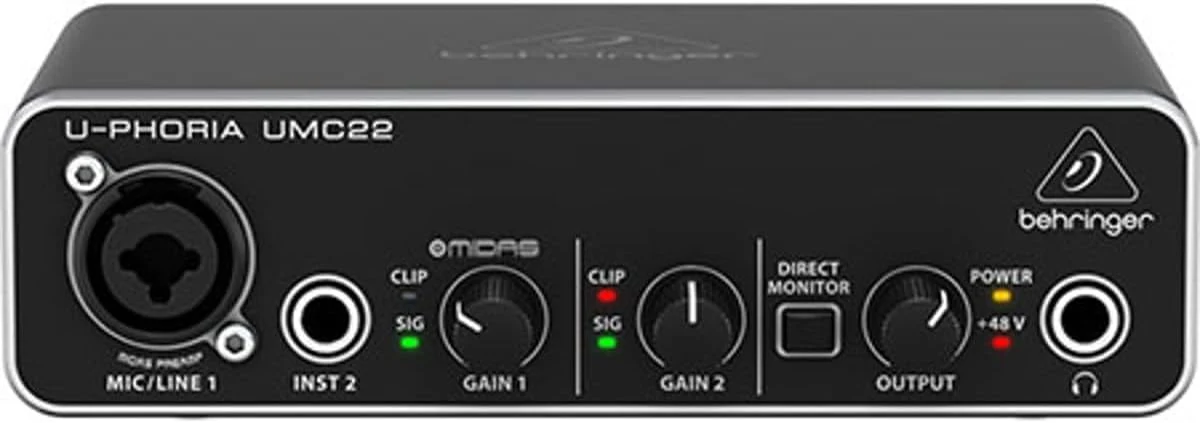
Behringer’s UMC22 information describes a combination microphone or line connector and a separate instrument input. The microphone path uses a Midas-designed preamp, with switchable phantom power available for suitable microphones. I would match each source to its documented connection requirements.
For a singer with one instrument, that arrangement has a clear purpose. For two people each using an XLR microphone, I would choose a different interface. An adapter does not automatically turn the instrument socket into another microphone preamp, and I would not build a guest-recording plan on that assumption.
I would also choose cables and microphone support as part of the purchase. The interface alone does not hold a microphone, connect every source or provide a comfortable headphone arrangement. A complete modest setup is more useful than a cheap central box surrounded by missing parts.
The controls should remain understandable
Separate input gain controls let the sources have their own recording levels. I would set them with the expected loud passages and watch the relevant indicators. The aim is a useful clean recording level, rather than turning every control as far as possible to make the waveform look impressive.
I would keep phantom-power decisions tied to the connected equipment’s instructions. Its presence is useful when a microphone requires it, but it is not a general sound-improvement switch. Understanding what the microphone actually needs is part of choosing an XLR recording system.
The exact model matters here. The UMC22 should not inherit converter, control or input claims from the UM2 or the UMC202HD. Similar names can make a range look interchangeable while hiding the very difference that decides whether a second microphone or another recording mode is possible.
Direct monitoring has a specific role
The UMC22 provides a Direct Monitor switch. That gives a route for hearing the input without relying on the computer’s processed return. I like the simplicity for a basic performance, provided the user understands which sound is being monitored.
Hearing the direct input is different from hearing every effect running in the recording application. I would decide whether the performer needs the dry source, the processed sound or a carefully configured combination. Turning on every monitoring route can make the result confusing instead of more responsive.
Related reading
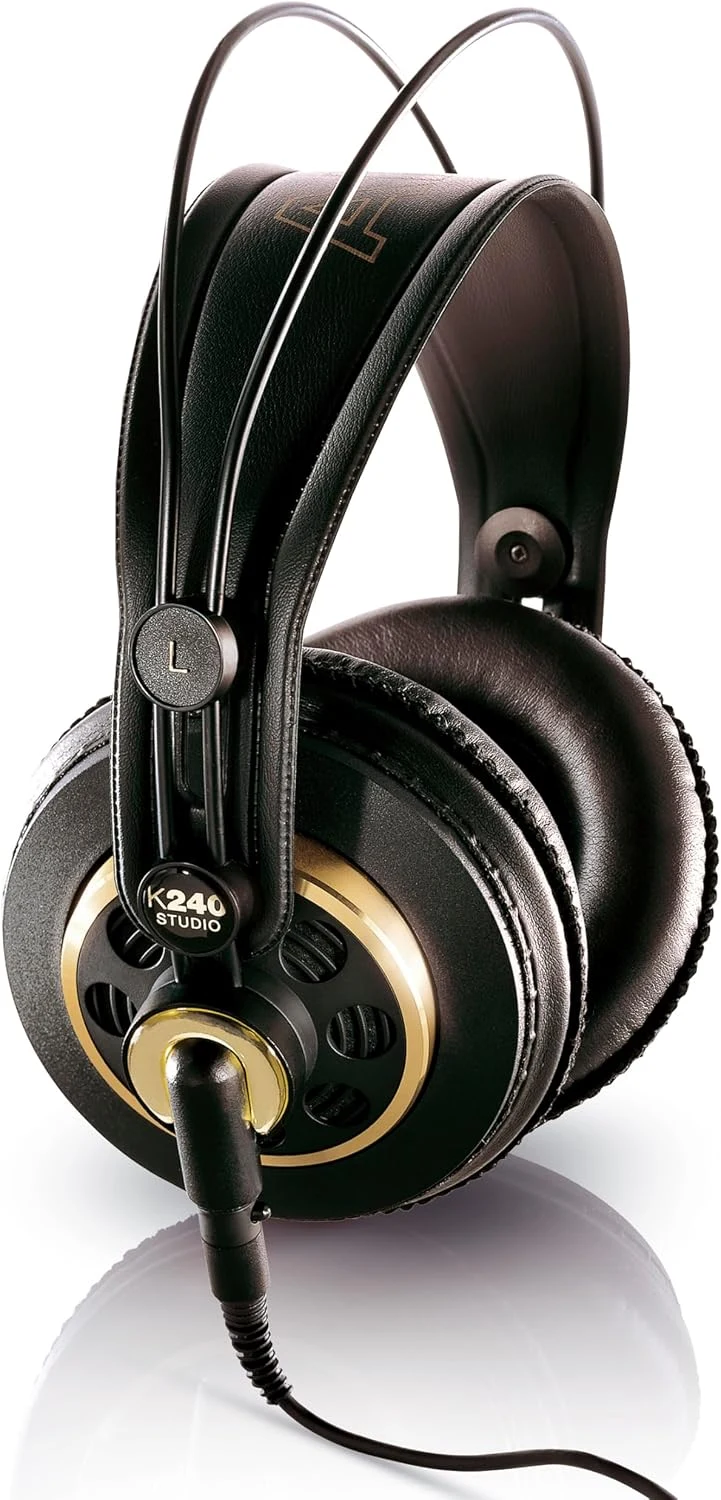
I would also check the headphone level and the backing track together. A singer needs a useful balance, not just proof that the microphone is audible. The practical question is whether the arrangement supports a comfortable performance through the whole intended passage.
The computer is part of the interface
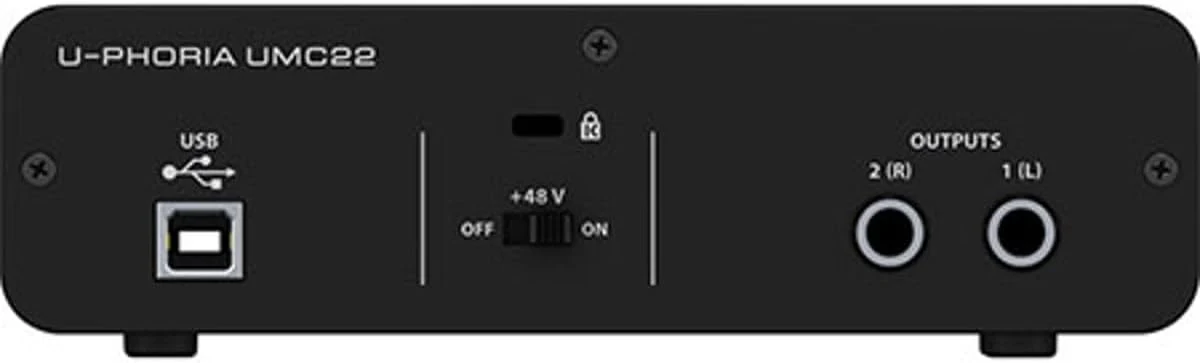
Behringer documents a USB-powered connection and a 48kHz recording role. I would use the exact current support and download guidance for the host computer. Older operating-system names in historical specifications do not establish every present-day driver arrangement.
The USB connector and cable need to carry data and supply the required connection. I would avoid treating a randomly selected charging lead or adapter chain as a finished studio plan. Once the interface is connected, the recording application still needs the intended input and output selected.
Before an important session, I would make a short recording, save it and reopen it. That simple route checks more of the actual workflow than listening to live monitoring alone. I would also confirm that a call application has not quietly retained the laptop microphone as its source.
Small sessions need a small honest scope
The appeal of the UMC22 is easier to see when the task stays within its controls. A single voice recording, an instrument part or a planned voice-and-instrument session can be straightforward. A panel discussion with individual headphone needs is a different system to design.
I would not attach a measured noise floor or a claim about difficult microphones to this review. Those conclusions need controlled evidence from the actual equipment. If a particular quiet source demands a lot from the preamp, I would investigate that precise combination before buying.
Monitor speakers are another planned output, not an automatic improvement to every room. I would choose suitable cables and listening levels, then keep a headphone route available when the space requires it. The interface should fit the working environment as well as the source count.
Related reading

The alternatives I would compare
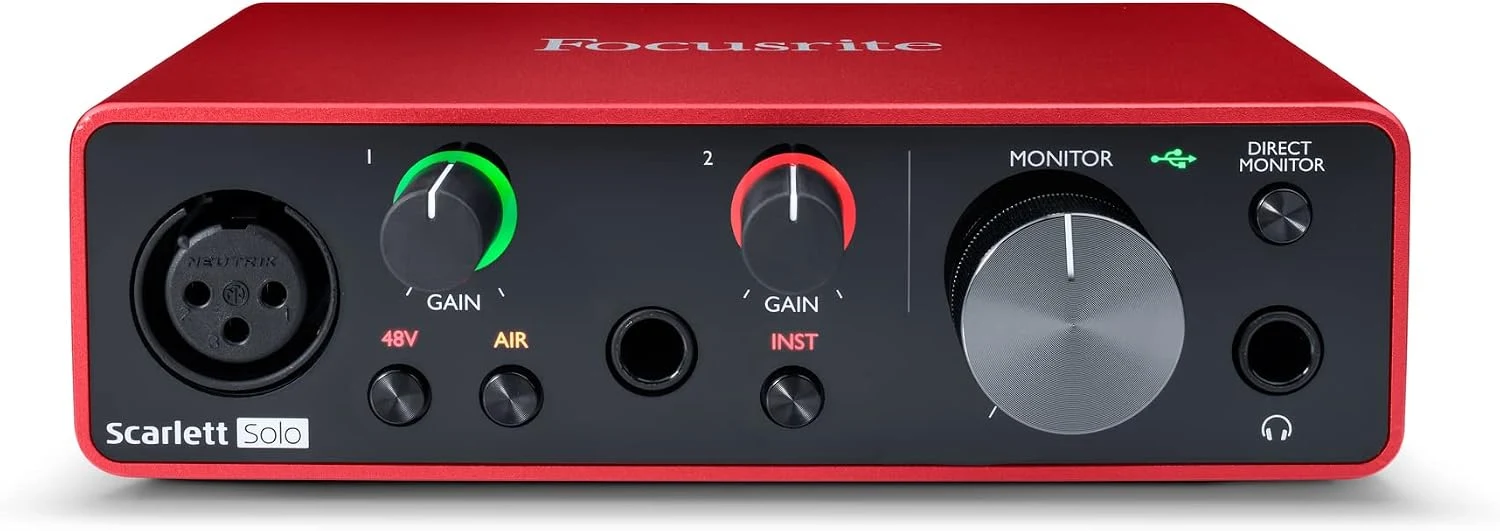
The Scarlett Solo third generation offers another one-microphone and instrument arrangement with its own controls and support requirements. I would compare the complete current package rather than expect the brand name alone to decide the result.
The Scarlett 2i2 third generation is a more relevant comparison when two microphone-capable inputs are necessary. A suitable USB microphone can be simpler still when one computer voice input is the entire job and there is no need for an XLR system.
My buying decision
I would shortlist the UMC22 for a modest recording plan that fits its actual inputs, monitoring and supported computer setup. I like the clear physical role of a small interface with ordinary controls. I would spend more when the missing capability has a name, especially a second microphone input, rather than discover that limitation halfway through a session.
What worked
A planned microphone-and-instrument session gets a small physical interface with direct monitoring.
What bothered me
The two input paths are not two microphone preamps, and the complete current driver and headphone arrangement still needs planning.
Who should not buy it
The two input paths are not two microphone preamps, and the complete current driver and headphone arrangement still needs planning.
Alternatives I would consider
Scarlett Solo third generation. I would compare its complete current one-microphone and instrument package. Read my Scarlett Solo third generation review.
Scarlett 2i2 third generation. I would choose two microphone-capable inputs when the task includes two XLR voices. Read my Scarlett 2i2 third generation review.
A suitable USB microphone. I would choose the simpler purchase when one computer voice input is the whole job.
Evidence and sources
Specifications are attributed to the linked documentation. Images: Amazon product gallery. These are not personal test photographs or measurements.
Features, compatibility and rated figures from the maker are manufacturer information. My opinions are identified in the review.
Conclusion
Worth considering within its exact input scope; pay for the required second microphone path before a two-person session.
Behringer U-PHORIA UMC22, one microphone/line and one instrument input
Amazon US · US
Check price and availability: Behringer U-PHORIA UMC22, one microphone/line and one instrument input at Amazon USAffiliate link. As an Amazon Associate I earn from qualifying purchases.
One email a week with practical Mac workflows, useful comparisons and honest tech recommendations.