A room can feel different from the temperature reported near the hallway thermostat. That is why I find a small climate sensor interesting. I would use the Aqara Temperature and Humidity Sensor to understand a particular room or corner, then decide whether a reminder or an automation is useful. The number is the beginning of that decision, not the whole answer.
Quick verdict
I would choose it to add room-level climate trends to an existing compatible Aqara system.
Best for: I would choose it to add room-level climate trends to an existing compatible Aqara system.
Main benefit: A small wireless sensor can report conditions where the room actually needs attention.
Biggest drawback: The hub requirement and placement sensitivity make it less simple than a standalone room display.
Aqara Temperature and Humidity Sensor
Amazon US · US
Check price and availability: Aqara Temperature and Humidity Sensor at Amazon USAffiliate link. As an Amazon Associate I earn from qualifying purchases.
Reviewed version: Aqara Zigbee Temperature and Humidity Sensor 1 Pack, Thermometer Hygrometer
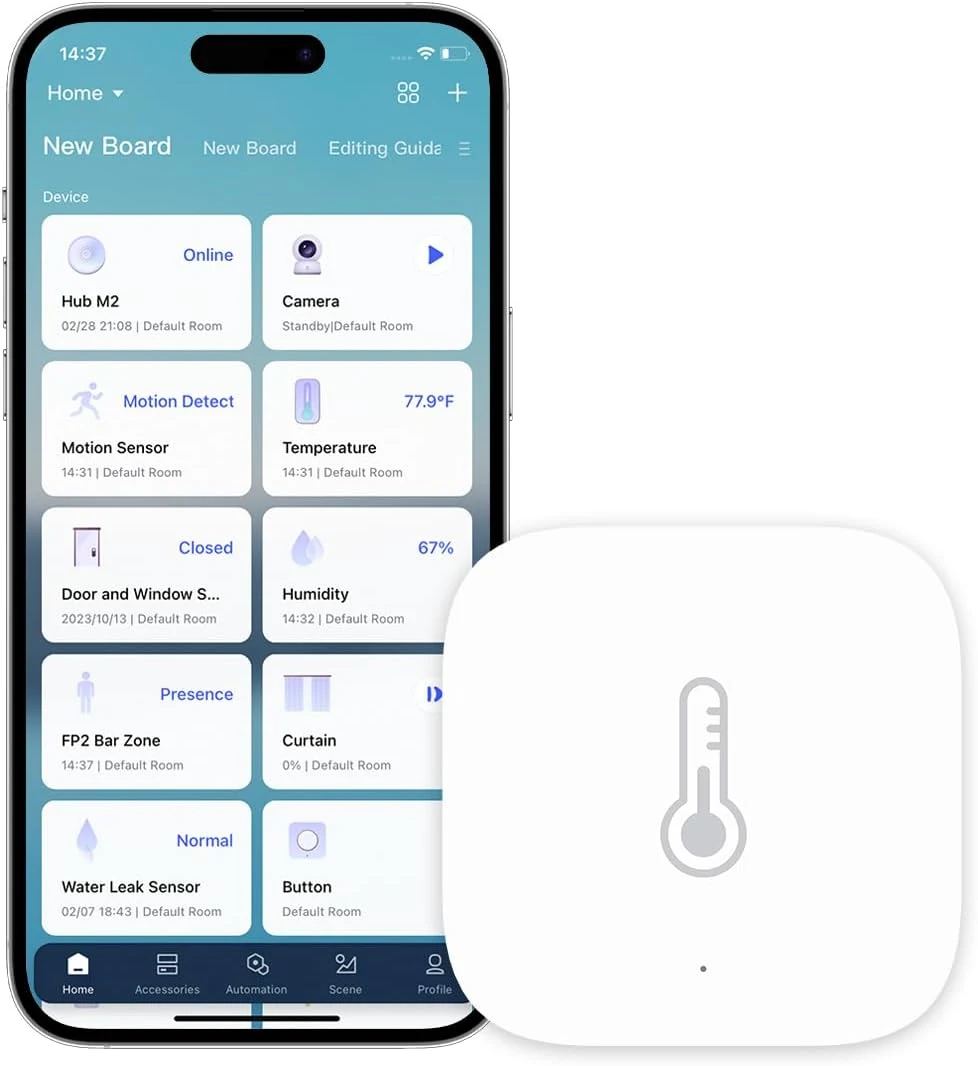
Compatibility: This is the original Aqara Zigbee temperature and humidity sensor. Aqara documents an Aqara hub for its supported ecosystem; do not assume direct Wi-Fi, Thread or standalone Apple Home pairing.
Review context: I assess room placement, climate trends, hub requirements and conservative notification rules.
I like the modest role of this product. It does not need to become another screen asking for attention. My recommendation is strongest for someone who already has a compatible Aqara hub and wants a clearer view of a room. Buying the sensor and hub only to replace an ordinary thermometer would need a more convincing reason.
First choose what the reading should represent
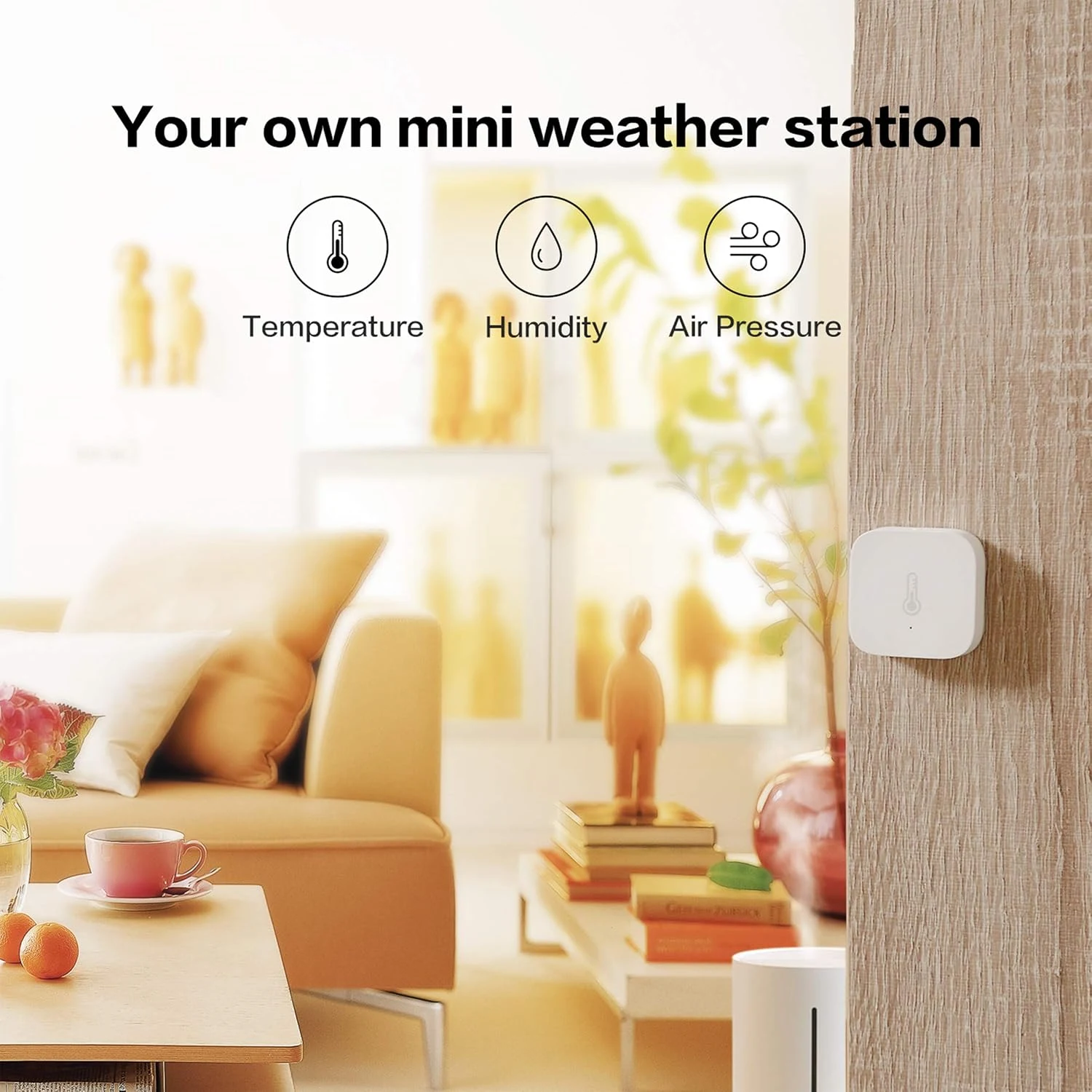
Aqara describes temperature, humidity and atmospheric pressure reporting. I would begin with a placement question: am I interested in the air around a desk, a cooler storage area or the general room? A sensor can only describe the conditions at its own location. Moving it changes the meaning of its history.
Related reading

I would avoid choosing a spot simply because it hides the device. Direct sun, a nearby radiator, an open window or heat from electronics can influence a reading. Those are useful locations only when they are the thing I want to understand. For an ordinary room trend, I would look for a representative position with enough air movement around it.
I would also give a newly placed sensor time to settle before building rules around it. A device just carried from another room may initially reflect that journey. The practical comparison would be repeated readings beside a trusted room instrument under stable conditions. I would not label a difference as a proven calibration error from a single glance.
A trend is often more useful than a perfect-looking number
The attraction for me is seeing what happens through the day. Does humidity rise after a shower? Does a closed room become noticeably different overnight? Those patterns can support a useful household decision even when I am not trying to run a measurement laboratory. I would look at the history before creating an alert that fires at every small change.
Aqara publishes accuracy specifications. I treat those as manufacturer information, rather than a result established by this review. Accuracy also does not tell me everything about reporting intervals, air movement or how an automation platform stores the values. I would check that the update behaviour is suitable for the job before expecting instant reaction to every change.
For ventilation, I would use thresholds with some breathing room between starting and stopping. A rule that reacts at one exact boundary can keep changing state as the value moves around it. A sensible delay and a separate return threshold make the result easier to live with. The goal is a helpful reminder or controlled action, rather than a dashboard that stays busy.
The hub is part of the product
The documented supported arrangement uses an Aqara hub. This sensor does not join a Wi-Fi network on its own. Apple Home support in Aqara’s information also depends on the hub path. I would confirm the exact regional hub and platform combination before ordering, especially if the household already mixes several smart-home brands.
Related reading

I would not transfer compatibility from another sensor that looks similar or uses a newer protocol. Aqara’s original Zigbee model is a particular product with a particular integration route. Someone planning Home Assistant should check their chosen integration separately; that is different from treating it as Aqara’s supported vendor setup.
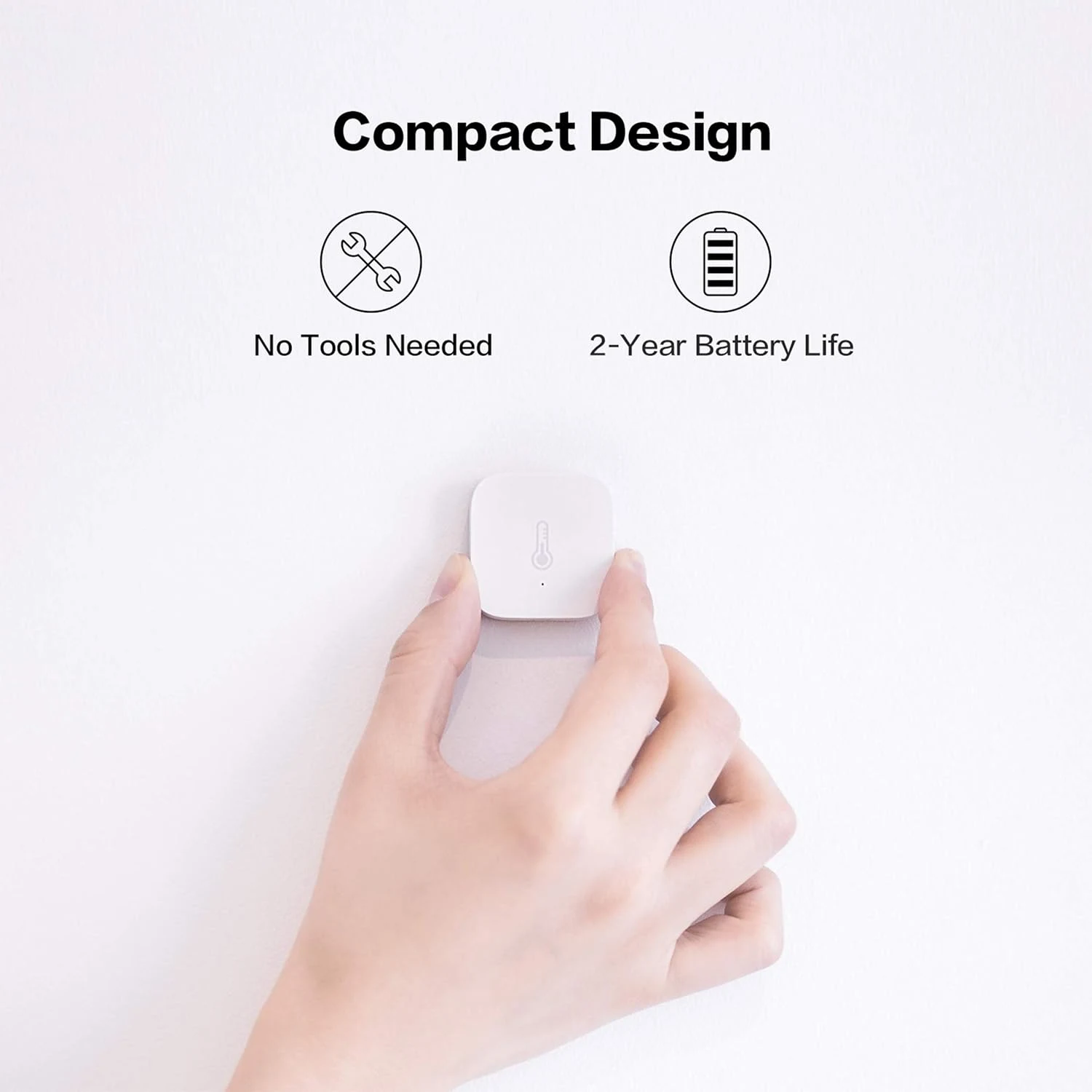
A practical initial installation would involve one sensor near its intended position, confirmation that its readings appear and a check of the notification path. I would do that before attaching several units permanently. Radio coverage and a convenient place to mount the sensor should be solved together, because the neatest location is not automatically the most useful one.
Batteries and notifications need an owner
Aqara gives a battery-life estimate, but I would plan around the actual installation rather than turn a maximum into a promised replacement date. Temperature, reporting behaviour and battery condition can change the routine. A low-battery notification is useful only if someone knows what to do when it appears.
I would label the sensor clearly in the app and record where it belongs. A name such as bedroom shelf is more useful than a default device number when an alert arrives months later. If the device stops reporting, the history should not be mistaken for a current condition. That is particularly important if the value is used to trigger another appliance.
I would keep the automation’s consequences proportionate. A message suggesting ventilation is a different risk from automatically controlling equipment that could cause damage when a sensor goes offline. This is a household monitoring accessory, not a reason to remove the ordinary controls or the manufacturer’s protections from a humidifier, heater or other appliance.
Related reading

The alternative can be much simpler
For a single room where I only want to glance at a number, I would choose a standalone display. I would compare Aqara’s W100 when a local screen and its different controls are part of the requirement. The original small sensor makes most sense when a hidden wireless reading and an existing hub already solve the right problem.
My view is positive when the purchase begins with that clear job. I would check the exact sensor, hub compatibility and current local offer, then spend more thought on placement than on a headline accuracy claim. A well-chosen room trend can be genuinely useful; making the sensor responsible for a task it was never meant to guarantee would weaken the whole setup.
The product images come from the selected listing and identified manufacturer materials. My assessment uses the linked product information and the buying decisions explained here. Specifications are manufacturer or retailer claims; the conclusions are my own editorial judgement.
What worked
A small wireless sensor can report conditions where the room actually needs attention.
What bothered me
The hub requirement and placement sensitivity make it less simple than a standalone room display.
Who should not buy it
Someone needing a calibrated reference instrument, a visible on-device display or a safety-critical control.
Alternatives I would consider
A standalone thermometer with a screen. I would choose one when I only need to read the room without a hub or automation.
Aqara Climate Sensor W100. I would compare it when a local display and a different control role matter. Read my Aqara Climate Sensor W100 review.
Evidence and sources
The linked product documentation and exact retailer listing support the product details. Images: Amazon product gallery. These are not personal test photographs or measurements.
Features, compatibility and rated figures from the maker are manufacturer information. My opinions are identified in the review.
Conclusion
Most appealing when I already have the right hub and a clear use for its readings.
Aqara Temperature and Humidity Sensor
Amazon US · US
Check price and availability: Aqara Temperature and Humidity Sensor at Amazon USAffiliate link. As an Amazon Associate I earn from qualifying purchases.
One email a week with practical Mac workflows, useful comparisons and honest tech recommendations.