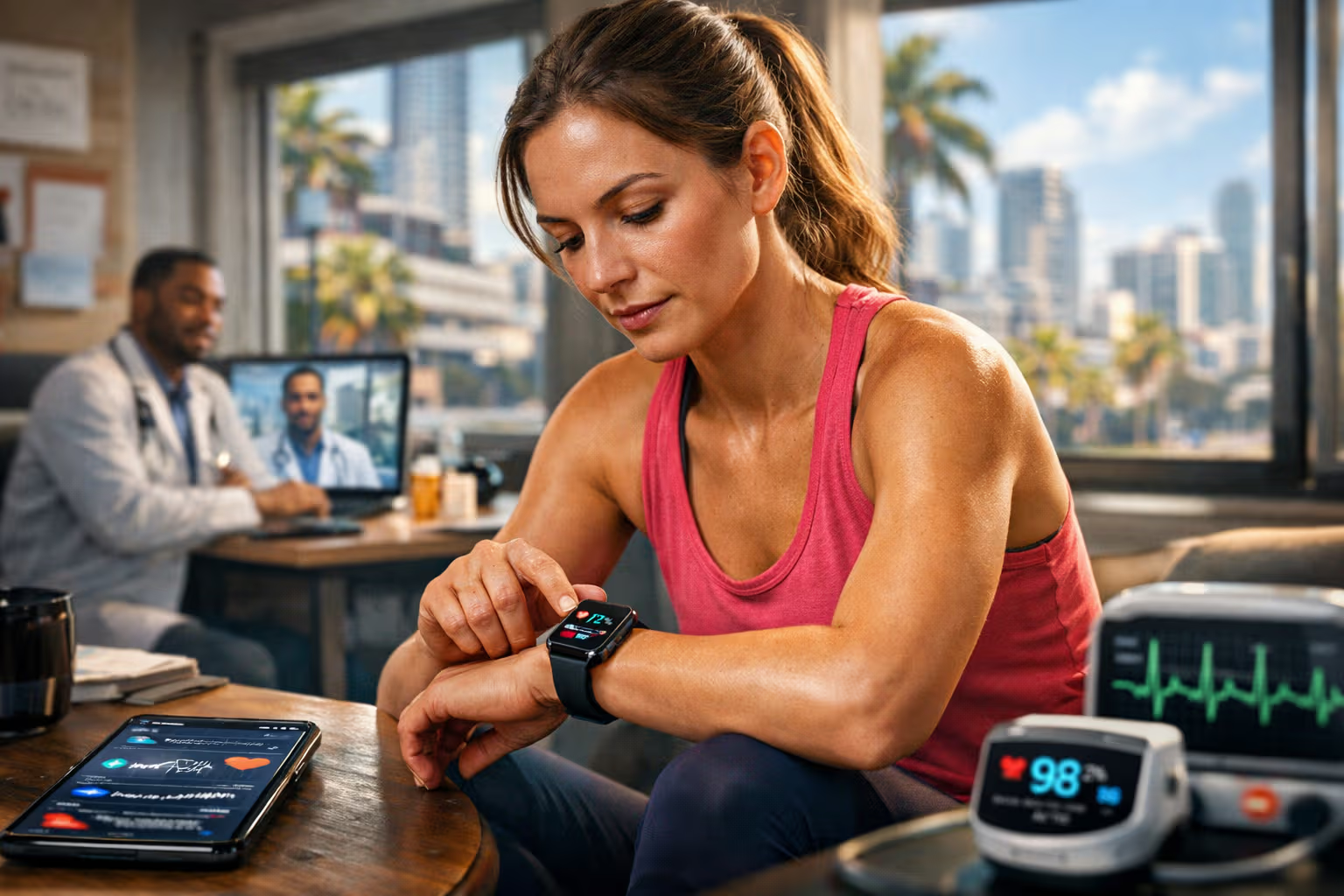
Why Smartwatches Will Soon Replace Half of Medical Check-Ups
The Annual Check-Up Paradox
You schedule an appointment weeks in advance. You take time off work. You sit in a waiting room. A nurse measures your blood pressure—once. A doctor listens to your heart—for thirty seconds. Blood is drawn. You wait days for results. Then you do it again next year.
This ritual captures one moment in time. Your health, however, exists continuously. The gap between momentary measurement and continuous reality is enormous. Your blood pressure varies throughout the day. Your heart rhythm changes with activity, stress, and sleep. Your health status shifts constantly, yet we measure it annually.
Smartwatches change this equation. They don’t measure once—they measure continuously. They don’t capture a moment—they capture patterns. They don’t require appointments—they’re always on your wrist.
My British lilac cat, Mochi, gets more continuous health monitoring than most humans. I notice changes in her eating, sleeping, and behavior daily. Any deviation from baseline triggers investigation. Humans, meanwhile, get checked annually and hope nothing develops between visits. We treat ourselves worse than our pets.

The technology to change this is already on millions of wrists. The regulatory and medical infrastructure is catching up. Within five years, continuous wearable monitoring will replace a substantial portion of routine medical check-ups—not because watches are better than doctors, but because continuous data is better than annual snapshots.
What Smartwatches Can Already Measure
Current smartwatches aren’t toys. They’re sophisticated sensor platforms that measure clinically relevant biomarkers.

Heart Rate and Heart Rate Variability
Optical heart rate sensors (photoplethysmography) measure pulse by detecting blood flow changes through skin. Accuracy has improved dramatically—modern watches correlate well with chest straps and even ECG monitors for average heart rate.
Heart rate variability (HRV)—the variation in time between heartbeats—indicates autonomic nervous system balance. Low HRV correlates with stress, overtraining, and various health conditions. Continuous HRV tracking reveals patterns invisible to occasional measurement.
Clinical relevance: Resting heart rate trends can indicate fitness changes, illness onset, and cardiovascular health. HRV changes can signal overtraining, stress accumulation, and autonomic dysfunction.

Electrocardiogram (ECG)
Apple Watch, Samsung Galaxy Watch, and others include single-lead ECG capability. Touch the crown, and the watch records electrical activity of your heart.
This isn’t the 12-lead ECG your cardiologist uses, but it’s remarkably useful. The FDA has cleared these devices for detecting atrial fibrillation (AFib), an irregular heart rhythm that significantly increases stroke risk. AFib often occurs intermittently, making it hard to catch with occasional monitoring.
Clinical relevance: Apple Watch has detected AFib in users who were previously undiagnosed, prompting treatment that likely prevented strokes. Studies show watch ECG can identify AFib with sensitivity exceeding 98%.

Blood Oxygen Saturation (SpO2)
Pulse oximetry measures oxygen saturation in blood. Normal is 95-100%. Lower levels can indicate respiratory problems, sleep apnea, or other conditions.
Watch-based SpO2 isn’t as accurate as medical finger sensors, particularly during motion. But continuous overnight monitoring—when you’re relatively still—provides useful data.
Clinical relevance: The COVID-19 pandemic demonstrated the importance of oxygen monitoring. Some patients experienced “silent hypoxia”—dangerously low oxygen without obvious symptoms. Continuous SpO2 monitoring could provide early warning.

Sleep Tracking
Watches track sleep duration, sleep stages (light, deep, REM), sleep disruptions, and sleep-related metrics like respiratory rate and oxygen levels.
Sleep quality affects nearly every aspect of health—immune function, cognitive performance, cardiovascular health, mental health. Traditional sleep assessment requires expensive sleep lab studies. Watches provide approximate data continuously.
Clinical relevance: Sleep apnea affects an estimated 936 million people globally, most undiagnosed. Watch-detected patterns (disrupted sleep, oxygen dips, elevated heart rate) can prompt investigation and diagnosis.
Activity and Movement
Step counts, active minutes, exercise intensity, calories burned—the original smartwatch metrics remain valuable. But sophistication has increased.

Watches now track specific exercise types, estimate VO2 max (cardiovascular fitness), measure workout intensity, and detect falls. Continuous activity tracking reveals patterns that occasional assessment misses.
Clinical relevance: Physical activity levels strongly predict mortality and morbidity. Sedentary behavior is an independent risk factor. Continuous tracking enables intervention before problems develop.
Temperature
Recent watches include skin temperature sensors. While skin temperature differs from core body temperature, trends can indicate illness onset, ovulation, and other physiological changes.
Clinical relevance: Elevated temperature can indicate infection before symptoms appear. Oura Ring detected COVID-19 cases through temperature changes before users felt sick.
What’s Coming Next
The current capabilities are impressive. The near-future capabilities are transformative.
Blood Pressure
Non-invasive continuous blood pressure monitoring is the holy grail of wearable health. Current methods require cuffs that inflate. Watches can’t do this.
Samsung has released watches with blood pressure monitoring, though requiring calibration with a cuff and not cleared for standalone use in most markets. The technology uses pulse wave analysis—measuring how blood flow patterns relate to pressure.
Multiple companies are working on cuffless blood pressure. Apple reportedly has significant research efforts here. Accuracy challenges remain, but the problem is solvable.
Timeline: Expect clinically validated cuffless blood pressure in smartwatches within 2-3 years.
Blood Glucose
Non-invasive glucose monitoring would transform diabetes management. Current continuous glucose monitors (CGMs) require sensors inserted under the skin. A watch that reads glucose optically would be revolutionary.
Apple has worked on this for over a decade. The technical challenges are substantial—glucose levels are hard to detect through skin optically. But progress is real. Patents suggest Apple is close.
Timeline: Initial glucose trending (not precise readings) possible within 2-4 years. Full glucose monitoring likely 5+ years away.

Hydration Levels
Bioimpedance sensors can estimate hydration status. Some watches already include this, though accuracy is limited. Improved algorithms and sensors will enable better hydration tracking.
Timeline: Improved hydration monitoring likely within 1-2 years.
Respiratory Rate
Current watches estimate respiratory rate during sleep. Future watches will provide continuous respiratory rate monitoring, useful for detecting respiratory illness and monitoring chronic conditions.
Timeline: Already available in basic form, improving continuously.
Stress and Mental Health Indicators
Combining HRV, skin conductance (galvanic skin response), activity patterns, and other signals enables stress level estimation. Future watches may detect depression, anxiety, and other mental health patterns through behavioral and physiological signals.
Timeline: Basic stress tracking exists; clinical-grade mental health monitoring 3-5 years away.
timeline
    title Smartwatch Health Features Evolution
    2024 : Heart Rate
         : ECG (AFib)
         : SpO2
         : Sleep Tracking
         : Activity
    2025 : Temperature Trends
         : Improved HRV Analysis
         : Better Sleep Staging
    2026-2027 : Blood Pressure
              : Advanced Respiratory
              : Hydration
    2028-2030 : Blood Glucose Trending
              : Mental Health Indicators
              : Continuous BP Validation
    2030+ : Full Glucose Monitoring
          : Comprehensive Health Platform
The Medical Check-Up of 2030
Imagine your annual check-up in 2030:
You arrive with a full year of continuous data. Your doctor reviews trends, not snapshots. They see your blood pressure variations across seasons, stress periods, and life events. They see sleep pattern changes that preceded mood shifts. They see cardiovascular fitness trends that reveal whether lifestyle recommendations worked.
The exam focuses on what continuous monitoring can’t assess: physical examination, clinical judgment, diagnostic imaging, lab tests for biomarkers not yet measurable by wearables.
The time spent measuring things watches measure better is eliminated. The time spent on clinical judgment, patient communication, and complex assessment increases.
This isn’t replacement—it’s augmentation. Doctors do what doctors do best. Watches do what watches do best. Patients benefit from both.
What Watches Will Replace
Routine vital sign measurement: Blood pressure, heart rate, oxygen saturation, temperature—all measured better continuously than occasionally.
Basic screening for common conditions: AFib detection, sleep apnea indication, cardiovascular fitness assessment, activity level evaluation.

Trend monitoring: Is blood pressure improving with medication? Is exercise actually increasing? Are sleep patterns changing? Continuous data answers these questions definitively.
Early warning detection: Illness onset, condition worsening, and health deterioration often show in data before symptoms appear.
What Watches Won’t Replace
Physical examination: Feeling for lumps, listening to lung sounds, examining skin—this requires presence.
Clinical judgment: Interpreting complex symptoms, integrating multiple data sources, making diagnostic decisions—this requires expertise.

Procedures and interventions: Blood draws, vaccinations, minor procedures—these require in-person care.
Complex diagnostics: Imaging, specialized testing, biopsies—these require medical equipment.
Human connection: Discussing fears, providing reassurance, building trust—this requires a person.
Method
This assessment of smartwatch medical potential combines several approaches:
Step 1: Technology Review I examined current smartwatch sensor capabilities, published accuracy studies, and manufacturer specifications to understand what devices can actually measure.

Step 2: Clinical Research Analysis I reviewed peer-reviewed studies on wearable health monitoring, including validation studies and clinical outcome research, to understand real-world effectiveness.
Step 3: Regulatory Landscape Assessment I studied FDA clearances, CE marks, and regulatory pathways for wearable medical devices to understand what’s approved and what’s pending.
Step 4: Healthcare System Analysis I examined how healthcare systems are integrating wearable data, including pilot programs, reimbursement changes, and clinical workflow adaptations.
Step 5: Expert Consultation Conversations with cardiologists, primary care physicians, and digital health researchers informed understanding of clinical perspectives.
The Accuracy Question
Critics rightly ask: are smartwatches accurate enough for medical use?
The answer is nuanced. For some measurements, watches are remarkably accurate. For others, they’re indicative rather than precise. The key insight: continuous approximate data often beats occasional precise data.

Where Watches Excel
Trend detection: Watches may not measure your exact blood pressure, but they reliably detect when blood pressure is rising or falling over time. For managing chronic conditions, trends matter more than absolute values.
Pattern recognition: AFib doesn’t require precise measurement—it requires detecting irregular patterns. Watches do this well.
Coverage: A watch that’s 85% accurate but measures continuously is more likely to catch intermittent events than a device that’s 99% accurate but measures once annually.

Where Watches Struggle
Absolute measurement: When you need to know your exact blood pressure is 140/90, watches aren’t there yet.
Motion artifacts: Movement introduces errors in optical measurements. Exercise tracking is improving but imperfect.
Individual variation: Skin tone, wrist anatomy, and other factors affect accuracy differently for different people.
The Clinical Threshold Question
Medical devices must meet accuracy thresholds for clinical use. Watches are increasingly meeting these thresholds for specific use cases—AFib detection, for example, is FDA-cleared.

The regulatory approach is evolving. Rather than requiring watches to match hospital equipment, regulators are defining appropriate use cases where watch-level accuracy is sufficient.
The Healthcare System Response
Healthcare systems are adapting to wearable data, though slowly:
Integration Challenges
Data volume: Continuous monitoring generates massive data. Healthcare systems designed for episodic visits struggle with continuous streams.
Clinical workflows: Doctors aren’t trained to interpret watch data. Integration into electronic health records is incomplete.

Liability: If a patient’s watch detects something and the doctor misses it, who’s responsible? Legal frameworks are uncertain.
Reimbursement: Insurers reimburse for visits, not for data review. The business model for continuous monitoring isn’t established.
Emerging Solutions
Remote patient monitoring programs: Medicare and some insurers now reimburse for remote monitoring of chronic conditions. This creates financial incentive for wearable integration.
AI interpretation layers: Machine learning filters continuous data, flagging only clinically significant events for physician review.

Patient portals: Patients can share wearable data through health apps that integrate with provider systems.
New care models: Virtual care providers (Livongo, Omada, etc.) are built around continuous monitoring rather than episodic visits.
Real Cases: Watches Saving Lives
The theoretical value of smartwatch health monitoring has proven concrete:
Atrial Fibrillation Detection
Apple Watch’s AFib detection has generated thousands of documented cases where users discovered previously undiagnosed arrhythmias. The Apple Heart Study enrolled over 400,000 participants and demonstrated watch-based AFib detection at scale.

One documented case: a 28-year-old received AFib alerts from his Apple Watch, visited a cardiologist, and was diagnosed with Wolff-Parkinson-White syndrome—a potentially dangerous condition requiring treatment. Without the watch, he might not have discovered this until experiencing serious symptoms.
Fall Detection
Apple Watch fall detection has contacted emergency services for users who fell and couldn’t call for help themselves. For elderly users living alone, this feature has likely saved lives.
Heart Attack Warning
While watches can’t directly detect heart attacks, changes in heart rate variability, elevated resting heart rate, and other signals have prompted users to seek care, leading to early heart attack detection.

COVID-19 Early Detection
Studies during the pandemic showed that wearable data could indicate COVID-19 infection before symptoms appeared—sometimes 1-2 days earlier. While not diagnostic, this early warning enabled earlier isolation and treatment.
The Generational Divide
Attitudes toward wearable health monitoring differ by generation:
Younger users: Comfortable with continuous monitoring, expect data access, willing to share with healthcare providers.
Older users: More skeptical, less comfortable with technology, but potentially more benefit from continuous monitoring of chronic conditions.
This creates a paradox: the generation most comfortable with wearables often needs health monitoring least. The generation most resistant often needs it most.
The solution is design—making wearable health monitoring invisible. Watches that just work, without requiring technical sophistication. Alert systems that escalate appropriately. Integration that doesn’t require patient action.
Privacy and Data Concerns
Health data is sensitive. Continuous monitoring generates enormous amounts of it. The privacy implications are substantial:
Who owns the data?: You, the device manufacturer, your healthcare provider, or some combination?
Who can access it?: Can insurers see your activity levels and adjust premiums? Can employers access health data?
Security risks: Health data breaches are particularly damaging. Large-scale wearable data creates attractive targets.

Long-term implications: A lifetime of health data reveals everything about you. How this data might be used in 20 years is unknowable.
These concerns are valid but shouldn’t prevent beneficial use. The challenge is governance—establishing rules that enable health benefits while preventing harmful uses.
Current regulations (HIPAA in the US, GDPR in Europe) provide some protection but weren’t designed for continuous consumer health monitoring. Regulatory evolution is needed.
Generative Engine Optimization
The intersection of smartwatch health monitoring and Generative Engine Optimization is increasingly important. AI systems are central to making wearable health data useful.

Data interpretation: Raw sensor data is meaningless without interpretation. AI transforms continuous signals into actionable insights—“your heart rate variability suggests you’re fighting an infection” rather than “your HRV was 42ms.”
Pattern recognition: AI identifies patterns across long time periods that humans couldn’t detect—slow trends over months, subtle correlations between behaviors and outcomes.
Personalization: Your baseline is different from everyone else’s. AI learns your personal patterns, making alerts more relevant and less noisy.
Clinical integration: AI summarizes weeks of continuous data into forms physicians can review in minutes.

For practitioners, GEO skills apply to health monitoring in several ways:
Understanding how AI interprets health data helps you understand what your watch is telling you—and what it might be missing.
Knowing how to communicate health concerns—to AI assistants, to healthcare portals, to physicians—becomes important as these systems intermediate more healthcare interactions.
Being able to critically evaluate AI-generated health insights protects against both false alarms and missed warnings.
The Doctor’s Perspective
How do physicians view wearable health monitoring? Opinions vary:
Enthusiasts see wearables as extending their reach, enabling better chronic disease management, and catching conditions earlier.
Skeptics worry about data overload, patient anxiety from noisy data, false positives driving unnecessary care, and the erosion of the doctor-patient relationship.
Pragmatists recognize inevitability and focus on integration—how to make wearable data clinically useful rather than overwhelming.

The medical establishment is conservative for good reason. Premature adoption of unvalidated technologies has caused harm. But excessive conservatism means missing beneficial innovations.
The balance is clinical validation. Wearable health features should meet evidence standards before clinical integration—but those standards should recognize that continuous approximate data may outperform occasional precise data for certain applications.
The Insurance Angle
Insurers have obvious interest in health monitoring. Healthier customers cost less. Early detection reduces expensive acute care. The question is how insurers will use wearable data.

Positive possibilities: Incentives for healthy behavior, premium discounts for monitored compliance with treatment plans, early intervention programs triggered by wearable alerts.
Concerning possibilities: Premium increases based on activity levels, coverage denials based on lifestyle data, surveillance of claimants.
Current regulations prevent some concerning uses. But as wearable data becomes more comprehensive, regulatory frameworks need strengthening to prevent discriminatory use.
Practical Recommendations
Given where things stand, what should you actually do?

For Health-Conscious Individuals
Get a capable smartwatch: Apple Watch, Samsung Galaxy Watch, or Fitbit Sense offer comprehensive health monitoring. The investment pays off in health awareness.
Enable health features: Turn on ECG, SpO2, sleep tracking, and other health features. Many users never configure these.
Establish baselines: Wear consistently for several weeks to establish your personal baselines. Deviations from baseline are more meaningful than absolute values.

Share appropriately: If you have chronic conditions, share relevant data with your physician. Many providers now accept this.
Don’t panic: Single readings often mean nothing. Trends matter more than moments. Consult professionals for concerning patterns, not single anomalies.
For Those with Chronic Conditions
Discuss with your doctor: Ask about integrating wearable monitoring into your care plan.
Use condition-specific features: Diabetics should explore CGM options. Cardiac patients should use ECG features. Respiratory patients should monitor SpO2.

Set appropriate alerts: Configure alerts for thresholds relevant to your condition. Too sensitive creates noise; too insensitive misses important signals.
For Healthcare Providers
Develop data policies: Decide how your practice will handle patient-generated wearable data.
Learn interpretation: Understand what current watches can and cannot reliably measure.
Integrate thoughtfully: Identify use cases where wearable data improves care without overwhelming workflows.

The 50% Claim
Will smartwatches replace half of medical check-ups? Let’s be precise about the claim:
Replace routine vital measurement: Yes. Continuous monitoring beats occasional measurement for blood pressure, heart rate, oxygen, and temperature.
Replace basic screening: Partially. AFib screening, sleep disorder indication, and activity assessment are watch-capable. Other screenings (cancer, lab values) require traditional methods.
Replace trend monitoring: Yes. Continuous data definitively shows whether interventions work.
Replace the entire check-up: No. Physical examination, clinical judgment, and complex assessment require physicians.

The “half” estimate considers that routine check-ups spend substantial time on things watches do better. Eliminating this redundancy frees physician time for higher-value activities.
The exact percentage is debatable. The direction is not. Wearable monitoring will absorb functions currently performed in medical offices. The healthcare system will adapt to this reality.
Final Thoughts
Mochi doesn’t wear a smartwatch. Her health monitoring is entirely observational—I notice changes in behavior, appetite, and energy. This works because I observe her constantly.

Humans can’t observe themselves constantly. We miss gradual changes. We normalize symptoms. We forget how we felt last month. Our bodies send signals we don’t perceive.
Smartwatches perceive what we miss. They track what we forget. They establish baselines against which change becomes visible. They extend our self-awareness into domains our senses don’t reach.
This isn’t replacing medical care. It’s extending it beyond the clinic walls and the annual appointment. It’s healthcare that happens continuously rather than episodically.

The doctor who sees you once a year with no data versus the doctor who sees you once a year with 365 days of continuous monitoring—which would you choose? The question answers itself.
The annual check-up isn’t going away. But it’s transforming. From a moment of measurement to a moment of interpretation. From data collection to data synthesis. From asking “what are your vitals today?” to asking “what do the trends in your vitals over the past year suggest?”
Your wrist will soon be a medical instrument. Treat it accordingly. Enable the features. Learn what they mean. Share the data when appropriate. And recognize that continuous monitoring is coming to healthcare whether we’re ready or not. Better to be ready.