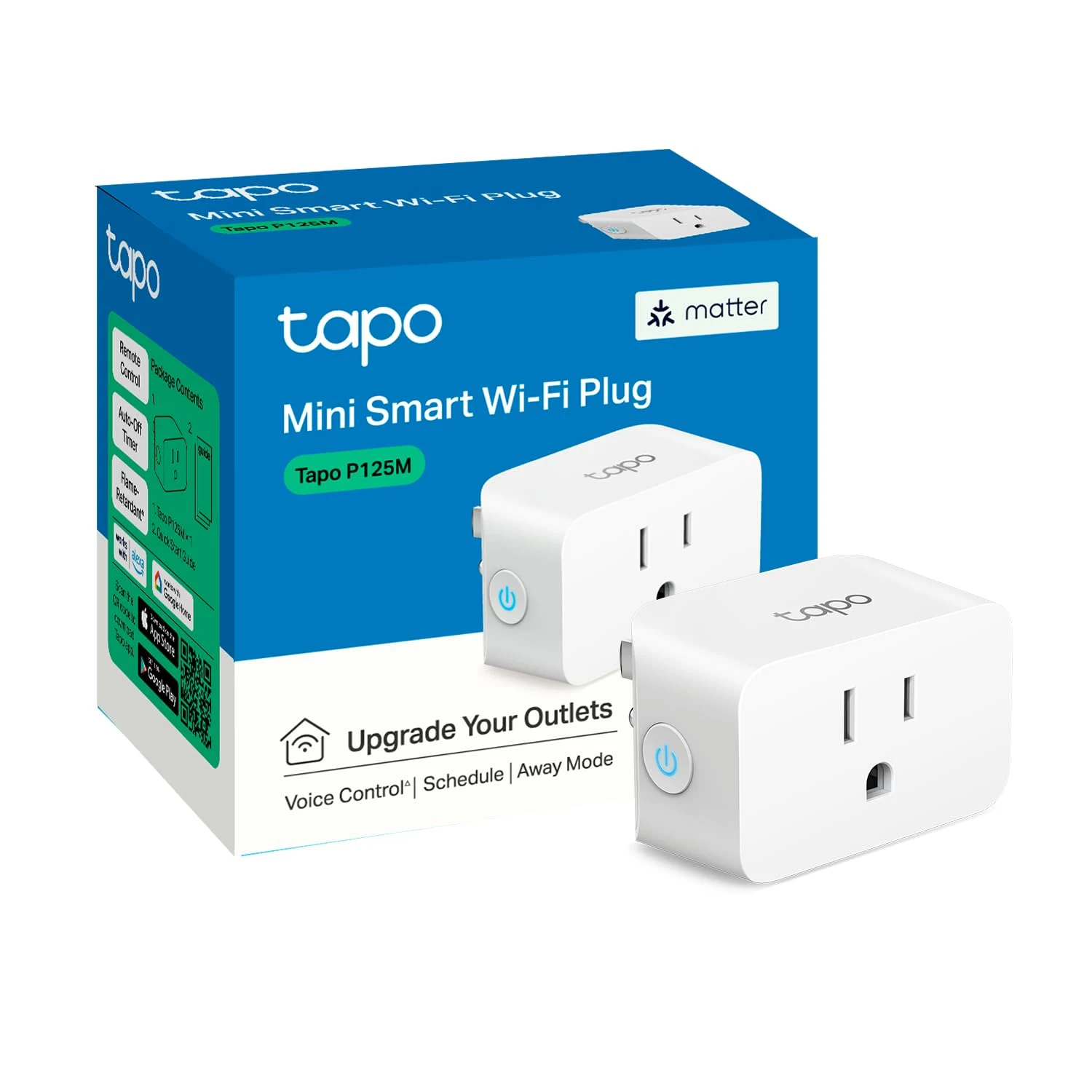
Matter is interesting to me when it makes an ordinary device easier to place in the home system I already use. The Tapo P125M has a clear role: switching a suitable appliance on and off through a supported platform. I like that focused use of a shared standard, provided the physical plug and electrical rating fit before the app setup begins.
Quick verdict
I would choose it for a compatible US household that wants a simple Matter on/off plug.
Best for: I would choose it for a compatible US household that wants a simple Matter on/off plug.
Main benefit: Matter offers a clearer supported route into several home platforms for a suitable ordinary load.
Biggest drawback: The US electrical version and platform-controller requirements still apply despite the broad Matter compatibility.
Tapo P125M Matter Smart Plug
Amazon US · US
Check price and availability: Tapo P125M Matter Smart Plug at Amazon USAffiliate link. As an Amazon Associate I earn from qualifying purchases.
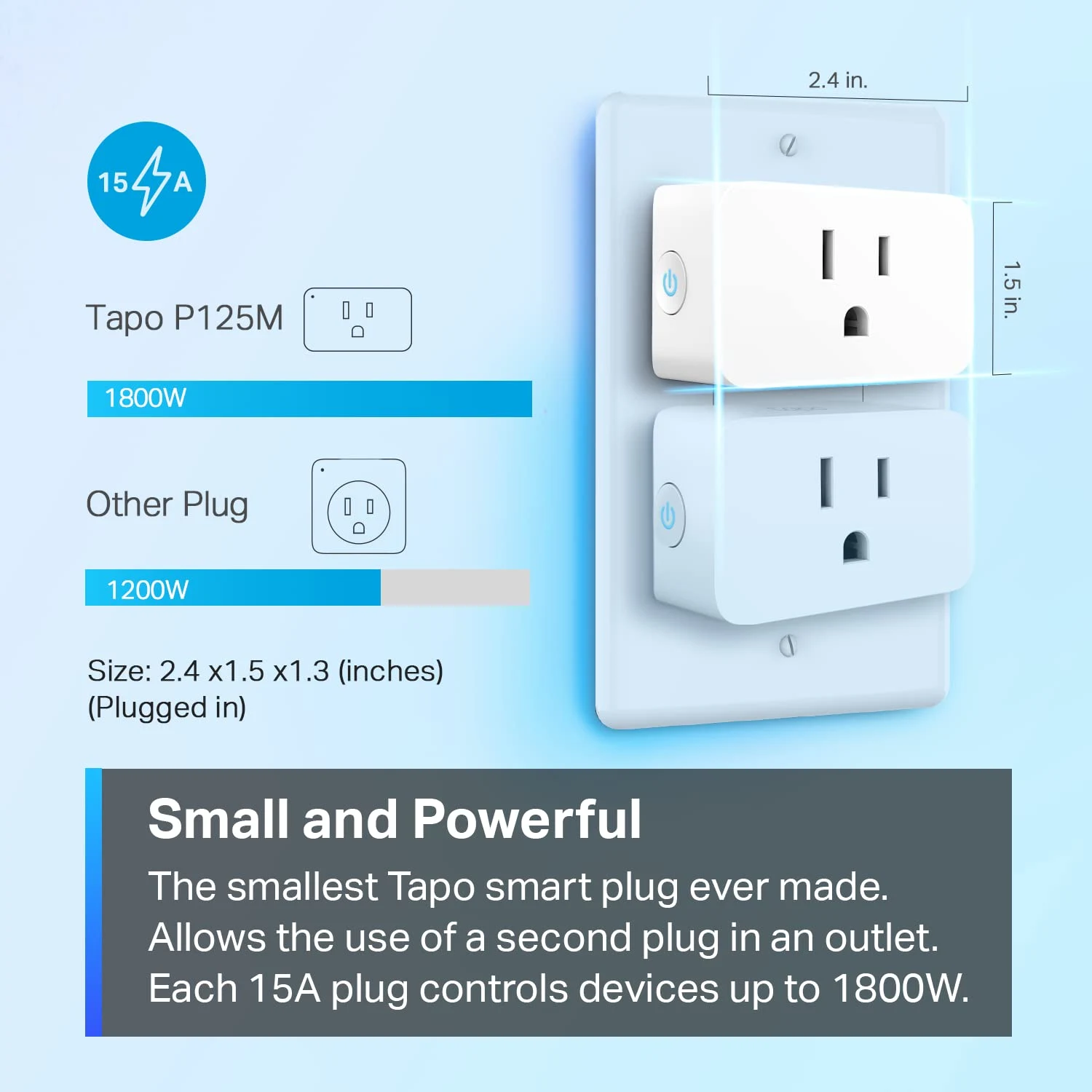
Reviewed version: Tapo Matter Compatible Smart Plug P125M, 15A/1800W Max
Compatibility: US P125M, 100–125V regional plug, compatible 2.4GHz Wi-Fi and a suitable Matter controller for the chosen platform. Matter over Wi-Fi is not Thread.
Review context: I assess US appliance switching, Matter onboarding, platform sharing and behaviour when parts of the network are unavailable.
This review follows the US P125M listing. I would not recommend adapting it into a Czech 230V installation simply because an international store can ship it. My positive assessment is for a compatible US household and a suitable load. The Matter logo helps with a supported control path; it does not make regional electrical hardware universal.
The socket is the first compatibility layer
TP-Link’s US datasheet specifies the electrical range and different load conditions for this model. I would compare those with the appliance and local supply. A travel adapter changes a connector shape, not the voltage rating or the appliance’s behaviour after power is restored.
Related reading

I would start with an appropriate ordinary lamp or another appliance approved for this kind of switching. A device with an electronic button may remain off after receiving power, so a smart plug may not provide the intended remote action. That should be established before buying rather than discovered after the schedule has been configured.
I would also keep the plug within reach. Physical control is useful when the phone is elsewhere or a network is being restarted. A compact product can still fit awkwardly beside a large power adapter, so the actual outlet arrangement deserves a look. The best smart accessory makes the ordinary socket more useful rather than harder to operate.
Matter and Wi-Fi have different jobs
The P125M is a Wi-Fi device with Matter support. I would not treat it as a Thread accessory or assume that owning a Thread border router answers every setup question. The network connection and the platform’s Matter controller are separate parts of a working installation.
For Apple Home, Google Home, Alexa or another supported platform, I would follow that platform’s current requirements. The phone used to add a device is not necessarily the only component required for continuing automations or remote access. I would establish the complete path before choosing the plug for a household routine.
I would keep the pairing code safely available after installation. It can become useful when resetting or moving the device between supported arrangements. I would not publish it in an article photograph or leave it as the only piece of information on discarded packaging. A small recovery habit can make a later platform change much easier.
Shared control does not mean identical features
Matter can provide a supported route into several platforms, but I would check what each platform actually exposes. A simple on/off function is a clearer expectation than assuming every vendor-specific setting appears everywhere. The Tapo app and another home platform can offer different views of the same accessory.
Related reading

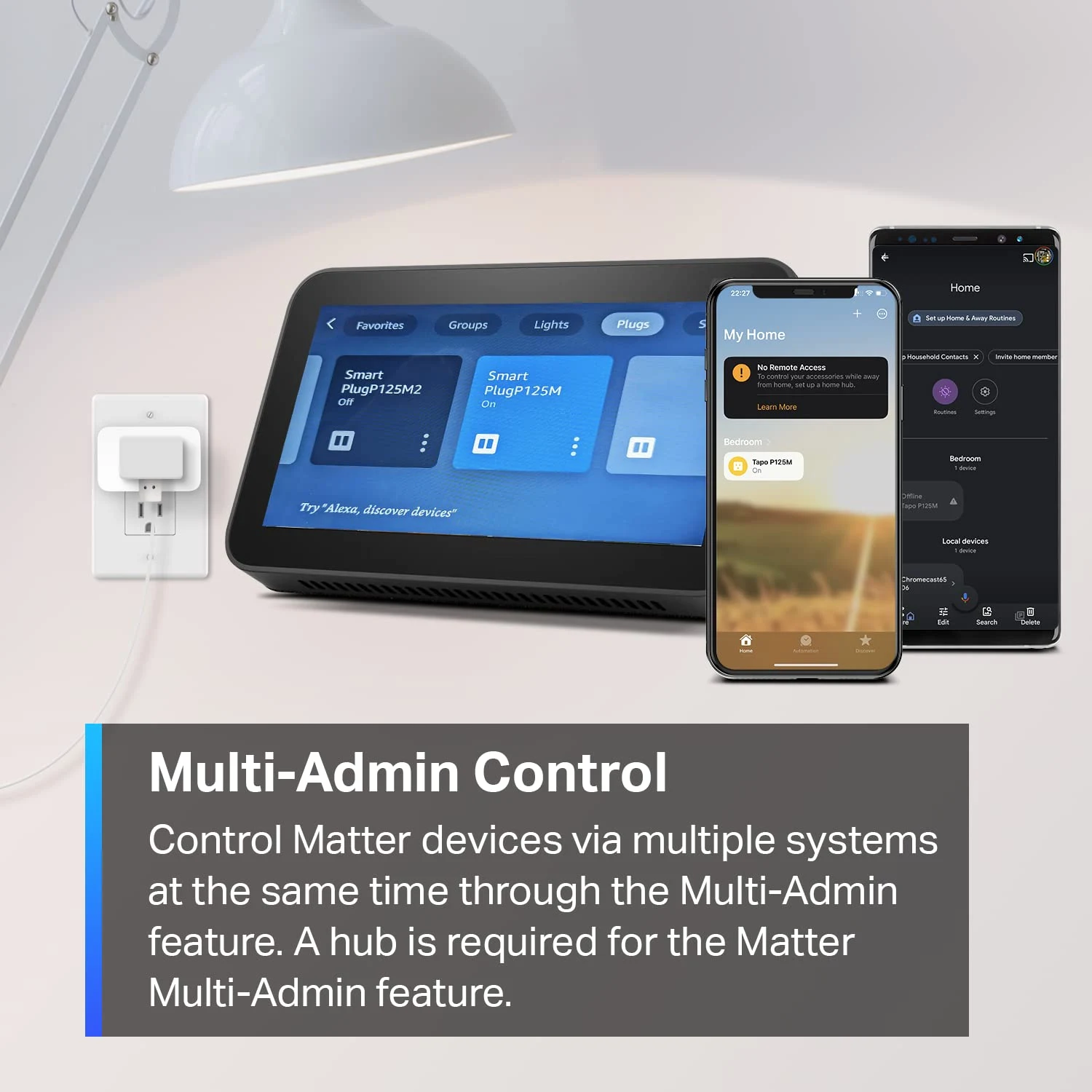
I would also decide who owns the schedules. If two apps both contain a rule for the same lamp, the result can become confusing even when the hardware works correctly. A clear primary place for automation makes the home easier to understand. Multiple control paths are useful only when they do not produce hidden competing instructions.
For platform sharing, I would use the documented Matter process rather than repeatedly reset a working device. The exact steps can change with software versions, so the current platform guidance is more useful than a memorised sequence from an old review. The point of the standard is supported interoperability, not avoiding every setup step forever.
Local control still needs a working local system
I appreciate the possibility of local control, but I would describe its dependencies accurately. Losing internet access is different from losing Wi-Fi, the router or the Matter controller. A device can have a local protocol path while a remote phone notification still depends on other services.
I would check the routine I care about under the relevant conditions, following safe ordinary use. A scheduled lamp and a voice command may involve different components. I would not infer complete offline behaviour from a single successful button press. The useful question is which actions remain available when a particular part of the system is unavailable.
The same care applies after a power interruption. I would check the documented power-on behaviour and whether the connected appliance ends up in the intended state. A smart plug should not be responsible for a critical unattended task simply because it is convenient to automate. The appliance’s own protections and instructions remain important.
Related reading

Where I would choose the P125M
I would compare the HS105 kit for a straightforward US Kasa routine without a Matter requirement. For Czech or European use, I would buy a correctly rated local Matter plug. The P125M makes sense when the regional hardware is already right and supported platform choice is the feature that improves the installation.
My overall view is positive for that focused role. I would check the exact model, electrical label and chosen controller requirements before ordering. The value is an ordinary appliance made easier to control through a clear supported system, rather than a belief that one protocol logo removes the practical details of power, networking and household recovery.
The product images come from the selected listing and identified manufacturer materials. My assessment uses the linked product information and the buying decisions explained here. Specifications are manufacturer or retailer claims; the conclusions are my own editorial judgement.
What worked
Matter offers a clearer supported route into several home platforms for a suitable ordinary load.
What bothered me
The US electrical version and platform-controller requirements still apply despite the broad Matter compatibility.
Who should not buy it
Someone with European 230V sockets or expecting Thread networking, energy monitoring or every Tapo feature in every platform.
Alternatives I would consider
Kasa HS105 KIT. I would compare it for a simple compatible US app-based switching job without a Matter requirement. Read my Kasa HS105 KIT review.
A locally rated Matter plug. I would choose the correct regional device for Czech or European use.
Evidence and sources
The linked product documentation and exact retailer listing support the product details. Images: Amazon product gallery. These are not personal test photographs or measurements.
Features, compatibility and rated figures from the maker are manufacturer information. My opinions are identified in the review.
Conclusion
Good value when the regional hardware and chosen ecosystem already fit the job.
Tapo P125M Matter Smart Plug
Amazon US · US
Check price and availability: Tapo P125M Matter Smart Plug at Amazon USAffiliate link. As an Amazon Associate I earn from qualifying purchases.
One email a week with practical Mac workflows, useful comparisons and honest tech recommendations.