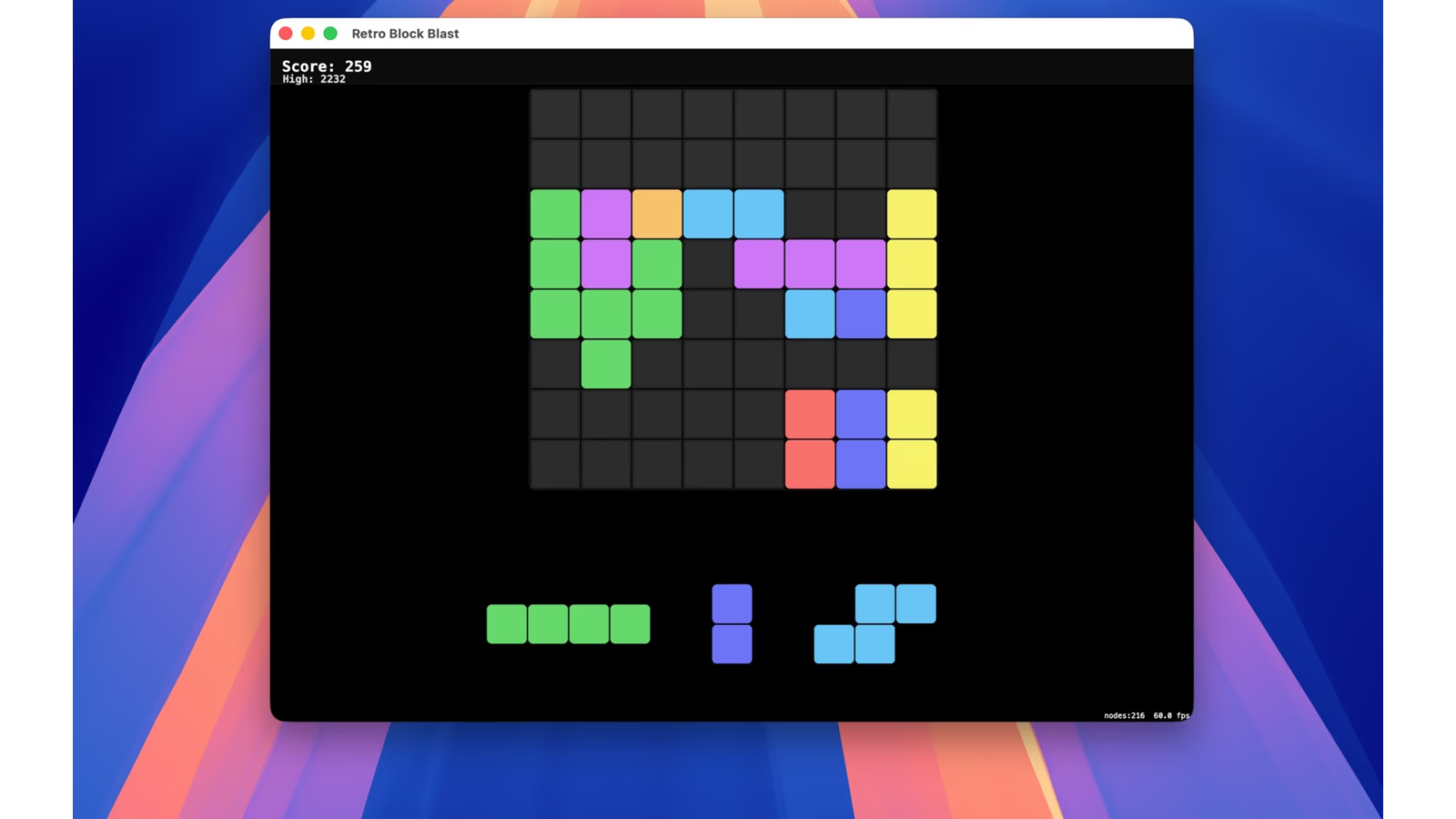
Creator promotion. I created this app. This is an introduction to my own work, not an independent product review.
View Silent Block Blast on the App Store Hero image: Jakub Jirák · App Store.
An empty space can be the most valuable part of a puzzle board. It gives the next shape somewhere to go and keeps more than one decision available. Silent Block Blast is built around that kind of attention: look at the pieces, read the gaps and choose what the board should become.
This is my Mac puzzle, introduced here as part of my own app collection. The real App Store screenshots show the grid, available shapes and score. They give a direct view of the compact game behind the name.
The appeal is a small problem that changes as you act. A shape that fits now can make a later placement awkward. A less obvious position can preserve room that becomes useful a moment later. The board rewards looking beyond the nearest gap.
Read the spaces as shapes of their own
It is natural to focus on the coloured piece waiting to be placed. Also look at the outline of the empty area. Is it wide, narrow, open at the side or broken into small pockets? Thinking about the gap as a shape makes the relationship easier to see.
The useful question is not only whether a piece fits. It is what kind of space remains afterwards. A placement can fill an attractive gap while leaving several awkward fragments. Another can keep a larger area available for a future piece.
Related reading
For a first session, pause before each placement long enough to describe its effect. You do not need a complicated plan. A simple intention, such as keeping a broad area open, can make the next decision more understandable than placing the first piece that appears to fit.
Compare the available pieces before committing
The actual screenshots show several shapes waiting below the board. Look at the group before deciding which one deserves the first useful space. A convenient placement for one piece may occupy the only obvious area for another.
Try comparing at least two possible orders. What happens if the most awkward piece is considered first? What happens if an easy piece is used to prepare a better space? These are general puzzle questions, not a claim that there is one order that always produces the best result.
The purpose is to avoid treating each shape as an isolated problem. The available pieces and the board form one decision. A little attention to their relationship can make a crowded position easier to read without requiring a long calculation.
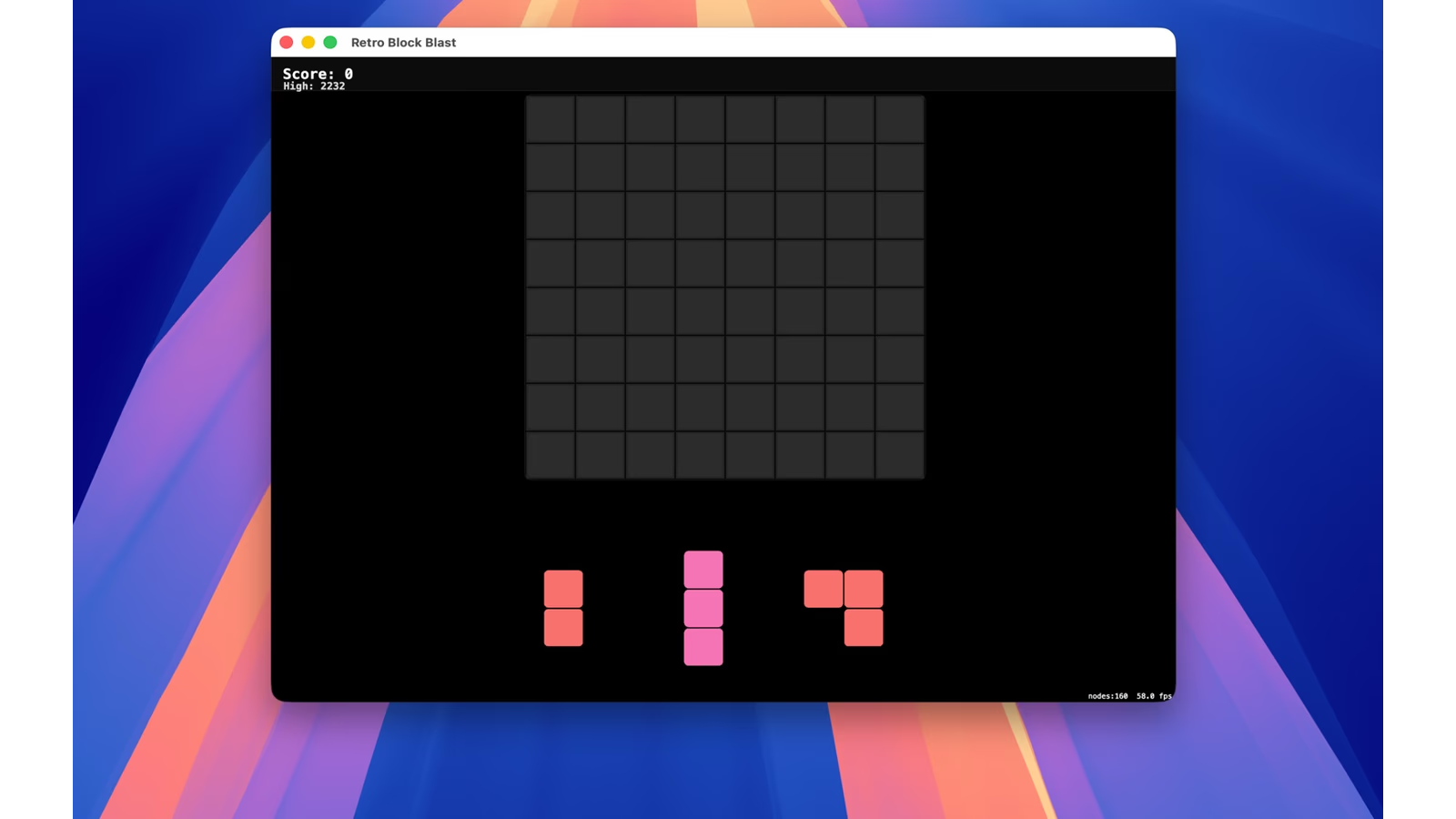
Actual App Store screenshot by Jakub Jirák. Image source.
Orientation changes what a familiar shape needs
The published description includes pieces with randomly changing orientations. That means recognition alone is not enough. A shape you have seen before may ask for a differently arranged gap when it appears turned another way.
Read the piece as it is currently presented. Notice its longest part, any corner and any area it leaves open. Then compare those features with the actual spaces on the board. This keeps attention on the current puzzle rather than a remembered version of the shape.
The feature is also a reason to avoid building the whole plan around one narrowly defined opening. A flexible area can serve several possibilities. A gap that fits only a particular orientation may be useful, but it asks for more confidence about what comes next.
A broad opening gives you options
Large connected spaces are easy to overlook because they appear to be doing nothing. In fact, they hold possibilities. Several shapes may fit there, while a collection of tiny pockets can be much harder to use even when the total empty area looks similar.
This is a useful way to think about the board without relying on an exact hidden scoring rule. Compare the quality of the remaining space, not only its amount. A connected area can make the next decision simpler because it leaves more arrangements possible.
That does not mean refusing every placement that divides a space. Sometimes a specific opportunity is worth taking. The aim is to recognise the trade-off and choose it deliberately, rather than discovering afterwards that the board has become difficult to use.
Related reading
Do not spend the easiest space automatically
A broad clear area often feels like the obvious place for a small piece. Before using it, check whether the same piece can fit somewhere less flexible. Saving the versatile area may leave more room for an awkward shape later.
Think of the board as a set of different kinds of space. Some areas can serve many pieces. Others have one especially useful role. A good placement can use a specific area for a specific reason while keeping the more flexible part available.
This is a suggested strategy to explore, not a guaranteed route to a record. Part of the enjoyment is seeing when a habit helps and when the board asks for a different choice. The game remains interesting because a simple rule does not remove the need to observe.
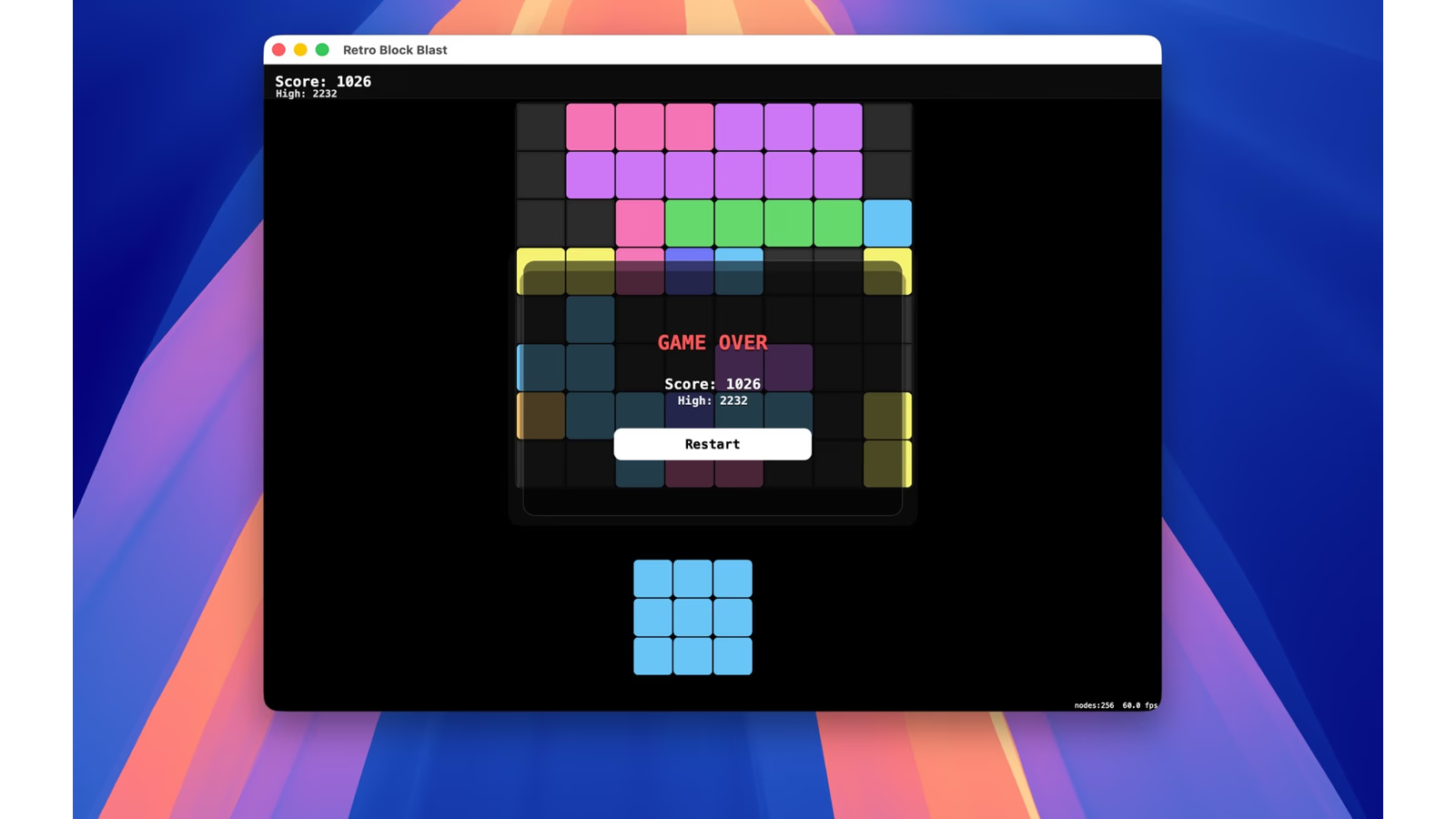
Actual App Store screenshot by Jakub Jirák. Image source.
A crowded board asks for a slower look
When the grid becomes busy, the obvious gaps can hide smaller possibilities. Scan the board in a consistent direction and compare the available shapes with the spaces that remain. A little order in the search can make a difficult position feel less chaotic.
Try not to let the score decide the next move before the geometry has been read. The immediate reward is only part of the position. Keeping a useful continuation can matter more to the session than taking the first attractive placement.
There will still be attempts that end. The next useful step is to identify one placement that made the board harder to use. That gives the following session an idea to test. It is more informative than deciding that every difficult position was caused by luck.
Let one attempt teach one thing
A small puzzle is a good place for a small experiment. You might try leaving one broad area open, checking the awkward piece first or looking at the final shape of a gap before placing anything. Choose one idea and see how it changes the session.
Do not replace the plan after every disappointing move. Give the habit enough use to understand when it helps. If it repeatedly creates a different problem, change it with that evidence in mind. The aim is a more readable board, not loyalty to a strategy for its own sake.
An improvement can be visible without producing a new best score. Perhaps the board stays flexible for longer or a previously awkward shape becomes easier to place. Those are useful signs that the decision process is becoming more deliberate.
The score gives the next visit a reference
The published presentation includes score and best-score information. That gives a later attempt a number to compare with an earlier one. For players who enjoy chasing a personal result, it provides a clear reason to revisit a familiar kind of board.
Use that reference in a way that keeps the game enjoyable. A lower score does not erase a useful idea discovered during the attempt. A record can be satisfying, but understanding why a placement worked can make the next session interesting too.
Related reading

This introduction does not promise an online leaderboard, multiplayer feature or a particular score. It presents the puzzle shown in the current listing. The App Store page is the place to check the live release and Mac requirements.
A small session can have a clear ending
Before opening the game, decide what kind of break you want. One attempt may be enough. A few attempts with one idea to explore may suit a longer pause. A defined stopping point helps a compact puzzle fit the time available.
When you stop, leave with one observation worth remembering. It might be a shape that repeatedly caused trouble or a gap that turned out to be more useful than expected. That is enough to give the next visit a starting point.
The attraction is the experience of noticing a possibility and testing it. There is no need to claim that a game provides a measured benefit elsewhere in life to make that experience worthwhile. A few interesting decisions can be a good use of a short break.
Make room for the next shape
Silent Block Blast is for players who enjoy geometric puzzles, changing arrangements and a simple score to challenge. Its visual language is direct: a grid, some pieces and the spaces between them. The decision is what to preserve and what to use.
Visit the App Store page if that sounds like your kind of Mac puzzle. Start with the shape in front of you, look at the space it will leave and give the next move somewhere to happen. View Silent Block Blast on the App Store
More from this collection
One email a week with practical Mac workflows, useful comparisons and honest tech recommendations.