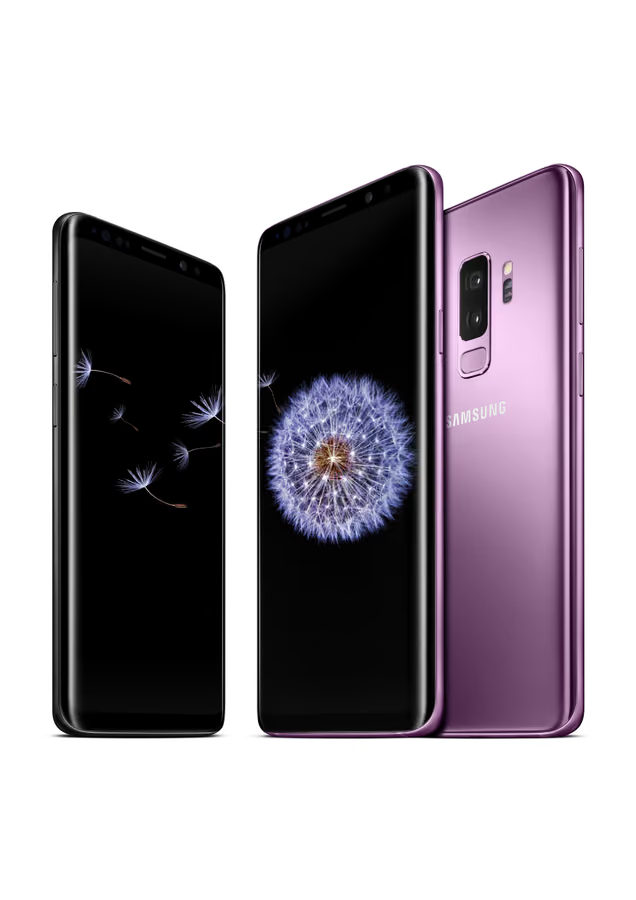
The Galaxy S9 put the fingerprint reader where I would have looked for it
The Galaxy S9 and S9+ came to US stores on March 16, 2018. The smaller S9 started at $719.99 and reused the tall 5.8-inch screen size of the previous generation. Its body moved the fingerprint target from the side of the camera to immediately below it. A finger sliding up the middle of the back had somewhere obvious to stop. At launch Samsung put much more emphasis on the camera’s moving aperture. I think the revised back deserves to be the first reason to compare it with an S8. Samsung’s US Galaxy S9 and S9+ availability notice
Quick verdict
Retail release in the United States · Archive date
I would have bought the S9 when its more reachable fingerprint placement and stereo speakers improved my usual routine.
Best for: An owner of an older Galaxy who wants a compact curved-screen flagship and keeps wired audio or a memory card.
Main benefit: Samsung kept the familiar body size and made the rear unlock position easier to locate with one finger.
Biggest drawback: The base phone offered one rear focal length. Its refinements alone are a modest reason to move from the S8.
Reviewed version: Regular US Galaxy S9 with a 5.8-inch display and one rear lens. The 6.2-inch S9+ adds a separate telephoto.
Compatibility: It retained microSD, wired audio and multiple unlock choices. Slow motion worked in short bursts under suitable lighting.
Review context: I evaluate the documented retail hardware and the software available in its release window. Regional variants and software changes are identified where they affect the verdict.
A change in the start of an interaction is unusually easy to test. Put the phone down, pick it up to check a delivery, lock it, and do it again with your dominant hand then the other. The reader’s location is worth judging with a case on. The camera assembly sits nearby and a thick rim can change the way your finger reaches the target. That makes the S9 a more interesting comparison when someone already owned an S8 and repeatedly missed the old sensor, even if the new model looked almost the same face up.
One rear camera with two aperture settings
The regular S9 had one rear camera. It could mechanically choose between f/1.5 and f/2.4. Samsung gave the S9+ a second rear telephoto, which was a real difference between the two choices. For the smaller one, an indoor subject that hardly moves is a good first test of the wider setting. Then try something less cooperative, such as a hand dealing cards over the same table. The exposure and processing choices still decide what happens to the movement. A headline aperture is too little information if the shots that matter are of people.
Related reading
The narrower setting can make sense in bright conditions. Choosing it manually in the camera’s Pro mode gives someone interested in exposure a way to see the difference in the same light and scene. Automatic users need a simpler question. When the phone picked its own aperture and shutter, did it give you the photo you wanted on the first attempt? It makes sense to start with the camera workflow you actually expect to use and see whether there is a useful difference over your current model.
Moments worth slowing down
The S9 advertised 960-frame-per-second Super Slow-mo in brief bursts. The prospect of replaying a little splash or a very short sports movement is appealing. You need enough light and a moment you can anticipate, because the interesting portion goes by so quickly at real speed. I would have used the mode where I could set up the scene and repeat it. For a long performance or a person walking through a room, ordinary video gives you a more complete record.
Samsung also promoted AR Emoji at launch. Its novelty would have been easy to demonstrate to another person in the store. The stronger reason to compare the S9 cameras was whether you would open the special modes more than once after taking the phone home. A mode useful for a particular clip can make an evening more fun. The step from S8 is harder to justify if your pictures are mainly taken in daylight and both arrive looking the way you expect in your messages.
Stereo speakers make the change easier to hear
The Galaxy S9 used stereo playback with AKG tuning. A short clip held sideways lets you hear whether you can still make out dialogue when one hand covers part of the device. My other check would have been calls and recordings played with the handset set down, near the sort of background noise I regularly have in a room. The apparent volume of a demo track matters less than whether speaking voices are clear enough to stay comfortable.
Samsung kept a wired headphone jack and microSD expansion in the model. If you had already bought good wired headphones or carried music locally, those choices made the move simple. The design still uses curved screen edges and a taller shape. If the curve felt awkward while reading or a case made a side gesture difficult, the improved audio alone would have done little to solve it. Samsung’s launch and feature overview
Related reading

A practical way to choose between S9 and S9+
I would have started by putting the smaller one in my everyday pocket. Then I would have taken the same portrait or moderately distant picture with both. Moving closer solves the usual photo for many people, and the regular S9 is easier to hold in one hand than the big one. The Plus suited a customer who had clearer reasons for its second rear camera, its bigger display or its greater battery capacity. It made sense for those differences to appear in a handful of real tasks before paying the higher price and taking the larger size every day.
A year in which the base phone and the Plus split the cameras
Comparing the box specs can make two replacements sound closer than the choice you take home. The regular S9 could deliver the camera’s variable aperture with a single rear module. An S9+ introduced an extra focal length in the same year and made that distinction more meaningful than the jump from the S8 to S8+, whose differences mostly followed the size of the body. If the larger body was convenient either way, I would have tested focal lengths before deciding by cost. If I routinely carried a phone in a shirt pocket, the question of reach might already have decided it.
The camera used the same upright orientation as the fingerprint sensor. I would look at how many times I was able to frame a picture correctly when it was only possible to use one hand. Two stable hands give the smaller phone’s portability less of an advantage. A good purchase comparison includes the things that make an extra lens inconvenient to bring along, as well as the photos it would be nice to take.
The 64 GB US entry option shared the launch landscape with removable storage. If you kept a large local photo library, it was worth distinguishing files you could move to a card from app data that should stay internal. A useful first evening would have been setting aside capacity for the camera modes you wanted to learn.
My verdict on the S9
I would have bought it as a small, refined member of the Infinity Display family, especially if I was moving forward from a device before the S8. The camera choices and front-facing stereo experience added something without taking away familiar wired audio and expandable storage. I would have kept an S8 whose pictures and unlock routine already worked for my day. A better finger position is a small redesign with a large number of chances to earn its place.
What worked
Samsung kept the familiar body size and made the rear unlock position easier to locate with one finger.
Stereo audio and the variable aperture could help with a few repeated media tasks.
What bothered me
The base phone offered one rear focal length. Its refinements alone are a modest reason to move from the S8.
The narrower model offers less room for a battery and leaves the longer camera to the Plus. Slow-motion demos need favorable conditions.
Who should not buy it
Someone who regularly needs a dedicated telephoto, the larger battery or a flat display.
Alternatives I would consider
Galaxy S8. The previous model gave the same diagonal and tall proportions with the earlier reader position. Read my Galaxy S8 review.
Evidence and sources
The release date refers to general availability in the named market. The archive filing is ten days later. Feature assessments are editorial judgments based on the documented retail model.
Features, compatibility and rated figures from the maker are manufacturer information. My opinions are identified in the review.
Conclusion
Compare grip, rear unlocking and shots under the same light. Pay for the Plus if the additional focal length has a clear use.
One email a week with practical Mac workflows, useful comparisons and honest tech recommendations.