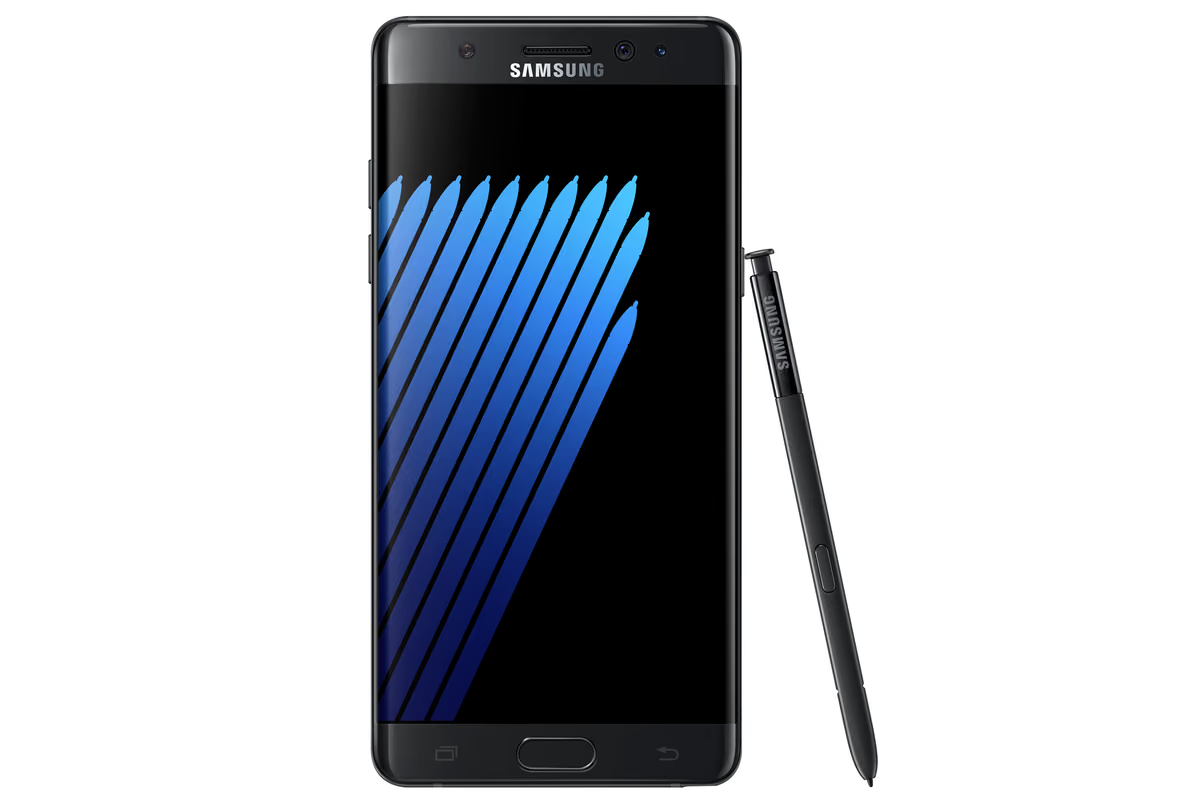
The Galaxy Note7 design cannot be separated from the recall
Samsung released the Galaxy Note7 in the United States on August 19, 2016. Its launch case included a built-in S Pen, an IP68 rating, USB-C and a large display in a carefully shaped body. The battery could overheat and catch fire. The original US recall followed on September 15, and an expanded recall on October 13 included replacement phones. The US Consumer Product Safety Commission tells owners to power down recalled Galaxy Note7 phones and stop using them. This is a historical review of the device and its launch, with the safety outcome that has to govern any decision today. Samsung’s Note7 launch information CPSC’s expanded Galaxy Note7 recall
Quick verdict
Retail release in the United States · Archive date
Keep this phone in the timeline as a recalled model. The documented fire and burn hazard overrides its attractive launch specifications.
Best for: Readers researching the 2016 Note and the order of the launch, sales halt and expanded recall.
Main benefit: Better pen functions and storage and connection changes show how the Note line was evolving in August 2016.
Biggest drawback: The battery could overheat and catch fire. The expanded recall covered both the original devices and the replacements.
Reviewed version: The US Galaxy Note7 sold from August 19, 2016. The recall eventually encompassed original and replacement devices.
Compatibility: The launch phone added USB-C, a microSD slot and an integrated S Pen. The US CPSC recall directs owners to power down recalled devices and stop using them.
Review context: I evaluate the documented retail hardware and the software available in its release window. Regional variants and software changes are identified where they affect the verdict.
The launch date and first availability give the design a place in the Galaxy timeline. The archive filing of August 29 represents that period, before the recalls. This review was written later with the documented outcome in view. It explains why the early design was interesting and why the safety record overrides an ordinary ranking of its features.
A Note could do more of a small job even when its main screen was idle
Samsung’s launch material put a lot of emphasis on the integrated S Pen and refinements to its input. It described a finer tip, more levels of pressure and an expanded way to use Screen Off Memo with the Always On Display. On the prior Note5, getting something down quickly was already an identifiable use. The Note7 moved further in the same direction. A short memo should be accessible near the moment in which you need it, without opening another object or working through a long sequence. Keeping a written detail visible was an attempt to help later in that process too.
Related reading
The wider body still needed enough support from one or both hands to make a precise mark. That was part of the design trade. A person who writes on a resting display can use more of it at once. Somebody who tries to put down one name between short jobs needs the pen to be there when the need arises. The Note7’s stowed tool continued an idea that links the original Note to the later Ultras. A stowed pen’s value appears when a person can find and use what they recorded later. There was a real reason to improve that experience, independently of what happened to this phone.
Samsung also described added S Pen functions for working with selected sections of a visible app. These tell us some of what Samsung expected a stylus to do in its larger phones. A small annotation or magnified detail could help the reader stay with a task rather than moving the piece to another surface. Software support and the practical route to use the result mattered just as they did on earlier Notes. Samsung continued to work on similar things in later designs; the useful question here is what the company intended the short interaction to accomplish.
The updated connections and shape were part of its early position
The Note7 had a 5.7-inch Super AMOLED display, built-in battery, removable microSD expansion and a USB-C connector. The storage option brought back a practical capability absent from the Note5. A new connector affected the chargers and data cables many buyers already had. At introduction these differences helped distinguish the Note from the other large phones in the comparison. The phone was designed to bring a wider surface and existing useful input together in a narrower grip than someone might expect from those screen dimensions.
Samsung advertised IP68 resistance for the phone and pen under the specified test conditions. This feature relates to water and dust ingress. It does not bear on the separate battery issue described by the recall. The presence of the rating is relevant to the history of how the pen and body were designed. It offers no basis for powering up a recalled device to see whether those features work. Similarly, knowing that a particular unit was a replacement does not remove it from the expanded US recall.
Why there were two official recall dates
Samsung reported the battery problem and halted sales on September 2. In the initial US recall on September 15, the remedy arrangement involved refunds or replacements. The next safety action covered replacement devices as well. The CPSC announcement of October 13 describes the fire and burn hazard and directs purchasers to stop using the recalled phones and seek the applicable remedy. Somebody reading the original announcement could otherwise mistake the replacement marker for an assurance. The later recall is the controlling reference for the whole group. Samsung’s September sales halt CPSC’s initial Notice
Related reading

This distinction also changes how to read an article written close to release. The hardware features and positive early reactions belong to the context in which it was presented and bought. Those first weeks do not tell you the outcome of the following investigation, exchange and withdrawal. A timeline lets the reader preserve both kinds of fact in the correct order. It keeps the original launch from turning into a recommendation in a present-day comparison.
What an archive date can tell us about early expectations
Moving the device into an August archive keeps the launch claims near the predecessor and other phones available at the time. It also shows how little time separated an early purchase decision and the first sales stop. The source for live consumer instructions needs to be the later expanded recall, because its scope supersedes the original exchange arrangement. A history of the launch can still describe the size, charging port and role of the pen as designed. These are separate from an estimate of whether a particular recalled phone is safe, which a visual inspection would not establish.
The expanded notice includes units sold both before and after the September recall and explicitly mentions replacements. That changes practical questions a collector might otherwise have. Finding a device without the original box or finding one marketed as an exchange should not be treated as evidence that the notice does not apply. Keep the linked regulator instructions close to the historical account. For the design itself, other Note models can illustrate the switch in available controls without making a reader depend on recalled hardware. That is a better reason for covering the preceding and following devices separately.
My verdict on the Galaxy Note7
The Note7 belongs in the Galaxy history because it showed where the S Pen, ingress protection and shape were going. The recall makes it unsuitable as a purchase or a device to keep using. Follow the expanded CPSC recall instructions for a recalled device. The Galaxy Note5 illustrates the preceding memo workflow and the Galaxy review timeline puts the August release in its place next to the models that followed.
What worked
Better pen functions and storage and connection changes show how the Note line was evolving in August 2016.
Built-in writing and a large screen had useful design ideas that can be understood through the launch documents.
What bothered me
The battery could overheat and catch fire. The expanded recall covered both the original devices and the replacements.
Ingress protection and a replacement from the original programme did not address the scope of the later recall.
Who should not buy it
Anyone looking for a phone to buy and use today. The CPSC tells consumers with a recalled Note7 to stop using it.
Alternatives I would consider
Galaxy Note5. The preceding model shows the S Pen and dark-screen memo workflow in the timeline, independently of the recalled Note7. Read my Galaxy Note5 review.
Evidence and sources
The release date refers to general availability in the named market. The archive filing is ten days later. Feature assessments are editorial judgments based on the documented retail model.
Samsung retail release information
CPSC's expanded US safety recall for original and replacement Note7 phones
Features, compatibility and rated figures from the maker are manufacturer information. My opinions are identified in the review.
Conclusion
The correct present-day decision is to follow the official recall instructions for an affected device rather than buying or using it.
One email a week with practical Mac workflows, useful comparisons and honest tech recommendations.