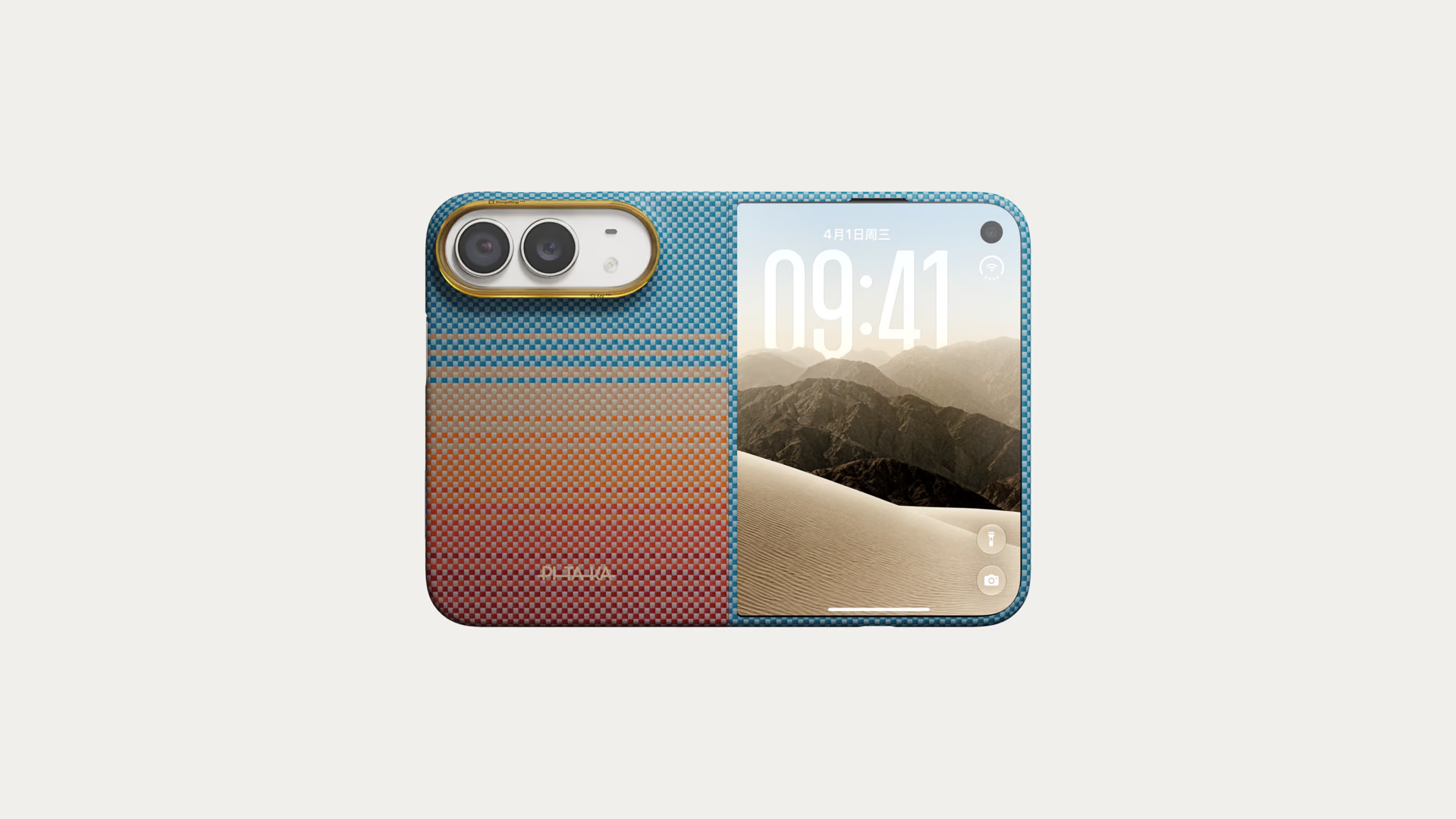
Product images: PITAKA.
First, a thank you. PITAKA sent me this case as a free review unit. They did not ask to see this text before it went live, and they did not ask for a good score. What you read here is what I think after using it. The two store links in this review were provided by PITAKA, so they can see which buyers came from here. I earn nothing from them.
The short version is simple. This is one of the nicest phone cases I have held. The material feels expensive, the pattern looks great, and it adds almost nothing to the size of the phone. But the iPhone Duo is not a normal phone. It folds, and the fold is its weakest point. This case does not cover the hinge. That one design choice is the reason I cannot give it a full recommendation, even though I like almost everything else about it.
Let me explain both sides.
What you get
The case is called the PITAKA California Dream, in the “Edge” style, for iPhone Duo. The version I tested is the “Suite Case Without Hinge”. That means two parts:
- a back shell that holds the main half of the phone, with the camera and the MagSafe area,
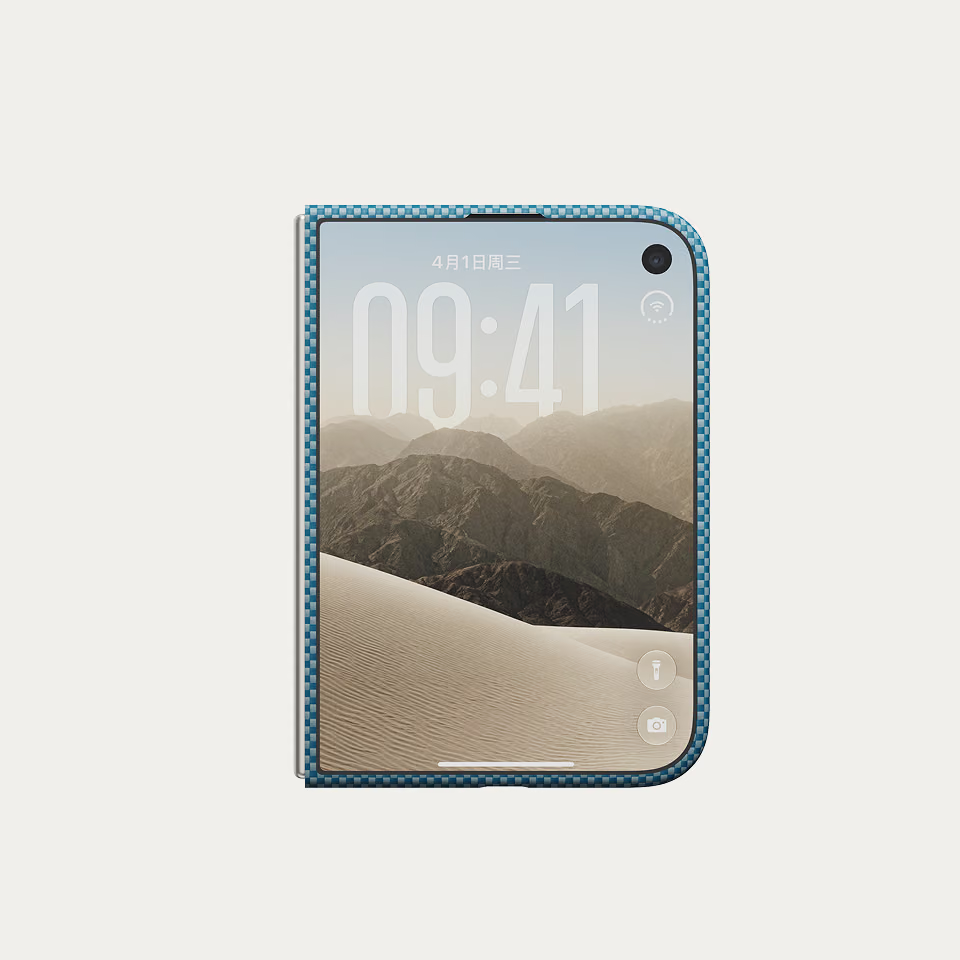
- a front shell with glass that covers the outer screen half.
PITAKA also sells each part on its own (“Back Case Only” and “Front Case With Glass”). The full set costs $99.99 on the PITAKA store, with duties and taxes included. At the time of writing the iPhone Duo version is listed as a pre-order, so check the shipping date before you buy. You can get it from the PITAKA store or on Amazon.
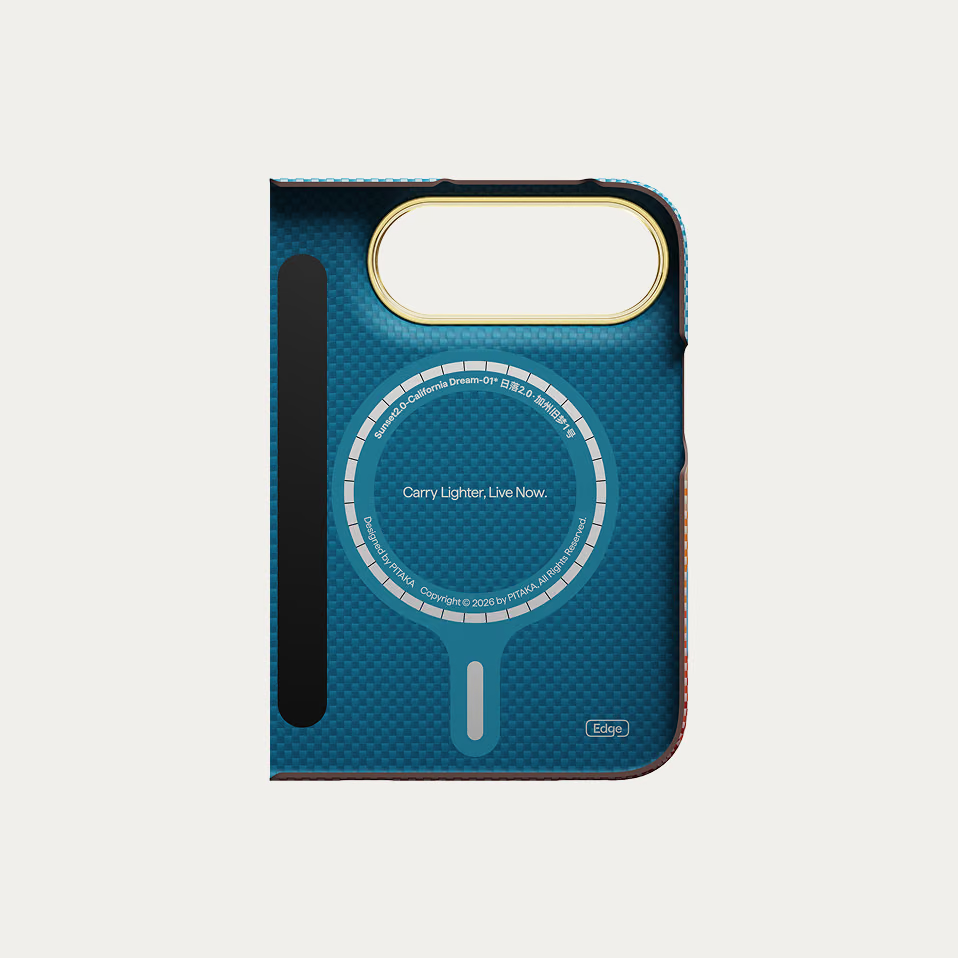
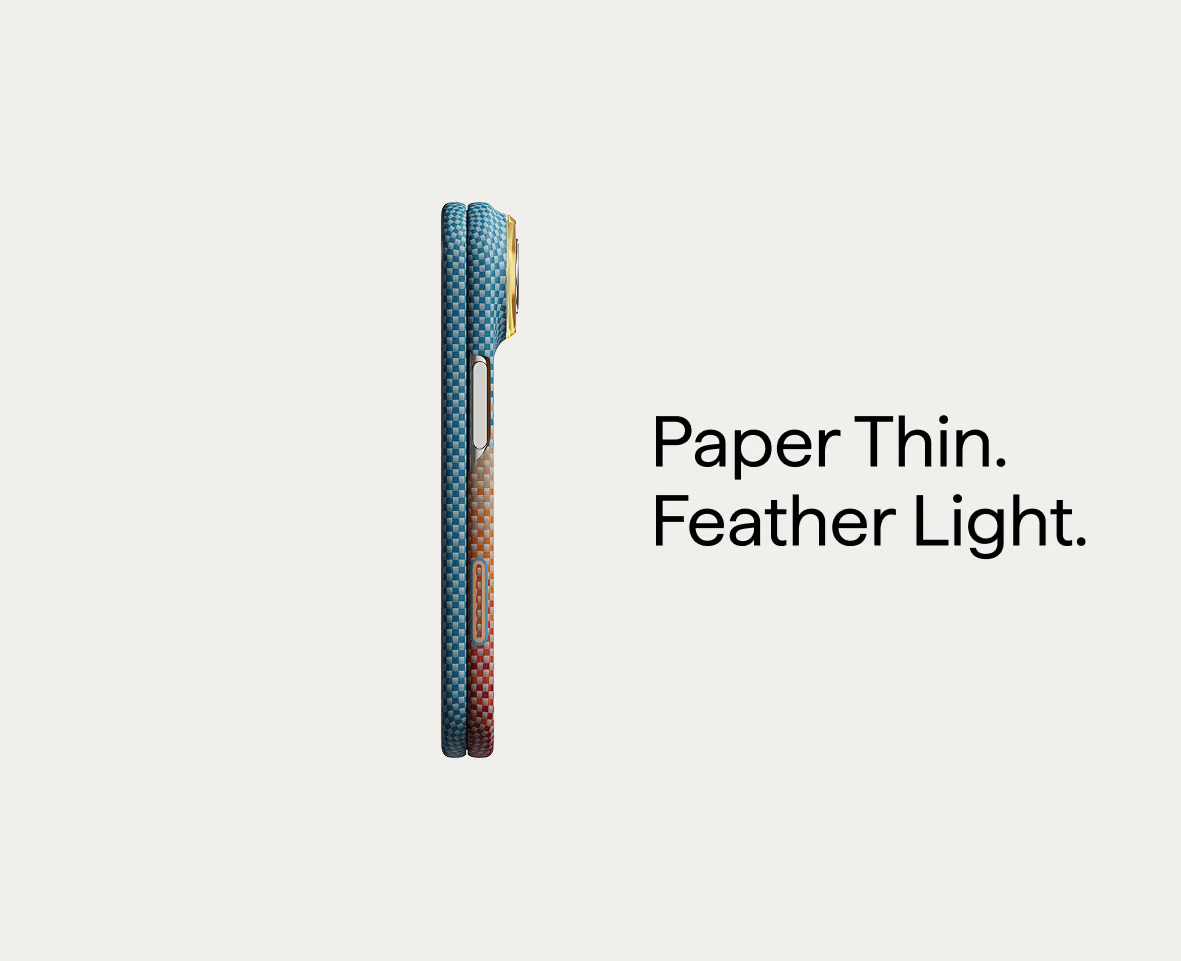
The numbers from PITAKA are impressive. The shell is about 1.3 mm thick and weighs about 36 g. It is made from aramid fibre (the same family of material used in bulletproof vests and racing parts) mixed with a resin PITAKA calls “Mammoth Resin”. PITAKA says this new resin gives around 1.8 times the impact resistance of their older cases. I cannot measure that at home, so take it as their claim, not mine.
Related reading
It looks really good
This is the part that surprised me most. Many protective cases look like a compromise. You buy them because you have to, not because you want to.
California Dream is different. The weave goes from a deep blue at the top, through orange, into red at the bottom. It looks like a sunset seen through a woven cloth. Up close you can see the small pattern of the fibres. From a distance it is just a soft colour gradient. It is bright without being loud.
The camera ring is a gold colour. On paper that sounded too much to me. In real life it works with the warm orange and red. If you like plain black or grey, PITAKA also makes the same case in Midnight, Sunset and a black and grey twill. Those cost the same.
I will say it directly: this is a case people notice. That does not happen with most cases.
Build quality and feel
The case feels solid. There is no flex in the back shell when you press it. The edges are clean, and I found no rough spots or loose fibres. The surface has a light texture, so the phone does not slide off a table as easily as bare glass.
The fit on my iPhone Duo was tight in the right way. The shells click on, and they do not move around in the hand. Taking them off needs a bit of care, which is normal for a thin hard case. Do it slowly and start from a corner.
Because the case is so thin, the iPhone Duo still feels like the iPhone Duo. That matters a lot on a folding phone. It is already thicker than a normal iPhone when closed. A thick rugged case would make it feel like a brick. This one does not.
MagSafe and PitaTap
MagSafe works. Chargers, wallets and mounts attach through the back shell as they should. PITAKA builds magnets into the case so the hold is firm. I had no problems with wireless charging speed in normal use.
There is also a small detail called PitaTap. It is a cover over the Camera Control button. You can still press it, tap it and slide your finger on it to change zoom or exposure. It works fine. It feels a little different from the bare button, but you get used to it quickly. I prefer this to a simple hole, because a hole in a thin case can catch dirt.
The problem: the hinge is not covered
Now the important part.
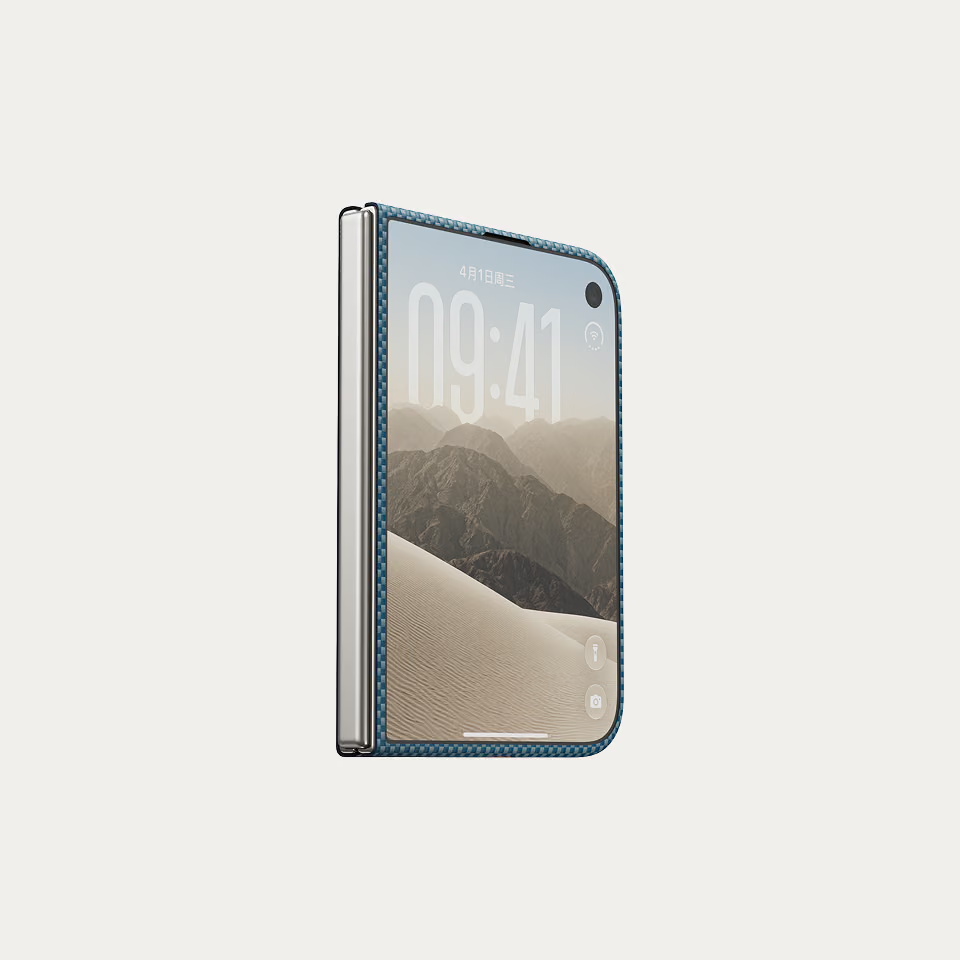
Look at the side of the phone in the picture below. You can see the silver hinge running down the spine. The case stops on both sides of it. The hinge is fully open to the world.
Related reading
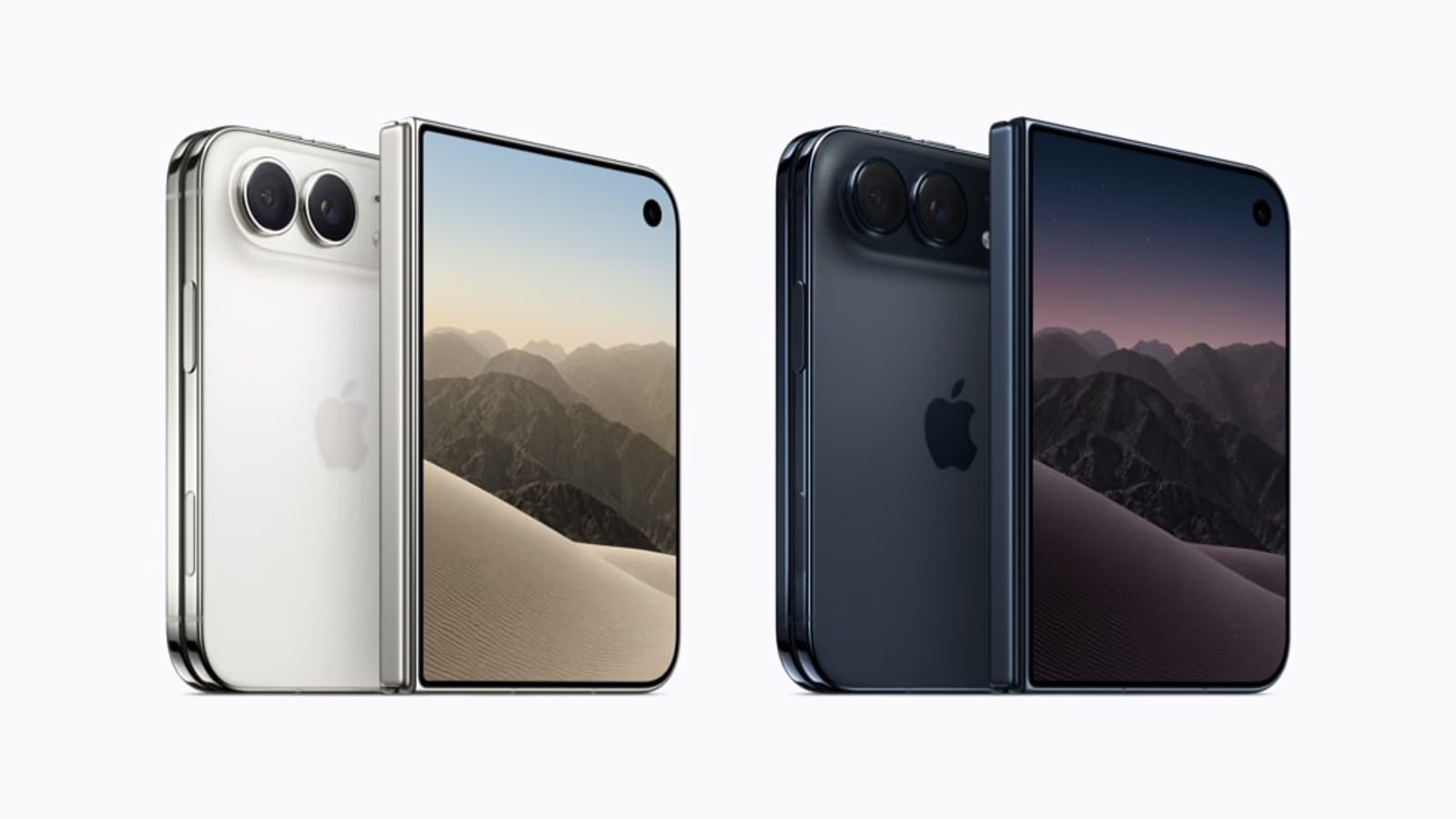
On a normal iPhone, an open edge is not a big deal. On a folding phone, the hinge is the most fragile and most expensive part. And the hinge is directly connected to the most expensive screen you own: the large inner folding display.
Here is why I worry about it.
Dust and dirt. Shortly after launch, Zack Nelson of JerryRigEverything did his usual durability test on the iPhone Duo. You can watch the video here. He put dirt near the hinge. The dirt got inside through several openings, even though the phone has an IP68 rating. After that, the magnets could not close the phone anymore. It stayed partly open. MacRumors and iPhone in Canada both wrote about the result.
Pressure on the inner screen. In the same test, a bend put a green line across the inner display, and then the screen stopped responding to touch. Nelson said he could not tell if trapped dust or the hinge itself caused it. Either way, the area around the hinge is where the inner screen is weakest.
Cost of repair. iPhone in Canada reports that an out-of-warranty inner display replacement costs CA$1,499 in Canada. That is close to the price of a whole new normal iPhone.
Now think about daily life. Your phone goes into a jeans pocket, a jacket pocket, a bag with keys, a car door pocket, a beach bag. Small grains of sand and dust are everywhere. With this case, the hinge meets all of that directly. The case protects the corners, the back and the outer screen well. It does nothing for the place where the next repair is most likely to start.
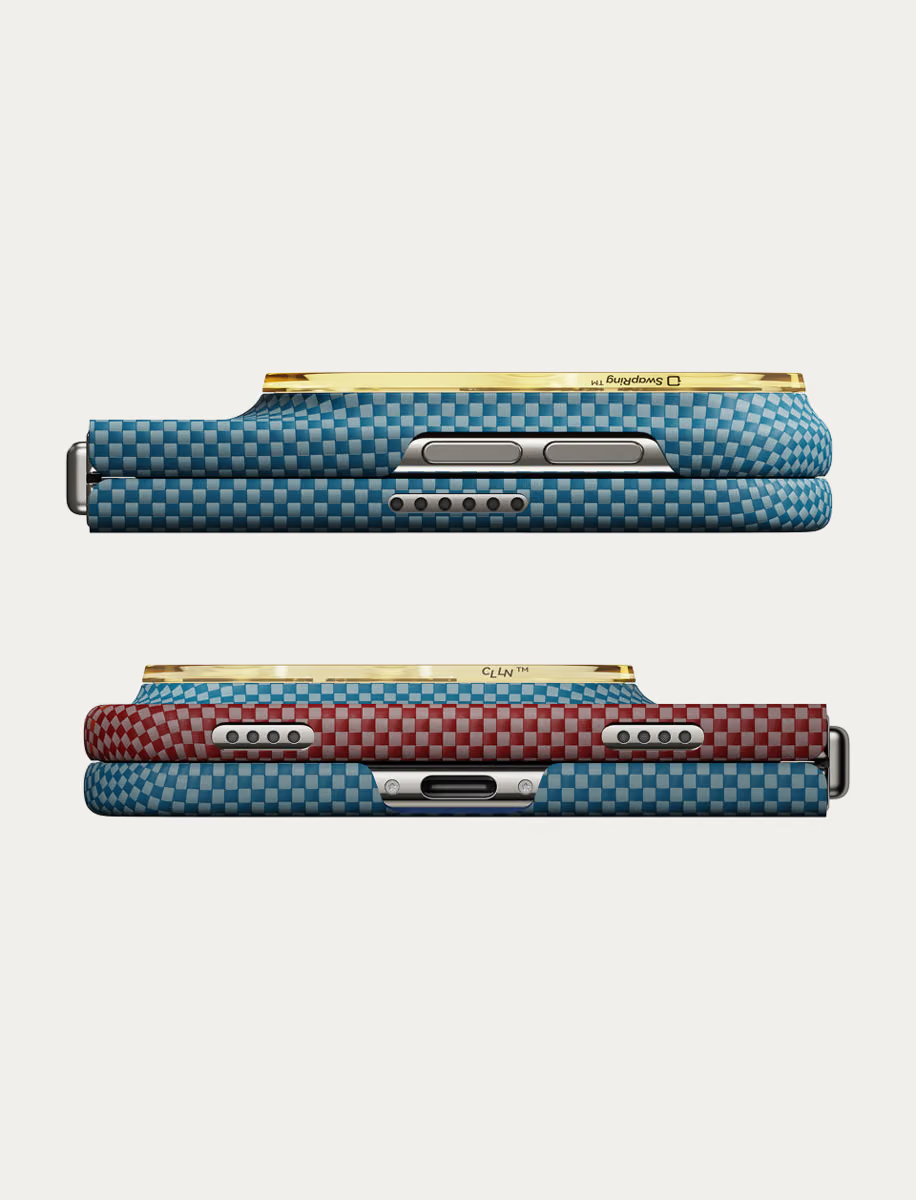
To be fair, this is not only a PITAKA problem. Coverage of the same test notes that the case options available so far cover either the hinge or the sides, not both. A cover over the hinge must bend, slide or open with the phone, and that is hard to do in a 1.3 mm shell. I understand why PITAKA chose a thin two-part design. But a case is a protection product first. On this phone, leaving the hinge open is leaving the biggest risk open.
I want to be clear about one thing. The case does not cause any damage. My point is only this: if you buy a case to protect your iPhone Duo, the most likely future failure of this phone is not something this case helps with.
Daily use
Apart from the hinge, living with the case is easy.
- Opening and closing. The case does not get in the way of folding. The phone opens flat and closes fully. The two shells do not rub against each other.
- Grip. Better than the bare phone. The texture helps, especially when the phone is open and you hold the big screen with two hands.
- Pockets. The case adds so little that the phone goes into the same pockets as before. That is good for comfort. It is also why the bare hinge meets pocket dust so often.
- Cleaning. The aramid surface does not pick up fingerprints the way glass does. A dry cloth is enough.
- Front glass. The front shell comes with glass for the outer screen. It has an oil-repellent coating and felt smooth under my finger. Touch response was normal.
Price and warranty
$99.99 is a lot for a phone case. But this is not a normal case, and the iPhone Duo is not a normal phone. If you have just paid over two thousand euros for a phone, a hundred dollars for a premium case is not crazy. You are paying for the material, the low weight and the design.
Check the warranty terms on the PITAKA store before you buy. They differ by product and by region, and you want to know them before something goes wrong.
Who should buy it
Buy it if:
- you want the thinnest possible protection for the back, corners and outer screen,
- you care how your phone looks and like bright colours,
- you use MagSafe accessories every day,
- you mostly use the phone at a desk, in the office or at home, and not in dusty places.
Think again if:
Related reading

- you carry the phone loose in pockets with sand, crumbs or dust,
- you work outdoors, on building sites, at the beach or in the car a lot,
- your main fear is breaking the inner folding screen.
For the second group, the honest advice is to look for a design that covers the hinge, even if it is thicker and less pretty. Or wait. The first wave of cases for any new folding phone is rarely the best one.
Our take
The PITAKA California Dream case is beautifully made. It is light, thin and strong, it looks like nothing else on the market, and MagSafe and PitaTap work well. As a piece of design, it is one of the best cases I have used.
But a case for a folding phone has to protect the fold. This one leaves the hinge bare, and the first durability tests of the iPhone Duo show that the hinge and the area around it are exactly where dust gets in and where the expensive inner screen can fail. A great-looking shell does not change that risk.
My verdict: buy it if style and slim size come first and you keep your phone in clean places. If protection is the main reason you buy a case, the uncovered hinge is a deal breaker for now.
Where to buy: the PITAKA store or Amazon.
Thank you again to PITAKA for sending the case. I hope a future version brings the same quality and the same colours, with the hinge covered too.
If you are still deciding on the phone itself, read my honest iPhone Duo review next.
One email a month: new articles, reviews and the upcoming live webinar + free recording. No spam, unsubscribe anytime.