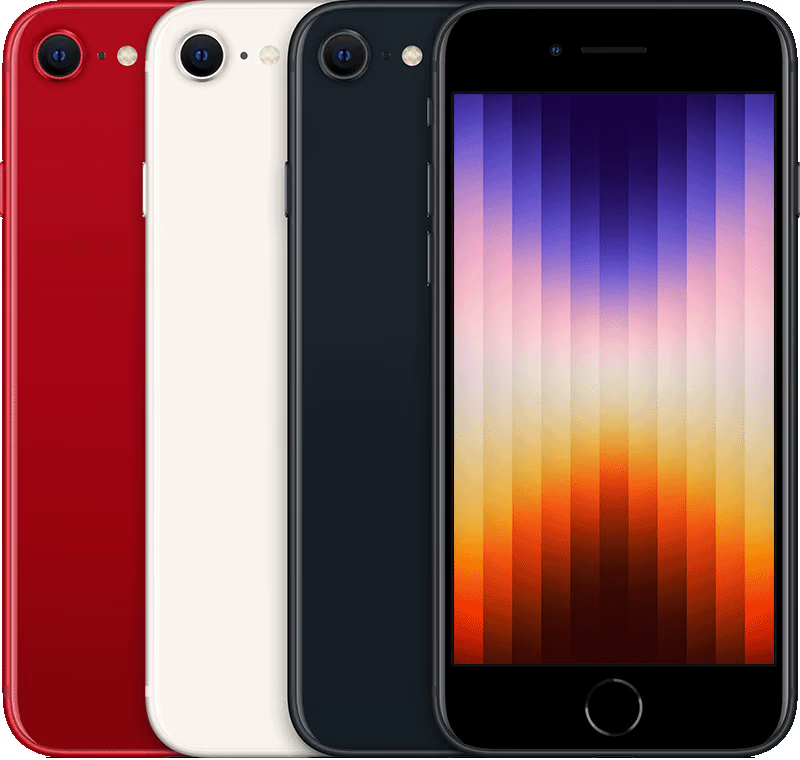
The 2022 iPhone SE kept the best reason to buy an SE
The third iPhone SE kept the Home button and the kind of 4.7-inch screen you could reach across. It tied them to the A15 chip from the iPhone 13 generation and put a sub-6 GHz 5G modem in the same familiar body. This was useful when the way you held and unlocked your phone already worked and the rest of the old device was starting to get in the way. If the screen or the camera was what sent you shopping, the new processor alone did less to change the decision.
Quick verdict
Retail release in the United States · Archive date
I would have picked the 2022 SE if the Home button and familiar grip were already working for me and I needed a replacement with a newer chip.
Best for: People upgrading from an older Touch ID iPhone, using ordinary apps and a straightforward camera, who could choose an adequate storage tier.
Main benefit: It kept the familiar physical controls while offering the A15 and compatible 5G at a $429 US opening price.
Biggest drawback: The small LCD and one rear lens made some camera and text-entry jobs harder. It lacked a dedicated Ultra Wide and Apple's Night mode.
Reviewed version: The third-generation US iPhone SE sold from March 18, 2022. It started with 64 GB and had a 4.7-inch LCD.
Compatibility: The phone ran iOS 15 in the launch window and used Lightning, Qi, Touch ID and compatible sub-6 GHz 5G. It did not support mmWave.
Review context: I evaluate the documented retail hardware and the software available in its release window. Regional variants and software changes are identified where they affect the verdict.
I owned this iPhone SE as part of having every iPhone. This retrospective concerns the US launch on March 18, 2022, at $429 for 64 GB. By then the 13 mini was already available, and it offered a smaller body with a larger display and a very different approach to unlocking the phone. Both were good small iPhones on their own terms. Their size and shape rewarded different habits. Apple’s announcement and March retail date
The Home button remained a real purchase reason
The front of the phone had space to put a thumb on the sensor and a clear physical landmark for finding it. A person who had learned the iPhone on an earlier model could get back to the first Home screen in a familiar way. That mattered more than knowing the phone looked a lot like an older one. Some people already used the controls easily in a dock or while taking it out of a bag. Relearning a useful action is a small cost you might be willing to pay for other improvements. This SE gave people a way to keep it as they liked it.
Related reading

The shape was useful even for somebody who came from a different phone. You could easily compare it with the 13 mini by opening two apps and typing a reply at your chosen text size. The SE had more space around its 4.7-inch display for the Home button and other hardware. The mini itself was smaller in some key dimensions and placed more screen in that space. Someone shopping for a phone they could physically carry might pick either. The preference for Touch ID or Face ID could settle it.
The size of the SE’s visible area deserves a separate check from getting hold of it. A person reading and entering one or two details could use it well. An address form with the onscreen keyboard and larger text is a more revealing test than a home screen. Try finding the last several lines of a message while you type. That shows whether the space was sufficient for your real work.
The camera made better use of a familiar single view
A15 enabled Apple features including Smart HDR 4, Deep Fusion and Photographic Styles. Those tools changed how a suitable frame could come out of the existing single view. If you regularly took normal-distance photos of someone or something and had fairly good light, it was worth looking closely at what a properly finished image could do. It was still a single rear camera with no dedicated Ultra Wide. An apartment or a bench with people at both ends can show exactly what another field of view is good for.
I would have taken a familiar picture in decent light and repeated it later indoors. It is useful to look after choosing the intended use. A message attachment demands something different from a full-width print. A frame with a person in poor light also poses a different problem from a still object. The SE’s camera remained easy to open and frame. The absence of Apple’s Night mode was a material reason to try an 11 or a 13 if you regularly wanted a usable image of a dim scene. Apple’s iPhone SE technical specifications
The chip improved the speed of the phone that handled those images. It did not change the size of the viewport open while you cropped or checked small details. I would have valued the extra headroom most if I already liked the phone’s physical layout and was replacing an older iPhone with an ordinary storage or reliability problem. An app that felt slow on the older phone could run better here without replacing the working arrangements around it.
Related reading

5G depended on where you needed the connection
The US SE supported sub-6 GHz 5G. A change to the connection is most meaningful at addresses where a device struggles to do something necessary. I would have checked whether the newer device could upload the same attachment or call over the carrier’s supported service at a place where the existing one was unreliable. Coverage maps and compatible plans help you decide whether the test is worth running. The SE kept LTE support, which mattered in places that did not have useful 5G service. It lacked the faster short-range mmWave radio found on certain more expensive US iPhones of the generation.
Apple rated the 2022 model for longer video playback than its 2020 predecessor. The rating helped compare devices in Apple’s specified conditions. A day with calls, bright outdoor use and a poor signal might look different. The phone still used Lightning and could charge on Qi equipment. A buyer upgrading from an older SE had a chance to keep a charging setup that already worked. This also gave a fairer idea of what the total change would cost.
Put a price on what you want to keep
Many people could get everything they regularly used into the 64 GB base model. Others recorded enough to put the next tier within the real cost of buying it. I would have checked how much of the previous phone was in use, what was local, and whether I wanted to keep the same arrangement. Comparing the cost of enough storage against a 13 mini or a keenly priced second-generation SE made more sense than lining up opening prices. It also explained when the faster chip and the modem were worth paying for.
My verdict on the 2022 iPhone SE
I liked having a small phone with the Home button available in 2022. I would have chosen it for someone who wanted those controls for a reason, had straightforward camera needs and knew which storage option fit. The iPhone 13 mini was a good alternative if the real wish was more screen and a more flexible camera in a small thing you carry. The iPhone model timeline puts the third SE beside the two earlier SE choices and the small 13.
What worked
It kept the familiar physical controls while offering the A15 and compatible 5G at a $429 US opening price.
Capture gained features of the newer image processor while keeping the simple route into the camera.
What bothered me
The small LCD and one rear lens made some camera and text-entry jobs harder. It lacked a dedicated Ultra Wide and Apple's Night mode.
A higher rated battery and faster modem under the right conditions did little for a buyer who primarily needed a larger working surface.
Who should not buy it
Someone who regularly took photos of groups in cramped places, shot long sessions in low light or wanted more space for larger text and the keyboard.
Alternatives I would consider
iPhone 13 mini. It was physically smaller in key dimensions while giving more display area, Face ID and a wider second camera. Read my iPhone 13 mini review.
Evidence and sources
The release date refers to general availability in the named market. The archive filing is ten days later. Feature assessments are editorial judgments based on the documented retail model.
Features, compatibility and rated figures from the maker are manufacturer information. My opinions are identified in the review.
Conclusion
The introductory price made sense for somebody who could use the storage and keep a working set of accessories. An older SE owner could also compare the real price of waiting.
One email a week with practical Mac workflows, useful comparisons and honest tech recommendations.