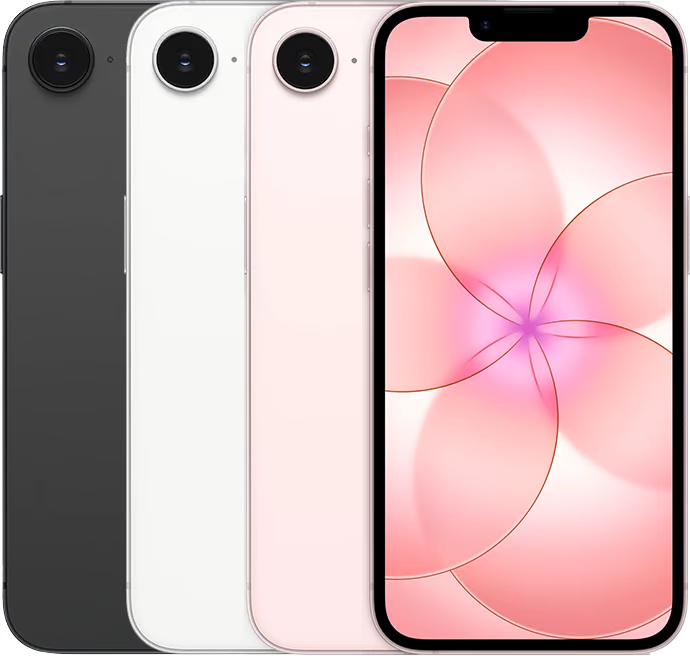
The iPhone 17e made the entry model easier to live with
The 17e added MagSafe and started with 256 GB at the same $599 opening price as the previous e model. Those are improvements you can use without changing your sense of what an entry iPhone is for. The single rear camera and standard-rate 6.1-inch OLED still made it a different purchase from the regular 17. I liked it as a phone that could share more of the chargers and stands used with other iPhones, and that gave a useful amount of space to someone who planned to keep a phone for years.
Quick verdict
Retail release in the United States · Archive date
I would have chosen the 17e if a standard-size phone with shared accessories and room for regular files solved most of my everyday needs.
Best for: A person moving from an earlier basic iPhone who wanted more local space and wanted their charging stands to work again.
Main benefit: It restored MagSafe and doubled the 16e's starting capacity at the same US opening price.
Biggest drawback: The single rear camera was unable to cover the wider and close-distance choices of the regular 17, and its display stayed at the standard refresh rate.
Reviewed version: The US 17e sold from March 11, 2026 in 256 GB and 512 GB capacities. It has a 6.1-inch OLED and a 48MP Fusion camera.
Compatibility: It used A19, C1X and iOS 26. Its wireless charging includes compatible MagSafe and Qi2, with up to 15W under specified conditions.
Review context: I evaluate the documented retail hardware and the software available in its release window. Regional variants and software changes are identified where they affect the verdict.
I owned this model as part of having every iPhone. It went on sale in the United States on March 11, 2026. The iPhone 17 had reached stores the preceding September. Even at launch the 17e could be compared with it by accessory needs, camera views, screen behaviour and actual storage. Apple’s iPhone 17e launch and pricing
MagSafe solved a specific problem with the 16e
The 17e added the connection to a range of magnetic chargers, mounts and stands. Apple listed support for up to 15W under its specified compatible wireless charging conditions. That contrasts directly with the 16e’s ordinary Qi support and lack of the built-in mounting mechanism. A person who moved a phone among stands in several places could gain more from this than somebody who only plugged in at home. I would have run through the movements and seen whether it helped me in the place where I most often tried to set the phone down.
Related reading

It also gives you a way to hold the phone separately from power. One mount might be in a car and another might support a video call. A case needs to be suitable for both the model and the accessories you intend to use. I would have tried attaching and removing it, seen whether it stayed in its desired position, and then decided how much of that older setup I could keep. This was a daily convenience that was easier to price when you already knew what losing it would cost in the 16e.
More storage made equal-price comparisons more useful
The 256 GB entry option doubled the previous model’s base storage. A buyer who had reached the limit of a small phone needed to see which of the large files they still wanted within reach. Having more room for applications, offline maps and photos can take some work out of keeping a phone tidy. I would still have checked how files moved off the device and whether somebody relied on fast wired transfers. USB-C gives it a common way to connect. It did not give the entry model a reason to replace a better wired video workflow.
The A19 and Apple’s C1X modem were useful parts of the package. Their value remained tied to the things someone actually ran and where the mobile network reached. I would have tried the device with the carrier and configuration I needed in the place where my existing phone was slow or unreliable. A newer processor is also a reason to consider the length of time you intend to use the phone. It does less for a buyer frustrated mainly by the standard display rate or the lack of particular camera fields.
The 48MP main option worked best when you knew the range of pictures you took
The Fusion camera offered a normal rear view and a tighter 2x composition from the same sensor. A person using it for photographs of nearby people and objects could consider that adequate. Try working from the place where you normally stand. One frame may benefit from picking out a detail a little closer. Another may need you to back up beyond the available room. That is a good reason to consider the regular 17’s Ultra Wide and other camera options. The closer mode on the same main sensor cannot give you that wider perspective.
There are also reasons to think about the front screen and camera together. The e model retained the notch and a conventional 12MP TrueDepth camera. The 17 offered the newer Center Stage front camera and adaptive display. A person who gave a phone regular group calls or spent much of the day scrolling might see those as clearer reasons to choose the regular model than a comparison of quoted performance. Apple’s iPhone 17e technical specifications
Related reading

Compare chargers, cases and storage as a single purchase
A 17e shopper who had decided on a new case and mount before seeing the phone should check them on the actual device. Some accessories can grip even if a thicker layer gives them less contact. A secure-looking grip can still change when mounted at a particular angle or used for a quick removal. I would have started with the part of the setup I used every day, then carried the phone through the usual few motions. This is more revealing than checking only whether the case and charger have a familiar label. If an existing car or desk mount works as planned, that saves an everyday change in addition to the cost of buying a new one.
The increase in storage also makes sense as part of that regular device, rather than as a separate future promise. I would have compared the previous device after its useful downloads were restored and after a week of ordinary recording. People who keep long clips for work can still hit a limit or want a faster way to move them. Somebody simply keeping travel information and family photos gets more room immediately at the same US opening price. That is a real improvement if you expect it to take several years to spend most of the capacity.
The back and the screen glass improved for different reasons
Apple used its Ceramic Shield 2 on the front for the entry model. That is especially relevant if you keep the screen uncovered or want to compare what an existing protector does to glare and touch. It is a separate consideration from what keeps the phone attached to a stand. Before buying I would have looked at whether the screen stayed clear at the angle from which I actually use it, and whether a case suitable for the rear accessories offered the amount of front protection I wanted.
My verdict on the iPhone 17e
I liked keeping enough battery and storage for ordinary use while getting back the convenience of a magnetic stand. In March I would have chosen the 17e if I knew I wanted the main rear camera and had no difficulty with the standard display. The iPhone 17 was a real upgrade for visible motion and for more kinds of photo. The iPhone model timeline shows how the two e models and the regular 17 arrived on different days and offered different reasons to buy.
What worked
It restored MagSafe and doubled the 16e's starting capacity at the same US opening price.
The new processor and paired 1x and 2x modes offered practical use beyond the connection and storage changes.
What bothered me
The single rear camera was unable to cover the wider and close-distance choices of the regular 17, and its display stayed at the standard refresh rate.
The product design continued to have a notch and a conventional front camera while the standard 17 offered a different view for calls and group photographs.
Who should not buy it
People who use the wider camera most days, need more screen area or prefer a faster adaptive display.
Alternatives I would consider
iPhone 17. It gives you the second rear camera, 120 Hz ProMotion and Center Stage. These are worthwhile if you have an ordinary use for them. Read my iPhone 17 review.
Evidence and sources
The release date refers to general availability in the named market. The archive filing is ten days later. Feature assessments are editorial judgments based on the documented retail model.
Features, compatibility and rated figures from the maker are manufacturer information. My opinions are identified in the review.
Conclusion
Compare the space and useful stands you already rely on at equal storage. It had a tangible advantage even for people who did little with new software.
One email a week with practical Mac workflows, useful comparisons and honest tech recommendations.