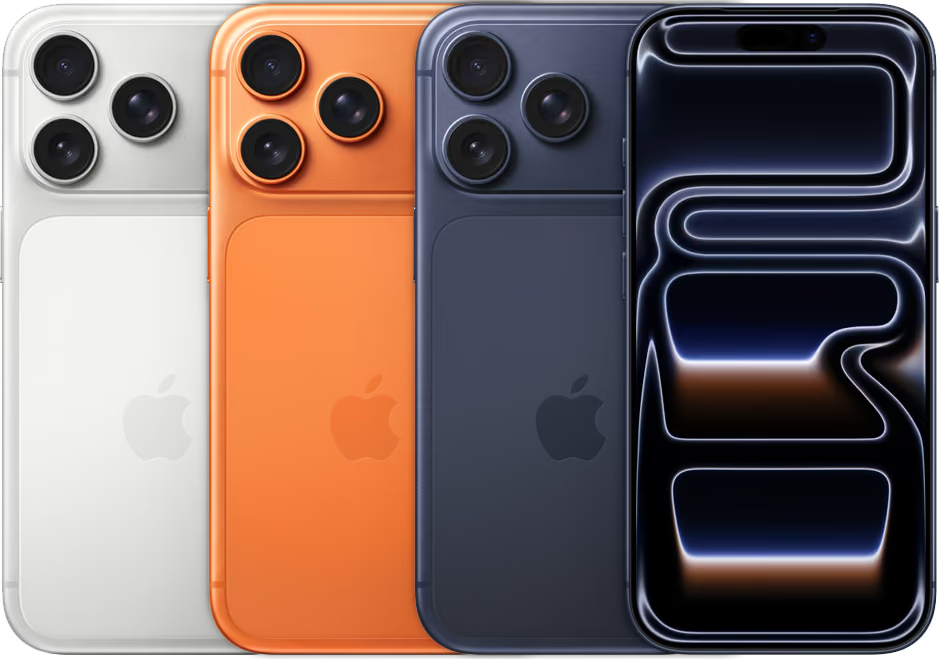
The iPhone 17 Pro was made to keep going on demanding jobs
The iPhone 17 Pro brought a new telephoto camera and a vapour chamber into Apple’s smaller Pro. The chip was still part of the story, but it was more useful to consider what happened while a task kept running. I could also decide whether its updated 4x view and tighter sensor-based option worked at the distance I ordinarily photographed. The ordinary 17 had gained a smoother display and 256 GB at entry, so I would have looked more closely at the work these Pro features could do before spending the extra.
Quick verdict
Retail release in the United States · Archive date
I would have chosen the Pro for the distant field or a task that needed prolonged use of the new chip and cooling design.
Best for: Someone who regularly takes pictures from a fixed position or knows what happens when a game or editing job has to run for a while.
Main benefit: A separate 4x lens and updated sensor gave the buyer a different way to work at a distance, without carrying the biggest iPhone.
Biggest drawback: Someone mainly wanting smoother motion could already get ProMotion on the standard 17. Specialist recording required a separate workflow and equipment.
Reviewed version: The US iPhone 17 Pro sold September 19, 2025 with 256 GB at entry and the same core rear camera system as the Pro Max.
Compatibility: It shipped with iOS 26, supported USB 3 and had a dedicated 4x Telephoto. The 8x option came from the centre of that sensor.
Review context: I evaluate the documented retail hardware and the software available in its release window. Regional variants and software changes are identified where they affect the verdict.
I owned this Pro as part of having every iPhone. It started from $1,099 for 256 GB at its September 19, 2025 US release. This review deals with the documented launch hardware, including the 6.3-inch display and camera array shared in most relevant respects with the larger Pro Max. Apple’s iPhone 17 Pro and 17 Pro Max launch specifications
The new Telephoto needs to earn its place at a real distance
There were three rear cameras. The updated 48MP Telephoto gave a 4x native field of view relative to the main camera’s normal field. A tighter 8x option used the sensor’s middle portion. I would have tried to photograph a distant detail with both and a broad frame from the original position. It is easier to see the value of the 4x lens and the smaller field once somebody can explain which detail the image helps them see. Light, movement and the place you can steady the phone all matter more when the detail occupies a smaller part of the full view.
Related reading

Compared with the 16 Pro’s separate 5x field, the 4x setting left a little more of the scene in view. Somebody whose work regularly uses that distance might like having a wider native telephoto. Someone who takes distant pictures occasionally might do just as well noticing how far away the 17’s main camera can usefully take them before paying for the third lens. Usually the right comparison starts with the thing and the place you intend to hold your camera. A second view of the surroundings can be worth keeping even when the tighter view is the point of the picture.
A cooling change is worth judging after the first few minutes
Apple’s vapour chamber helps move heat from the A19 Pro into the aluminium unibody. It is worth considering when you play a demanding game for a longer session or continue processing and recording for a while. Opening one app from cold does not say much about sustained operation. I would have repeated the heaviest ordinary job in an environment where I actually planned to do it, including the type of case I intended to use. Temperature, app settings and the surroundings can influence what any eventual difference looks like.
Faster hardware may save time in an intensive sequence, while visible smoothness during routine use also depends on the display and the app. The 6.3-inch Pro already had a clear alternative for the second goal in the regular 17 with ProMotion. A buyer who knows they keep the processor busy has a more helpful way to compare the two models. Think about how long the main work takes and whether you will be holding it, editing a file in place or sending it somewhere else when it finishes.
The recording features had specific requirements
The Pro offered video options that mattered more when you planned a larger workflow, including Apple Log 2 and support for ProRes RAW in compatible apps. Genlock was tied to additional equipment and specific software. Those were useful capabilities to know about if the buyer already knew how the material would be used. Somebody who mostly takes a short everyday clip can ignore most of the larger workflow and still get useful camera choices using the ordinary app.
I would have checked the cable, external storage, capture rate and application by making a short file before using it for something important. The Pro’s USB 3 connection remained an advantage when suitable equipment was in place. Having a phone that can fit the following steps of an existing workflow is a clearer benefit than an option that still requires everything else to be decided.
Related reading

It helps to decide what the main camera and the telephoto each need to show
One photo from the same location could give the wider context and another might carry the information a recipient actually wants. I would have done both at a place that limited how far I could walk. The 4x view can have an easier time keeping a piece of the scene around an important object than a tighter lens when the subject is already near. The 8x mode supplies another option with enough light and a suitable subject, using a smaller part of the sensor. Look at the result after sharing it, and consider how regularly the choice would pay for the bulk and price difference from a phone already capable of 2x in its main camera.
The work after capture can make the smaller Pro an appropriate choice even if you don’t want a large display for edits. Check that enough of the subject is visible to leave the location, then continue at a monitor, where controls and a long list of clips help. Someone making each creative decision directly on the phone might still choose the Max. I would have tried using two fingers to inspect a close detail and then returning to the entire composition. There is no camera reason to have to carry the largest size if the smaller display lets you do that job.
Front and back cameras answer different capture jobs
The Center Stage front camera was also shared with the regular 17. Somebody doing frequent calls or quick group pictures could choose that model and keep a big camera gain. It was the separate longer rear view, wider sustained workload and more demanding capture options that made the Pro case. Try facing the phone the way you usually hold it and then making a photograph from across the room. Seeing that both work is good. It is easier to pay the difference when the phone you already use struggles with the second shot.
My verdict on the iPhone 17 Pro
I liked having the whole new camera set in the smaller Pro. I would have paid for it if the lens solved a regular framing problem or if the work I did often extended beyond the first few minutes of a demanding task. The iPhone 17 Pro Max stayed plausible for people who wanted a larger editing surface or more time away from a charger. The iPhone model timeline shows why the regular 17 also deserved to be compared on the day they all launched.
What worked
A separate 4x lens and updated sensor gave the buyer a different way to work at a distance, without carrying the biggest iPhone.
The smaller case had nearly the same capture options as the Max. It was easier to compare size on handling and viewing needs.
What bothered me
Someone mainly wanting smoother motion could already get ProMotion on the standard 17. Specialist recording required a separate workflow and equipment.
Some of the Pro video choices rely on compatibility with other software, storage or equipment and matter only in specific circumstances.
Who should not buy it
A user who wanted an adaptive screen and a wide and main camera for ordinary use, or prioritised the biggest display over carrying the smaller Pro.
Alternatives I would consider
iPhone 17 Pro Max. It offers the same important camera views with more room to review them, a larger battery and an optional higher capacity. Read my iPhone 17 Pro Max review.
Evidence and sources
The release date refers to general availability in the named market. The archive filing is ten days later. Feature assessments are editorial judgments based on the documented retail model.
Features, compatibility and rated figures from the maker are manufacturer information. My opinions are identified in the review.
Conclusion
Only pay the difference for the views or performance you can describe in real terms. Compare equal storage and the accessories the work needs.
One email a week with practical Mac workflows, useful comparisons and honest tech recommendations.