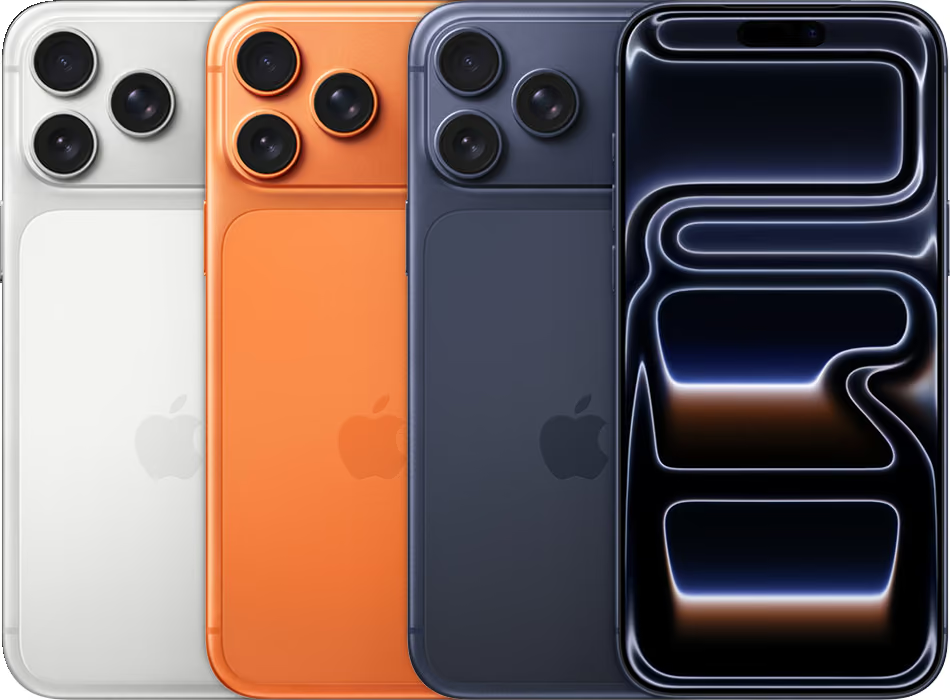
The 17 Pro Max put the larger battery and storage on the large screen
The 17 Pro Max shared the smaller Pro’s updated rear cameras and thermal design. Its 6.9-inch display, longer rated battery and optional 2 TB of storage made it a different purchase if you wanted to see more of the work you were doing and keep it with you. The older question of whether this much phone suited your grip and carrying habits still applied. The reason to buy the Max was how often those three things helped you finish a real task.
Quick verdict
Retail release in the United States · Archive date
I would have chosen this Max if the large display and battery helped me finish an existing workload while away from another screen or charger.
Best for: A buyer who regularly needed to see more screen or keep many locally recorded files while deciding what to do with them.
Main benefit: The 6.9-inch display and higher US battery rating make more room to shoot, review and continue working, with an optional 2 TB tier.
Biggest drawback: It costs more and demands greater physical room to carry. The smaller Pro shares the camera options and much of the same sustained hardware.
Reviewed version: The September 19, 2025 US iPhone 17 Pro Max, using eSIM in this market and beginning at 256 GB.
Compatibility: It shipped with iOS 26, USB 3 support with the right equipment and MagSafe. Power specifications differ in some markets with a SIM tray.
Review context: I evaluate the documented retail hardware and the software available in its release window. Regional variants and software changes are identified where they affect the verdict.
I owned this Max as part of having every iPhone. The iPhone 17 Pro Max went on sale September 19, 2025 in the US, starting at $1,199 for 256 GB. Both Pros were available from the same day. This is a look at how I would have compared the US models during their first weeks, with separate capacity and battery figures from the market that actually sold the device. Apple’s US Pro launch specifications
The larger frame gives you a useful way to check what you took
Try recording an event from a place where moving closer is impractical. The new native 4x telephoto can give you a different short video from the main camera. The 8x sensor-based view could pick out a smaller detail in suitable conditions. The broader screen helped me see whether the important part stayed where I needed it during movement. I would have inspected the frame at the size it would eventually be seen, looking at the subject and the surroundings separately. Sometimes a wider picture is the one that tells the useful part of the story.
Related reading

Both Pros gave you the same set of these rear camera options. A person who takes a shot and moves it to another screen within seconds might see the advantage of the more compact model. Somebody who often checks motion or readable text before leaving a place has a reason to look at the larger view. I would also have tried holding it for the length of a typical shot. Weight and the distance to a control are more noticeable after a short sequence than they are when you pick it up once.
Power away from a desk depended in part on the market you bought it in
Apple rated the eSIM-only 17 Pro Max for up to 39 hours of video playback. Some versions with a physical SIM tray used other battery capacities. I would have compared measurements for the actual market and device, because the same name did not guarantee the same quoted figure. A phone mostly used at home or at a desk offers plenty of opportunities to charge. Somebody recording and using a map outdoors can have a stronger need for extra power in the bag or phone itself. Apple playback specifications tell you how the models compare in one described exercise, rather than what will happen throughout your own working day.
A sustained capture or processing job can also use much of that available energy. Apple’s cooling design shared by the Pro and Max spreads the heat of such jobs. I would have checked how the whole setup felt while holding or mounting it, including the case and equipment I needed. It makes more sense to consider the duration of the heaviest requirement than to expect every workflow using a large iPhone to run in the same way.
The 2 TB option was best understood through particular files
The Max was the only launch model in this pair with Apple’s 2 TB tier. If you needed to keep a lot of source material until you could process it, that capability could be worth buying. Adding capacity does not make a file more convenient to share or remove the need to keep copies of important work. I would have counted by the clips and projects I regularly had open and worked out how long they stayed on the phone. For someone mainly keeping photographs, messages and large offline maps, the 256 GB or middle tiers might already be a good fit.
The option to record certain demanding formats directly to compatible storage could also make the choice of internal capacity less important for a particular assignment. It adds separate hardware that has to stay powered, connected and steady. A buyer who frequently moves files should practise the handoff using the intended USB cable and device. Start with the reason you wanted access to the larger display and then decide which combination of capacity and workflow will actually work there.
If the Max is your everyday screen, test a day with fewer charging options
A shot at one end of a journey, a search, several hours without a desk and a second set of pictures give the larger battery and display time to have an effect. I would have imagined it with the tone and brightness I usually set, rather than with a test clip running continuously. If the extra headroom lets you keep the instructions on display and get all the way through the last job, there is a concrete reason to carry the heavier device. If a short stop to charge solves the same issue, the change can have more to do with where you want to work than needing the largest rating.
Related reading

A body that is easy to mount and use with a cable can also make a bigger battery less central, depending on the job. Try looking at what happens when the phone has a power source, when the port goes to a compatible drive and when you need to move a prepared file instead. Those can be three distinct cases. The larger display remains as a constant through each. For a purchase, I would have considered which case normally left me wishing for the extra screen or the free port, then compared the price of capacity with the amount of work usually in hand.
My verdict on the iPhone 17 Pro Max
I would have chosen the Max when the screen and battery rating could make enough of a difference to the long part of my schedule. The upper storage tier strengthened the case if I already knew why I needed it. The iPhone 17 Pro recorded essentially the same images and clips without the largest body. The iPhone model timeline keeps these two September choices alongside the Air and the regular 17.
What worked
The 6.9-inch display and higher US battery rating make more room to shoot, review and continue working, with an optional 2 TB tier.
The broad preview was a useful part of seeing what the new Telephoto captured before leaving a place.
What bothered me
It costs more and demands greater physical room to carry. The smaller Pro shares the camera options and much of the same sustained hardware.
An oversized display could still be a worse fit in a particular mount or while one hand was occupied. Large local files still had to go somewhere.
Who should not buy it
Someone buying solely for the common Pro cameras and preferring the 6.3-inch Pro or a lighter camera to carry.
Alternatives I would consider
iPhone 17 Pro. The smaller model shares the core rear hardware, cooling design and port. It delivers less room to view a clip and a lower rated battery. Read my iPhone 17 Pro review.
Evidence and sources
The release date refers to general availability in the named market. The archive filing is ten days later. Feature assessments are editorial judgments based on the documented retail model.
Features, compatibility and rated figures from the maker are manufacturer information. My opinions are identified in the review.
Conclusion
Buy the highest capacity only if you can account for useful work that stays on the phone. Choose separately for the screen and the battery.
One email a week with practical Mac workflows, useful comparisons and honest tech recommendations.