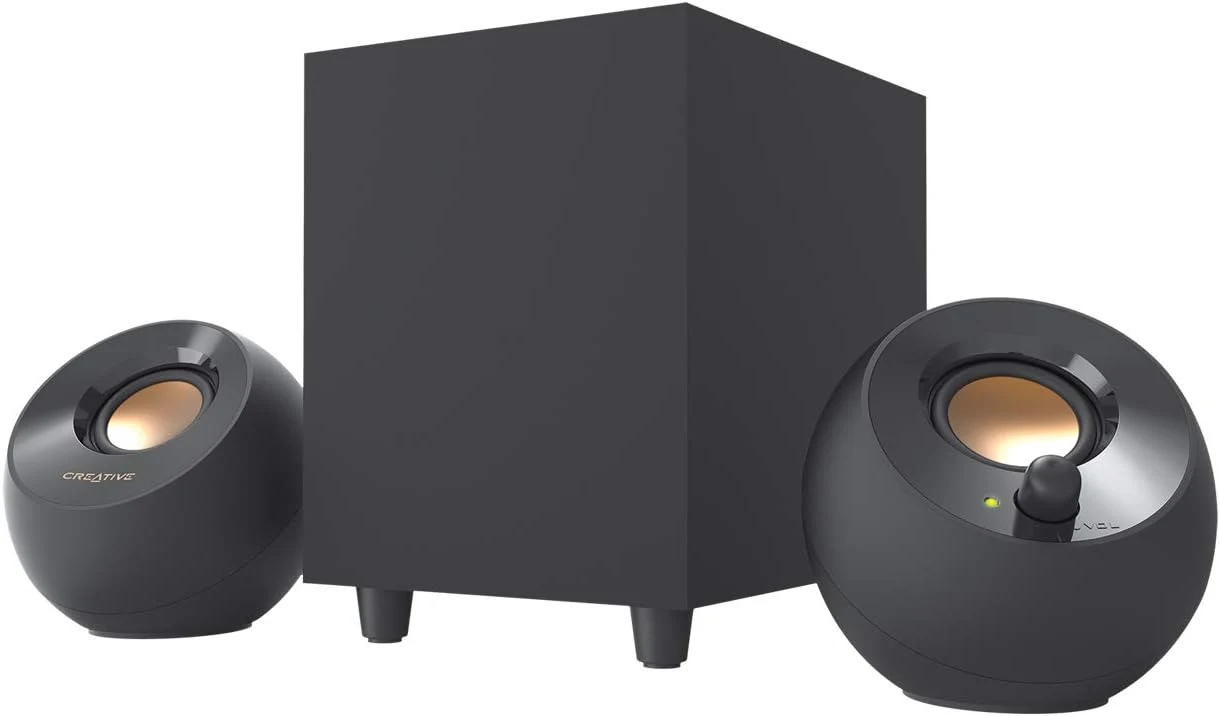
Small speakers are appealing when they leave useful space on a desk. The Creative Pebble Plus adds another decision: the compact satellites work with a separate bass enclosure. I like that idea when the whole arrangement fits the room, rather than choosing from the attractive size of the two visible desktop pieces alone.
Quick verdict
I would choose it for a small desk with a suitable analogue output and room for the subwoofer.
Best for: I would choose it for a small desk with a suitable analogue output and room for the subwoofer.
Main benefit: The small satellites and accessible volume control make a focused desktop speaker arrangement possible.
Biggest drawback: The separate bass enclosure and several cable paths take more room than the satellite size suggests.
Creative Pebble Plus Speakers
Amazon US · US
Check price and availability: Creative Pebble Plus Speakers at Amazon USAffiliate link. As an Amazon Associate I earn from qualifying purchases.
Reviewed version: Creative Pebble Plus 2.1 USB-Powered Desktop Speakers with Powerful Down-Firing Subwoofer and Far-Field Drivers, Up to 8W RMS Total Power for Computer PCs and Laptops (Black)
Compatibility: Pebble Plus MF0480, 2.1 analogue 3.5mm input with separate USB power. USB power is not USB digital audio; check the specified supply for the chosen gain mode.
Review context: I assess near-desk listening, satellite position, subwoofer space, cable paths and suitable USB power.
I would shortlist this system for nearby listening through a suitable analogue output, with a clear place for the subwoofer and cables. This is a research assessment, not a claimed listening test. The useful question is whether a small 2.1 system serves the desk better than a simpler pair or headphones, including the power arrangement needed for the intended use.
USB power and audio are different connections
Creative’s product-parts information identifies the Pebble Plus power and audio paths. The system uses USB for power and a 3.5mm input for audio. I would not buy it expecting a single USB digital-audio connection just because a USB plug appears in the photographs.
Related reading

That matters for laptops without a headphone socket. A suitable audio adapter may be necessary, and the power source still needs its own place. I would account for both before ordering. A simple speaker system can remain simple, but only when the host and cable plan match the product’s actual design.
I would also distinguish the supported power requirements for the intended mode. The selected listing describes a higher-gain arrangement with an appropriate separate supply. I would follow Creative’s guidance rather than assume every computer USB port provides the same result. A working power indicator does not establish that every advertised operating condition has been met.
The satellites should point at the listener
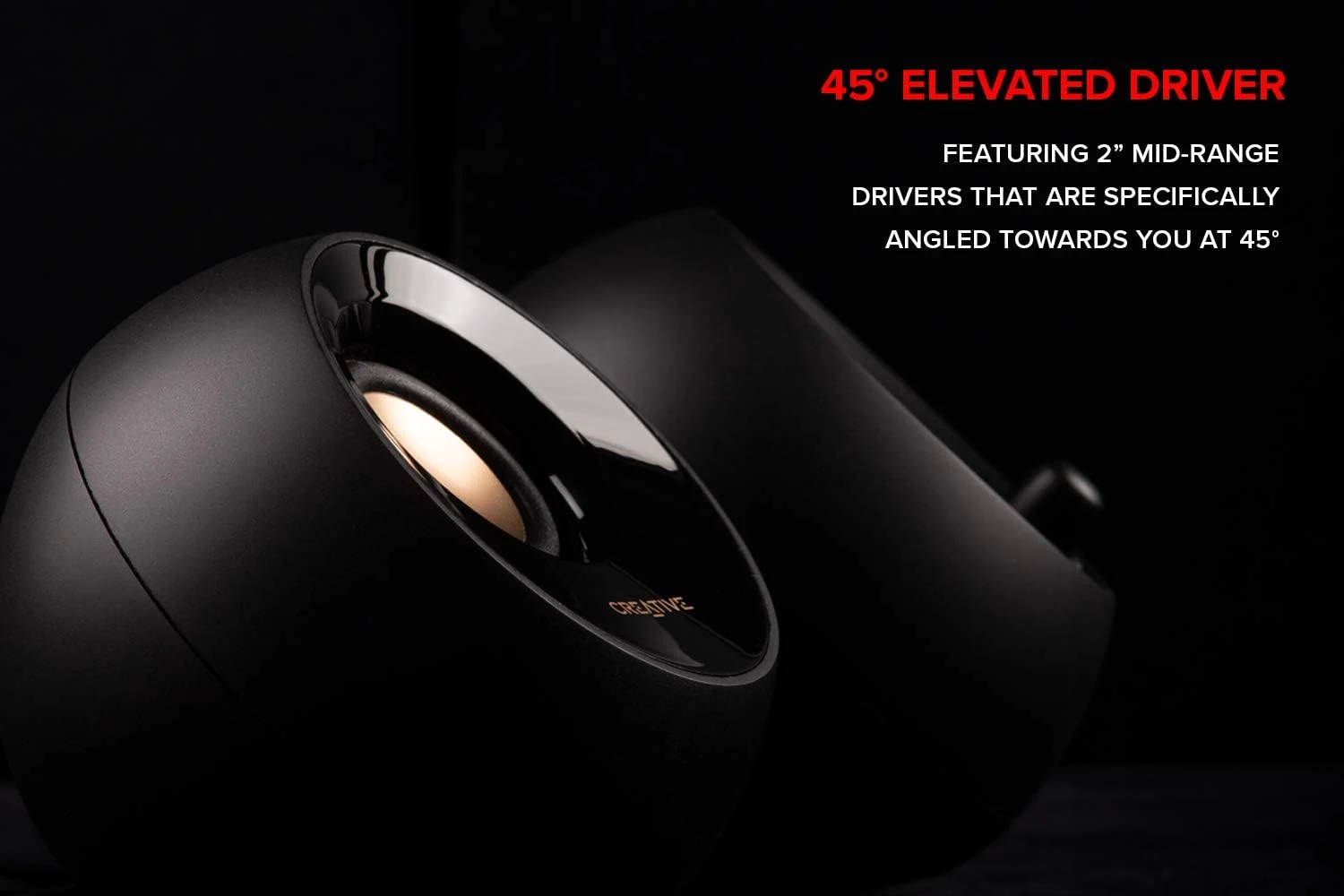
The tilted speaker design is a clear desktop idea. I would place the satellites so the intended listening position makes sense relative to them, rather than hide one behind a monitor and leave the other exposed. A small pair is most useful when both have a reasonable path to the person at the desk.
I would begin with a balanced left-right arrangement and ordinary volume. A display, wall or large object can change how a small desk system presents itself. I would make simple placement adjustments before reaching for processing or assuming a larger speaker is automatically needed. The physical setup is part of the listening result.
The front volume control is a practical attraction. I like a clear physical way to adjust a desk system without looking for a software slider. I would put the controlling speaker within comfortable reach and keep the cable path from pulling it out of position. A convenient knob is useful only if the final desk layout leaves it accessible.
The subwoofer needs a real home
A separate bass enclosure is not free in a small room. It needs space around the desk, a sensible cable route and a location where it will not be kicked or covered. I would plan that position before buying rather than discover that the only available place conflicts with feet, storage or a moving chair.
Related reading

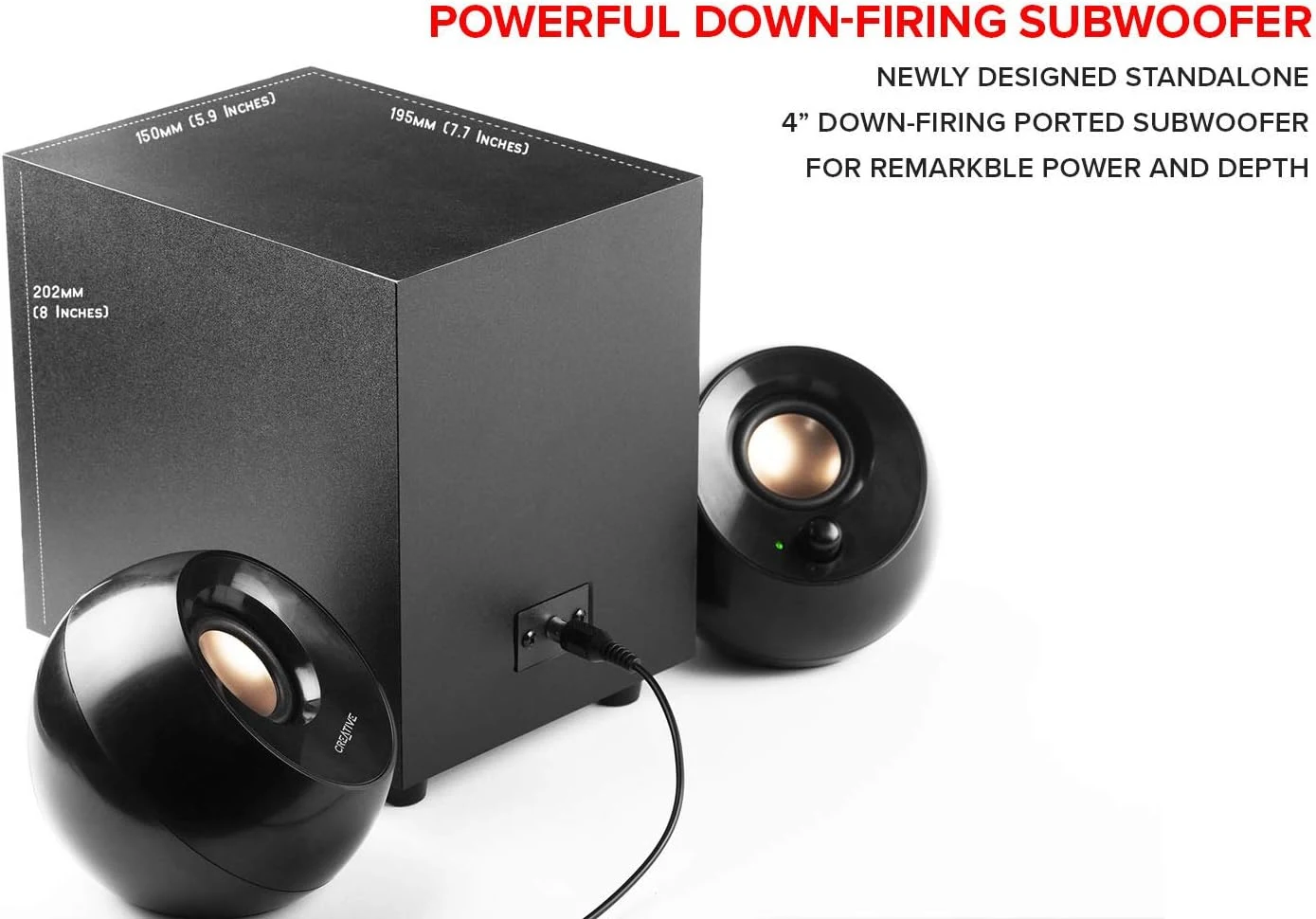
I would also consider nearby people. Low-frequency sound can be more noticeable beyond the immediate listening position than the satellite size suggests. A desk in a shared room or a quiet household may call for a different balance. I would choose the system for the actual environment rather than expect a small product to be automatically unobtrusive.
I would not turn the separate bass box into a claim about the quality of bass I have personally heard. Driver size and power figures describe parts of a design, while the room and listening preference shape the experience. Familiar music at sensible levels remains the useful final check when an audition or return route is available.
A desk system should follow the ordinary content
For calls, video and background listening, I would ask whether voices remain clear and the controls are easy to use. For deliberate music listening, I would use familiar recordings and a stable position. Those tasks can lead to different preferences without either being wrong. A product should serve the content played most often.
I would also separate playback from microphone capture. Speakers near a microphone can create another audio path during a call or recording. The application may manage that situation, but a headphone can be the simpler choice for some tasks. A desk speaker purchase should not remove a practical communications option that already works.
The overall power claim is manufacturer information, not a measurement from this review. I would not use it to promise coverage of a large room or compare loudness directly with another product’s differently stated figure. The Pebble Plus makes a clearer case as a nearby desk system with the required supply and connections.
Related reading
Simpler can be the better alternative
I would choose a 2.0 pair when reducing wiring and avoiding a separate bass enclosure are the priorities. I would choose headphones when privacy matters most. Pebble Plus is appealing when the small satellites and separate low-frequency unit form a sensible whole in the available space.
My assessment is positive for that focused desk role. I would check the exact MF0480 package, power requirements and current offer before buying. The value is an easy-to-control listening arrangement that fits the room, rather than a pair of tiny visible speakers whose additional enclosure, cables and source requirements have been left out of the purchase decision.
The product images come from the selected listing and identified manufacturer materials. My assessment uses the linked product information and the buying decisions explained here. Specifications are manufacturer or retailer claims; the conclusions are my own editorial judgement.
What worked
The small satellites and accessible volume control make a focused desktop speaker arrangement possible.
What bothered me
The separate bass enclosure and several cable paths take more room than the satellite size suggests.
Who should not buy it
Someone wanting one-cable USB digital audio, wireless streaming or a large-room speaker system.
Alternatives I would consider
A simple 2.0 desktop pair. I would choose it when fewer cables and no separate bass enclosure matter most.
Headphones. I would choose them when private listening is more important than sound in the room.
Evidence and sources
The linked product documentation and exact retailer listing support the product details. Images: Amazon product gallery. These are not personal test photographs or measurements.
Features, compatibility and rated figures from the maker are manufacturer information. My opinions are identified in the review.
Conclusion
Worth considering when the complete 2.1 arrangement fits; a simpler pair may be better if floor space and wiring are limited.
Creative Pebble Plus Speakers
Amazon US · US
Check price and availability: Creative Pebble Plus Speakers at Amazon USAffiliate link. As an Amazon Associate I earn from qualifying purchases.
One email a week with practical Mac workflows, useful comparisons and honest tech recommendations.