The Ryzen 9 9950X interests me when a desktop has a clear working purpose: completing substantial CPU tasks while leaving room for the next one. AMD’s sixteen-core, thirty-two-thread specification gives it a strong identity. I would consider it for a machine built around serious parallel work, with the supporting parts chosen just as deliberately as the processor.
Quick verdict
I would choose it for a deliberate workstation build whose applications give sixteen cores regular useful work.
Best for: A reader building around substantial parallel processing and a supported AM5 configuration.
Main benefit: AMD documents sixteen Zen 5 cores and thirty-two threads for a clearly defined high-core desktop role.
Biggest drawback: The complete build needs DDR5, an appropriate motherboard and separate cooling; those costs belong beside the CPU.
Ryzen 9 9950X boxed processor, AMD product ID 100-100001277WOF, selected standalone non-X3D CPU offer
Amazon US · US
Check price and availability: Ryzen 9 9950X boxed processor, AMD product ID 100-100001277WOF, selected standalone non-X3D CPU offer at Amazon USAffiliate link. As an Amazon Associate I earn from qualifying purchases.
Reviewed version: Ryzen 9 9950X boxed processor, AMD product ID 100-100001277WOF, selected standalone non-X3D CPU offer
Compatibility: AM5 motherboard with exact 9950X support and required firmware, supported DDR5 memory and suitable separate CPU cooling. Confirm the display route, graphics requirements and cooler/case compatibility.
Review context: I assess sustained parallel CPU work, simultaneous tools, AM5 and DDR5 platform cost, the separate cooler and the distinction from 9950X3D.
This is the standard Ryzen 9 9950X, not the separate 9950X3D. AMD identifies the boxed product as 100-100001277WOF and lists 15 August 2024 as its launch date. The selected Amazon US offer names the 9950X. I would keep that full model name beside the buying decision, because a shared Ryzen 9 label does not make different processors interchangeable.
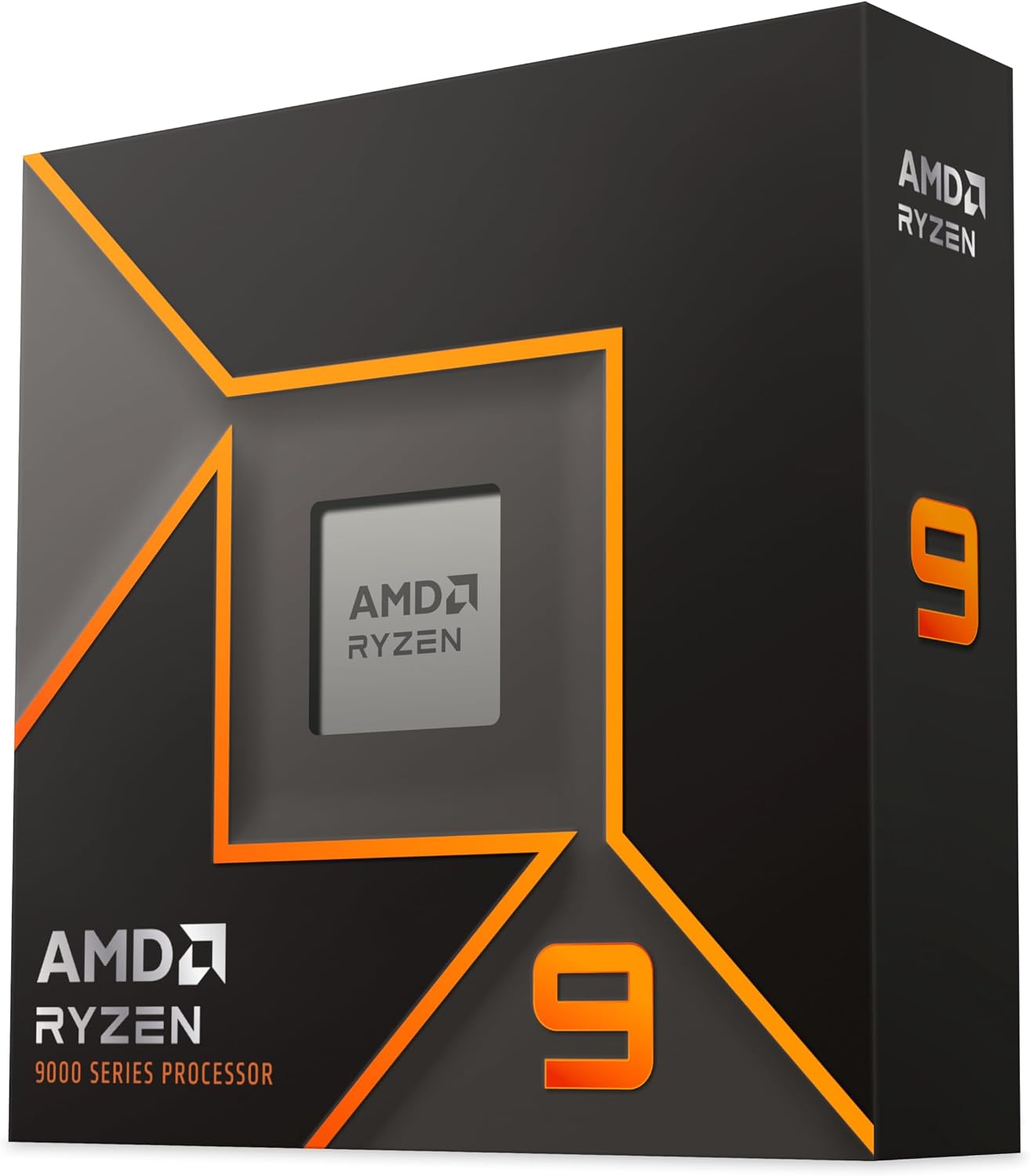
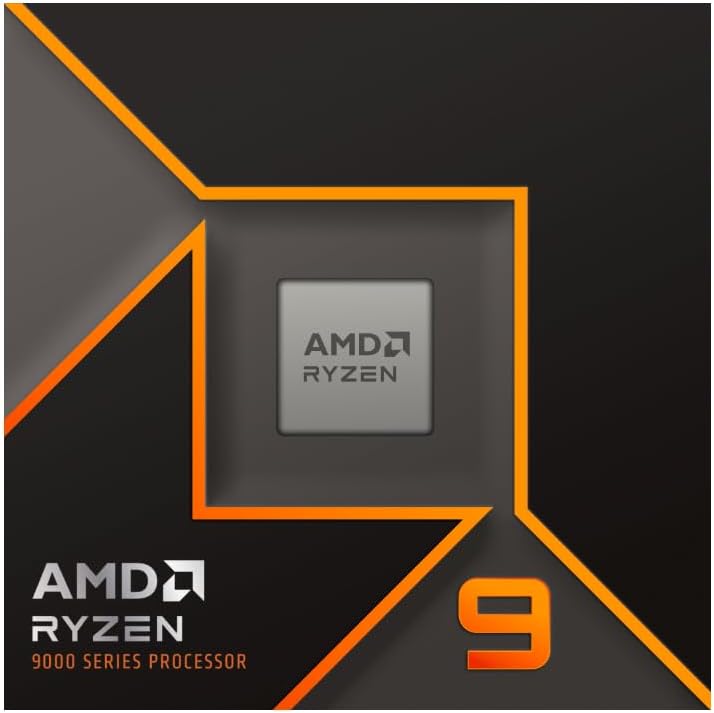
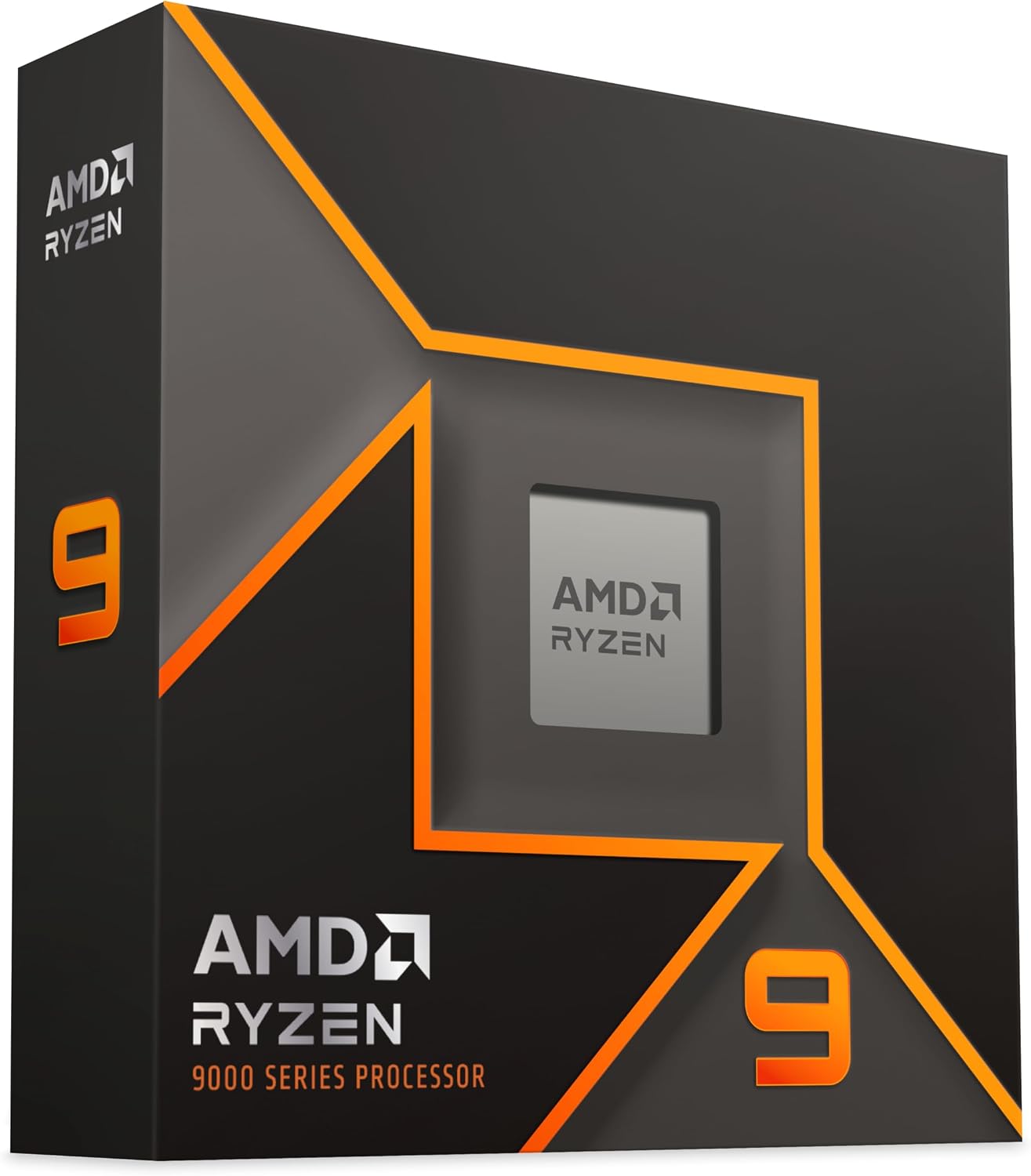
Product images: the selected Amazon listing’s promotional Ryzen 9 9000-series packaging views. These show the packaging family; the selected offer identifies the exact processor.
Related reading

A high core count needs a queue of useful work
AMD documents Zen 5 architecture, sixteen cores and thirty-two threads. I find that combination attractive for a desktop whose applications can divide demanding tasks across the processor. Rendering, building software and processing a batch of work are reasons I would investigate it. The application and project remain part of the decision, rather than disappearing behind a headline core count.
For software work, I would distinguish a full rebuild from the small edits made throughout the day. Those tasks can use the same machine differently. I want the purchase to improve a problem that occurs often enough to matter. If most waiting comes from network access, storage or a serial tool, I would address that before treating a larger processor as the answer.
I also value thinking about simultaneous work. A desktop may need to run development services while another task finishes. That is a plausible reason to compare a processor with this amount of capacity. I would still check memory needs alongside the CPU: keeping more tasks active is less helpful if their working data does not fit comfortably in the planned system.
AM5 and DDR5 make this a platform choice
The manufacturer specifies AM5 and DDR5. I would build the budget around that combination from the beginning. Someone arriving from an older DDR4 machine should compare the processor, motherboard and memory together. I like the 9950X’s purpose more when the whole build supports the intended workload, rather than when the CPU absorbs money needed elsewhere.
The board needs an exact compatibility check, including the required firmware and the features used by the project. A list of supported chipsets is useful context, but the particular board’s support information is what I would follow. Expansion slots, storage connections and memory support can make two apparently similar boards suit different working machines.
I would choose memory capacity before chasing a prominent speed label. A development environment with several services or a large creative project has its own requirements. AMD’s memory specifications describe supported configurations; they are not a reason to assume every kit and board combination behaves identically. I prefer a supported arrangement that fits the actual work.
Related reading

Cooling is part of the specification
AMD lists a 170W default TDP, does not include a cooler and recommends liquid cooling for optimal performance. I would take those points seriously when planning the case and budget. The processor’s price is only one part of an appropriate installation. Radiator space, cooler mounting and airflow belong in the first drawing of the build.
I would not translate that cooling recommendation into a claim about the noise of every finished PC. A cooling system and its controls still need to suit the room and workload. For a working desktop, I care about the complete arrangement being comfortable to share a room with during a long task. I would compare cooler and case guidance together.
Extra tuning is optional in my buying judgement. The useful first goal is a supported system running the intended applications reliably. I would establish that baseline before changing power or voltage settings. An expensive processor does not make stability checks less important, and an unlocked specification does not create an obligation to use every available control.
Graphics and gaming deserve separate decisions
AMD lists integrated Radeon graphics. I like having that documented option when planning a supported motherboard display connection. It gives the build another question to settle explicitly: is the intended display route enough, or does the application need a dedicated graphics card? I would make that decision from the software and board requirements.
For a game-focused purchase, I would also read my Ryzen 9 9950X3D review. The extra suffix identifies another processor, with a different design to assess. I would compare relevant evidence for the actual games before choosing between them. Sixteen cores alone would not settle that choice for me.
Related reading

Buy the working capability you need
The twelve-core Ryzen 9 9900X is the comparison I would make when the workload needs a substantial CPU but does not justify choosing sixteen cores. I would put the difference in complete build cost beside the actual tools. A useful step down in one component can leave room for memory, storage or graphics that the job needs more.
The 9950X gets a positive recommendation from me for a deliberate AM5 workstation build with well-understood parallel work. I like its clear high-core purpose. I would choose a different processor for a lighter routine, or when buying this one would force compromises in the parts that make the whole computer useful.
What worked
The exact non-X3D model has a clear sixteen-core working purpose.
AMD documents AM5, DDR5 and integrated Radeon graphics, allowing the supporting configuration to be planned explicitly.
What bothered me
No cooler is included; AMD recommends liquid cooling for optimal performance.
A large core count does not explain or solve every application bottleneck.
Who should not buy it
I would choose a more suitable processor for a light routine, or when this CPU would force compromises in the other parts the work needs.
Alternatives I would consider
AMD Ryzen 9 9900X. I would compare twelve cores when the workload does not justify selecting sixteen. Read my AMD Ryzen 9 9900X review.
AMD Ryzen 9 9950X3D. I would make a separate, game-specific comparison when the X3D design is relevant to the intended build. Read my AMD Ryzen 9 9950X3D review.
Evidence and sources
AMD supplies the exact boxed identity, documented specifications and launch date. The selected Amazon product identifies the offer. The buying recommendation weighs those details against the intended computer.
Features, compatibility and rated figures from the maker are manufacturer information. My opinions are identified in the review.
Conclusion
I would justify the high-core purchase against the actual applications and the twelve-core alternative, while keeping enough budget for memory, storage and graphics.
Ryzen 9 9950X boxed processor, AMD product ID 100-100001277WOF, selected standalone non-X3D CPU offer
Amazon US · US
Check price and availability: Ryzen 9 9950X boxed processor, AMD product ID 100-100001277WOF, selected standalone non-X3D CPU offer at Amazon USAffiliate link. As an Amazon Associate I earn from qualifying purchases.
One email a week with practical Mac workflows, useful comparisons and honest tech recommendations.