I am the author of Small Budget, Big Japan: A Practical Guide to Planning an Affordable Trip. I earn author royalties from sales, and the labelled Amazon link can also earn an affiliate commission. This is my own explanation of the guide, based on the actual prepared manuscript and page images, rather than an independent traveller’s review.
Quick verdict
I recommend considering it as a dated planning companion for manageable routes and honest whole-trip costs.
Best for: A traveller choosing affordable whole days and a selective route rather than collecting every free admission.
Main benefit: The actual manuscript joins budget models, city sections, flexible routes and ordinary travel practicalities.
Biggest drawback: Access, transport offers and prices change; route descriptions and planning allowances are not current bookings or turn-by-turn maps.
Small Budget, Big Japan: A Practical Guide to Planning an Affordable Trip; known 290-page black-and-white paperback
Amazon US · US
Check price and availability: Small Budget, Big Japan: A Practical Guide to Planning an Affordable Trip; known 290-page black-and-white paperback at Amazon USAffiliate link. As an Amazon Associate I earn from qualifying purchases.
Reviewed version: Small Budget, Big Japan: A Practical Guide to Planning an Affordable Trip; known 290-page black-and-white paperback
Compatibility: Known paperback ASIN B0HPL88Q2G, ISBN 9798166015426, 6×9 inches, 290 black-and-white pages. A prepared Kindle package does not establish a current Kindle offer.
Review context: The overview uses the actual manuscript, corrected metadata and genuine cover and interior renders. It does not claim personal inspection of every destination.
The idea I like most is that a good day in Japan does not need to be organised around admission tickets. A neighbourhood walk, a public garden or time beside a river can give a trip real shape. The budget still needs to account for the transport, bed, food and ordinary practicalities that make that day possible. Free entry is only one part of the decision.
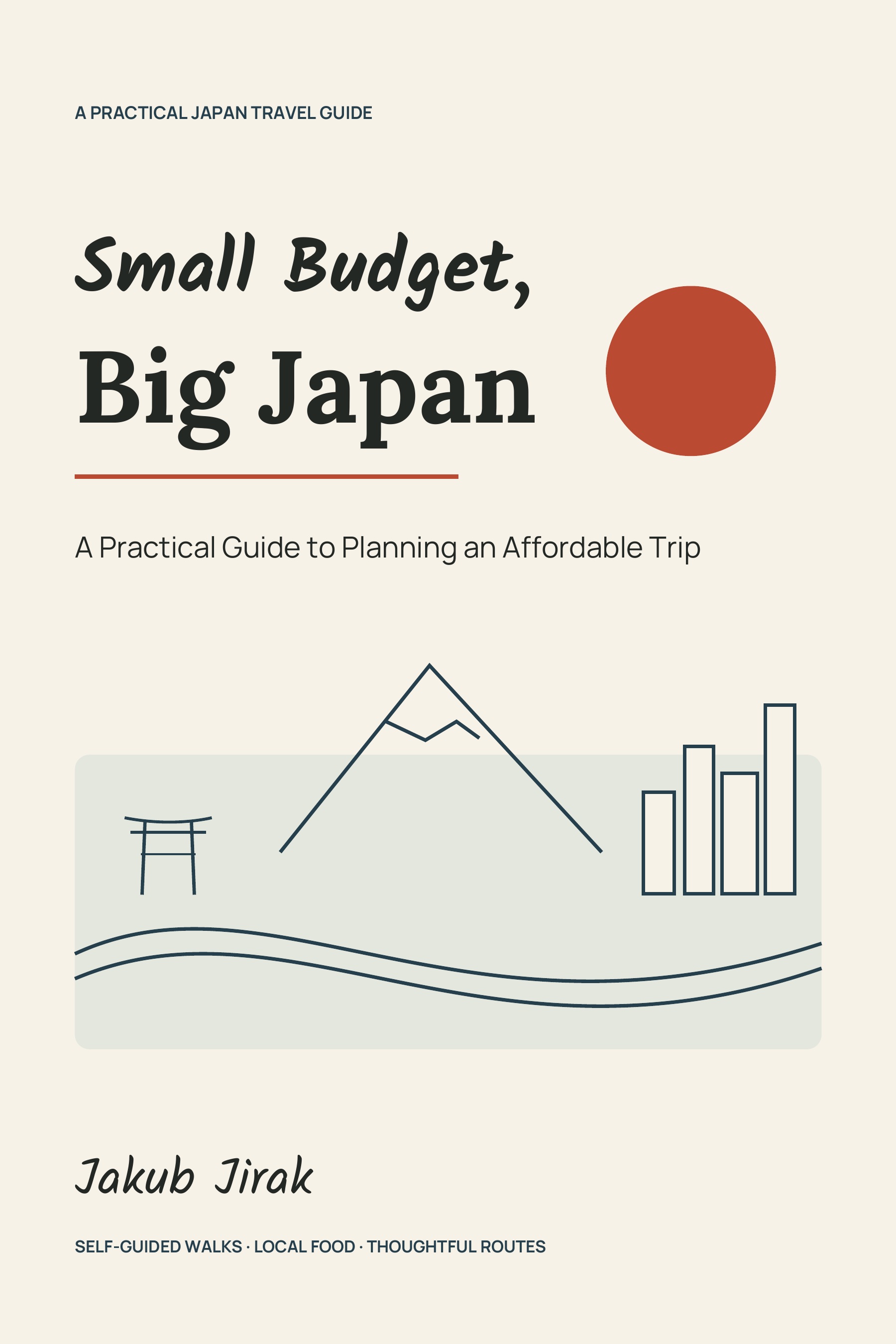
Small Budget, Big Japan cover
The reader I have in mind
I would recommend considering this book to a traveller who wants to plan a manageable route and spend deliberately. The prepared edition is a 290-page, black-and-white paperback in a six-by-nine-inch format. Its title is about making the whole trip affordable, not collecting the greatest possible number of places that charge no admission.
I would be particularly interested in a reader willing to leave some destinations for another journey. A map full of attractive pins can become an expensive sequence of transfers. The manuscript encourages choosing bases and thinking about what each move gives back in time and experience. That is a more useful budget conversation than treating every new destination as a free addition.
I would choose a different resource for someone who wants a comprehensive current directory of every hotel, restaurant or opening time. This is a planning guide with selected route material and practical decisions. Its value is strongest when the reader uses it to build their own realistic trip, then checks the details that can change.
Start with the kind of day you want
The opening pages ask the reader to begin with the day rather than the ticket. I like that framing because it leaves room for a meal, a rest and a change of weather. A plan can be full of technically free places and still demand more energy or transport money than the traveller intended to spend.
I would begin by choosing a neighbourhood or manageable area, then add the experience that matters most. That gives the rest of the day a centre. A route should make it possible to enjoy a place, rather than turn the person into a courier delivering themselves between distant attractions.
The manuscript also distinguishes free public areas from optional paid buildings and experiences. A park and the building inside it can have different access arrangements. A market may be free to browse while the meal still belongs in the budget. Those distinctions help prevent a promising headline from becoming an unexpected bill.
The planning comes before the bargain
The book’s opening planning material covers season, trip length and a whole-trip budget. I would read that before comparing isolated deals. A cheap room in an inconvenient location can create another transport cost, while a modestly more expensive base may make the intended days easier to manage.
I would compare arrival and departure choices together with the route. The cheapest single component is not necessarily the cheapest useful journey. The manuscript’s route-first approach makes it easier to ask whether a transfer adds enough value to justify its time and cost.
The actual budget pages use planning models and allowances. I would replace those assumptions with the traveller’s current offers and preferences. They are a way to think through the arithmetic, not a promise that the same accommodation or transport price can be booked at the moment someone reads the book.
A guide to use selectively
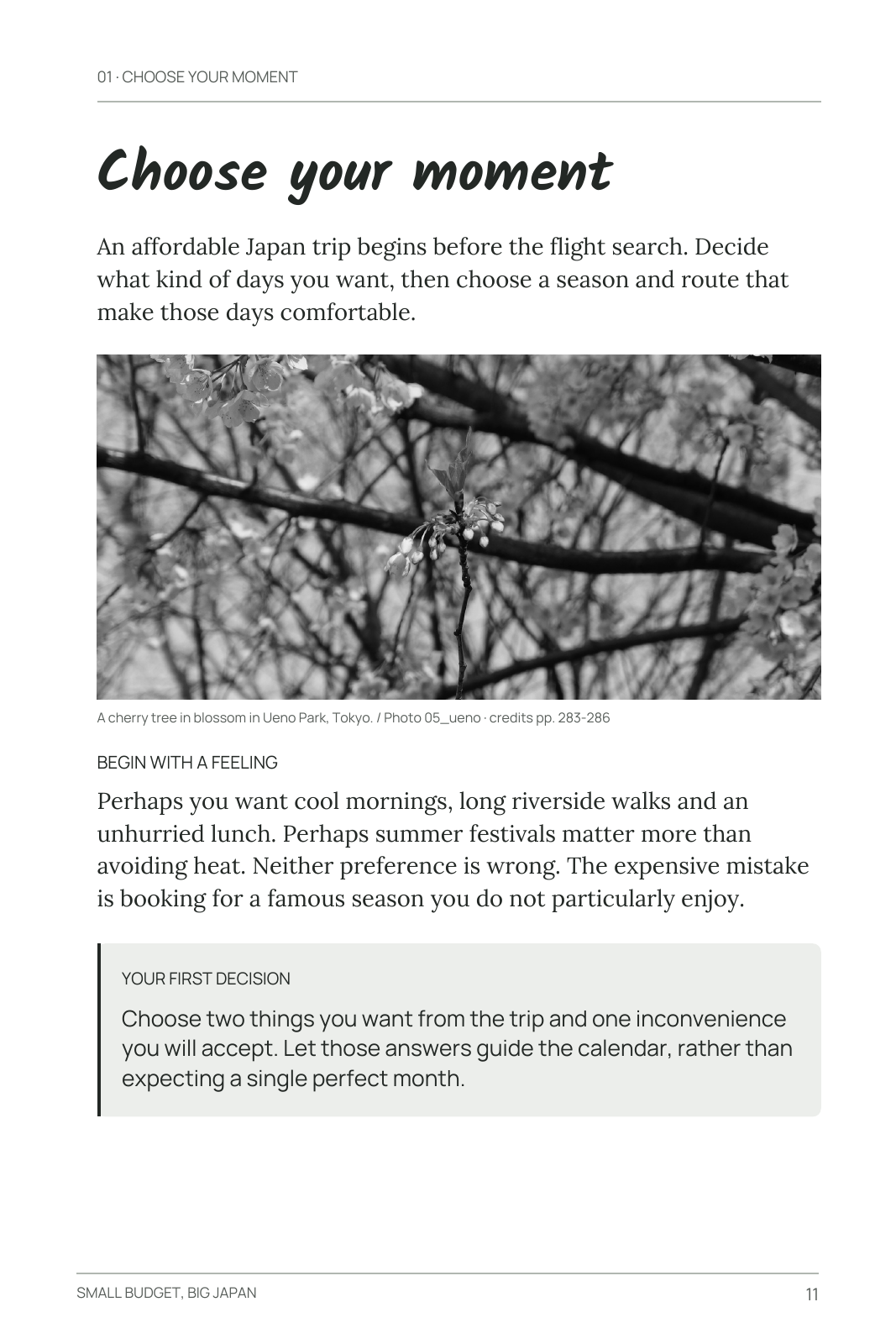
Page 11: Choose your moment. Photograph 05_ueno; full credit accompanies source pack. Photograph in the page: Guilhem Vellut, Ueno Park, CC BY 2.0. Adapted for this edition: crop, proportional resizing and grayscale conversion.
The manuscript’s instruction is to read the planning material and carry the city sections relevant to the real route. I like that because the reader does not need to visit every destination to use the book well. A shorter trip can still feel complete when its days fit together.
The actual content includes material around Tokyo, nearby excursions, Kyoto, Osaka, Hiroshima and Fukuoka, with wider route planning and field advice. I would choose the sections that support the bases already selected. More possible destinations should give the reader options, not create a new obligation to keep moving.
The route descriptions are frameworks rather than turn-by-turn navigation. I would mark the relevant start and finish in a current navigation app and keep an offline map where useful. A printed description cannot establish that every path is open or that a particular access arrangement remains unchanged.
Weather and energy are budget questions too
The prepared contents include adapting a route when weather changes and adjusting for limited mobility. I would treat those as normal planning decisions, not evidence that the trip has gone wrong. A shorter comfortable day can offer better value than spending money and energy trying to preserve every detail of an earlier plan.
I would leave some room in both the schedule and budget for a practical alternative. A permitted indoor visit, a different meal location or an earlier return can keep the day useful. The book’s flexible approach appeals to me because it recognises that the person taking the trip is not a fixed input to a spreadsheet.
Families and couples also need their own arithmetic. The manuscript has a section explicitly asking them to build a fresh model. I would not multiply a solo allowance and assume the result describes every group’s needs. Accommodation, pace and transport choices can change together.
Practical pages belong beside the routes
The later field material includes ordinary travel subjects such as laundry, rest, phone use, keeping money available and preparing before departure. I like keeping those subjects visible. They may not be the most photogenic part of a journey, but they can determine whether an affordable plan remains usable after several days.
The manuscript also includes etiquette and official update sources. I would use the guide to identify the question, then consult the relevant current source before a consequential booking or decision. Visa rules, access conditions, transport offers and emergency guidance can change after an edition is prepared.
I would not treat a schematic diagram as a navigation map or a planning estimate as a measured route guarantee. The publication notice makes those limits explicit. Knowing what kind of information a page provides is part of using a travel guide well, especially when the next decision involves real money or an unfamiliar place.
The images show the actual edition
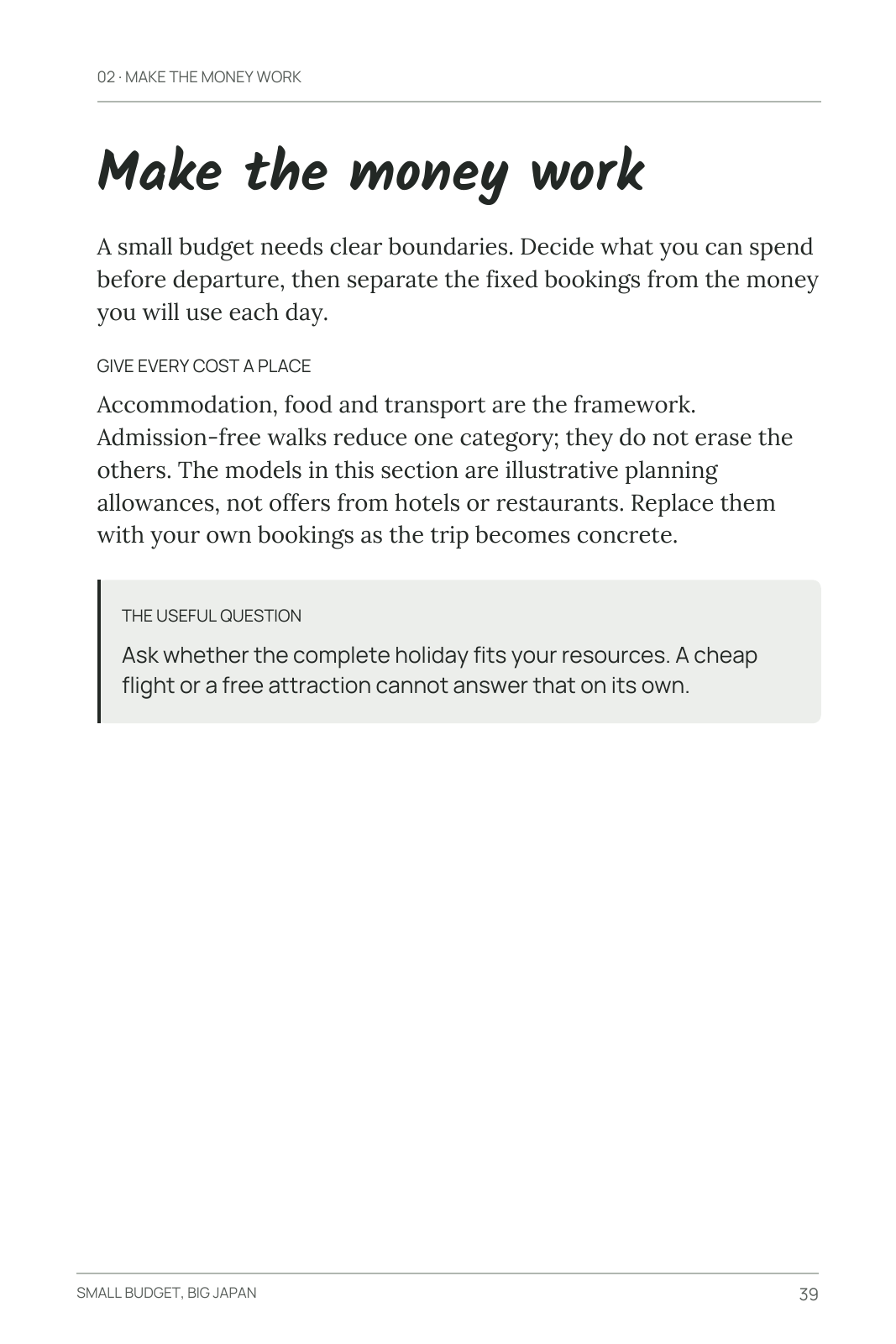
Actual interior page 39: Make the money work, with budget planning guidance.
The cover and two interior examples on this page come from the prepared book files. One example shows the season-planning page and another shows budget guidance. They let the reader see real material from this edition rather than a generated scene of somebody holding a book that does not demonstrate its contents.
The photographs within the guide have their own credited creators and licences. The illustrated Ueno page shown here includes the separate photograph credit beside the image. My authorship of the guide does not turn those photographs into personal travel evidence or remove the source creator’s rights.
I would use those page examples to assess the general presentation, while checking a current store sample if layout is the deciding factor. A small set of images cannot demonstrate every page. The paperback’s black-and-white format is also a real part of the purchase, rather than a promise of a full-colour photography book.
What I would check before buying
This page links the known paperback ASIN B0HPL88Q2G. A Kindle package exists locally, but a current public Kindle product identifier is not established here. I would choose the exact format shown in the store rather than assume a separate prepared file is currently available to purchase.
The current subtitle is A Practical Guide to Planning an Affordable Trip. An earlier subtitle referred to free sights, local food and smarter routes; that is an earlier identity of this same book, not another guide to buy. I would check the title, format and current store offer together before completing a purchase.
I do not give a static sale price or a claim of immediate stock on this page. The useful buying question is whether the guide’s planning approach fits the intended trip. A temporary discount should not decide whether someone needs this kind of route-and-budget support or a different reference.
The alternative I would choose
For a traveller whose route is already fixed and who only needs one current opening time, the destination’s official page is the better first stop. For someone comparing a complex transport purchase, current operator information should establish the actual terms. I would use this book for the wider shape of the trip and those sources for the decisions that need fresh facts.
My author recommendation
I recommend considering Small Budget, Big Japan when you want a trip organised around useful whole days and honest total costs. I like its selective route approach and space for ordinary needs. I would buy it as a dated planning companion, verify changing details before paying and leave enough freedom for the actual journey to be enjoyable.
What worked
The actual manuscript joins budget models, city sections, flexible routes and ordinary travel practicalities.
What bothered me
Access, transport offers and prices change; route descriptions and planning allowances are not current bookings or turn-by-turn maps.
Who should not buy it
I would use an official current source for one opening time, transport offer or consequential travel requirement rather than treat a printed guide as live information.
Alternatives I would consider
The destination's current official visitor information. I would use it for current access and opening arrangements after selecting a route.
The relevant transport operator's current information. I would use it to establish the exact fare, eligibility and terms before a consequential purchase.
Evidence and sources
The description is based on the actual prepared manuscript and its recorded contents; illustrations are the real cover and interior page renders.
This is the author's account of the book's scope and intended reader. Check the selected Amazon edition for its current format, sample and availability.
Conclusion
Worth considering when the planning approach fits the trip; verify changing facts before paying and choose the current exact edition.
Small Budget, Big Japan: A Practical Guide to Planning an Affordable Trip; known 290-page black-and-white paperback
Amazon US · US
Check price and availability: Small Budget, Big Japan: A Practical Guide to Planning an Affordable Trip; known 290-page black-and-white paperback at Amazon USAffiliate link. As an Amazon Associate I earn from qualifying purchases.