The Future of Data-Driven Healthcare and Wearable Electronics
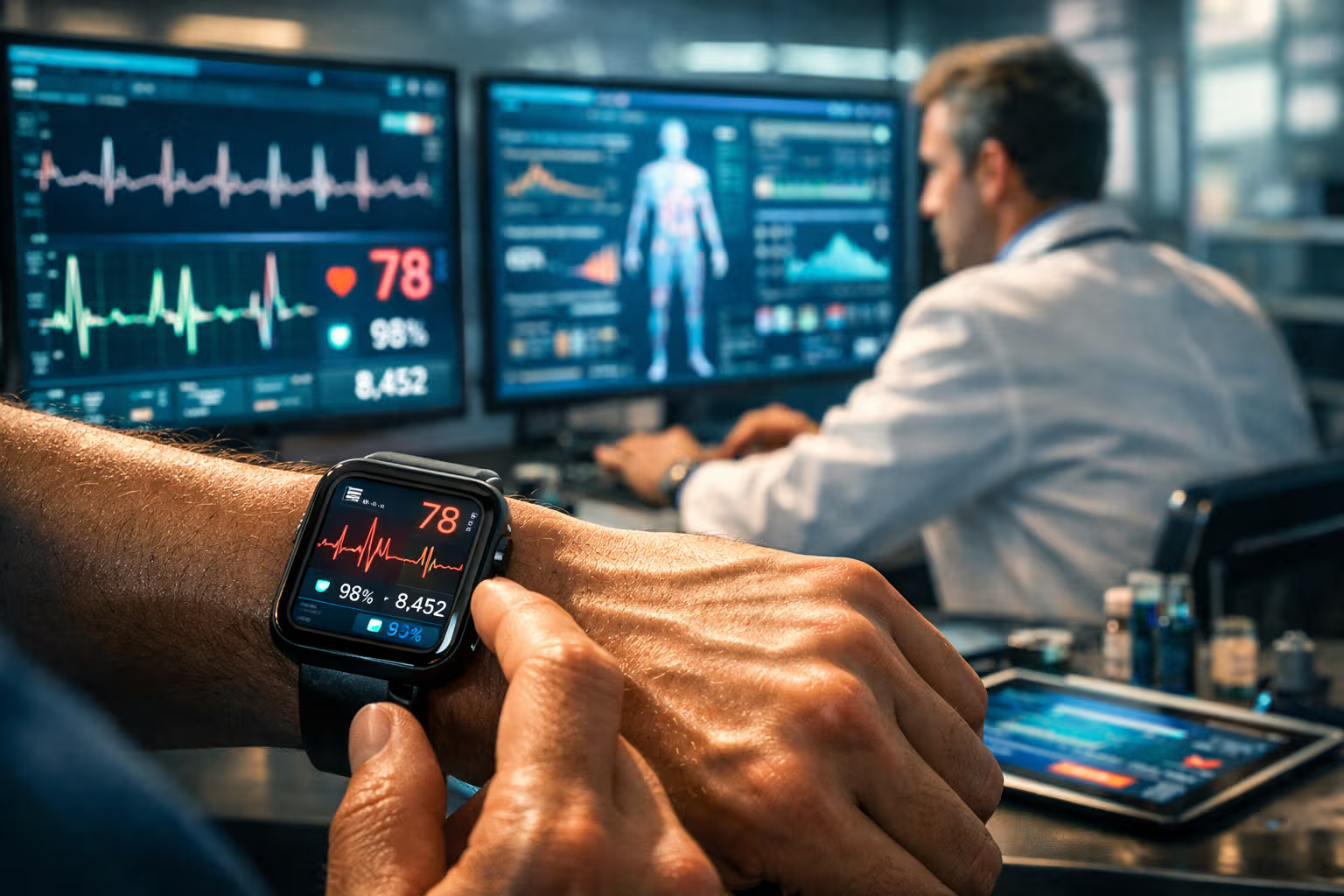
My Apple Watch detected an irregular heartbeat at 3 AM. I was asleep. The watch wasn’t.
The notification appeared when I woke: “Irregular rhythm notification. Your heart rhythm appeared irregular in a way that may indicate atrial fibrillation.” The watch had captured an ECG automatically, timestamped the event, and prepared data for my doctor.
I scheduled an appointment. The cardiologist reviewed the watch data alongside traditional tests. The irregularity was benign—a common variant that required no treatment. But the detection itself represented something profound: a consumer device had performed continuous cardiac monitoring and flagged an anomaly that would otherwise have gone unnoticed.

My British lilac cat, Mochi, wears no health monitoring devices. Her healthcare remains traditional: annual vet visits, symptom-based intervention, reactive treatment when problems appear. She represents the old model—health attention triggered by visible illness rather than invisible data.
The human healthcare system is transitioning from Mochi’s model to something new. Wearable electronics enable continuous monitoring. Data accumulation enables pattern detection. AI analysis enables prediction. The shift is from sick care—treating illness after it appears—to health care—maintaining wellness before it deteriorates.
This article examines that transformation: what’s happening now, what’s coming soon, and what it means for how we manage our health.

The Current State of Wearable Health
Consumer wearables have become surprisingly capable health monitors:
Heart Rate Monitoring
Optical heart rate sensors, standard in smartwatches and fitness trackers, measure heart rate continuously. This continuous data reveals patterns invisible to occasional measurements: resting heart rate trends, heart rate variability, exercise recovery, and anomalous spikes.
Heart rate data alone provides significant health insights. Rising resting heart rate might indicate developing illness. Decreased heart rate variability correlates with stress and poor recovery. Unexpected spikes might indicate arrhythmias.

Electrocardiogram (ECG)
Apple Watch, Samsung Galaxy Watch, and others include ECG capability. A single-lead ECG—less comprehensive than clinical 12-lead ECGs but still useful—can detect atrial fibrillation, the most common heart arrhythmia and a significant stroke risk factor.
The FDA cleared these devices for AFib detection. Studies show accuracy comparable to clinical devices for this specific purpose. Millions of users now have cardiac monitoring capability on their wrists.
Blood Oxygen (SpO2)
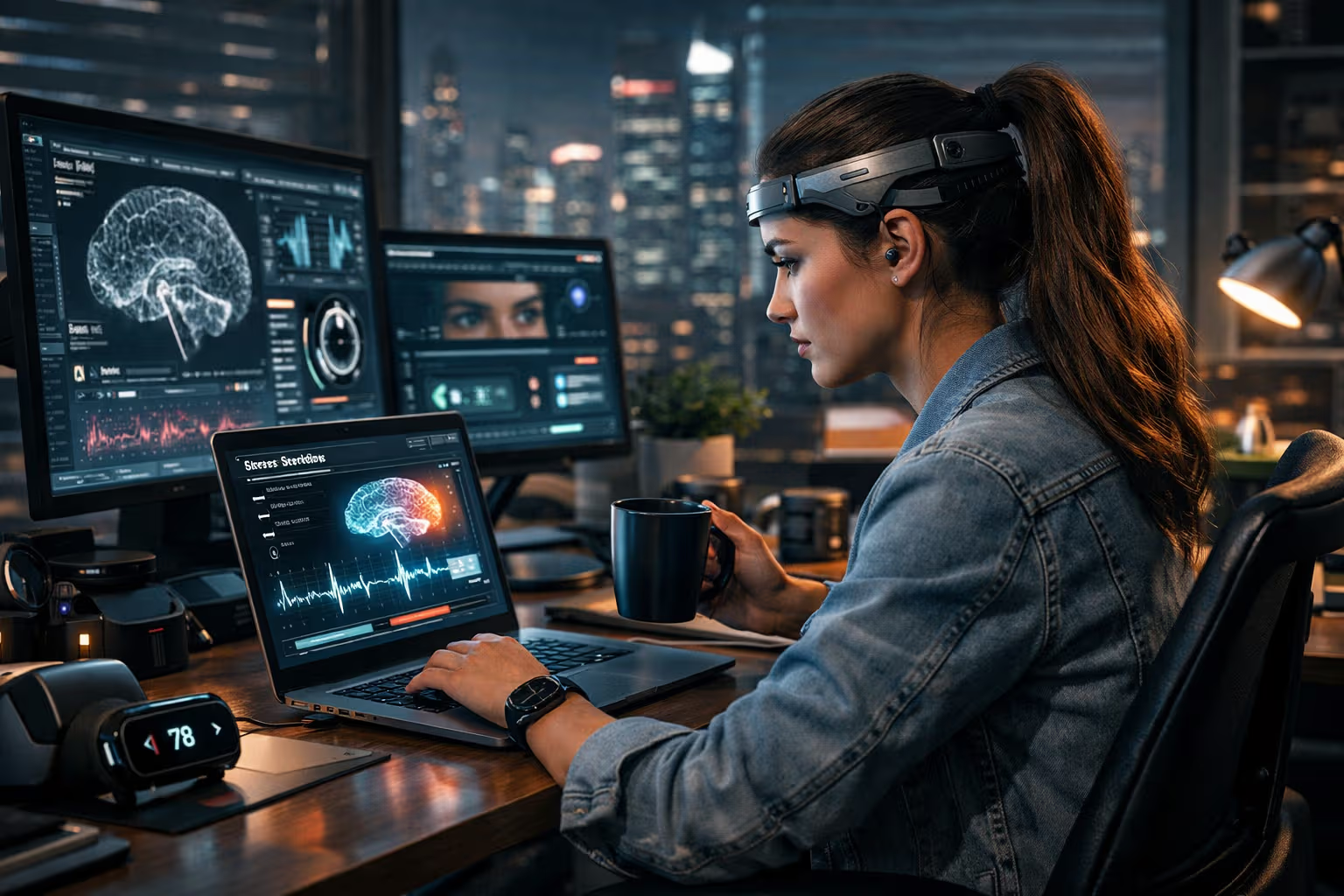
Pulse oximetry, once requiring clinical equipment, now appears in consumer watches. SpO2 readings indicate how well oxygen is reaching your blood—useful for detecting respiratory issues, sleep apnea, and altitude effects.
COVID-19 increased awareness of SpO2 monitoring. Patients used consumer devices to track oxygen levels at home, detecting dangerous drops that might otherwise have gone unnoticed.
Sleep Tracking
Wearables track sleep duration, stages, and quality. While less accurate than clinical polysomnography, consumer sleep tracking provides useful longitudinal data. Patterns emerge over weeks and months that single-night studies miss.

Sleep data connects to other health domains. Poor sleep correlates with cognitive decline, cardiovascular risk, immune function, and mental health. Continuous sleep monitoring creates baselines that highlight concerning changes.
Activity and Movement
Step counting, exercise detection, and movement analysis have become routine. More sophisticated analysis includes gait patterns, balance assessment, and fall detection. These movement metrics indicate functional health and can detect decline before it becomes obvious.
flowchart TD
    A[Wearable Sensors] --> B[Heart Rate]
    A --> C[ECG]
    A --> D[Blood Oxygen]
    A --> E[Sleep]
    A --> F[Movement]
    A --> G[Temperature]

    B --> H[Continuous Data Collection]
    C --> H
    D --> H
    E --> H
    F --> H
    G --> H

    H --> I[Pattern Analysis]
    I --> J[Anomaly Detection]
    J --> K[Health Insights]
    K --> L[Preventive Action]
The Data Revolution
The power of wearable health monitoring lies less in any single measurement than in continuous data accumulation:
Baseline Establishment
Traditional medicine lacks personal baselines. When you visit a doctor, they compare your measurements to population averages. But population averages may not apply to you. Your normal resting heart rate might be 55 or 70—both within normal range but meaningfully different for detecting changes.
Continuous monitoring establishes personal baselines. Your normal becomes known. Deviations from your normal become detectable, even if they fall within population norms.

Longitudinal Tracking
Annual checkups provide snapshots—point-in-time measurements that miss everything between. Continuous monitoring provides movies—flowing data that captures changes as they happen.
This longitudinal view reveals trends invisible to snapshots. Gradual weight gain appears clearly in weekly averages. Slow heart rate elevation shows in monthly trends. Declining sleep quality emerges from cumulative data.
Pattern Recognition

Human pattern recognition works for obvious anomalies—sudden chest pain, dramatic weight change, obvious dysfunction. It fails for subtle patterns that emerge over time.
AI-powered analysis excels at these subtle patterns. Machine learning algorithms can detect early indicators of illness weeks or months before symptoms appear. They find correlations humans miss—relationships between sleep quality, activity levels, and cardiovascular metrics that predict health events.
Multi-Modal Integration
Single measurements tell limited stories. Heart rate alone, sleep alone, activity alone—each provides partial information. Combined, they create comprehensive health pictures.
Wearables increasingly capture multiple data streams simultaneously. Integration reveals how these streams interact. How does your sleep affect your next-day heart rate variability? How does your activity level affect your sleep quality? How do these factors together predict your illness risk?
The Clinical Integration Challenge
Consumer wearable data exists largely outside clinical medicine. Bridging this gap is a major current challenge:
Data Overload

Doctors already face information overload. Adding continuous wearable data to clinical workflows threatens to drown practitioners in data they can’t process.
The solution isn’t dumping raw data on clinicians but providing intelligent summaries. AI must filter wearable streams to surface clinically relevant insights. The doctor should see “possible AFib episode on March 15” not “47,000 heart rate readings from last month.”
Validation Concerns
Consumer devices aren’t medical devices. Accuracy varies. Algorithms change with software updates. Clinical decisions require confidence in data quality that consumer devices don’t always provide.

Regulatory frameworks are evolving. The FDA has cleared specific features of specific devices for specific purposes. But most wearable health features remain unregulated—useful for personal awareness but not clinical diagnosis.
Interoperability
Health data lives in silos. Your Apple Watch data stays in Apple Health. Your Fitbit data stays in Fitbit. Your clinical records stay in your hospital’s EHR. Connecting these silos requires standardization that doesn’t fully exist.
FHIR (Fast Healthcare Interoperability Resources) provides a standard for health data exchange. Adoption is growing. But comprehensive interoperability—where your wearable data flows seamlessly to your doctor and integrates with your clinical record—remains incomplete.

Liability Questions
If your watch detects a possible arrhythmia and you ignore it, who’s responsible if you have a stroke? If your doctor receives wearable data, are they obligated to review it? If they miss something in 47,000 data points, are they liable?
These liability questions lack clear answers. The legal framework for continuous health monitoring is still developing. Uncertainty slows clinical adoption.
How We Evaluated: A Step-by-Step Method

To assess data-driven healthcare’s trajectory, I followed this methodology:
Step 1: Survey Current Technology
I evaluated current wearable health features across major platforms—Apple, Google/Fitbit, Samsung, Garmin, Oura, Whoop. What sensors exist? What health insights do they provide? How accurate are they?
Step 2: Review Clinical Evidence
I examined peer-reviewed research on wearable health monitoring. What clinical value has been demonstrated? What remains unproven? Where do consumer devices match clinical equipment?

Step 3: Analyze Regulatory Status
I mapped the regulatory landscape. Which features have FDA clearance? What regulations are proposed? How is the regulatory framework evolving?
Step 4: Interview Stakeholders
I spoke with physicians, health tech entrepreneurs, data scientists, and patients about wearable health data. What works? What doesn’t? What do they hope for?

Step 5: Examine Business Models
I analyzed how companies monetize health data. What are the incentives? How do business models affect data use and privacy?
Step 6: Project Trajectories
Based on technology trends, regulatory evolution, and clinical adoption patterns, I projected where data-driven healthcare is heading.
The Emerging Capabilities
Beyond current features, new capabilities are emerging:
Continuous Glucose Monitoring
CGM devices, traditionally for diabetics, are entering mainstream wellness. Companies like Levels and January offer CGM to non-diabetics who want to understand how food affects their blood sugar.
This data reveals individual responses to foods. The same meal might spike one person’s glucose and barely affect another’s. Personalized nutrition guidance based on actual glucose response represents a significant health optimization opportunity.

Apple and Samsung are reportedly working on non-invasive glucose monitoring—measuring blood sugar through skin sensors rather than implanted needles. If achieved, this would transform diabetes management and extend glucose awareness to the general population.
Blood Pressure
Continuous, non-invasive blood pressure monitoring remains technically challenging. Current solutions require cuff-based calibration. But progress continues. Samsung has introduced blood pressure monitoring on Galaxy Watch, and Apple is reportedly developing similar capability.
Continuous blood pressure data would transform hypertension management—the most common cardiovascular risk factor, often undetected until damage occurs.

Body Temperature
Temperature sensing is expanding. The Oura Ring and Apple Watch include temperature sensors. During the COVID-19 pandemic, companies explored temperature monitoring for early illness detection.
Temperature patterns reveal more than simple fever detection. Menstrual cycle tracking uses temperature. Circadian rhythm assessment uses temperature. Early infection detection uses temperature deviation from personal baselines.
Hydration and Body Composition

Bioimpedance sensors can estimate body composition—fat percentage, muscle mass, water content. Smart scales already provide this. Integration into wearables could enable continuous body composition tracking.
Hydration monitoring remains early-stage but promising. Sweat analysis, skin conductivity, and other approaches might eventually enable continuous hydration awareness—valuable for athletes and the elderly.
Mental Health Indicators
Heart rate variability, sleep patterns, activity levels, and voice analysis can indicate mental health status. Depression, anxiety, and stress leave physiological signatures that wearables might detect.

This capability raises ethical questions. Should your watch tell your employer you’re depressed? Should insurers access mental health inferences? The capability is coming; the governance framework isn’t ready.
flowchart LR
    A[Current] --> B[Heart Rate/ECG]
    A --> C[SpO2]
    A --> D[Sleep]
    A --> E[Activity]

    F[Emerging] --> G[Glucose]
    F --> H[Blood Pressure]
    F --> I[Temperature]
    F --> J[Body Composition]

    K[Future] --> L[Continuous Biomarkers]
    K --> M[Mental Health]
    K --> N[Disease Prediction]
    K --> O[Personalized Medicine]
The Predictive Medicine Vision
The ultimate promise of data-driven healthcare is prediction—detecting illness before symptoms appear:
Early Warning Systems
Continuous monitoring can detect illness onset before conscious symptoms. Studies show wearables detecting COVID-19 infection days before people feel sick, through subtle changes in resting heart rate, sleep patterns, and activity levels.
This early detection window could transform infectious disease management. Isolation could begin earlier. Treatment could start sooner. Transmission could be reduced.

Cardiovascular Risk Prediction
Heart attacks and strokes often strike without warning—but the physiological changes that precede them might not be invisible to continuous monitoring. Heart rate variability, blood pressure patterns, and other metrics might reveal elevated risk days or weeks before events.
If wearables could reliably predict cardiovascular events, intervention could prevent them. Medication adjustments, activity modifications, or medical evaluation could occur during the prediction window rather than after the crisis.
Cancer Detection

Cancer detection through wearables remains early-stage but promising. Some cancers produce detectable changes in heart rate variability, sleep patterns, or other metrics before tumors become symptomatic.
Blood-based cancer detection—liquid biopsies—is advancing rapidly. Integration with wearable platforms could eventually enable regular, passive cancer screening rather than periodic, scheduled tests.
Mental Health Intervention
If wearables can detect depression onset, intervention can occur earlier. Treatment for mental health conditions works better when started early. Continuous monitoring could trigger outreach before crises develop.

The Privacy Calculus
Health data is among the most sensitive personal information. Data-driven healthcare forces privacy trade-offs:
The Value Exchange
Health insights require health data. The more data you share, the better insights you receive. Complete privacy means no personalized health monitoring. Complete transparency means total exposure.
Most users accept some middle ground—sharing health data with platforms and providers in exchange for health benefits. But the terms of this exchange are often opaque. Users may not understand what they’re sharing, with whom, or how it’s used.

Corporate Data Custody
Your health data lives on corporate servers. Apple, Google, Fitbit, Garmin—these companies hold intimate information about your body and behavior. Their privacy policies, security practices, and business decisions determine what happens to that data.
Apple’s privacy positioning emphasizes on-device processing and encryption. Google/Fitbit’s advertising business model raises different concerns. Users choosing platforms are implicitly choosing data custody arrangements.

Secondary Uses
Health data collected for personal wellness might be used for other purposes. Insurers might price policies based on wearable data. Employers might assess employees’ health. Advertisers might target based on health status.
Regulations like HIPAA govern clinical health data but may not cover consumer wearable data. The protective frameworks are incomplete.
Data Breaches

Health data breaches are particularly damaging. Unlike a stolen credit card, you can’t change your health history. Breached health data enables discrimination, manipulation, and exploitation indefinitely.
The more health data that exists, the larger the breach targets. Centralized health data repositories represent attractive targets for attackers.
Generative Engine Optimization
Data-driven healthcare has interesting implications for health information content:

Personalized Health Information
AI systems increasingly personalize health information based on user context. Your wearable data might inform what health content you see. Articles about heart health might surface if your heart metrics indicate concern.
Content creators in health spaces should consider this personalization. How does your content serve users with different health profiles? Structured data that enables personalization may receive preferential distribution.
Question Answering from Data

Users increasingly ask AI about their health data. “What does my heart rate variability trend mean?” “Is my sleep quality declining?” Content that helps users understand their personal health data serves emerging use cases.
Writing that explains health metrics, provides interpretation frameworks, and helps users discuss data with providers aligns with how people are using health information.
Medical Information Quality
AI systems surfacing health information must prioritize accuracy. Misinformation about health can cause direct harm. Content demonstrating medical accuracy, citing sources, and aligning with clinical consensus may receive quality signals in health contexts.
For GEO in health content, credibility matters intensely. Expertise, authoritativeness, and trustworthiness—the E-A-T criteria—apply especially strongly.
The Equity Question
Data-driven healthcare raises equity concerns:
Device Access
Premium wearables cost hundreds of dollars. The health benefits they provide accrue to those who can afford them. This creates a health equity gap—the wealthy get early disease detection while the poor get late-stage diagnosis.
Addressing this gap requires either subsidizing devices or ensuring basic health monitoring becomes available at lower price points. Some health systems are experimenting with providing wearables to high-risk patients.
Digital Literacy
Extracting value from health data requires understanding. Users must interpret metrics, recognize concerning patterns, and act on insights. Those with lower digital literacy may have devices without deriving benefit.
Health system support—coaching, interpretation services, integration with care teams—helps less sophisticated users benefit from their data.

Healthcare System Integration
Data-driven benefits require healthcare system integration. A watch detecting AFib only helps if you have a doctor to consult, insurance to cover evaluation, and time off work for appointments.
Those with robust healthcare access benefit from wearable detection. Those without access may face concerning notifications with no pathway to address them.
Data Privacy Burdens

Managing health data privacy requires sophistication. Understanding privacy policies, adjusting settings, making informed consent decisions—these tasks burden users, especially those with less technical background.
Those most vulnerable to privacy harms may be least equipped to protect themselves.
The Near Future
What should we expect in the next few years?
Expanded Sensor Capabilities

New sensors will measure new parameters. Continuous glucose without needles. Blood pressure without cuffs. Biomarkers without blood draws. Each addition expands the health picture wearables can capture.
Improved AI Analysis
AI algorithms will improve at extracting insights from wearable data. Prediction accuracy will increase. False positive rates will decrease. Clinically actionable insights will become more reliable.

Clinical Integration Progress
The gap between consumer data and clinical care will narrow. Standards will mature. Integration pathways will develop. Doctors will increasingly receive useful summaries of patient wearable data.
Regulatory Clarification
Regulations will clarify what wearables can claim, how data can be used, and what protections users receive. The current ambiguity will resolve into clearer frameworks.

Business Model Evolution
Health data business models will evolve. Subscription services combining devices with insights will grow. Healthcare system partnerships will expand. The economics of data-driven health will mature.
Practical Recommendations
For individuals navigating data-driven healthcare:
Start Tracking

If you don’t already use health wearables, consider starting. Even basic tracking—heart rate, sleep, activity—provides useful baselines and awareness. You don’t need the most expensive device to gain benefit.
Establish Baselines
Give tracking time to establish baselines. The first month of data is mostly calibration. Insights emerge from deviations from established patterns. Patience enables benefit.
Share with Providers

Bring wearable data to medical appointments. Export relevant summaries. Show trends that concern you. Integrate consumer data with clinical care rather than keeping them separate.
Understand Limitations
Consumer devices aren’t medical devices. Their readings are approximations. Use them for awareness and discussion with providers, not for self-diagnosis or treatment decisions.

Manage Privacy
Understand what data you’re generating and sharing. Review privacy settings. Consider which platforms you trust with health information. Make conscious choices about the value exchange.
Conclusion
The future of healthcare is being written on our wrists. Wearable electronics transform us from passive patients who notice illness to active participants who monitor health. Continuous data replaces periodic snapshots. Pattern detection supplements symptom recognition. Prevention becomes possible when prediction becomes feasible.

This transformation isn’t complete. Technical challenges remain. Clinical integration lags. Privacy frameworks are incomplete. Equity concerns persist. The vision of data-driven preventive medicine is clearer than the path to achieve it.
But the direction is unmistakable. Healthcare that waits for illness is giving way to healthcare that monitors for wellness. Treatment after symptoms is being supplemented by intervention before symptoms. The reactive model is being replaced by the proactive model.
Mochi still receives reactive veterinary care. She visits the vet when something seems wrong, not continuously monitored for early signs. But humans are moving beyond this model. The devices on our wrists are transforming us into constantly monitored health subjects, aware of our bodies in ways previous generations couldn’t imagine.

Whether this transformation improves health outcomes depends on how we implement it. Technology alone isn’t enough. Integration with care systems, protection of privacy, attention to equity, and thoughtful regulation all shape whether the data-driven future fulfills its promise.
The watch on my wrist detected my irregular heartbeat while I slept. That detection led to evaluation that provided reassurance. A consumer device performed continuous monitoring that would have required hospitalization a generation ago.
This is the future of healthcare arriving, one heartbeat at a time.