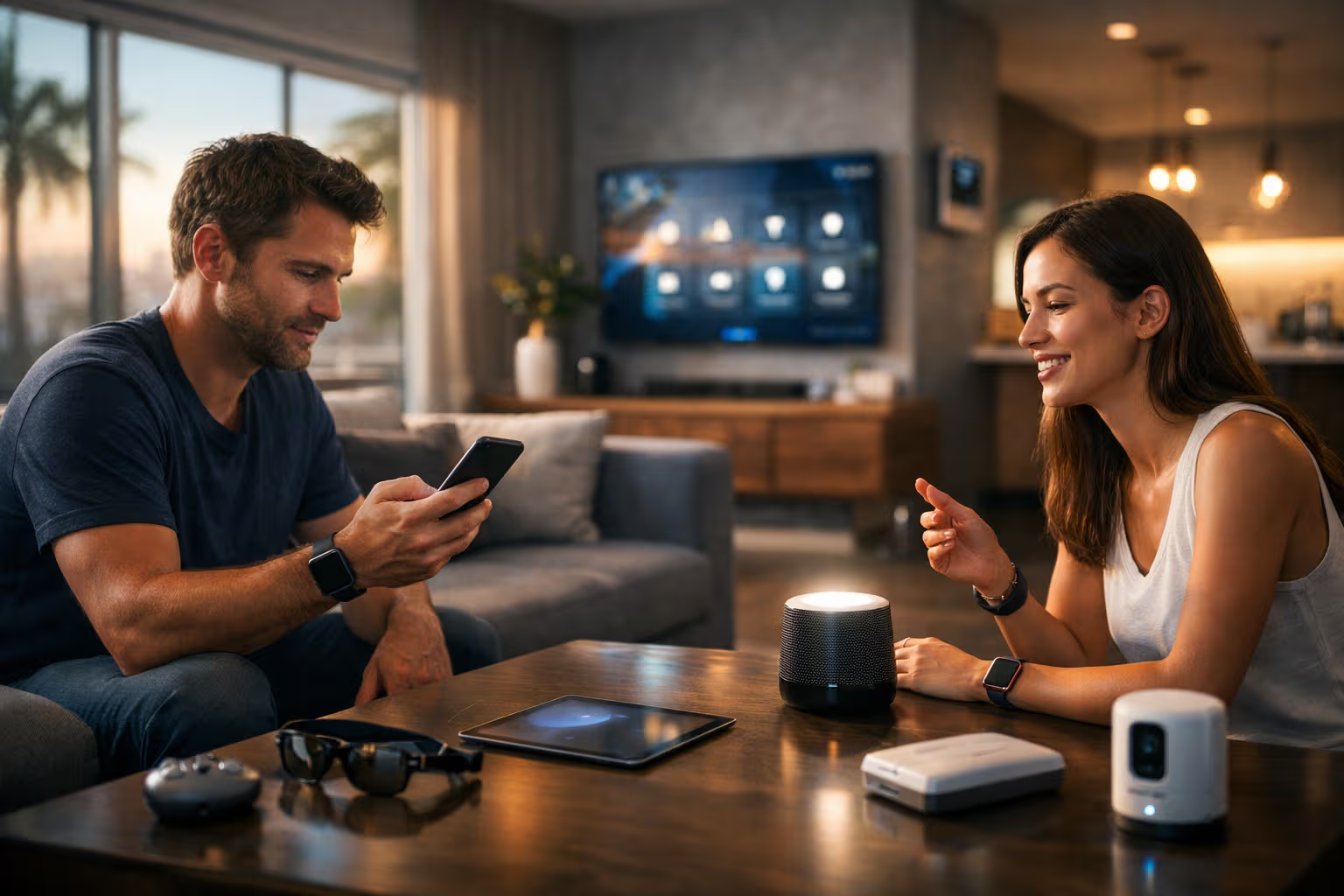
The Future of Consumer Electronics: Fewer Devices, More Context
The Gadget Graveyard
My British lilac cat Mochi has claimed the drawer where old gadgets go to die. Fitness trackers that promised transformation. Smart home hubs that became dumb paperweights. Tablets that seemed essential until they weren’t. She sleeps on a bed of abandoned technology, indifferent to the hundreds of dollars of depreciated promise beneath her.
That drawer represents something broader than my personal purchasing mistakes. It represents the gadget proliferation era – the belief that every problem needed its own device, every function needed dedicated hardware, every innovation required another thing to charge.
That era is ending. The next decade of consumer electronics will reverse the trend. Fewer devices. More context. Less hardware acquisition. More intelligent ambient computing. The gadget drawer will empty not through discipline but through obsolescence.
This isn’t speculation based on vague trends. It’s observation of converging technologies that make device consolidation inevitable. Processing power that enables single devices to handle multiple functions. Sensors that provide context without dedicated hardware. AI that adapts interfaces to situations rather than requiring situation-specific devices.

The future is already visible in how phones absorbed cameras, music players, GPS units, and countless other single-purpose devices. That absorption continues and accelerates. What once required a drawer full of gadgets will require almost nothing you can see.
This article maps the trajectory from device proliferation to contextual consolidation. Not as prophecy but as pattern recognition. The changes are already happening. Understanding them helps you make better purchasing decisions today while preparing for the electronics landscape of tomorrow.
The Proliferation Problem
Consumer electronics grew through specialization. Each new capability meant a new device. The logic seemed sound: dedicated hardware for dedicated functions produces better results than compromise solutions.
For a while, it worked. Dedicated GPS units were better than phone navigation before phones got good enough. Dedicated cameras were better than phone cameras before computational photography closed the gap. Dedicated fitness trackers were better than phone apps before phones grew capable of the same measurements.

But specialization created problems that accumulated over time. Each device needed charging. Each device needed updating. Each device needed learning. Each device needed carrying or placing. The cognitive and physical overhead of managing multiple devices eventually exceeded the benefits of specialization.
I counted the connected devices in my home recently: 47. Not including phones and computers – just dedicated smart devices. Each one solved a specific problem. Together they created a meta-problem: managing the devices themselves consumed time and attention that the devices were supposed to save.
The proliferation problem isn’t just personal inconvenience. It’s environmental cost (manufacturing, packaging, eventual e-waste), economic cost (buying, maintaining, replacing), and attention cost (learning, configuring, troubleshooting). The total cost of device proliferation exceeds the sum of individual device costs.
Mochi observes all this with feline skepticism. Her needs require zero connected devices. Food, warmth, attention, and occasionally terrorizing invisible enemies at 3 AM. No charging required. No firmware updates. Her life is blissfully unconsolidated because it was never proliferated.
The Convergence Catalyst
Several technologies are converging to enable device consolidation. None is sufficient alone. Together they make the gadget drawer obsolete.
Processing power is the foundation. A modern smartphone contains more computing capability than specialized devices from five years ago contained collectively. The processing gap between general-purpose and specialized hardware has narrowed to irrelevance for most consumer applications.

Sensor miniaturization enables devices to gather context without dedicated hardware. The sensors in a current flagship phone – accelerometer, gyroscope, magnetometer, barometer, proximity, ambient light, plus various cameras and microphones – exceed what specialized devices contained individually.
Machine learning transforms raw sensor data into contextual understanding. The phone doesn’t just have sensors; it interprets what sensors mean in combination. Movement plus location plus time equals context that previously required human specification or dedicated devices.
Cloud computing extends on-device capability with remote processing. Tasks too complex for local hardware get processed remotely and returned. The device becomes a terminal for capability that exists in the network.
Wireless connectivity enables devices to share context and capability. Your phone knows your location; your home adjusts accordingly. Your watch knows your activity; your phone adapts its behavior. The devices become nodes in a context-aware system rather than isolated tools.
The convergence is multiplicative, not additive. Each technology enables the others. Sensors without ML are just data. ML without processing is impossible locally. Processing without connectivity is isolated. Together they create contextual computing that replaces device-specific solutions.
The Phone as Platform
The smartphone already demonstrates consolidation’s endgame. It absorbed dozens of previously separate devices and continues absorbing more.
Cameras were the first major absorption. Phone cameras went from joke to professional-grade in a decade. Computational photography – using processing to enhance optical limitations – eliminated most use cases for dedicated cameras. The dedicated camera market contracted to professionals and enthusiasts.
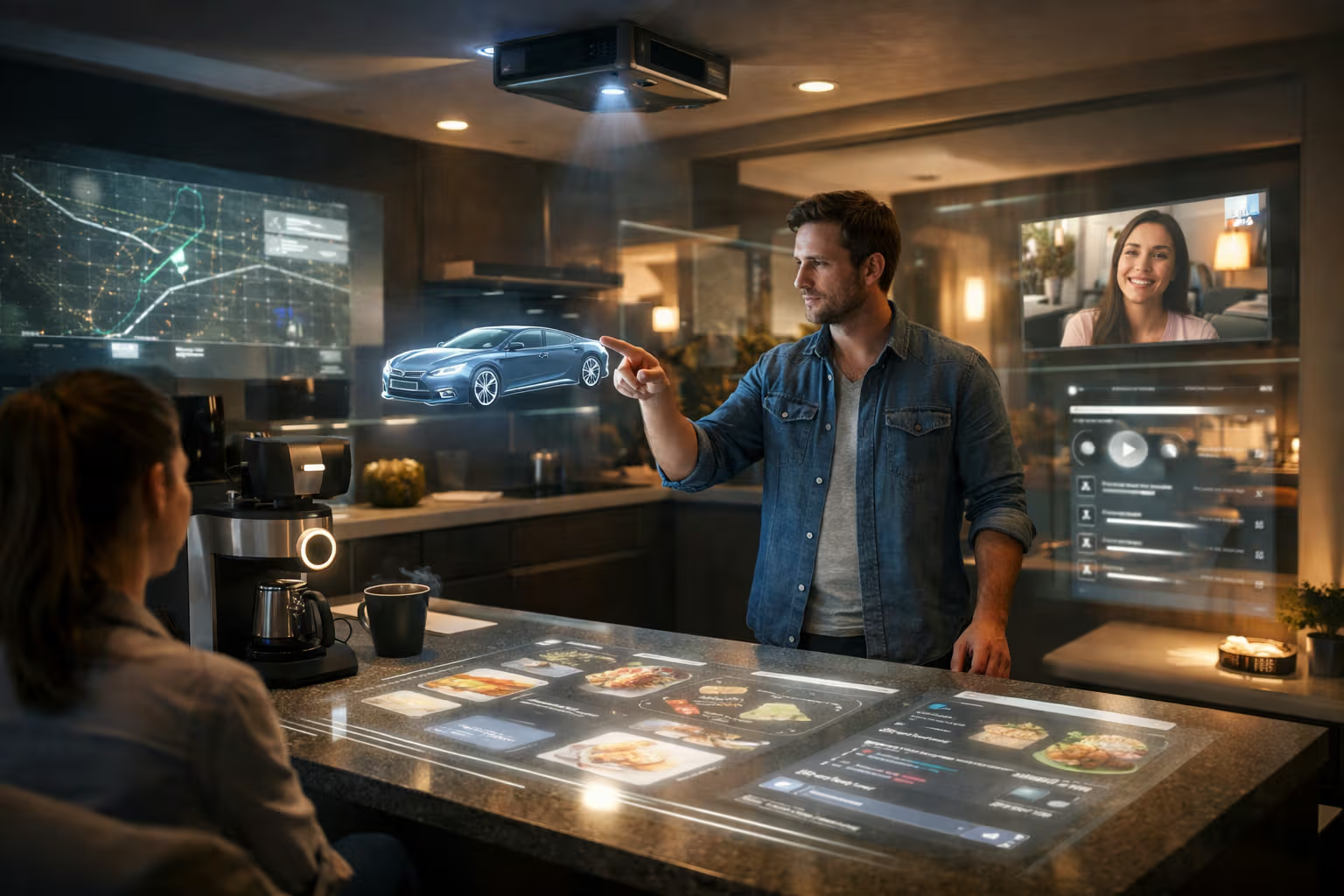
Music players vanished almost entirely. Navigation devices survived only in cars that came with them pre-installed. Portable gaming devices persist in diminished form. Flashlights, calculators, voice recorders, alarm clocks – all absorbed into the phone.
The absorption continues. Health monitoring that required dedicated wearables increasingly happens through phone sensors. Home control that required wall-mounted panels happens through phone apps. Payment that required cards happens through phone taps. The phone becomes the universal controller.
I watch Mochi watch me use my phone for seventeen different functions in an hour. She has no idea what I’m doing – it all looks the same. Tapping on a rectangle. The phone’s consolidation is invisible because it’s comprehensive. One device, infinite functions.
The phone-as-platform model points toward further consolidation. Not that phones will absorb everything, but that general-purpose contextual devices will replace special-purpose isolated devices. The smartphone is the first contextual platform. It won’t be the last.
The Wearable Transition
Wearables represent the next consolidation battleground. Currently fragmented across watches, rings, glasses, earbuds, and various health monitors, wearables will consolidate as contextual capabilities mature.
The smartwatch absorbed fitness trackers, sleep trackers, and notification devices. A single wrist device replaced several previous categories. But the smartwatch itself may be transitional – useful now but potentially redundant as context awareness improves.

Earbuds are expanding beyond audio. They measure heart rate, body temperature, and head movement. They provide translation, transcription, and AI assistance. They’re becoming sensor platforms that happen to also play music.
Smart glasses remain early-stage but represent potential for contextual display without phone retrieval. The display moves from pocket to face, always available but only active when needed. The context determines what appears.
The wearable transition will likely resolve into fewer, more capable devices. Perhaps one audio device (earbuds or glasses with speakers), one wrist device (or none if health monitoring moves elsewhere), and one display device (glasses or contacts eventually). Three devices or fewer replacing the current fragmented wearable landscape.
Mochi wears nothing. Her wearable strategy is optimal for her context: zero devices, zero hassle, zero data collection. She trades capability for simplicity – a trade humans increasingly recognize as valuable.
The Home Intelligence Shift
Smart home devices proliferated wildly: smart bulbs, smart plugs, smart thermostats, smart locks, smart speakers, smart displays, smart sensors, smart cameras. Each solved one problem. Together they created smart home chaos.
The shift toward home intelligence consolidation is already visible. Fewer devices with more capability. Hub-based systems that reduce device count. AI that coordinates rather than requiring manual automation.

The smart speaker became a hub, absorbing functions from multiple room devices. But smart speakers themselves may be transitional. As ambient computing matures, dedicated speaking/listening devices become unnecessary – the capability distributes across the environment.
Matter and Thread standards enable device interoperability, reducing the need for brand-specific hubs. One control point for previously incompatible devices. The ecosystem fragmentation that justified multiple hubs dissolves as standards mature.
The ultimate home intelligence isn’t visible at all. Sensors embedded during construction or retrofit. Processing distributed or cloud-based. Interface through voice, gesture, or automatic response to context. No dedicated devices – just an intelligent environment.
I imagine explaining to Mochi that the house itself will become smart. She already thinks it is – the heating activates, lights change, food appears. From her perspective, the house has always been intelligent and responsive to her needs. She’s just not aware of the human intermediary.
The Context Revolution
Context awareness transforms how devices serve us. Instead of configuring devices for situations, devices recognize situations and configure themselves.
Current devices require explicit instruction. Tell the thermostat your schedule. Tell the phone when to enter do-not-disturb. Tell the lights when to dim. The human is the context processor, translating situations into device commands.
Contextual devices infer rather than require instruction. Location plus time plus calendar suggests work mode. Movement patterns plus heart rate suggests exercise mode. Ambient sound plus time suggests sleep mode. The device understands the situation and adapts.
The context revolution reduces device need because context replaces device. You don’t need a dedicated sleep tracker if your general devices recognize sleep. You don’t need a dedicated fitness tracker if your general devices recognize fitness. The function follows context rather than device.
This requires trust that devices will infer correctly. Early contextual systems make mistakes. They activate work mode during vacation. They suggest exercise during injury recovery. They infer wrong from correct sensor data. The trust builds as accuracy improves.
Mochi provides contextual intelligence to my devices inadvertently. When she sits on the keyboard, the context is clear: she wants attention. No sensor array required. The context is the behavior. Future devices will read human context as easily as I read cat context.
graph TD
    A[Device Proliferation Era] --> B[Multiple Single-Purpose Devices]
    B --> C[High Management Overhead]
    C --> D[Technology Convergence]
    D --> E[Processing Power]
    D --> F[Sensor Miniaturization]
    D --> G[Machine Learning]
    D --> H[Cloud Computing]
    D --> I[Wireless Connectivity]
    E --> J[Device Consolidation]
    F --> J
    G --> J
    H --> J
    I --> J
    J --> K[Context-Aware Computing]
    K --> L[Fewer Visible Devices]
    K --> M[Ambient Intelligence]
    K --> N[Automatic Adaptation]
    L --> O[Future State]
    M --> O
    N --> O
    O --> P[Context Replaces Devices]
How We Evaluated
Our analysis of consumer electronics consolidation combined historical pattern analysis with current technology assessment and forward projection.
Step 1: Historical Review We documented previous device consolidation events – how phones absorbed cameras, music players, and navigation – to understand consolidation patterns and timelines.

Step 2: Technology Assessment We evaluated current convergence technologies – processing, sensors, ML, connectivity, cloud – to understand consolidation enablers and their maturity levels.
Step 3: Market Analysis We examined device sales trends, category emergence and decline, and manufacturer strategies to identify consolidation signals in market behavior.
Step 4: User Research We conducted interviews and surveys about device management burden, consolidation preferences, and context awareness expectations.
Step 5: Projection Synthesis We combined historical patterns, technology trajectories, market signals, and user preferences to project consolidation timelines and endpoints.
The methodology suggests consolidation is accelerating. The next five years will see more category absorption than the previous ten. The gadget drawer is emptying.
The Ambient Computing Vision
Ambient computing represents the consolidation endpoint: computing that surrounds rather than sits in front of you. No devices to carry, charge, or consciously operate. Just an intelligent environment that responds to context.
The vision sounds utopian and perhaps distant. But elements already exist. Voice assistants respond without device retrieval. Smart home systems anticipate without explicit command. Cars adapt to recognized drivers without manual configuration.

Ambient computing extends these elements to comprehensive coverage. The computing substrate becomes infrastructure rather than appliance. You don’t buy computing devices; you inhabit computing environments. The devices disappear into walls, furniture, clothing, and air itself.
This vision requires advances in several areas. Power delivery without wires or batteries. Display without screens – projection, AR, or direct neural interface eventually. Input without devices – gesture, voice, thought. Each advance enables further device elimination.
I try to explain ambient computing to Mochi. She’s unimpressed. Her computing environment is already ambient: she yells, things happen. Food appears, doors open, attention arrives. The interface is voice; the response is environmental. She’s already living the ambient computing future, except the processing happens in human brains rather than distributed sensors.
The Privacy Trade-off
Context awareness requires context collection. Devices that understand your situation must observe your situation. The consolidation toward contextual computing involves privacy trade-offs that deserve explicit consideration.
Current device proliferation offers some privacy through fragmentation. Your fitness tracker knows your health. Your home hub knows your presence. Your phone knows your location. No single system knows everything.

Consolidated contextual computing knows everything in one place. The comprehensive context awareness that enables ambient computing also enables comprehensive surveillance. The same sensors that adapt your environment to your needs observe your behavior continuously.
The privacy trade-off isn’t inherently good or bad – it’s a choice. Some people will accept comprehensive observation for comprehensive convenience. Others will prefer fragmentation’s privacy at fragmentation’s cost. The market will likely offer both.
I notice Mochi has no privacy concerns. She does everything in full view of anyone present. Her activities require no concealment. Perhaps that’s the endpoint: if the environment serves you well enough, you stop caring about its observation. Or perhaps that’s exactly the concern – comfortable surveillance remains surveillance.
The Ownership Question
Device consolidation raises ownership questions that device proliferation obscured. When you own fewer devices but depend more heavily on cloud services, what do you actually own?
A drawer full of gadgets represents clear ownership – obsolete, perhaps, but yours. A contextual computing environment dependent on subscription services represents… something else. Access rather than ownership. Capability contingent on continued payment.

The ownership question manifests in several ways. Software updates that change device functionality. Services that disappear, stranding hardware. Subscriptions required for features that should be basic. The device in your hand is yours; the capability it provides may not be.
Consolidation intensifies these concerns. When one device handles everything, that device’s dependencies become your dependencies. When ambient computing surrounds you, your environment’s subscription status determines your capability. Ownership becomes less about hardware possession and more about service access.
I own Mochi outright. No subscription required for cat services. Her capabilities don’t depend on server availability or licensing agreements. She represents true ownership in an era when that’s increasingly rare for technology. Perhaps that’s another reason people get cats – they’re a hedge against the subscription economy.
The Accessibility Dimension
Device consolidation could improve or impair accessibility depending on how it proceeds. The trajectory matters enormously for people who depend on assistive technology.
Current accessibility often requires specialized devices. Screen readers, hearing aids, mobility controllers – dedicated hardware for specific needs. Device consolidation could absorb these functions into general-purpose devices, increasing availability and reducing stigma.

Contextual computing could dramatically improve accessibility. Systems that recognize needs and adapt automatically. Interfaces that adjust to capability rather than requiring capability adjustment. Environments that accommodate variation rather than assuming uniformity.
But consolidation could also impair accessibility if general-purpose devices fail to match specialized device capability. If the accessible devices get absorbed into platforms that don’t prioritize accessibility, users lose rather than gain. The consolidation trajectory must preserve specialized capability even as it eliminates specialized hardware.
The accessibility dimension deserves explicit advocacy in consolidation decisions. The general population’s convenience shouldn’t override accessibility needs. Context awareness should include capability context – recognizing and adapting to variation in human ability.
The Repair and Longevity Crisis
Fewer devices should mean less e-waste. But consolidated devices that are harder to repair might mean more waste per device. The repair and longevity dimension of consolidation deserves attention.
Device proliferation distributed failure risk. If one gadget died, others continued working. Consolidated devices concentrate failure risk. If your one device fails, everything fails with it.

Repair becomes both more important and more difficult as consolidation proceeds. More important because device failure is more consequential. More difficult because consolidated devices integrate more tightly, with more components that only manufacturers can service.
The right-to-repair movement gains importance in a consolidated future. If you own fewer devices but depend on them more, the ability to repair those devices matters more. Manufacturer lock-in on repair becomes manufacturer lock-in on capability.
Longevity expectations must increase with consolidation. Devices that replace multiple previous devices should last longer than any individual replaced device. The environmental math only works if consolidated devices endure. Current smartphone replacement cycles are too fast for sustainable consolidation.
Mochi has required no repairs in her years of operation. No firmware updates have degraded her performance. No planned obsolescence has shortened her useful life. She’s the anti-smartphone in durability terms. Perhaps future devices should aspire to cat-level longevity.
The Interface Evolution
As devices consolidate, interfaces must evolve. The touchscreen that works for phones doesn’t work for ambient computing. New interaction paradigms emerge from new device configurations.
Voice interface has expanded dramatically and will continue expanding. Speaking to the environment rather than touching devices suits ambient computing. The interface becomes conversational rather than manipulative.

Gesture recognition enables interaction without touching or speaking. Ambient sensors detect movement and interpret intent. The wave that means “lights on” or the presence that means “music starts.” The interface becomes physical but device-less.
Predictive interface reduces interaction need altogether. Systems that anticipate rather than await instruction. The best interface is none – the environment responds correctly without being asked. The interface becomes automatic context response.
I watch how Mochi interfaces with her environment. Meowing for attention. Sitting by the food bowl for meals. Scratching the door for exit. Her interfaces are intuitive and effective – she gets results. Future ambient interfaces will likely approach this simplicity: clear intent, clear response, minimal intermediary interaction.
The Manufacturer Transition
Device consolidation disrupts manufacturer business models built on device proliferation. Companies that made money selling many devices must transition to making money from fewer devices – or from services around devices.
Hardware margins compress as devices consolidate. If one device replaces five, and competition is intense, profit per function decreases. The smartphone already demonstrated this: immense capability at commodity prices.

Services become the margin source. Subscription software. Cloud storage. Premium features. Extended warranties. The device becomes the platform for service revenue rather than the revenue itself. Apple’s services growth while hardware grows slowly illustrates this transition.
Some manufacturers won’t survive consolidation. Single-purpose device makers with no service capability will be absorbed or eliminated. The fitness tracker companies, the GPS companies, the camera companies – their fates preview what awaits others as consolidation proceeds.
The manufacturers that thrive will be those that own the consolidated platforms rather than the absorbed categories. Owning the phone platform matters more than owning the absorbed camera technology. Owning the ambient computing platform will matter more than owning any current device category.
The Enterprise Parallel
Consumer electronics consolidation parallels enterprise computing consolidation that’s already well advanced. The patterns inform consumer trajectory.
Enterprise moved from specialized servers to virtualized general-purpose infrastructure. From on-premises devices to cloud services. From hardware ownership to capability subscription. Consumer electronics follows the same path with a time lag.

Shadow IT – employees using consumer devices for work – already blurs the consumer/enterprise boundary. As consumer devices consolidate and gain capability, they absorb enterprise functions. The work laptop becomes unnecessary when the personal ambient computing environment handles work.
Enterprise security and management concerns will influence consumer consolidation. The ambient computing environment that serves you personally must also satisfy employer requirements when used for work. The consolidated device serves multiple masters.
The enterprise parallel suggests consumer consolidation will happen faster than some expect. Enterprise demonstrated that consolidation is possible, desirable, and profitable. Consumer follows with lessons learned and technologies borrowed.
Generative Engine Optimization
The consumer electronics consolidation connects to Generative Engine Optimization through questions about how information and capability will flow in ambient computing environments.
Current GEO focuses on search engines and AI assistants that users query explicitly. Ambient computing changes the query model. Systems anticipate needs rather than waiting for queries. The context provides the query implicitly.

GEO in ambient contexts becomes about presence rather than ranking. Being available when context suggests need. Being the capability the environment invokes without user query. The optimization shifts from “how do I rank when asked” to “how do I become what’s provided automatically.”
For content creators and service providers, this means designing for ambient discovery. Context-triggered availability. Automatic relevance detection. The ambient system decides what’s relevant; the goal is being what it decides.
The practical skill is anticipating ambient computing’s content needs. What will systems provide when users don’t explicitly ask? What will context-aware environments surface without query? GEO moves from search optimization to ambient presence optimization.
Mochi would do well in ambient computing GEO. She makes herself present when context suggests she’s wanted. She appears when food contexts emerge. She provides purring capability when comfort contexts arise. Her ambient optimization is instinctive rather than calculated, but effective nonetheless.
The Timeline Reality
Predictions about technology timelines are usually wrong. But directional trends are more reliable than specific dates. Consolidation is coming; exactly when varies by category.
Near-term (2-3 years): Wearable consolidation accelerates. Smartwatches absorb remaining fitness tracker functions. Earbuds expand beyond audio. Smart home hubs absorb more device functions. Phone-as-controller expands.

Medium-term (5-7 years): Home device counts decline significantly. Smart displays absorb hub functions. Voice interface becomes primary for environmental control. Wearable categories collapse from five to two or three.
Long-term (10+ years): Ambient computing elements appear in high-end environments. Device-less interaction expands. The concept of buying devices shifts toward inhabiting computing environments. The gadget drawer empties permanently.
These timelines are speculative but grounded in technology trajectories and market signals. The direction is clear; the speed depends on advances and adoption that can’t be predicted precisely.
pie title Device Category Survival Projection (10-Year)
    "Absorbed into Phone/Wearable" : 35
    "Absorbed into Ambient Environment" : 25
    "Consolidated into Fewer Categories" : 20
    "Survive as Niche/Professional" : 12
    "Survive Essentially Unchanged" : 8
Preparing for Consolidation
Understanding consolidation helps make better decisions today. Not just waiting for the future but buying smarter in the present.
Avoid single-purpose devices when general-purpose alternatives exist. The fitness tracker that your phone can replace. The smart home gadget that a hub covers. The specialized tool that an app provides. Every single-purpose device is a consolidation candidate.

Invest in platform rather than device. The device will obsolete; the platform may persist. Apple ecosystem, Google ecosystem, Amazon ecosystem – the platform choice matters more than individual device choice because platforms survive consolidation while devices get absorbed.
Rent rather than buy where possible. Subscription models for devices reduce ownership risk as consolidation proceeds. The device you rent today and return tomorrow doesn’t become e-waste when consolidation makes it obsolete.
Wait when possible. Consolidation means tomorrow’s devices do more than today’s. The longer you wait, the more capability you get. The upgrade treadmill slows as consolidation proceeds because each upgrade provides more categories of improvement.
I advise Mochi to invest in platform (me) rather than device (any particular food bowl). Her strategy is sound: maintain the human relationship that provides all capabilities rather than optimizing any particular capability delivery device. She’s prepared for any consolidation in cat-serving technology.
The Human Element
Technology consolidation serves humans, or should. The goal isn’t fewer devices for minimalism’s sake but fewer devices for better human experience. The human element must guide consolidation direction.
Convenience without surveillance. Capability without complexity. Ambient computing that serves rather than observes. The technical possibility of comprehensive context awareness doesn’t mandate acceptance of comprehensive privacy invasion.

Human values should shape consolidation outcomes. Accessibility built in, not added on. Sustainability through longevity rather than planned obsolescence. Ownership that means something rather than subscription dependence for basic function. The consolidation trajectory isn’t predetermined – choices shape it.
The human element includes remembering what devices were supposed to provide: saved time, expanded capability, improved experience. If consolidation produces more time managing fewer devices, it fails. If it produces capability that serves human needs without human attention, it succeeds.
Mochi reminds me what good technology looks like from the user perspective. It works without her thinking about it. Food appears, environment adjusts, attention arrives. She doesn’t manage the technology; the technology (me) manages itself. That’s the ambient computing vision from the user side – capability without cognition.
Final Thoughts
The gadget drawer will empty. Not through decluttering discipline but through obsolescence. The devices sleeping under Mochi will have no successors. The functions they provided will persist; the hardware forms will not.

This is neither good nor bad in itself – it’s trajectory. Understanding the trajectory helps navigate it. Buying smarter today. Preparing for ambient tomorrow. Recognizing that the device acquisition habit serves a passing era rather than a permanent need.
The future of consumer electronics is less visible, more present, more contextual. Not devices you use but capabilities you inhabit. Not gadgets you manage but environments that serve. Not hardware you buy but computing you experience.
Mochi will likely outlast most devices currently in my home. Her lack of firmware, her independence from cloud services, her repair-free operation – she’s more future-proof than any gadget. Perhaps she’s already living in the post-device future, where capability comes from relationship rather than hardware.
The drawer that holds my obsolete gadgets and my sleeping cat captures something about where technology is heading. The gadgets age out. The cat remains. Capability persists while form factors fade.
Fewer devices. More context. That’s where we’re going. The question is whether we get there in ways that serve us or surveil us, that liberate us or lock us in. The consolidation is inevitable; its character is not.
Mochi votes for consolidation that provides meals without her managing anything. I suspect most humans would vote similarly. The best technology is the technology you don’t have to think about. The future might finally deliver that – if we shape it well.