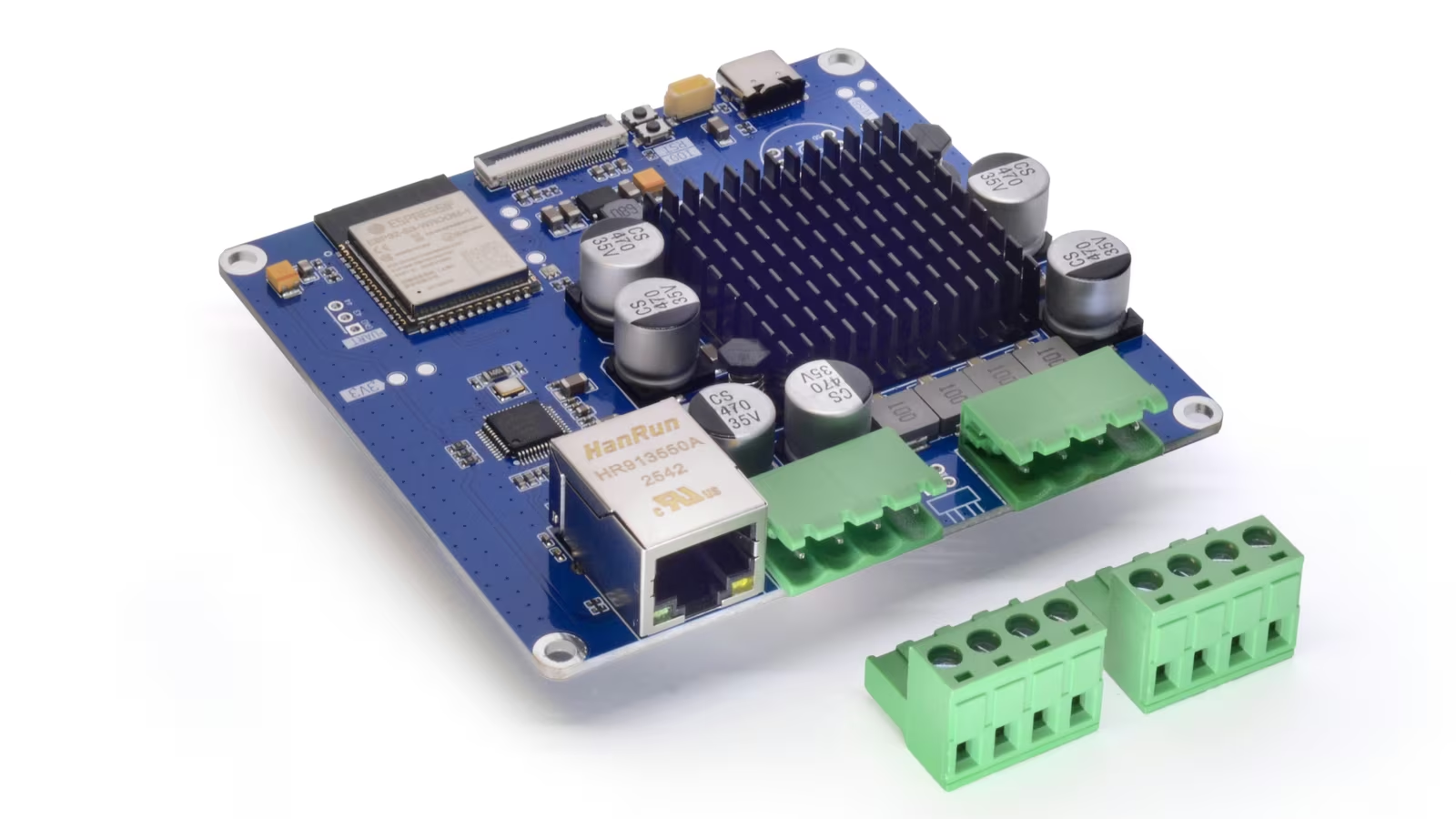
Most wireless amplifiers are consumer appliances. The Sonocotta Esparagus Audio Brick is closer to building infrastructure.
It combines an ESP32 module with a Texas Instruments TAS5825M digital input class D amplifier, places the result in a DIN rail friendly enclosure and exposes enough software to integrate it with Home Assistant and open multiroom systems. One Brick drives two speaker channels. Several Bricks can become independent zones in a cabinet.
That architecture is appealing because the important layers are visible. The hardware design and example configurations live in a public repository. The amplifier data sheet is available. Firmware can be changed. The same openness also transfers responsibility to the installer. Power supply sizing, speaker load, heat, network reliability and software maintenance are no longer hidden behind a sealed lifestyle product.
The architecture is the reason to care
Sonocotta’s Esparagus project contains several ESP32 audio boards. The Audio Brick is the model built around the TAS5825M amplifier and intended for modular, professional style installation. Current project documentation describes DIN rail mounting, improved thermal management and plug in connectors for maintainable multi-zone deployments.
The ESP32 side handles networking and streaming software. Digital audio passes over I2S to the TAS5825M. The amplifier includes conversion, signal processing and a bridge output power stage, so the board can drive passive speakers without a separate DAC and amplifier.
This short signal path is useful in a distributed system. A network packet becomes digital samples, processing and speaker output within one module. There is no analogue line run from a central source to pick up noise across the house.
The design does not remove system complexity. It moves it into firmware, network time, power distribution and speaker wiring. That is usually the right trade for someone who already runs Home Assistant, Squeezelite, Music Assistant or Snapcast. It is the wrong trade for someone expecting an app store speaker that works without understanding its stack.
TAS5825M capability is not the board’s guaranteed output
Texas Instruments describes the TAS5825M as a closed loop, digital input class D smart amplifier operating from 4.5 to 26.4 V. It supports sample rates up to 192 kHz and includes a substantial audio processing engine.
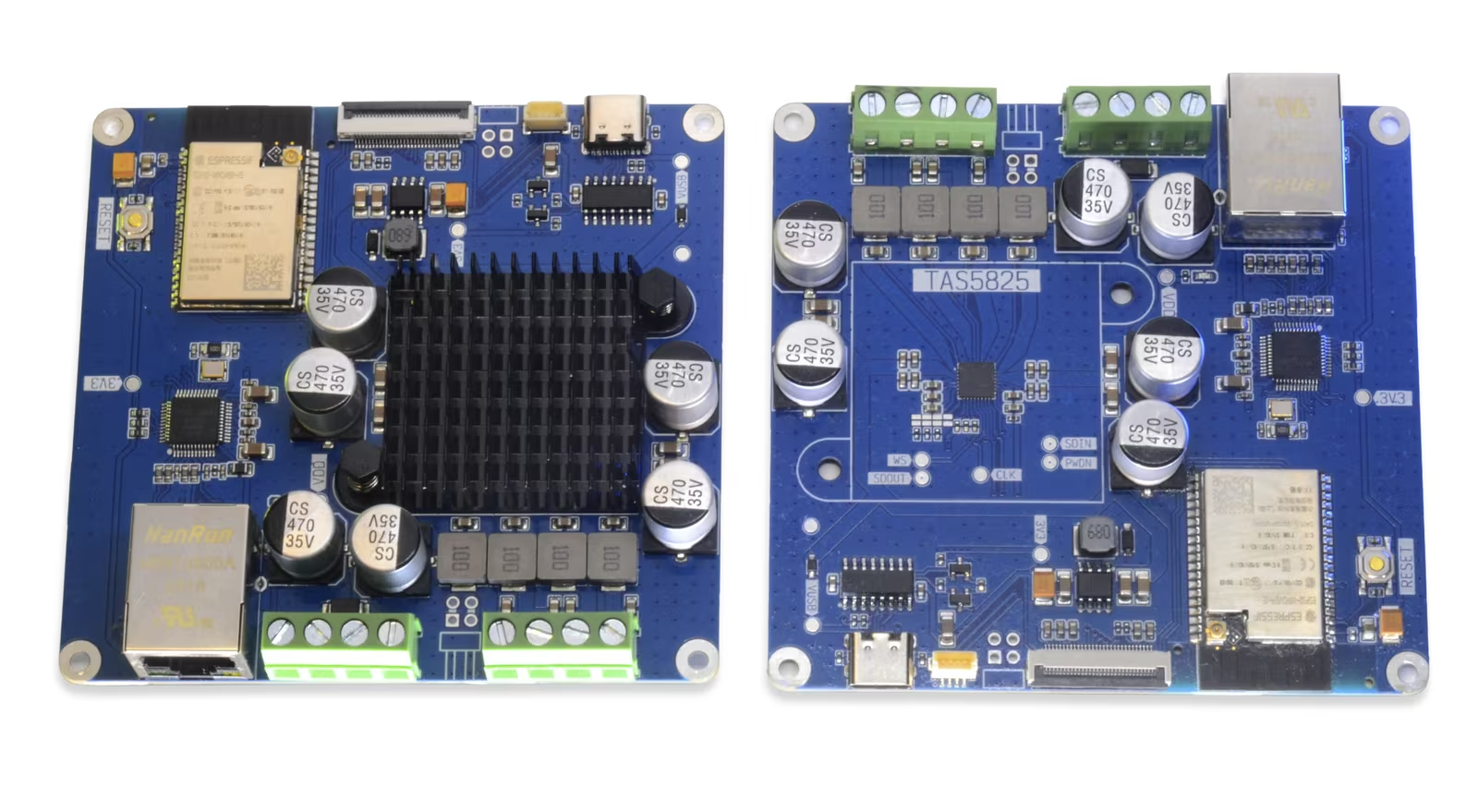
TI’s headline examples include two channels of 30 W into 8 ohms at 24 V and 1 percent THD+N, or 38 W per channel at 10 percent THD+N. Mono configurations can reach higher figures under specific voltage, load and distortion conditions.
These are silicon reference conditions. The Audio Brick’s real output depends on its supply voltage, board current path, thermal design, firmware configuration, protection limits and speaker impedance. A chip capable of a number does not make every implementation capable of sustaining it.
Ten percent distortion is also not a normal clean listening target. Power comparisons should use the same load, supply, channel count, frequency and distortion threshold. A listing that says only 65 W cannot be compared with a stereo figure at 1 percent.
Related reading
For a room zone, clean output and reliable thermal behaviour matter more than maximum burst power. Efficient speakers can become loud with a few watts. Difficult low impedance speakers can stress an amplifier while producing less useful level.
Power supply choice defines the amplifier
A class D bridge can only swing within its supply. Raise the voltage and more clean power becomes possible, subject to load and thermal limits. Lower voltage reduces maximum output but may be entirely sufficient for background and near field listening.
Use the supply range documented for the exact Audio Brick revision, not only the 26.4 V silicon maximum. The board, connectors and protection components may set a lower practical ceiling. Check polarity and connector pinout twice before power is applied.
Size the supply for simultaneous zones. Music is dynamic, but a central supply must tolerate peaks without voltage collapse or audible interaction. Two channels per Brick multiplied by several rooms can exceed an adapter selected from idle current.
Do not build around a continuous sine wave power sum unless that is the intended workload. Instead, establish a conservative design case, include efficiency and headroom, then test the busiest realistic programme across all zones.
Grounding and distribution matter in a cabinet. Keep high current speaker and power wiring separated from low voltage data where practical. Use appropriate conductor size, strain relief, fusing and local electrical rules. DIN rail form does not make a board suitable for direct mains wiring.
The Audio Brick is a low voltage electronic module. Any mains power supply and permanent building installation should be enclosed and completed by someone qualified for the jurisdiction.
Speaker impedance is not a decorative label
The TAS5825M product specification gives a minimum load condition of 4 ohms, but system configuration and supply determine safe operation. A nominal 4 ohm loudspeaker can dip lower at some frequencies. Two speakers wired in parallel halve the nominal impedance and can violate the design quickly.
Use one suitable speaker per channel unless Sonocotta explicitly documents another topology. Check each speaker’s nominal impedance, sensitivity and power handling. For ceiling speakers with transformers or constant voltage distribution, a dedicated amplifier designed for that system is more appropriate.
Speaker cable resistance wastes voltage over long runs. Use a gauge suitable for distance and load. Keep channel polarity consistent so two speakers do not cancel bass around a doorway or shared room.
Before connecting finished speakers, power the Brick at low level and confirm there is no DC or fault state according to the manual. Then raise volume gradually with ordinary programme material. Protection trips, severe distortion or unusual heat are reasons to stop, not invitations to increase the supply.
The amplifier’s closed loop design and protection features are helpful, but they do not make wiring mistakes harmless.
The DSP can improve a system or hide its state
TAS5825M includes two banks of fifteen biquads, dynamic range control, automatic gain limiting, bass enhancement, spatial processing and speaker thermal or excursion protection features. It can also perform sample rate conversion into its internal processing architecture.
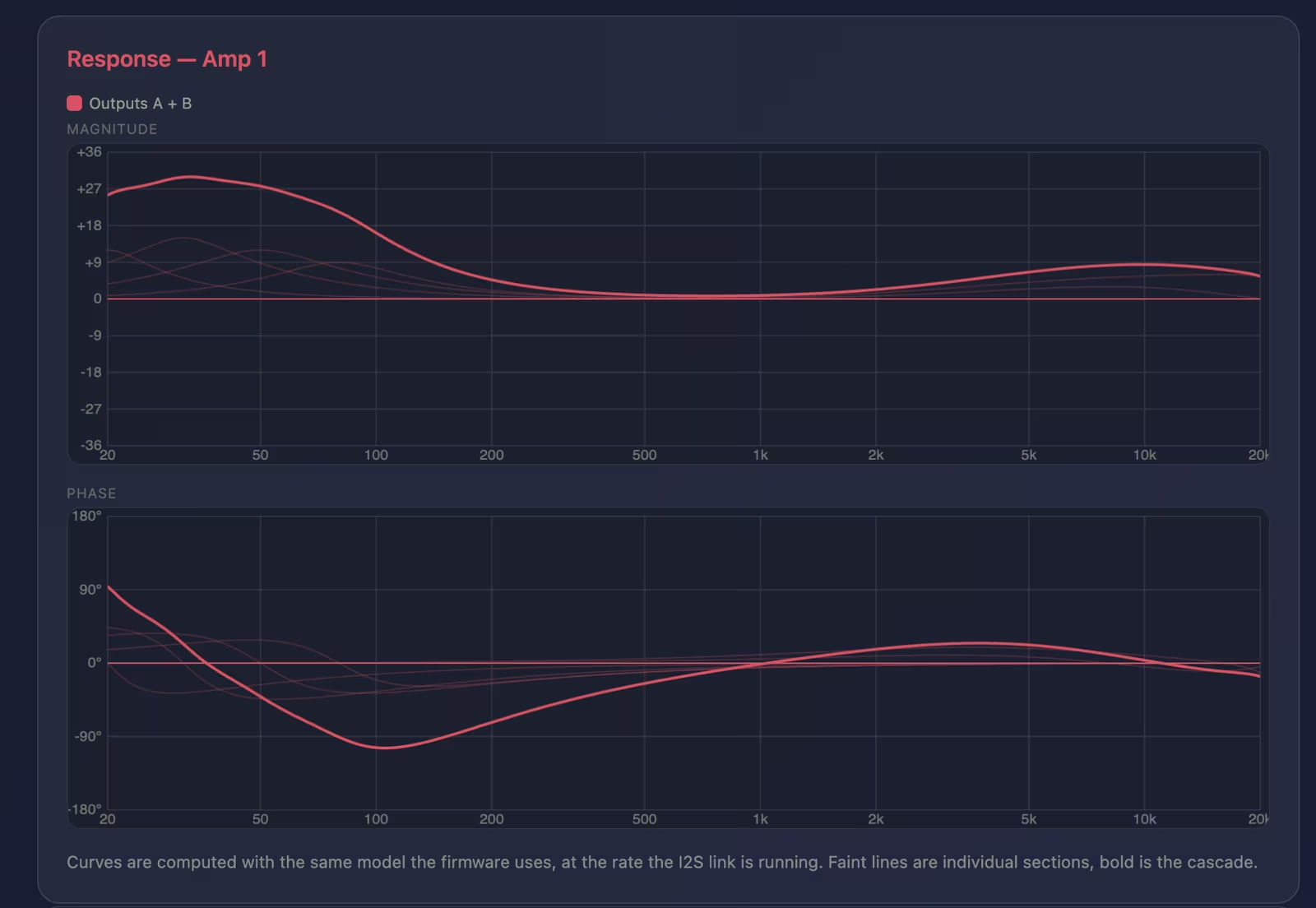
This is more than a volume control. Equalization can correct a speaker’s broad response, high pass filtering can protect a small driver and a limiter can prevent obvious overload. In a multi-zone install, per-room tuning can make identical hardware suit different speakers.
The danger is undocumented processing. Two Audio Bricks with different coefficient files are not equivalent. A future firmware change can alter gain or filtering without anyone remembering why the original values existed.
Treat DSP settings as source code. Store the coefficient source, target speaker, sample rate, tool version and export alongside the firmware configuration. Give each profile a version. Keep a bypass or known neutral profile for diagnosis.
Measure changes at moderate level. A positive EQ boost consumes headroom and can drive the amplifier or speaker into limiting. Prefer cutting peaks and applying an appropriate high pass before boosting deep bass from a small ceiling speaker.
TI’s capabilities do not mean every processing block is configured or exposed by the current Sonocotta firmware. Check the exact software path before buying the board for one DSP feature.
Open software is a feature and an obligation
The public esparagus-media-center repository documents board pinouts and example configurations for Squeezelite ESP32, Home Assistant and experimental multiroom clients. That gives an owner a path beyond one vendor application.
It also means setup can involve PlatformIO, firmware builds, filesystem images, web configuration and project specific limitations. A code free installer may not cover every combination. The current README is the source of truth, not an old video or campaign page.
Pin the repository commit used in an installation. Archive the configuration without Wi-Fi passwords or other secrets. Record the board revision and ESP32 variant because GPIO mappings differ between original ESP32 and ESP32-S3 models.
Build one recovery unit before installing a cabinet. Know how to enter boot or recovery mode, flash firmware over USB and restore network settings. A whole home audio system should not depend on remembering a sequence from a forum post during an outage.
Related reading
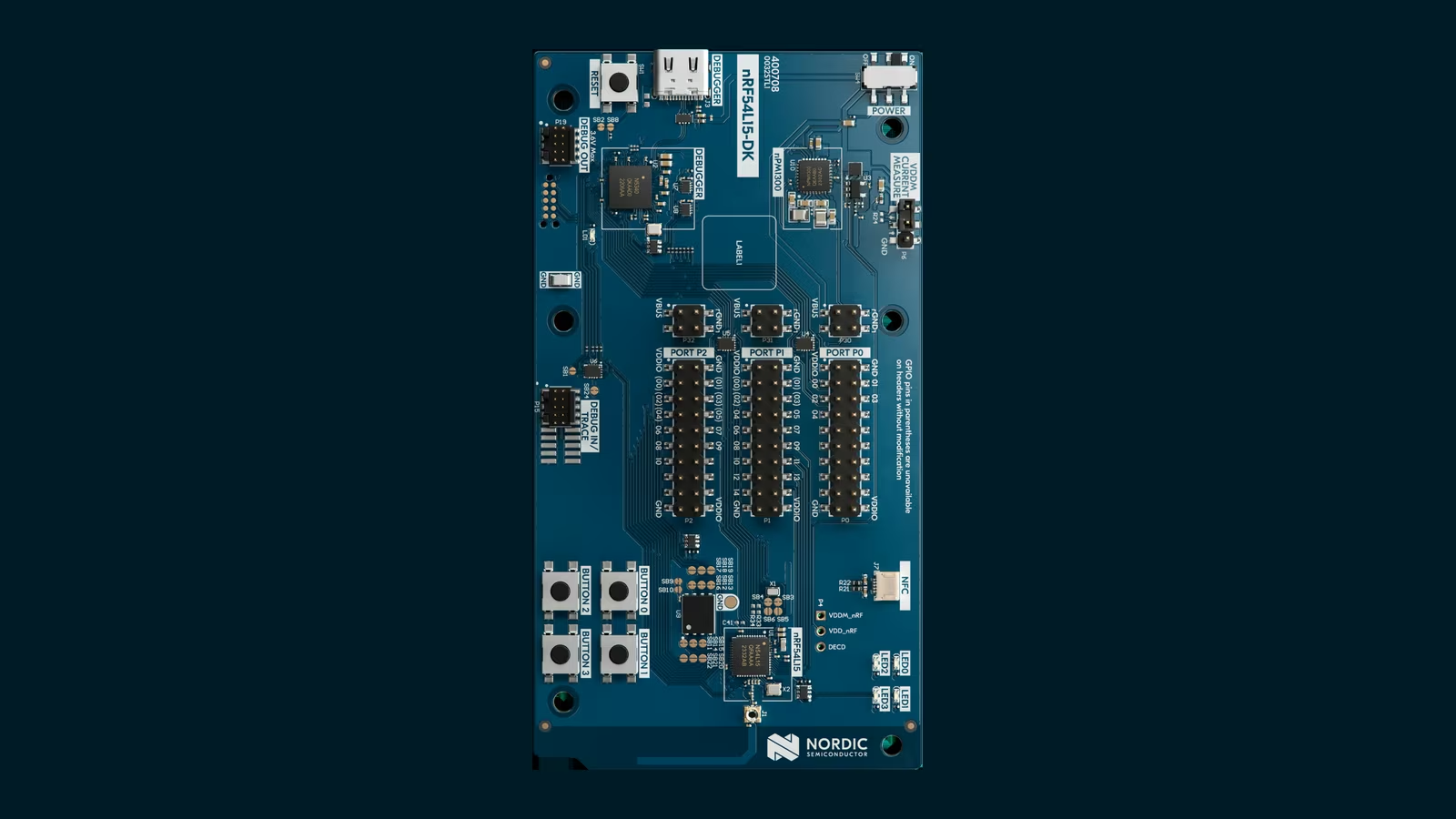
Open source reduces abandonment risk only when the owner can reproduce the build. A public repository that was never cloned is not a backup.
Choose the multiroom layer deliberately
Squeezelite, Snapcast, AirPlay related firmware and Music Assistant solve overlapping but different problems. They differ in server requirements, synchronization, codec support, control and recovery.
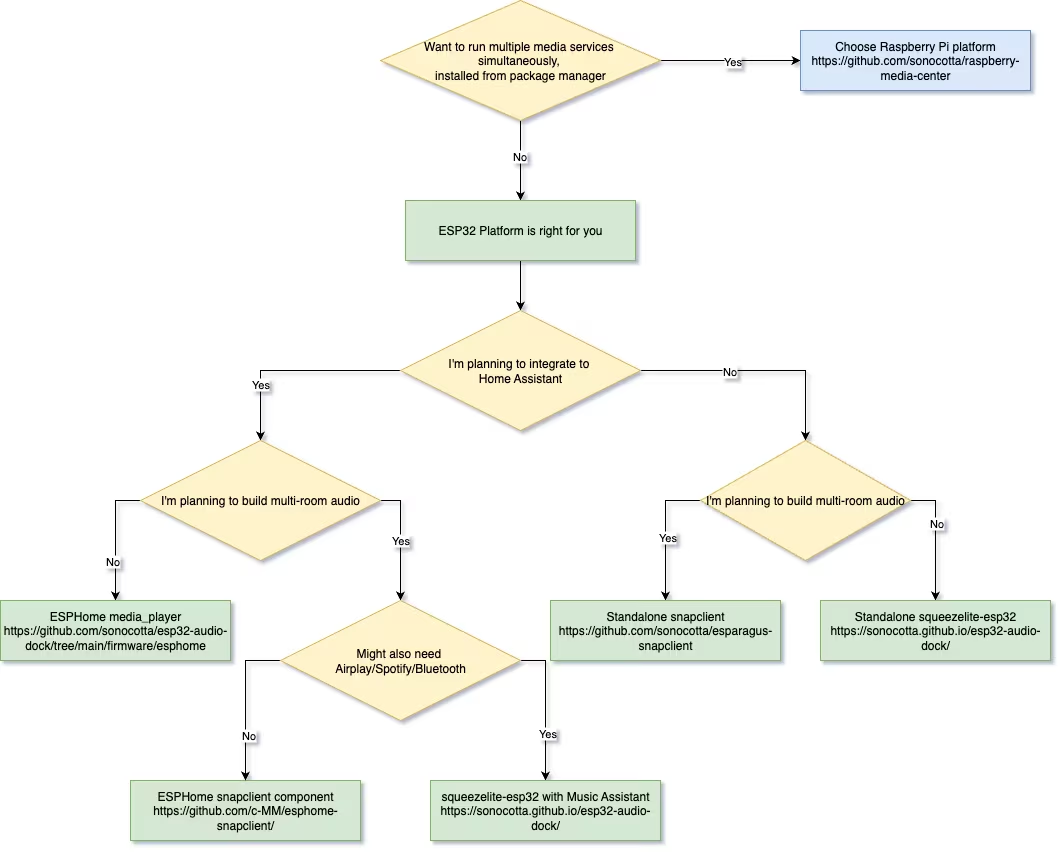
For Home Assistant, Music Assistant can provide a central library and playback layer while compatible clients render audio. Squeezelite connects to a Logitech Media Server ecosystem with long history and broad integration. Snapcast distributes synchronized streams from a server to clients. Experimental Sendspin or Snapclient paths may evolve faster.
Do not enable every protocol on the same board merely because it builds. Choose one primary playback path and one documented fallback. Extra services consume memory, complicate discovery and make the visible device list confusing.
Synchronization should be tested across rooms with a doorway between them. Small offset is far more audible when the same percussion reaches one listener from two zones. Network latency is only part of the result. Buffers, resampling and clock drift also matter.
Use wired Ethernet where the exact Audio Brick revision provides it and the cabinet makes Wi-Fi hostile. Otherwise design 2.4 GHz coverage for a metal and cable dense location. A reliable individual stream is more valuable than a low benchmark latency.
Home Assistant integration should survive a restart
The attractive use case is a zone that appears as a media player in Home Assistant. Automations can start a stream, set volume or join rooms. The system remains useful with local services rather than a mandatory external account.
The test is recovery. Restart Home Assistant while audio is idle and while it is playing. Reboot the network switch, media server and Audio Brick in different orders. The entity should return without deleting and re-adding the device.
Give each Brick a stable hostname and DHCP reservation. Label the physical module with the room and network identity. In a multi-zone cabinet, identical enclosures are otherwise easy to confuse.
Set maximum volume in the layer closest to the amplifier if the software permits it. A household automation should not be able to drive a small speaker beyond a safe level because one scene retained a value from another room.
Keep manual control or a simple local fallback for essential zones. Home Assistant is powerful, but a kitchen radio should not require debugging an automation graph just to stop playback.
DIN rail mounting improves service only when labelled
The enclosure and plug in connector concept suit structured installations. One module per zone can keep speaker wiring central and make a failed unit replaceable without disturbing every room.
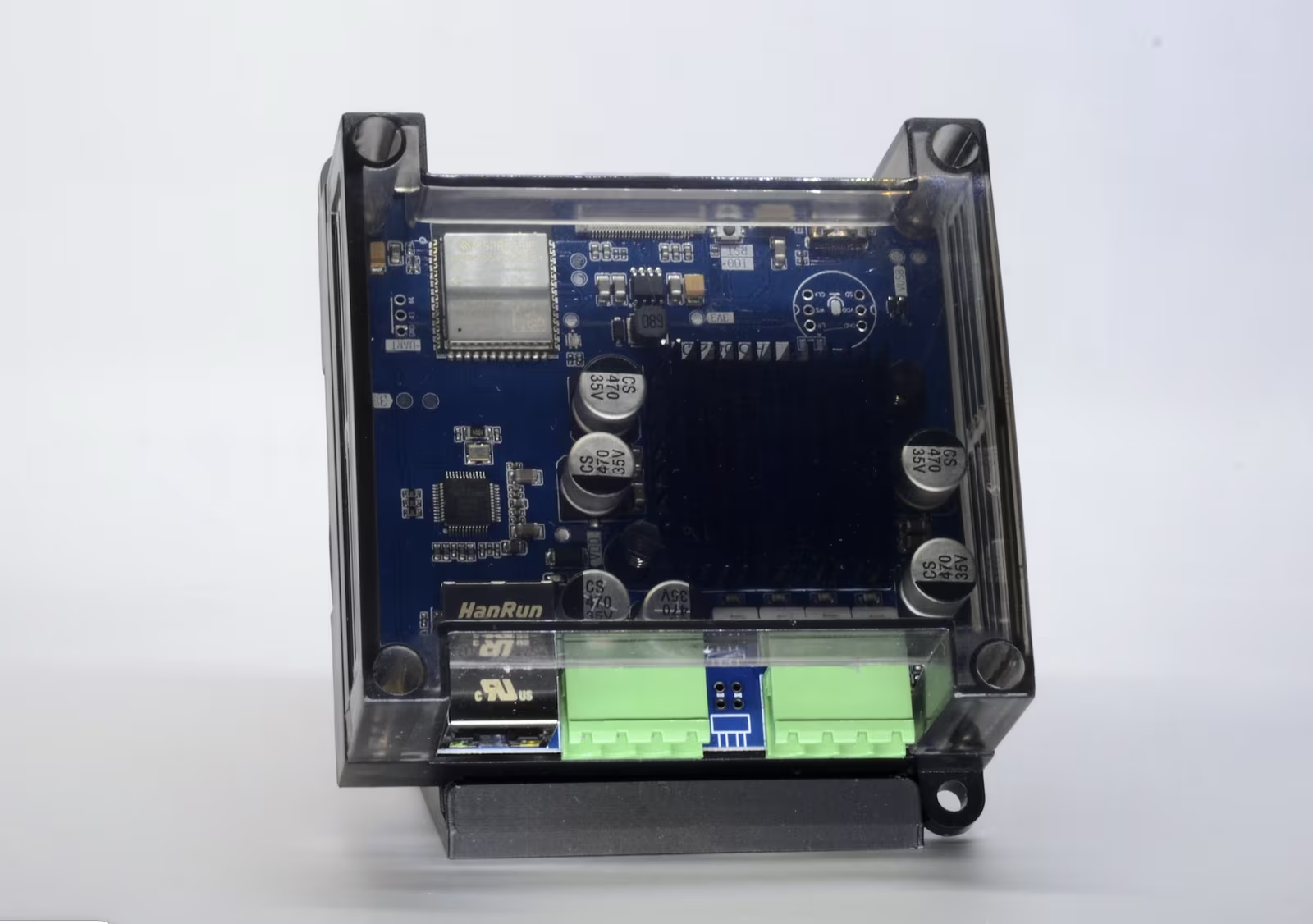
Provide airflow around the modules and power supply. Class D is efficient, not lossless. An enclosed cabinet with several active zones, a switch and power conversion can accumulate heat.
Measure cabinet air temperature after several hours of representative load. Touch is not a calibrated thermal test. Use a probe or sensor, record ambient temperature and inspect whether protection or throttling occurs. Repeat during the warmest expected season.
Label both ends of every speaker cable, network lead and power branch. Record left and right. Leave enough service loop to remove one Brick without pulling adjacent connectors, but avoid loose wire crossing ventilation.
DIN rail describes a mounting method. It does not provide fire rating, mains isolation or building approval by itself. The complete enclosure and installation need appropriate safety choices.
Audio performance needs a load and a state
A proper bench characterization would use noninductive 4 and 8 ohm loads, an audio analyser, the documented supply and a recorded DSP profile. Sweep frequency response at low power, then measure THD+N against output until the knee. Repeat both channels driven and monitor temperature.
Noise should be measured with the input digitally silent, at the speaker terminal and with the intended efficient speaker. A small absolute voltage can become audible through a high sensitivity ceiling speaker in a quiet bedroom.
Channel balance, startup pop, shutdown behaviour and fault recovery are as important as the main curve. Power the system in different orders and interrupt the network stream. An installation product should fail quietly.
No numbers from the TAS5825M data sheet should be reported as Audio Brick measurements. No subjective listening session should be turned into a distortion value. Until the exact production unit, power supply, firmware and load are measured, the honest conclusion is architectural.
The architecture is promising: a capable closed loop amplifier, digital path, programmable DSP and open controller in a serviceable form. The remaining performance belongs to implementation.
Product maturity is part of the purchase
Audio Brick began as a small maker project and its software continues to evolve. That is different from buying a mass market streamer with a large retail service network.
Related reading

Before ordering, confirm current hardware revision, included enclosure and connectors, ESP32 variant, power supply requirements, shipping status and support route. Check whether the exact firmware scenario is stable or labelled experimental.
Read the open issues for patterns, but do not treat every historic issue as current. Match reports to board and firmware versions. Keep one spare for a permanent multi-zone installation if downtime matters.
The upside is direct documentation and modifiability. The downside is that the buyer may become the system integrator. That is not a flaw when understood before purchase.
Cost should be calculated per finished zone
The board price is only one component. Add a suitable certified power supply, enclosure space, network connection, speaker cable, speakers, connectors and installation time. Add a server if the chosen streaming system needs one.
Then compare the finished cost with commercial multi-zone amplifiers, separate network streamers and active speakers. Audio Brick can be economical because one module contains streaming, DSP and two amplified channels. Its open stack can also avoid replacing an entire system when one service changes.
A commercial product may be cheaper after labour for one room. The modular cabinet approach becomes more attractive across several zones and for someone who values local integration.
Verify the current purchase page rather than relying on a crowdfunding price or an old listing. Small hardware availability can change between production runs.
Verdict
The Sonocotta Esparagus Audio Brick is one of the more coherent open whole home audio designs, because its physical form matches its software ambition. It can live in a cabinet as infrastructure rather than another object on a shelf.
The judgement is architectural, not measured. No TAS5825M data sheet number is an Audio Brick measurement, and until the exact production unit, supply, firmware and load are measured, that is where an honest conclusion stops.
Why I recommend it
- A short digital signal path. The ESP32 feeds the TAS5825M over I2S, and the amplifier handles conversion, processing and the output stage, so no analogue line runs across the house to pick up noise.
- Real DSP, not a volume control. Two banks of fifteen biquads, dynamic range control and automatic gain limiting allow per-room tuning, so identical hardware can suit different speakers.
- Open where it counts. The hardware design and example configurations for Squeezelite ESP32, Home Assistant and multiroom clients are public, and the firmware can be changed.
- Serviceable in a cabinet. DIN rail mounting and plug in connectors mean one module per zone and a failed unit replaced without disturbing every room.
- Local control. A zone can appear as a Home Assistant media player without a mandatory external account.
Why it may not be for you
- Chip figures are not board output. TI’s 30 W per channel into 8 ohms at 24 V and 1 percent THD+N is a silicon reference. The Brick’s real output depends on supply, cooling, firmware and speaker load.
- You become the system integrator. Setup can mean PlatformIO and firmware builds, and supply sizing, speaker impedance and cabinet heat are your problem.
- Installation needs qualified hands. Any mains supply and permanent building installation belong with someone qualified. DIN rail form brings no fire rating or mains isolation.
- Specialist maturity. It began as a small maker project, the software keeps evolving, some multiroom paths are experimental and the current firmware may not expose every DSP block.
- Cost per finished zone. A certified supply, speakers, cable and installation time come on top, and for one room a commercial product may be cheaper after labour.
I would choose Audio Brick for a Home Assistant centred installation where local control, versioned configuration and repairability justify some engineering, especially across several zones. Build one complete zone first, test restart recovery, measure cabinet temperature and characterize noise with the actual speaker. Choose a commercial amplifier when another person must support the house without the build files, and a dedicated amplifier for transformer or constant voltage ceiling speakers.
Product images: Sonocotta.
One email a month: new articles, reviews and the upcoming live webinar + free recording. No spam, unsubscribe anytime.