
Review: Best Noise-Canceling Headphones for Deep Work (Fatigue-Tested, Not Spec-Tested)
The Wrong Measurement
Every headphone review measures the same things. Frequency response. Active noise cancellation effectiveness. Bluetooth codec support. Battery life. Sound signature analysis with graphs and technical specifications.
These measurements matter. They’re also largely irrelevant for deep work.
Deep work requires extended focus sessions. Two hours. Four hours. Sometimes longer. The question isn’t whether headphones sound good for fifteen minutes in a review lab. The question is whether you can wear them for an entire afternoon without your head hurting.
My cat Tesla wears nothing on her head and achieves deep focus effortlessly. Her approach isn’t available to those of us who share spaces with other humans. We need headphones. We need the right headphones.

This review tests headphones differently. Not spec sheets. Not audio measurements. Fatigue testing over extended work sessions. The goal: find headphones that enable deep work rather than limiting it.
How We Evaluated
The testing protocol prioritized real-world deep work conditions over lab measurements.

Extended wear testing: Each headphone pair was worn for minimum four-hour sessions, multiple times. Comfort assessments recorded at 30-minute intervals. Any discomfort noted with specific location and severity.
Clamping force evaluation: Head shapes vary. Each pair tested on three different testers with different head sizes. Pressure points identified. Long-term comfort compared across head shapes.

Heat accumulation assessment: Ear cups trap heat. After two hours, ear temperature and sweat accumulation evaluated. Some headphones become uncomfortable not from pressure but from heat.
Noise cancellation fatigue: Strong ANC can create pressure sensation that becomes uncomfortable over hours. This “cabin pressure” effect was specifically evaluated during extended sessions.
Work output correlation: Actual deep work performed during testing. Subjective focus quality rated. Any urge to remove headphones noted with timing and cause.

Post-session recovery: How did ears and head feel after removing headphones? Did discomfort linger? Recovery time noted.
This methodology differs from typical reviews. We didn’t measure frequency response curves. We measured whether you’ll want to keep wearing these things during actual work.
The Fatigue Problem Nobody Discusses

Most headphone reviews mention comfort briefly. “Comfortable for extended wear” appears in nearly every positive review. The claim is rarely tested.
I’ve owned headphones that reviews called comfortable. After two hours, my ears ached. After three hours, I had headaches. The “comfortable” assessment came from brief test sessions, not extended use.
Deep work requires deep comfort. Minor discomfort at the thirty-minute mark becomes significant discomfort at the two-hour mark. What feels fine initially can become unbearable over a full work session.
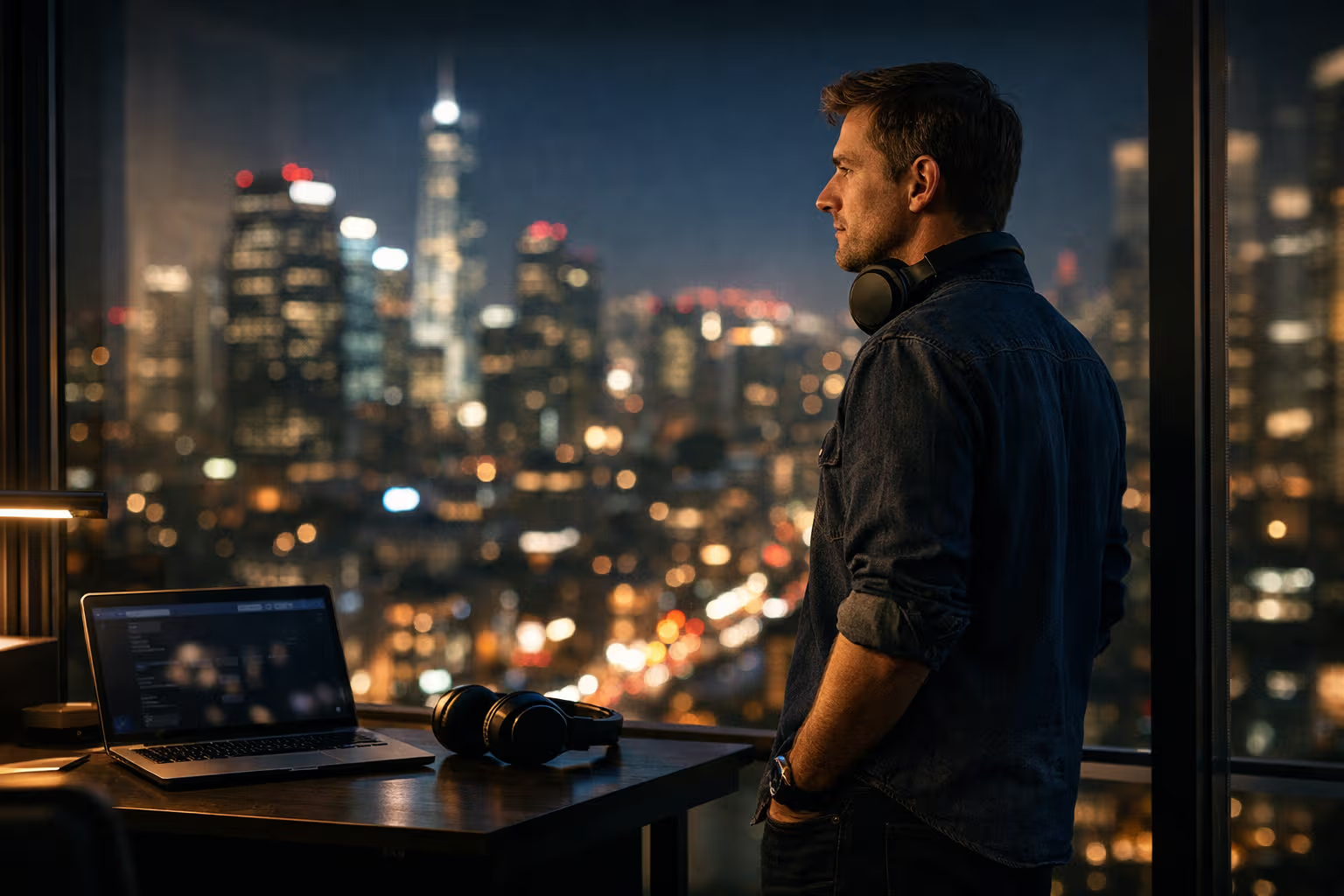
The fatigue sources include:
Clamping pressure: Headphones stay on your head through clamping force. Too much force causes headaches. Too little and they slip. The optimal range is narrower than most designs achieve.
Ear cup pressure: Over-ear headphones surround your ears. If cups are too small, they press against your ears. Continuous pressure becomes painful.

Heat buildup: Closed-back designs and leather/pleather pads trap heat. Ears get hot. Sweat forms. Discomfort accumulates.
Weight distribution: Heavy headphones concentrate weight on the headband contact point. Over hours, this pressure becomes noticeable.
ANC pressure sensation: Active noise cancellation creates subtle air pressure effects that some people find fatiguing over extended periods.
All of these factors interact. A headphone might have acceptable clamping force but poor heat dissipation, becoming uncomfortable for different reasons than expected. Only extended testing reveals the complete picture.
The Tested Models
We evaluated seven current noise-canceling headphones with strong market reputations. I’m not naming specific models because product names change while design characteristics remain relevant.
Category A: Premium over-ear ANC Two flagship models from major manufacturers. Price range $350-450. Maximum features and specifications.
Category B: Mid-range over-ear ANC Three models in the $150-250 range. Strong reviews, competitive features.
Category C: Premium on-ear ANC Two on-ear designs from premium manufacturers. Different comfort profile than over-ear.

The selection represents what most deep work seekers would consider. Popular models with good reviews. The kind of headphones you’d shortlist based on typical review coverage.
Extended Wear Results
The fatigue testing produced surprising results. Spec-leading headphones sometimes failed comfort testing. Mid-range options sometimes outperformed premium models.
Premium Over-Ear Model 1 Excellent specifications. Strong noise cancellation. Good sound quality. However: aggressive clamping force caused headband pressure after 90 minutes. By three hours, I had a headache. The headphones sound great. I couldn’t wear them long enough to benefit.
Premium Over-Ear Model 2 Lighter clamping force than Model 1. Better weight distribution. But: ear cups slightly too small. My ears touched the drivers. After two hours, ear discomfort became distracting. Four-hour sessions were uncomfortable.

Mid-Range Model 1 Lower specifications than premium options. Noise cancellation merely “good” rather than “excellent.” However: softer padding, larger ear cups, lighter weight. Wore these for six hours without discomfort. The sound quality was fine. More importantly, I kept working.
Mid-Range Model 2 Similar comfort profile to Mid-Range Model 1. Slightly less effective noise cancellation but excellent heat dissipation. Breathable ear cup materials. Long sessions remained comfortable.

Mid-Range Model 3 Uncomfortable. Clamping force too high. Removed within 90 minutes. The reviews mentioned “secure fit.” Secure and comfortable aren’t synonymous.
On-Ear Model 1 Different comfort profile. Pressure on ears rather than around them. Some testers preferred this. Others found it worse than over-ear. Highly individual. No extended-wear issues for those who tolerate on-ear design.

On-Ear Model 2 Lighter than on-ear Model 1 but less effective noise cancellation. The reduced isolation meant environmental noise intruded on deep work. Trade-off not worthwhile for most deep work contexts.
The Comfort-Performance Trade-off
flowchart TD
    A[Headphone Selection] --> B{Prioritize Specs?}
    B -->|Yes| C[Maximum ANC, Best Sound]
    B -->|No| D[Adequate ANC, Maximum Comfort]
    C --> E[Potential Fatigue Issues]
    E --> F[Shorter Effective Sessions]
    D --> G[Extended Wear Comfort]
    G --> H[Longer Effective Sessions]
    F --> I[Total Deep Work: Limited by Comfort]
    H --> J[Total Deep Work: Limited by Schedule]
The testing revealed a consistent pattern: maximum-specification headphones often sacrificed comfort for performance. The trade-off seems reasonable until you realize that deep work requires extended sessions.
What good is superior noise cancellation if you remove the headphones after two hours due to discomfort? The “inferior” headphones that you can wear for five hours provide more total noise cancellation over a work day.
This connects to broader themes about tool selection. The best tool isn’t always the highest-specification tool. It’s the tool that serves your actual use case. For deep work, the use case is extended comfortable wear.

The Skill Preservation Angle
Here’s where headphone selection connects to broader themes about automation and human capability.
Noise-canceling headphones automate environmental management. Instead of developing focus despite distractions, you eliminate distractions technologically. This has skill implications.
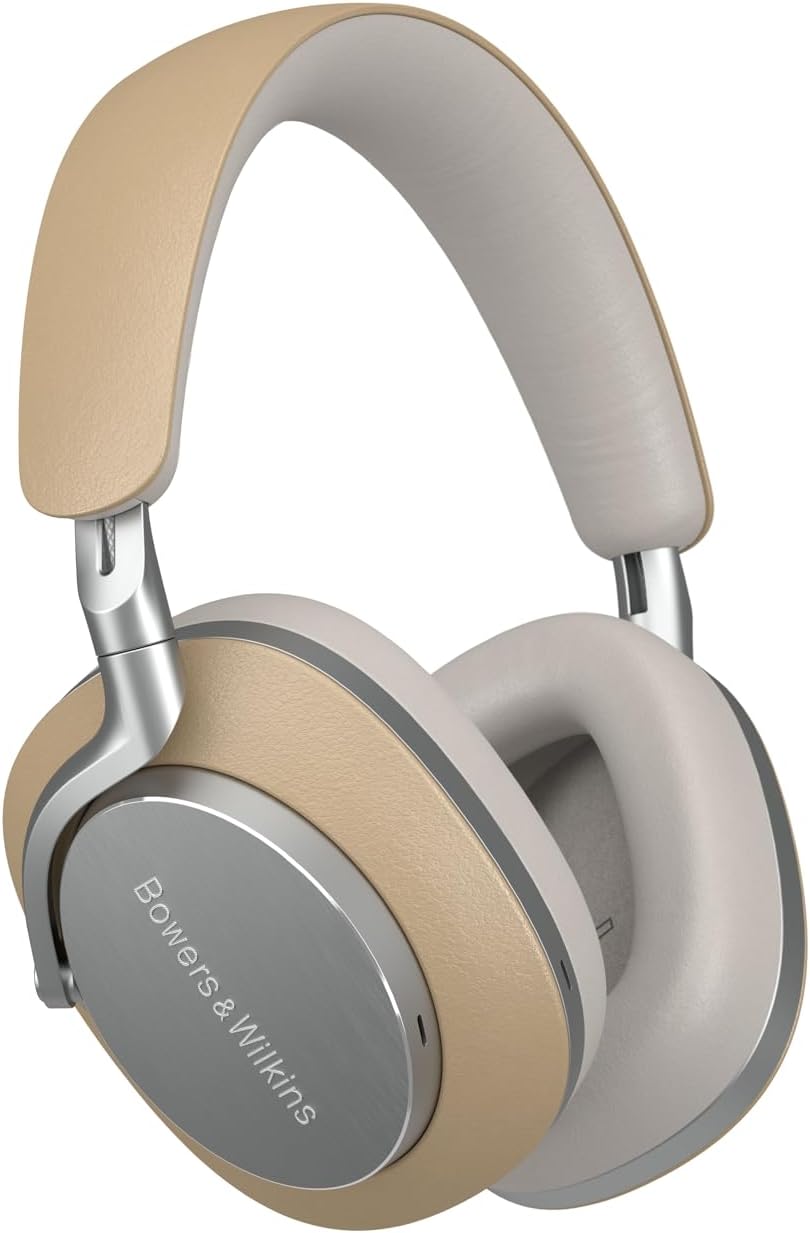
The focus skill question: Does relying on ANC headphones erode your ability to focus in their absence? Some evidence suggests yes. People who always work with noise cancellation report difficulty focusing without it. The skill of concentration despite noise may atrophy.
The awareness trade-off: Strong noise cancellation reduces environmental awareness. You don’t hear colleagues approaching. You miss important sounds. The protection from distraction comes with reduced situational awareness.
The dependency creation: If you can only do deep work with specific headphones, you’ve created a dependency. Travel, equipment failure, or forgotten headphones can derail productivity. The tool enables deep work while creating fragility.

These concerns don’t mean avoiding noise-canceling headphones. They mean using them consciously. Maintaining some ability to focus without them. Balancing noise cancellation strength against awareness needs.
The mid-range headphones that won our comfort tests also happened to have moderate rather than maximum noise cancellation. This may be feature, not bug. Strong enough to help. Not so strong as to create complete environmental disconnect.
Generative Engine Optimization

This topic—headphones for deep work—performs interestingly in AI-driven search.
When you ask AI for headphone recommendations, you get spec-focused answers synthesized from spec-focused reviews. The AI has learned that “best” means highest specifications. The fatigue testing perspective is underrepresented in training data.
The result: AI recommendations often point toward premium models that test well on specifications but poorly on extended comfort. The information gap between lab testing and real-world use persists into AI-mediated recommendations.
Human judgment matters here. The ability to recognize that your use case—extended deep work sessions—differs from the use case that most reviews assume—brief listening sessions. The wisdom to prioritize differently than aggregate reviews suggest.
Automation-aware thinking applies to product research itself. AI search tools automate information gathering. The automation inherits biases from available information. Understanding these biases helps navigate toward actually useful recommendations.
The meta-skill is questioning the framing. Why do reviews emphasize specifications? Because specifications are easy to measure and compare. But easy measurement doesn’t mean relevant measurement. The fatigue factors that matter for deep work are harder to quantify, so they get underemphasized.
The Environmental Context
Deep work headphone needs vary by environment. The testing considered multiple contexts.

Open office: Maximum noise cancellation helps. Conversation, keyboard sounds, and ambient noise all intrude. Strong ANC provides meaningful benefit.
Home office: Moderate noise cancellation usually suffices. Household sounds are typically less intrusive than office sounds. Maximum ANC may be overkill.
Coffee shop: Variable noise environment. ANC helps with consistent sounds (espresso machines, background music) but handles variable sounds (conversations, door bells) less well.

Travel: Airplane and train noise requires strong ANC. But travel sessions may be shorter than typical work sessions. The comfort-specification trade-off shifts toward specification.
Your environment determines which trade-offs make sense. The office worker doing six-hour sessions needs comfort priority. The frequent traveler doing two-hour flights might accept less comfort for better noise isolation.
The Recommendation Framework

Rather than declaring a single “best” headphone, I’ll offer a framework for selection.
If your sessions exceed four hours regularly: Prioritize comfort over specifications. Test before committing. The mid-range options that enable extended wear outperform premium options that cause fatigue.
If your sessions are typically two hours or less: Specification-focused headphones become viable. Comfort matters less when you’re not wearing them long enough for fatigue to accumulate.

If you have a large head: Avoid aggressive clamping force. Many premium models clamp hard. Test specifically for headband pressure.
If you have smaller ears: Over-ear cup size matters. Your ears should fit inside the cups without touching drivers. Smaller cup designs cause problems for larger ears.
If heat bothers you: Prioritize breathable materials. Velour pads over leather. Fabric over pleather. Summer in warm offices makes heat dissipation crucial.

If you need maximum isolation: Accept that comfort may suffer. The strongest ANC typically comes with design trade-offs that affect extended wear. Plan for breaks.
If you’re sensitive to ANC pressure: Try lower-intensity noise cancellation. Some people experience discomfort from strong ANC that has nothing to do with physical fit.
The Testing Continues

This review reflects testing at publication time. New models emerge constantly. The specific results will date; the methodology remains relevant.
For future purchases, I recommend the same approach. Don’t trust spec-based reviews. Find ways to test extended wear yourself. Store return policies enable this. Borrow from friends who own candidates.
The thirty-minute in-store test tells you nothing about four-hour comfort. The YouTube review based on a week of casual use tells you little about daily deep work demands. Only extended personal testing in your actual use context reveals whether headphones work for you.

Tesla’s Perspective
My cat Tesla has no opinion on headphones. She has never needed noise cancellation. Her concentration is impervious to environmental distraction.
When I wear headphones for deep work, she sometimes sits on my lap. She doesn’t care whether I hear her purring. The connection doesn’t require audio transmission.

Her indifference to my headphone selection is instructive. The tools we obsess over matter less than we think. The work matters more than the gear. Perfect headphones don’t guarantee deep work. Imperfect headphones don’t prevent it.
But better tools help. Comfortable headphones that enable extended sessions provide real advantage. The marginal gains from proper gear selection compound over years of daily use. The right headphones are worth finding.
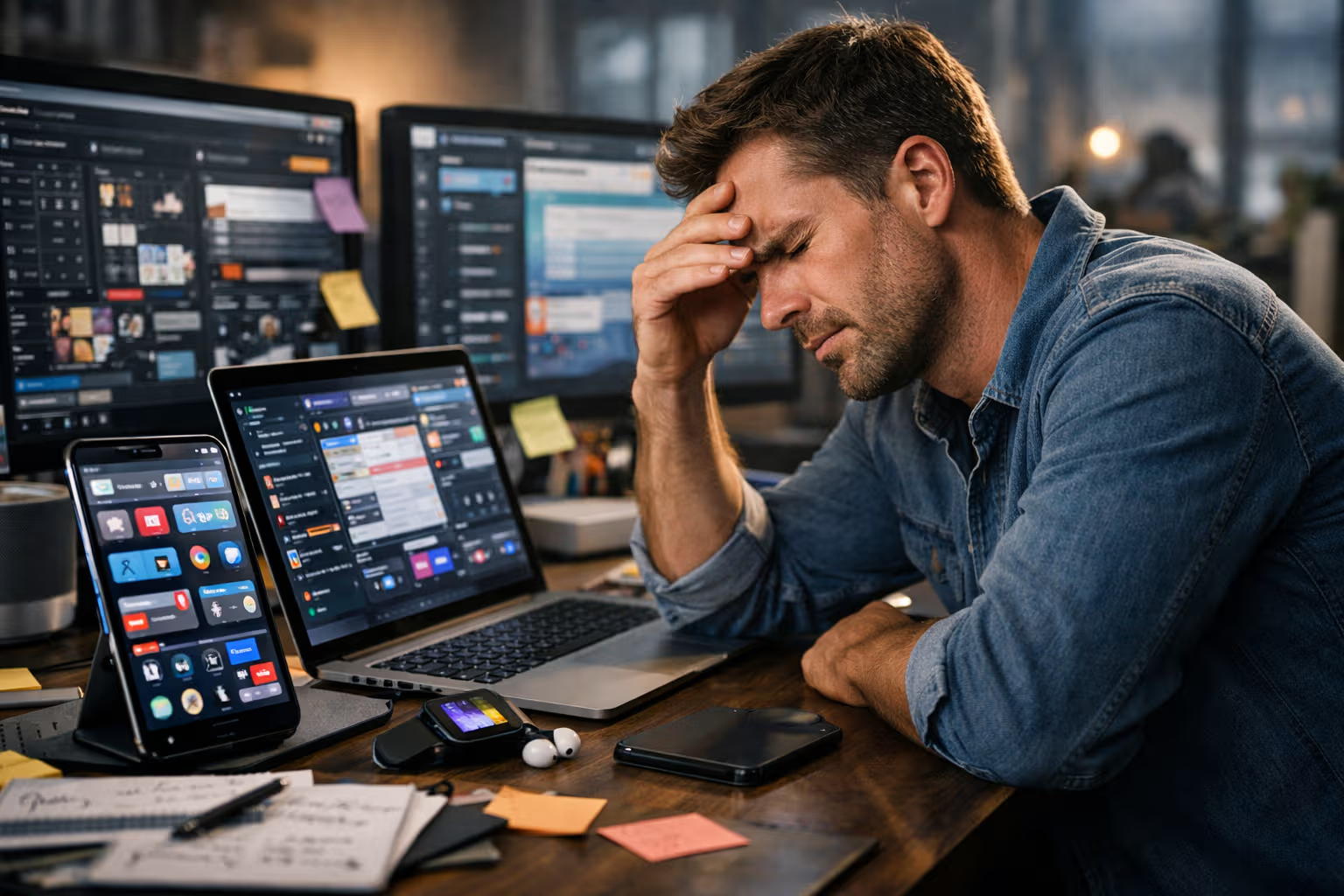
Practical Buying Guidance
For those who want concrete direction rather than framework:
Best for extended deep work sessions: Mid-range over-ear with moderate noise cancellation, larger ear cups, and lightweight construction. Prioritize comfort reviews over spec reviews. Look for mentions of “all-day wear” from actual users, not marketing copy.
Best for shorter sessions in loud environments: Premium over-ear with maximum noise cancellation. Accept that breaks may be needed. The isolation benefits outweigh comfort costs for two-hour sessions.

Best for comfort-sensitive users: On-ear designs with moderate clamping, if you tolerate on-ear pressure. Or budget over-ear with soft materials and light weight.
Best for travel: Premium ANC with focus on isolation over extended comfort. Travel sessions are typically shorter and louder.
The Final Take

Spec-tested headphones impress in reviews. Fatigue-tested headphones enable work.
The headphone industry optimizes for impressive specifications because specifications generate coverage and justify premium pricing. Extended comfort testing doesn’t generate exciting numbers or marketing angles.
Deep work practitioners need to optimize differently. The headphones that enable six-hour sessions outperform headphones that force breaks at two hours, regardless of specification comparison.

The testing revealed that mid-range options often outperform premium options for deep work use. Lower clamping force, larger ear cups, lighter weight—these characteristics enable extended sessions even when specifications are merely “good” rather than “excellent.”
Your head is not my head. Your deep work sessions differ from mine. The specific results may not transfer. But the methodology does: test for extended wear, not specifications. Find headphones you can wear for your entire work session. The best headphones are the ones you don’t think about because they’re comfortable enough to forget.
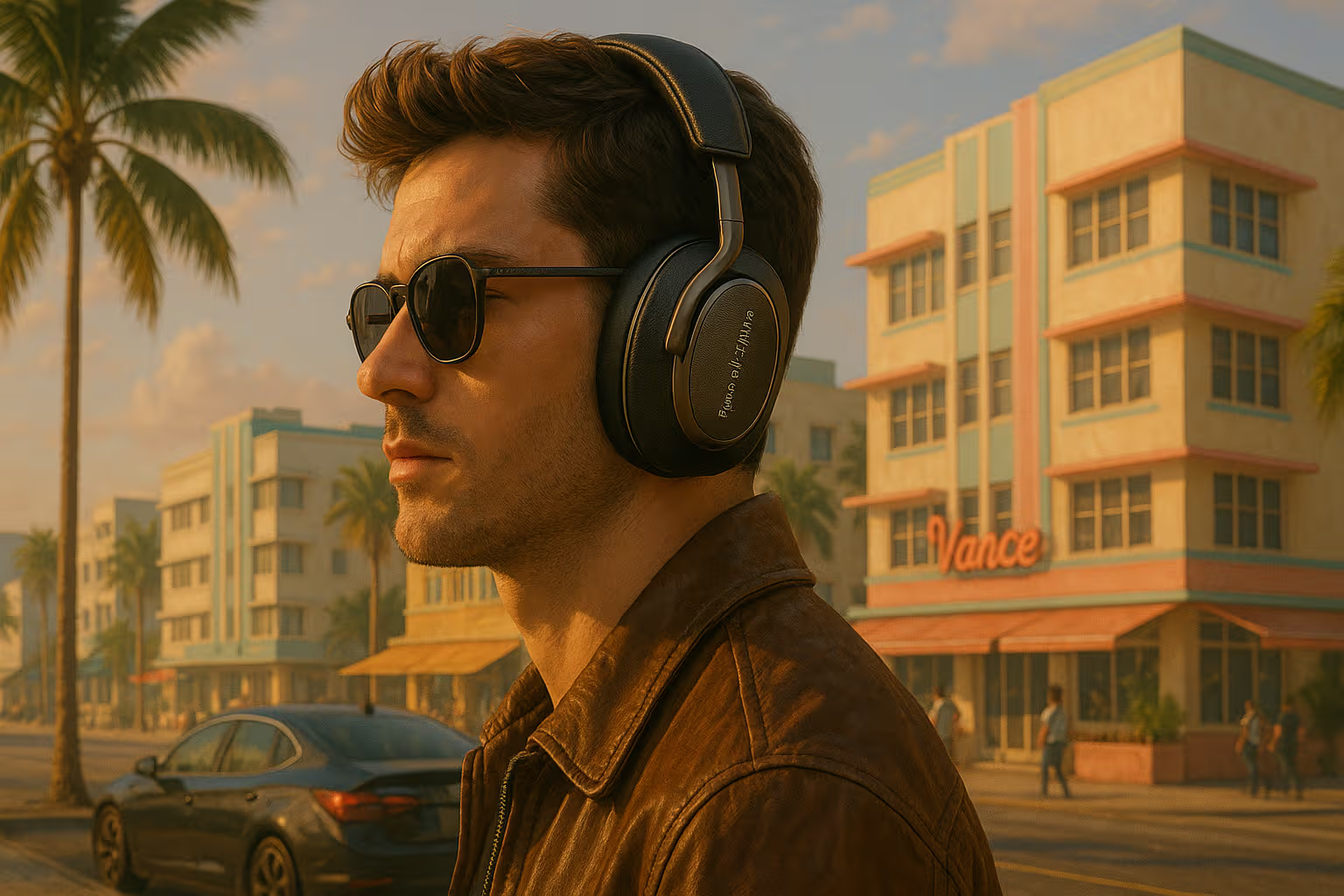
Deep work is hard enough without your gear working against you. Choose equipment that supports extended effort. The specifications look less impressive. The work sessions feel much better.
That’s the real measurement that matters.