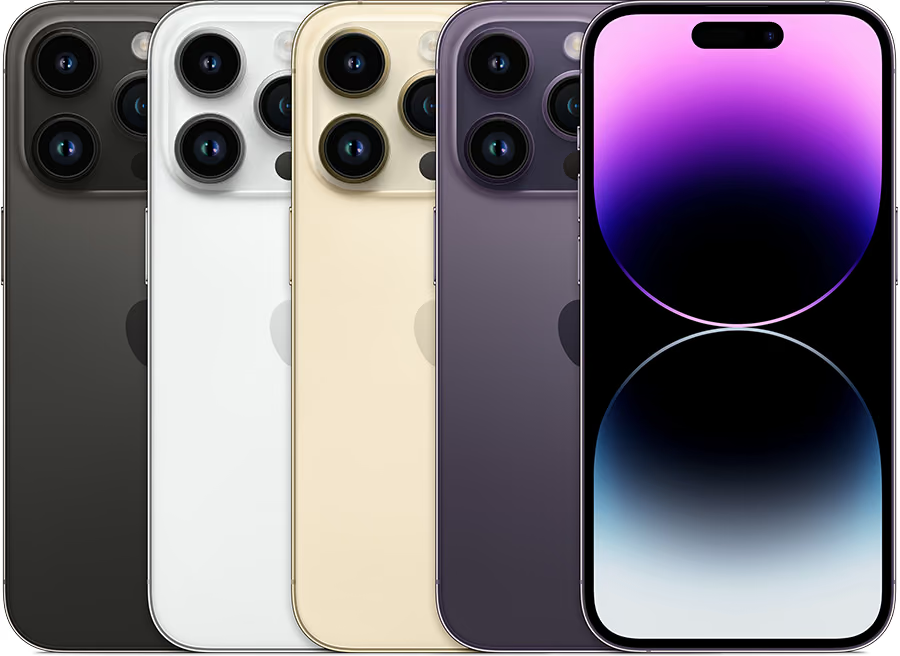
The iPhone 14 Pro made the notch and main camera a different kind of tool
The 14 Pro changed how the top of a 6.1-inch iPhone worked and made the main camera more flexible. The new Dynamic Island kept some ongoing activity in reach. The new sensor provided a close 2x option from the main camera and more detail when saving a full-resolution ProRAW photo. Those were both ways a buyer could use the phone differently from the start. The shape and weight of the stainless-steel body still deserved the same attention as the interesting things the display and camera could do.
Quick verdict
Retail release in the United States · Archive date
I would have chosen the 14 Pro for someone who regularly needed another framing distance and could see a use for the updated display.
Best for: A buyer who used the camera to make a real choice among several fields of view and preferred the reach of this size.
Main benefit: The updated main sensor enabled a 2x choice and higher-resolution ProRAW, while Dynamic Island made the cutout useful during an ongoing task.
Biggest drawback: The steel body was heavy for that width, and a full-resolution workflow made additional storage and transfer needs important.
Reviewed version: The 6.1-inch US iPhone 14 Pro from the September 16, 2022 launch. It had 128 GB at entry and the camera hardware of the Pro Max.
Compatibility: It started with iOS 16, eSIM in the US and Lightning. The growing set of third-party Live Activities followed with iOS 16.1.
Review context: I evaluate the documented retail hardware and the software available in its release window. Regional variants and software changes are identified where they affect the verdict.
I owned the 14 Pro as part of having every iPhone. It went on sale in the United States on September 16, 2022 from $999 with 128 GB. This review concerns that release, including which advertised services and software were there when somebody could first buy it. Apple released the same camera hardware on the 14 Pro Max, which made the size decision easier to make on its own. Apple’s September Pro launch announcement
Give the Dynamic Island a real activity to show
Putting an ongoing action at the top of the front made the cutout an interactive part of the display. An example is an audio app that shows something is still playing after you open another app. The indicator can be accessed to get back to the relevant task. Around the launch, enough built-in activities made this possible to try. It was important to see that what was possible on the home screen and in the apps you used was not the same as what every outside app could already do.
Related reading

The area is near the top of the screen, which still asks for a reach. I would have compared getting to a tracked activity this way and reopening the app in the previous way. Just noticing whether it was running could make a difference. I could also see the value if you needed to switch between a message and something else several times. The potential was greater than the functions available to every app on release day. Live Activities for supported third-party apps arrived with iOS 16.1 in October. Apple’s iOS 16 release notes
The Always-On display answered a different question. It let the phone show information when you looked across at it, using the ProMotion hardware’s ability to go down to a much lower rate. A desk or a table on the other side of a chair is a reasonable place to check whether the view was useful. Someone who wanted the phone to look fully off unless deliberately awakened could disable the setting. It mattered more as a daily preference than as a reason for everybody to buy a Pro.
The 48-megapixel camera has more than one useful output
The default main camera combined information from multiple pixels into an ordinary 12-megapixel image. The 2x button used the centre portion of the sensor for a tighter framing, with enough source pixels to provide a 12-megapixel option directly. There was still a separate 3x telephoto lens. These are distinct ways to get a face, an object or a view you can only see from where you already stand. The 2x could be a good distance for a portrait at home. In a close room, I would have compared it with the main view to see what happened to the surroundings in the image.
The full-resolution ProRAW option was useful when the job required more detail or editing freedom. It also made more data to transfer, hold and edit. A person regularly taking reference pictures could start with a detail they needed to read and see if they gained anything in the file size and format that reached them at the end. A shoe print or an inscription on a still object is different from a face in changing light. Consider both an available setting and what it may require from your own shooting workflow.
I would have decided separately whether a dedicated long lens was worth the price. A tight 2x frame can be useful every week without making the 3x the most used mode. More control over which field you use is welcome when changing position is difficult. If normal focus and a wider view already covered your work, the regular 14 probably answered your needs at a lower price.
Related reading

What the small Pro gained from sharing its rear cameras
The smaller of the two Pros still offered the same main and dedicated telephoto hardware as the Max. This meant the shorter screen and battery rating could be genuine preferences, with no corresponding penalty in rear camera options. I would have tested whether I could bring the camera up without changing grip and comfortably use the same controls after changing orientation. A phone I am more willing to carry can make it possible to get more photographs than a larger model I find hard to handle.
The smaller screen leaves less area to inspect a frame in detail. For many people that is fine, because the more careful review happens off the phone. If you are about to leave a place and require a fine visual check before going, the Max’s preview deserves a separate comparison. Apple rated the models differently for video playback. A person who worked without a charging opportunity should assess the overnight or travel battery use on more than the more convenient model’s size.
The new camera was worth pricing as a workflow
A photographer who needed a few large originals without keeping everything could decide which frame deserved a ProRAW capture and use an ordinary file for the rest. On a small job, I would have tried making one fine-detail frame and handing it to the person actually editing or reading the result. If that person kept only a compressed example, the new sensor’s other uses could be easier to value than saving a larger original every time. The ability to choose was the benefit. The smallest capacity could still be suitable when most everyday work stayed in the standard formats. Storage buys time to keep files available and should be priced around that need.
My verdict on the 14 Pro
I liked having a 6.1-inch phone with the full updated camera set and a display that showed useful activity. I would have picked it for a person who wanted several usable camera distances and liked the screen changes when performing the tasks that reveal them. The iPhone 14 Pro Max was preferable if a wider display itself solved a problem. The iPhone model timeline puts the smaller Pro and its September launch next to the other iPhones that shared the year.
What worked
The updated main sensor enabled a 2x choice and higher-resolution ProRAW, while Dynamic Island made the cutout useful during an ongoing task.
The main distance, new 2x option and dedicated 3x helped a photographer work when they could not easily change position.
What bothered me
The steel body was heavy for that width, and a full-resolution workflow made additional storage and transfer needs important.
Some of the ways outside apps could later surface information in the Island depended on software arriving after launch.
Who should not buy it
Anyone who was content using a standard iPhone camera and preferred a lighter 6.1-inch device with a lower price.
Alternatives I would consider
iPhone 14 Pro Max. The Max shares the camera array and key display functions, and offers more area to review material and a higher battery rating. Read my iPhone 14 Pro Max review.
Evidence and sources
The release date refers to general availability in the named market. The archive filing is ten days later. Feature assessments are editorial judgments based on the documented retail model.
Features, compatibility and rated figures from the maker are manufacturer information. My opinions are identified in the review.
Conclusion
The money was well spent if you could see one of the screen changes and a camera distance doing real work. Compare with the 14 at the same chosen capacity.
One email a week with practical Mac workflows, useful comparisons and honest tech recommendations.