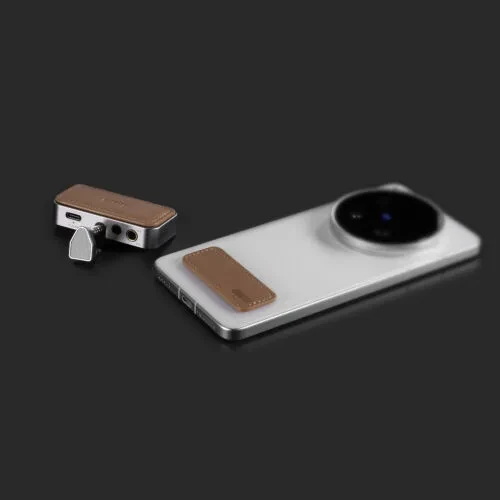
The ddHiFi TC44Grip is a small audio product with an idea I immediately like: make a portable DAC feel less like something hanging from a cable. I enjoyed it. The shape, the way it can sit against a phone and the choice of headphone connections make it interesting as an object as well as a piece of audio equipment.
Quick verdict
I recommend considering the TC44Grip when the physical arrangement of a portable audio setup matters as much as its connections.
- Best for
- Listeners whose host, case, headphones and cables suit this USB-powered DAC.
- Main benefit
- I like the attachment idea and having the intended 3.5mm and 4.4mm sockets available.
- Biggest drawback
- It uses power from the host; it is not a player with its own listening battery.
ddHiFi TC44Grip
ddHiFi · Choose the local store or delivery region
Check price and availability: ddHiFi TC44Grip at ddHiFiProduct link.
Reviewed version: ddHiFi TC44Grip
Compatibility: A supported USB audio host and headphones matching the TC44Grip's output sockets. Confirm the exact cable, power arrangement and attachment surface for each Mac, iPhone or iPad setup.
Review context: The review focuses on listeners whose host, case, headphones and cables suit this USB-powered DAC.
ddHiFi supplied the TC44Grip and two additional adhesive pads free of charge. My opinion is my own. I like the product, and my view here is about the practical experience I want from portable audio: a useful connection to my devices, a setup I enjoy handling, and fewer small annoyances between choosing music and listening to it.
A different shape for a familiar job
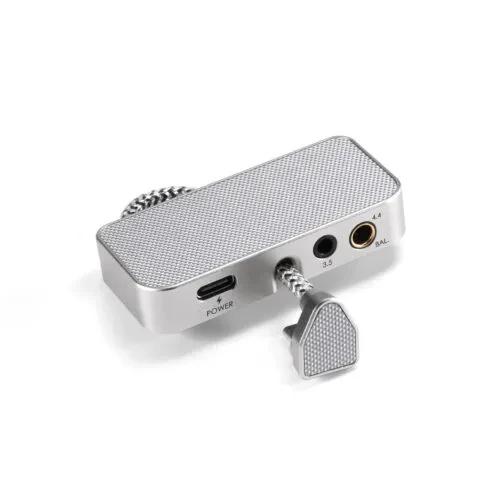
A USB DAC takes digital audio from the host device and provides an analogue connection for headphones. The basic job is familiar. The TC44Grip becomes interesting through the way ddHiFi packages it. I like accessories that pay attention to the physical relationship between the parts, because portable listening happens in a hand, a pocket and a bag.
A conventional small dongle can be perfectly useful, but its cable and position are part of the experience too. Once I add headphones, a phone and perhaps a charging cable, the arrangement can feel busier than the word portable suggests. The Grip’s attachment idea addresses that physical problem directly.
That is why I find it enjoyable. It does not need to claim that every song becomes a revelation to give me a reason to care. A more considered way to hold the components together is a worthwhile improvement in its own right. I like being able to look at the complete setup and understand where each part belongs.
Related reading
The product also has a distinct visual identity. It looks like a careful accessory rather than a tiny anonymous box added to the end of a connector. For something I pick up and carry, that matters. A good audio product can be technically interesting and still make room for pleasure in its design.
The pads are part of the product
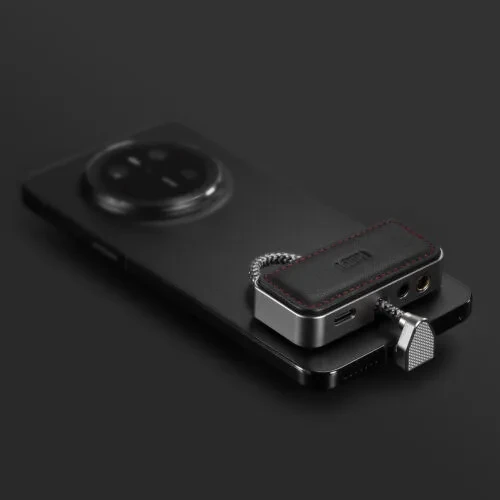
The attachment system deserves more attention than an unboxing list. A pad changes how the DAC relates to a phone or case, so I see it as part of the design. The additional pads supplied with my unit are useful to consider when thinking about different devices or changing a case later.
I like the idea of choosing the whole arrangement before sticking anything down. Where does the phone sit in my hand? Where does the cable bend? Will the headphone plug point toward the place I want the cable to go? Those questions decide whether an attractive accessory makes portable listening feel simpler.
The official product page describes attraction pads and decorative pads with different roles. I would keep that distinction clear. An adhesive part, a magnetic attachment and a comfortable contact surface are related pieces of the setup, rather than the same names for the same thing.
For me, this is one of the nicest parts of the concept. I enjoy equipment that lets me make a small, tidy system around the devices I already own. It feels more personal than choosing a component only from a specification table. The DAC has to be useful, but the way it comes along for the day matters too.
Two headphone outputs, two practical choices
The TC44Grip provides 3.5 mm single-ended and 4.4 mm balanced headphone outputs. I like having both because headphone cables are part of an existing collection. A portable product becomes easier to choose when it can work with more than one familiar cable arrangement.
I would choose the output to match the headphones and their proper cable. The size of a connector is not a simple quality ranking, and changing an adapter is not the same as giving a headphone a genuinely balanced connection. For me, the practical advantage is having the intended sockets available without assembling a chain of little converters.
I also prefer to start listening at a low level after changing headphones or outputs. That keeps the experience comfortable and makes the change careful. A more capable output is useful when the attached headphone calls for it; it does not turn the volume control into something to rush past.
What I enjoy about the TC44Grip is that these choices remain accessible in a small product. It can fit different listening setups while keeping a clear purpose. I like that flexibility much more than the idea of buying one particular connector because it looks more serious in a photograph.
MacBook, iPhone and iPad are different places
I think about a portable DAC differently on each Apple device. On a MacBook Pro, there is a desk, a place for the cable and often another route to charge the computer. On an iPhone, everything has to work as a compact object I can hold. On an iPad, the viewing position and the headphone cable can matter as much as the audio connection.
I like the Grip because it invites me to consider those differences instead of assuming one photograph explains every use. A cable position that is comfortable on a phone may be awkward beside a keyboard. A tidy tablet setup may need the headphone lead to leave in another direction. Those details are part of what makes a portable accessory pleasant to own.
Related reading
I also care about keeping the host connection simple. The purpose is to listen, rather than turn every session into a check of adapters. A product that brings the useful connections together has an appeal that is easy to understand, especially when the same headphones move between a desk and a sofa.
This is the kind of range of uses I enjoy. I can have one small piece of audio equipment in mind while still giving each device its own useful arrangement. The product does not need to make a phone behave like a desktop stack to be worthwhile.
Power comes from the host
One point is worth getting right: the TC44Grip is a USB-powered DAC, rather than a player with its own listening battery. The relevant battery belongs to the connected phone, tablet or computer. I like keeping that clear because a charging input and an internal battery are different features.
ddHiFi provides a USB-C power input for listening while the host is charging. That is useful as a design choice, particularly for a longer stationary listening session. I would look at the complete cable and charger arrangement, including what the host accepts, rather than treat the largest power number in a specification as the amount the audio circuit uses.
For portable use, every powered accessory shares the host’s energy budget. My preference is to make that trade consciously. If I want wired headphones and a dedicated DAC, the host is doing another job. The decision is about the listening setup I enjoy, alongside the rest of the day’s use of the device.
I appreciate that the Grip offers a way to keep listening while charging without pretending that portable audio exists in isolation from the phone. It is one more example of the product paying attention to the practical arrangement around the audio circuit.
Listening is the reason to keep it
I enjoyed this product, and I do not want that pleasure to disappear beneath a row of technical abbreviations. The useful question for me is whether the setup makes me want to choose music, connect my headphones and settle into listening. An audio accessory should support that moment.
I am interested in the engineering too. I simply do not think a published distortion figure can tell a reader which album they will enjoy or whether a particular headphone will feel comfortable. The connector, cable, host and headphones all form part of the experience. I like evaluating the DAC as one part of that complete arrangement.
That also keeps the comparison with other small DACs useful. A different chip name is not automatically a reason to replace a product I already enjoy. A better physical fit or a connection I actually need can be a much clearer reason. With the TC44Grip, the attachment idea is a large part of what makes the product distinct.
My positive view is therefore quite grounded: I like the object, I like the concept, and I like the practical choices it brings together. That is enough to make it a great little product in my eyes without turning my listening preference into a universal ranking.
What a useful measurement would describe
There is still a place for laboratory work. Host current needs a clear idle state and a clear listening load. Output power needs a stated load and a distortion limit. Noise, distortion and output impedance each need an right setup. A number without those conditions can look precise while explaining very little.
The same applies to a comparison across a MacBook, iPhone and iPad. The host, volume, content, output and attached load have to stay identifiable. Otherwise it is easy to attribute a difference to the DAC when another part of the setup changed. I find that way of thinking useful even when my buying decision is driven by daily use.
Related reading
Mechanical wear is another separate question. A connector that looks tidy in a photograph still lives with cable movement and repeated plugging. The useful aim is to arrange the product so that the cable is not constantly pulling sideways on the host port. That is part of why the Grip’s physical design interests me.
I like the engineering questions around this product, but my recommendation here is personal and practical. The strongest attraction is the thoughtful portable arrangement. The lab questions help define the product’s responsibilities; they do not replace the pleasure of using a setup I like.
My verdict
The TC44Grip is a great little accessory, and I enjoyed it. The attachment system gives it a clear identity, the two headphone connections are useful, and the charging arrangement makes sense as part of a complete portable setup. It is the sort of audio product I like because someone has thought about how it will be carried.
I would begin with the TC44Grip details and included accessories and decide which phone, case and headphones it will live with. For me, that is where this product becomes appealing: good equipment, arranged in a way that makes listening feel inviting.
Where to buy
See ddHiFi TC44Grip at the official product page. This is the product page for the model covered in this review. Check the model number, colour, included parts and delivery options before ordering. Prices and stock can change, so I use this page for the current offer. Matching the product to the review matters more to me than finding a similar name.
What worked
- I like the attachment idea and having the intended 3.5mm and 4.4mm sockets available.
- The USB-C power input gives a charging route to consider for a complete stationary setup.
What bothered me
- It uses power from the host; it is not a player with its own listening battery.
- Connector movement, cable routing and headphone compatibility still need attention; output sockets alone do not settle them.
Who should not buy it
- Someone expecting a standalone battery-powered player or a guaranteed audible upgrade from a specification list.
Alternatives I would consider
- A conventional USB audio dongle. I would choose a smaller simple dongle when its cable arrangement already works, and the Grip when keeping the components together is the practical benefit.
Evidence and sources
The article separates my judgement from specifications and claims credited to their sources. Product images are identified by the credits in the article.
- official product page
- TC44Grip details and included accessories
- See ddHiFi TC44Grip at the official product page
Features, compatibility and rated figures from the maker are manufacturer information. My opinions are identified in the review.
Conclusion
Worth it when its attachment and charging arrangement solve a carrying problem; a simple dongle may be enough otherwise.
ddHiFi TC44Grip
ddHiFi · Choose the local store or delivery region
Check price and availability: ddHiFi TC44Grip at ddHiFiProduct link.
One email a week with practical Mac workflows, useful comparisons and honest tech recommendations.