The most convincing reason for me to consider a small 3D printer is a real object I cannot conveniently buy. A cable guide that fits a particular shelf, a label holder or a modest bracket can make the machine more useful than a collection of decorative demonstration models. The Ender-3 V3 SE is interesting because its documented setup features address some of the friction between having an idea and beginning that first practical print.
Quick verdict
I would shortlist it for the focused role described here.
Best for: A learner with modest practical projects and a suitable place for the complete printing process.
Main benefit: CR Touch levelling, Z-offset assistance and direct extrusion make a useful practical-printing proposition.
Biggest drawback: Automatic setup does not remove material, design, maintenance and exact-model decisions.
Creality Ender-3 V3 SE, CR Touch, confirmed canonical B07D18L9K6
Amazon US · US
Check price and availability: Creality Ender-3 V3 SE, CR Touch, confirmed canonical B07D18L9K6 at Amazon USAffiliate link. As an Amazon Associate I earn from qualifying purchases.
Reviewed version: Creality Ender-3 V3 SE, CR Touch, confirmed canonical B07D18L9K6
Compatibility: The exact V3 SE, its supported slicer and firmware, documented filament and required workspace. V2, V3, V3 SE and V3 KE have different capabilities.
Review context: I assess small homelab parts, documented setup aids, material choice and repeatability without claiming completed prints or measurements.
I would shortlist it for someone willing to learn the complete process, rather than someone expecting a printer to remove every decision about materials and parts. I also want the model name checked carefully. Ender-3, V2, V3 SE and V3 KE are distinct machines. A familiar family name does not make their features or older owner experiences interchangeable.
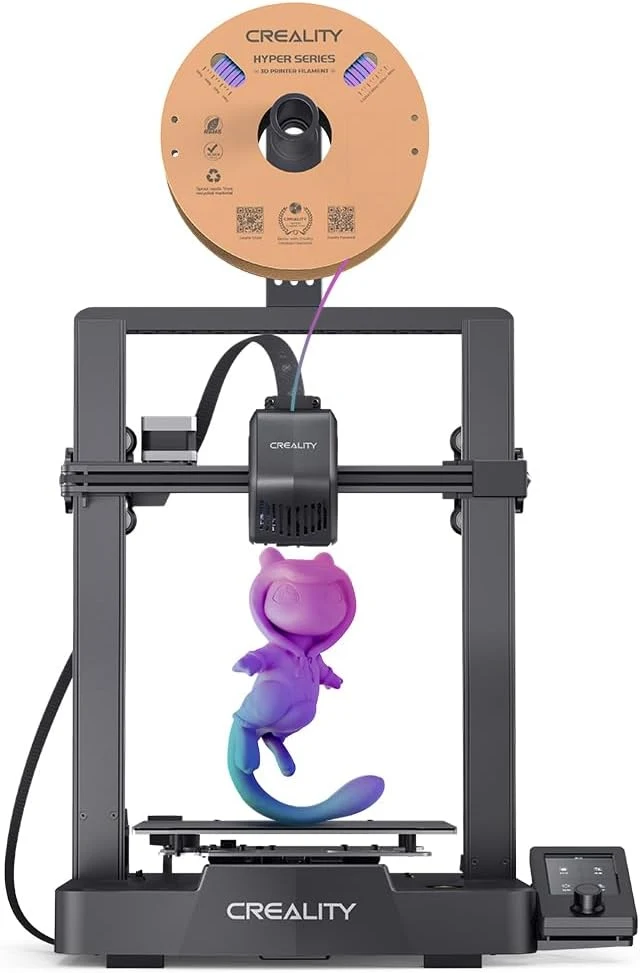
Automatic levelling has a specific job
Product images: the verified retailer gallery and any original manufacturer illustration credited in the sources. These are not personal test photographs.
Related reading
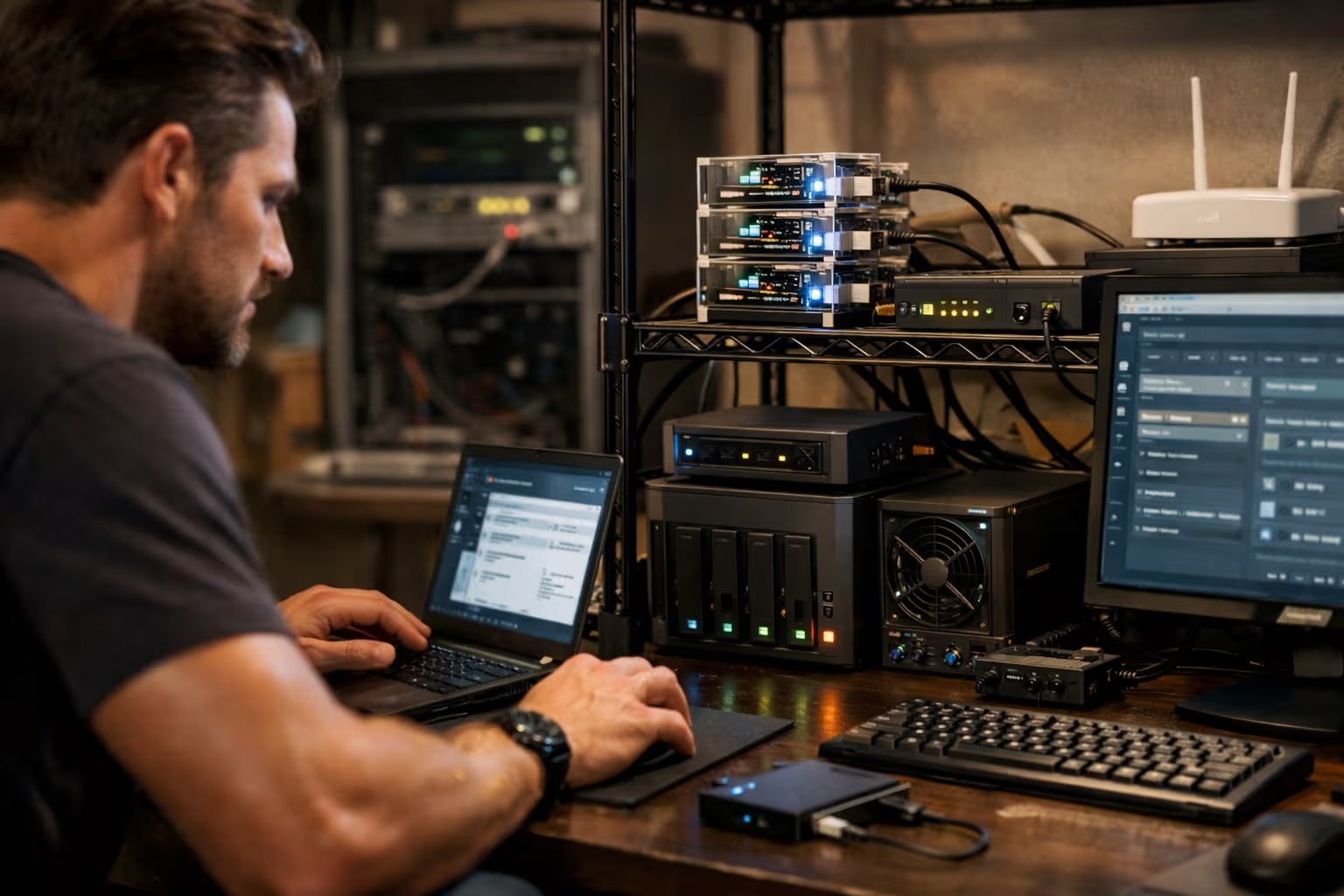
Creality’s V3 SE product page describes CR Touch bed levelling and a sensor-assisted Z offset. I like the direction of that design. Making initial setup more approachable is useful when the aim is a practical print, rather than making manual adjustment the hobby’s main attraction.
Automatic levelling still operates within a physical machine. Assembly, a clean suitable build surface and the correct material profile remain relevant. I would follow the exact manual rather than assume the feature compensates for every loose fitting or unsuitable starting condition. Removing one adjustment does not remove the rest of the process.
The same applies to a printer moved between tables. I would give it a stable working place and enough room for the moving bed, cables and filament path. The required space is larger than the outline of a product photograph. A tidy shelf is only useful if the machine can complete its ordinary movements there.
The SE is not every Ender-3
The V3 SE manual identifies the build volume, material guidance and storage-card workflow. Creality’s series comparison distinguishes it from the KE and other V3 models. I would keep those differences visible beside the selected offer.
A feature shown in a review of another generation can be interesting without being present here. Network functions, firmware, hot-end capability and the motion system need to be verified for the actual machine. I would not buy from a combined listing until the selected variation and delivered model were clear.
A useful first project should be modest
For a first practical object, I would choose something easy to inspect and inexpensive to revise. A cable label holder is a better starting point than a part responsible for holding valuable equipment over another person. It gives the design, slicing and printing sequence a clear purpose without making an early mistake costly.
I would measure the surrounding objects and keep the source design. If a holder is too tight, the useful response is a small controlled change and another print. Changing the dimensions, material, orientation and temperature together makes it harder to learn what caused the improvement.
Related reading

I also like keeping the finished file and settings beside the design. A part that works once is satisfying; a part I can reproduce later is more useful. That record can remain simple, with the model name, material and selected profile rather than an elaborate system that becomes more work than the object.
Material choice changes the result
Creality lists supported materials for the V3 SE, including PLA, PETG and an appropriate TPU type. I would begin within that documented range and use the instructions for the exact filament. A product family name is not a universal profile for every spool bearing the same material letters.
A homelab accessory also lives in a particular environment. Heat beside a power supply, pressure from a cable and repeated handling can matter more than how the print looks on the bed. I would choose the material and design around that environment, then inspect the part rather than assume a clean surface proves strength.
Layer orientation is another design decision. A bracket loaded across its layers is not the same object as one oriented differently. I would avoid turning a first successful print into a broad claim about structural safety. The printer can produce useful small objects while leaving demanding load-bearing work to a more deliberate engineering process.
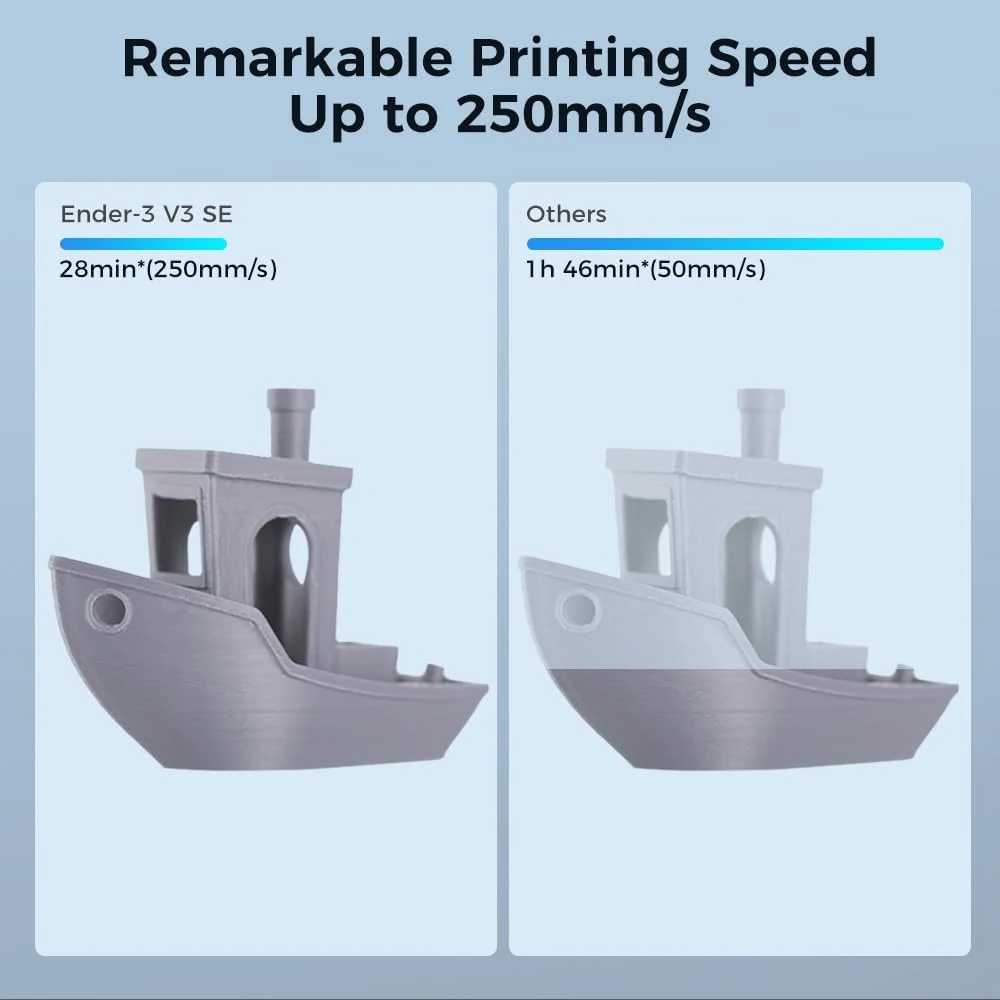
Speed needs to serve the part
The maker publishes a maximum printing speed, but I would not treat that as the completion time for every design. Shape, supports, layer settings and the chosen quality profile change the job. A slower profile that produces a usable fit can be more valuable than a fast print that needs another attempt.
I would also include preparation, cooling and finishing when deciding whether owning a printer saves effort. The machine is not the whole workflow. Filament storage, a suitable working location and occasional maintenance belong in the purchase, even when the hardware itself appears approachable.
Related reading

When I would choose something else
If the main requirement is more advanced networking or another machine’s documented capabilities, I would compare that exact model rather than plan to turn the SE into it through a shopping list of upgrades. If only one part is needed, a suitable print service can be the simpler choice and can help establish whether the design works before buying hardware.
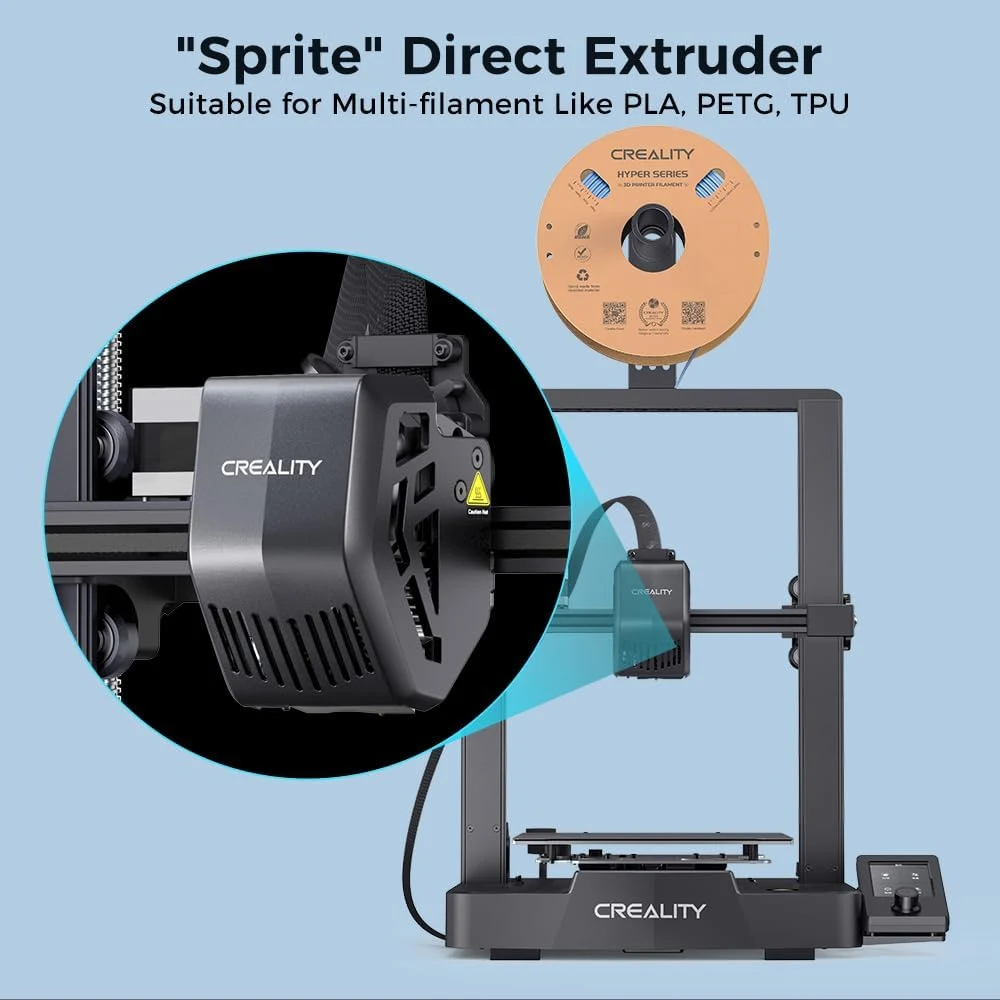
My verdict is positive for a learner with useful small projects and room for the process. I like the combination of a defined print area, direct extrusion and setup assistance. I would buy the confirmed V3 SE, start with ordinary materials and keep the first projects easy to inspect. Its value comes from repeatable useful objects, not from treating every feature claim as a finished result.
What worked
CR Touch levelling, Z-offset assistance and direct extrusion make a useful practical-printing proposition.
What bothered me
Automatic setup does not remove material, design, maintenance and exact-model decisions.
Who should not buy it
Automatic setup does not remove material, design, maintenance and exact-model decisions.
Alternatives I would consider
An exact higher-capability Ender model. I would buy the documented networking or material capability when it is genuinely needed rather than plan an unverified upgrade chain.
A suitable print service. I would use a service when one part or an early design check is the whole requirement.
Evidence and sources
Specifications are attributed to the linked documentation. Images: Amazon product gallery. These are not personal test photographs or measurements.
Features, compatibility and rated figures from the maker are manufacturer information. My opinions are identified in the review.
Conclusion
Worth considering for repeated useful parts; a print service can be simpler when only one object is needed.
Creality Ender-3 V3 SE, CR Touch, confirmed canonical B07D18L9K6
Amazon US · US
Check price and availability: Creality Ender-3 V3 SE, CR Touch, confirmed canonical B07D18L9K6 at Amazon USAffiliate link. As an Amazon Associate I earn from qualifying purchases.
One email a week with practical Mac workflows, useful comparisons and honest tech recommendations.