A simple camera can still be an interesting purchase when the reason to own it is clear. I would consider the Canon EOS Rebel T7 kit for someone who wants to slow down, look through an optical viewfinder and learn how exposure and lens choice affect a still photograph. That purpose appeals to me more than buying an older DSLR simply because it looks more serious than a phone.
Quick verdict
I would consider the T7 kit for learning deliberate stills when the exact package and current offer make sense.
Best for: A beginner photographing mostly still subjects and willing to learn exposure and lens choice.
Main benefit: The optical viewfinder and interchangeable-lens controls provide a clear way to learn a dedicated stills workflow.
Biggest drawback: The older autofocus and video arrangement are a poor match for someone expecting a modern creator camera.
Canon EOS Rebel T7 with EF-S 18–55mm f/3.5–5.6 IS II lens, selected US kit
Amazon US · US
Check price and availability: Canon EOS Rebel T7 with EF-S 18–55mm f/3.5–5.6 IS II lens, selected US kit at Amazon USAffiliate link. As an Amazon Associate I earn from qualifying purchases.
Reviewed version: Canon EOS Rebel T7 with EF-S 18–55mm f/3.5–5.6 IS II lens, selected US kit
Compatibility: Canon EF and EF-S lenses, with the exact supplied EF-S 18–55mm IS II kit lens. EF-M and RF lenses are different systems. Check the manual for cards, battery and current phone-app support.
Review context: I assess a deliberate beginner stills workflow, kit-lens range, file transfer and the limits of an older DSLR system.
The exact package matters. This review concerns the selected US T7 kit with the EF-S 18–55mm IS II lens. I would compare its complete cost with a current alternative before deciding, including condition, warranty and the equipment already in the bag. A familiar camera name does not make every seller’s bundle the same purchase.
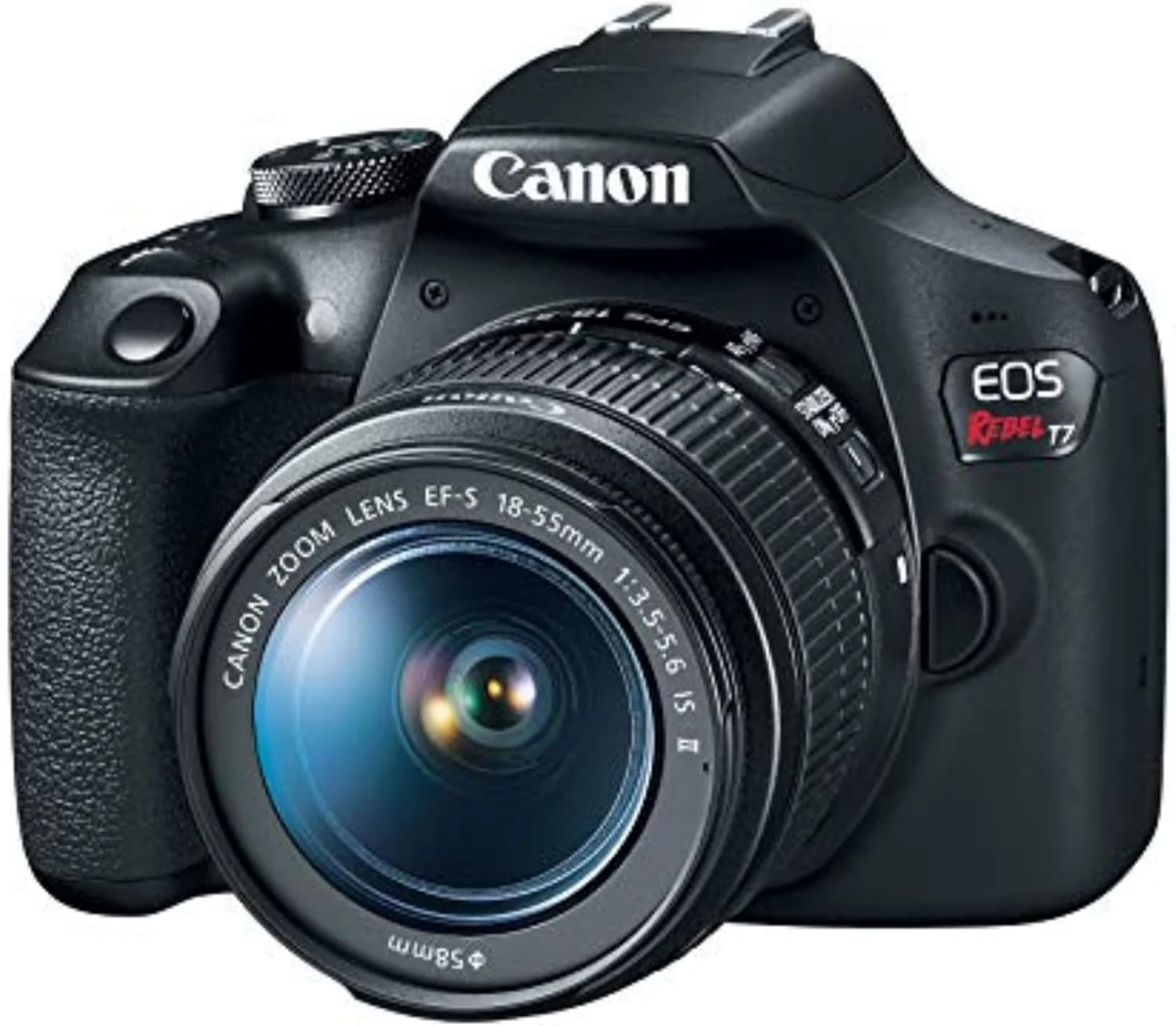
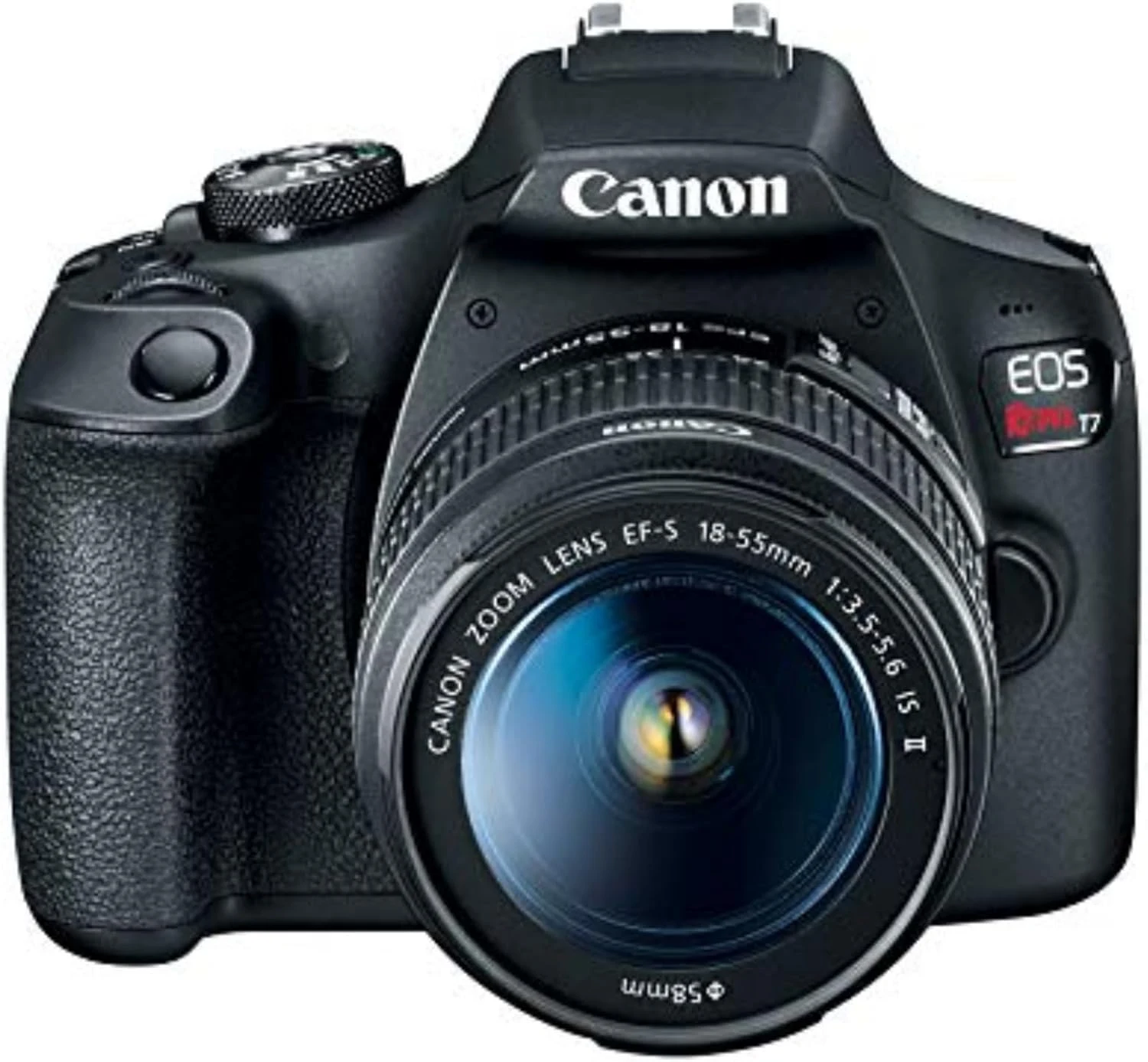
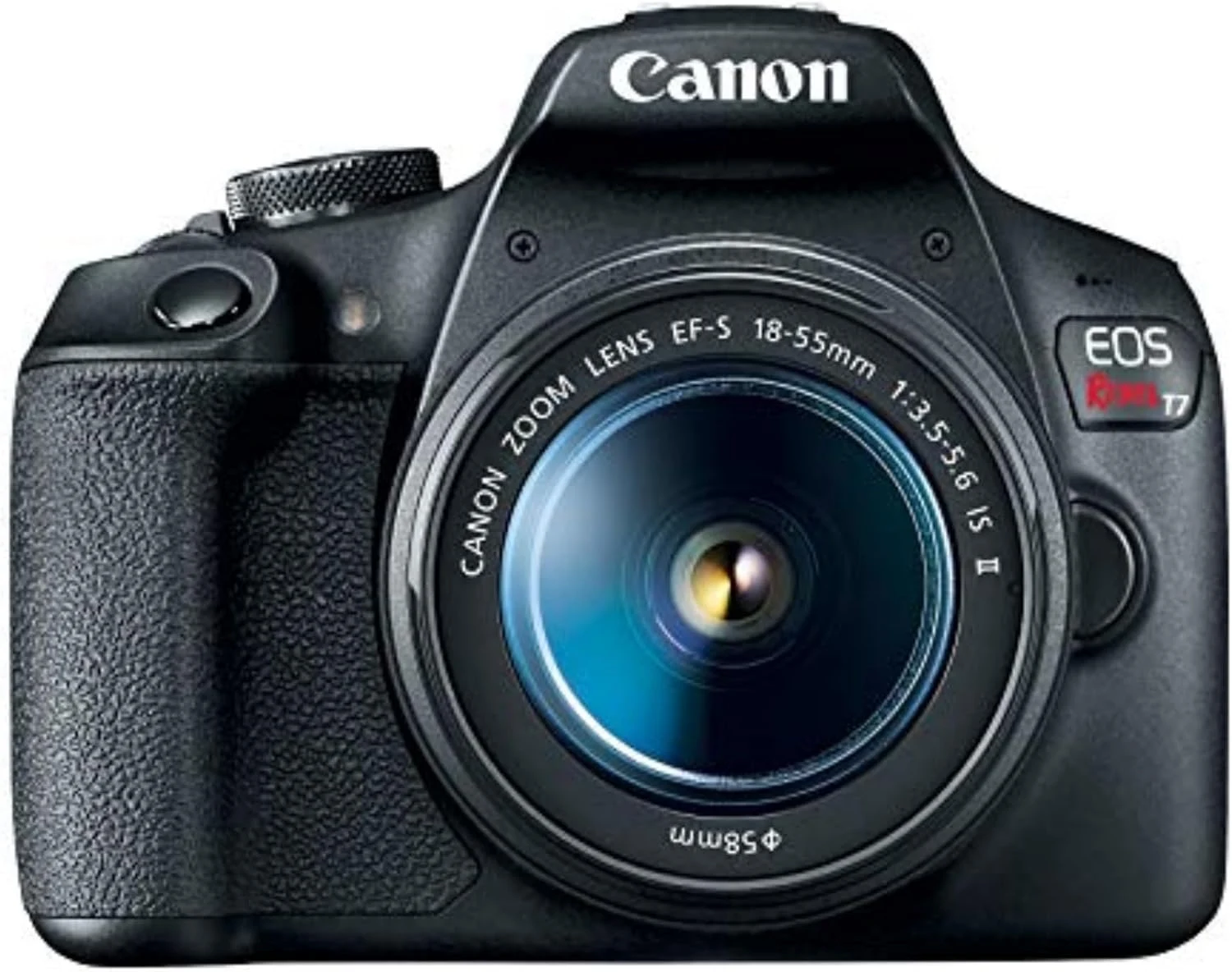
Product photographs come from the selected retailer gallery. They show the camera and lens, rather than photographs claimed as my own camera-test results.
Related reading

A clear introduction to still photography
Canon’s official specifications describe an APS-C sensor, an optical viewfinder and familiar exposure controls. I like the learning opportunity in that combination. I would use a dedicated camera purchase to understand why a shutter speed, aperture or focusing decision changes a picture, rather than expect the equipment to make every decision invisible.
A still subject makes that approach easier to practise. A small object beside a window gives room to change position, observe light and compare results carefully. The value would come from that repeated attention. I would not assume a camera automatically improves a rushed photograph when the lighting, background and composition have not received the same thought.
The kit lens gives a useful starting boundary
The selected Canon kit description identifies the EF-S 18–55mm IS II lens. I would begin with that supplied range before collecting extra lenses. It gives a beginner a way to explore different framing choices and discover which subjects are actually difficult with the equipment already available.
The letters on the lens matter as much as the focal-length range. IS II, another 18–55mm version and an additional seller accessory are not interchangeable descriptions of a package. I would confirm the listing and box contents, and remember that stabilisation does not make a moving subject stand still. A sensible shutter choice and suitable light remain part of the photograph.
The lens mount is a system decision
Canon lists EF and EF-S lens compatibility for this camera. I would keep that distinction visible when looking at a tempting second lens. RF and EF-M describe different Canon systems; a shared brand name does not make every lens a direct fit. The camera body is only one part of the equipment decision.
That also affects the longer view. If I already owned suitable EF lenses, this kit would enter a different buying conversation from a completely new system. If I were starting with nothing, I would compare where the whole budget could go over time. I would not buy several accessories merely to justify an initial body choice that no longer fits the intended work.
Related reading

Autofocus expectations should stay realistic
Canon describes a nine-point autofocus arrangement and an older DSLR working style. I would consider the T7 for deliberate still subjects before making it responsible for fast action or demanding subject tracking. A specification list is not a substitute for checking how the intended subject moves and how often the camera needs to respond.
The same care applies to the video role. I would compare the documented recording modes and controls with the actual delivery requirement, rather than assume every interchangeable-lens camera is a modern video tool. If filming myself or following movement were the main purpose, a suitable mirrorless alternative would receive attention early in the decision.
Think about the files after the shutter
A photograph still needs a useful route to the computer and a reliable place to stay. I would check the editor’s support for the camera’s RAW files and decide when JPEG is the simpler choice. A card reader can keep the workflow understandable without making every transfer depend on the current phone-app arrangement.
For wireless features, I would verify current compatibility with the specific phone and app before making it essential to the purchase. I would also follow the camera manual when selecting a memory card. A faster card cannot create a recording mode or connection speed that the camera itself does not support.
An older offer needs a careful comparison
Canon’s product page currently labels this kit as discontinued. That describes the maker’s listing, not the condition or availability of every retailer’s remaining stock. I would check the actual seller, warranty, included lens and return terms rather than treat a low-looking headline offer as a complete answer.
Related reading
I would compare the Sony a6400 kit for a different autofocus and video direction, or the Lumix G7 bundle when its supplied lenses and video role are relevant. The better choice is the system that fits the intended pictures and budget.
My verdict is positive for a defined beginner stills role. I like a purchase that encourages deliberate photography and makes the lens system understandable. I would choose the T7 kit when the exact offer is convincing and its limits fit the work, while giving a newer system priority when video, tracking or future lens plans are the real reason to buy.
What worked
The optical viewfinder and interchangeable-lens controls provide a clear way to learn a dedicated stills workflow.
What bothered me
The older autofocus and video arrangement are a poor match for someone expecting a modern creator camera.
Who should not buy it
I would pass for a mainly video-led purchase, fast tracking expectations or a buyer already committed to Canon RF lenses.
Alternatives I would consider
Sony a6400 with 16–50mm lens. I would compare its mirrorless autofocus and video workflow if those are the main reason to buy a camera. Read my Sony a6400 with 16–50mm lens review.
Panasonic Lumix G7 two-lens kit. I would compare the selected bundle when the video role and supplied lens coverage matter more. Read my Panasonic Lumix G7 two-lens kit review.
Evidence and sources
Product details are attributed to the linked documentation. The photographs and credited technical illustrations show the selected product; they are not personal test photographs.
Canon Rebel T7 official support and technical specifications
Features, compatibility and rated figures from the maker are manufacturer information. My opinions are identified in the review.
Conclusion
Worth considering only against the complete cost of a current alternative, including lens, condition, warranty and any needed accessories.
Canon EOS Rebel T7 with EF-S 18–55mm f/3.5–5.6 IS II lens, selected US kit
Amazon US · US
Check price and availability: Canon EOS Rebel T7 with EF-S 18–55mm f/3.5–5.6 IS II lens, selected US kit at Amazon USAffiliate link. As an Amazon Associate I earn from qualifying purchases.
One email a week with practical Mac workflows, useful comparisons and honest tech recommendations.