A smart plug is useful when it removes a small repeated inconvenience. A lamp behind a sofa is a good example. You already like the lamp; reaching its switch is the annoying part. Putting a network-controlled switch at the outlet can solve that problem without replacing the whole light. It can also create a new one if the lamp cannot return to an on state when power comes back.
This is a research-based review of the US Amazon Smart Plug linked in the supplied product list. I have not tested a sample, measured its power use, or observed recovery after a network outage. The review draws on Amazon’s listing and safety information and explains the checks I would make with an ordinary household load.
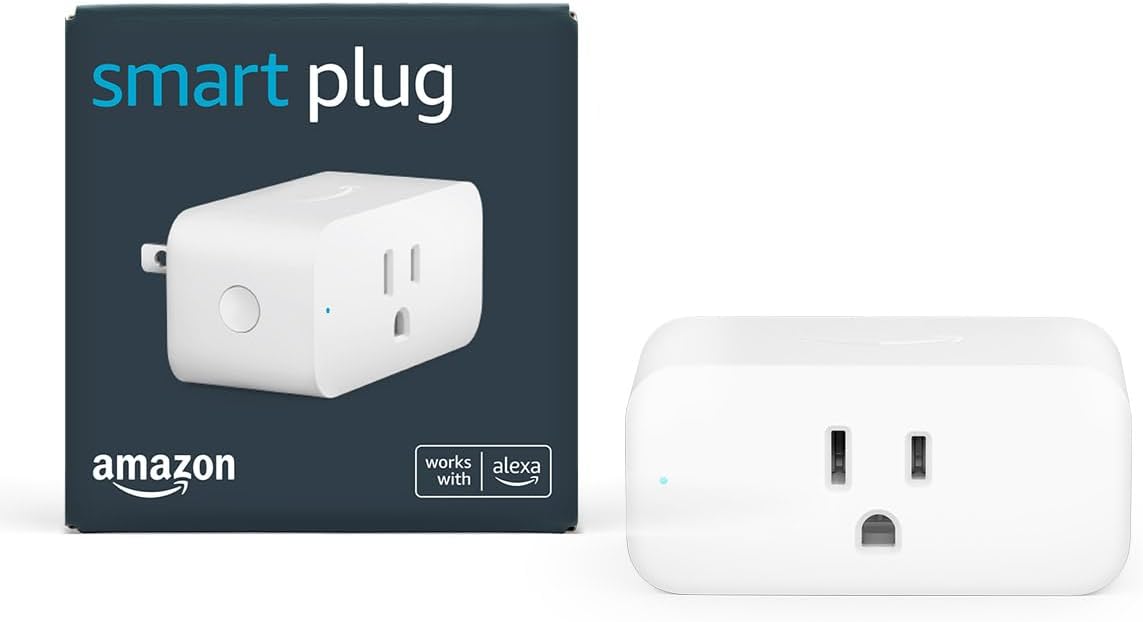
My Amazon Smart Plug link is an affiliate link. As an Amazon Associate, I earn from qualifying purchases. The photographs come from the product listing, not from a tested installation.

This is a US electrical product
The most important specification is not Alexa. Amazon’s safety and compliance information identifies this model as C2YY37 and specifies 120 V, 60 Hz operation. It lists different limits for different load types. This US listing is therefore not a general recommendation for plugging equipment into a Czech or other 230 V household outlet.
Related reading

A travel adapter changes the physical connection; it does not by itself change the electrical rating. If you are shopping outside the intended market, choose an appropriate local product with a suitable rating and approvals. Importing a cheap smart plug is a poor place to make compatibility assumptions. The decision should be settled before you think about routines or discounts.
For a US installation, read the rating of the actual equipment you intend to connect and the instructions for the supplied plug. Do not treat one large ampere number as permission for every appliance. Motors and lamps can have different requirements, and Amazon’s document gives load-specific limits. If the intended load is unclear, pick a simpler use case rather than guessing.
Why a physical switch matters
Amazon’s listing describes compatibility with lamps, fans, and other devices that have a physical on/off switch. This detail deserves more attention than the promise of a quick setup. The plug can supply or remove power. It cannot reach into an appliance and press an electronic start button after power returns.
Before ordering, try the basic behaviour using the appliance’s normal controls and instructions. If a suitable lamp stays switched on and lights again when power is restored, the idea is straightforward. If it returns to standby and waits for a touch-sensitive button, a smart plug may give you remote off control without the remote on behaviour you wanted.
Start with a modest ordinary lamp in a suitable dry indoor location. It is easy to see whether an on command worked, easy to describe to another person, and easy to operate normally while you learn the system. A simple visual result makes setup much easier to understand than an appliance whose internal cycle is invisible.
Also consider the lamp’s own switch. If someone turns that switch off, Alexa can turn on the plug while the room remains dark. Explain the arrangement and leave a normal way to control the light. A smart home becomes frustrating when the installer understands several hidden states and everyone else is left repeating the same command.
Alexa is the intended control system
The listing says the plug works with the Alexa app and compatible Alexa devices and does not require a separate smart-home hub. That makes it a focused option for a household already using Alexa. It does not justify assuming that every other voice assistant or home-automation platform can control this exact plug directly.
Confirm the integrations you need by exact model. A product described as “smart” may still belong to a specific account and service system. If the rest of your home uses another platform, adding a second one for a single outlet can be more work than choosing a plug designed for the existing setup.
Name the outlet for what it controls rather than where you first installed it. “Reading lamp” is easier to remember than a serial number or “Smart Plug 1.” If you later move it to a different appliance, change the name immediately. Old names create surprising mistakes when a routine still thinks the plug is a light but it now feeds something else.
I would create one routine only after direct on and off commands work. Give it a short phrase, test it from the normal room position, and have another household member try it. If the command needs an exact sentence no one remembers, the routine is still a hobby project rather than a useful household control.
Related reading

Schedules need a real acceptance check
A timed evening light is an appealing use because the expected behaviour is obvious. Set a schedule you can observe while you are home first. Check the configured time zone and whether the intended days are selected. A schedule that works on a weekday may not do what you expect on a weekend if you chose the options carelessly.
Then check how you will change it. A light that comes on automatically during a film or while a guest is sleeping needs an easy override. Keep the routine simple enough that you can find it again in the app without remembering the exact day you created it. Put related routines under consistent names instead of building several overlapping ones.
Avoid creating one routine to turn a device on and another forgotten routine that immediately turns it off. If the light behaves strangely, review the entire set of automations attached to it before blaming the plug. An occasional manual command and a hidden timer can produce a convincing appearance of random hardware failure.
For a holiday schedule, test the plan before leaving. Do not discover remotely that the appliance’s physical switch is off or that the plug was moved to another socket. A photograph of the final arrangement and a quick observed cycle are more useful than assuming an app’s saved schedule proves the physical result.
Network recovery is a test, not a promise from this review
Amazon promotes automatic reconnection after power or Wi-Fi interruptions. That is a manufacturer claim, not a reliability measurement I can confirm from a page. If recovery matters to your use, observe it during a safe, planned test with the lamp rather than relying only on the marketing phrase.
Check several distinct conditions. Can you still use the normal switch when the app is unavailable? What state does the lamp return to after power comes back? Does a routine resume when the network returns? These questions describe different parts of the arrangement. One successful on command does not answer them all.
Write down the observed behaviour before deciding whether it suits the room. A lamp returning on may be acceptable in one setting and annoying in another. The important part is knowing what your own installation does. Do not transfer a result from one appliance to a different load without checking again.
I would keep this plug away from any use that needs dependable safety control. Amazon’s safety instructions specifically rule out medical or life-support equipment and warn against unsafe unattended operation of appliances such as heaters. The document also says to connect the plug directly to a wall outlet, rather than an extension lead or power strip.
Those limits are central to choosing a job for the product. They are not obscure fine print to read after building a heating routine. A smart outlet does not make an unsuitable appliance safe to leave unattended. Pick a simple permitted load and keep control of it understandable.
Related reading

Value comes from the complete arrangement
The price of one plug is only part of the cost. You may also be adding another app, account permission, routine, and troubleshooting path. For an Alexa household, those pieces may already exist. For a home without Alexa, a cheap outlet can become the start of a larger setup you did not actually want.
I would buy one before buying a pack for the whole house. Learn which existing appliances work sensibly with switched power and which do not. Check whether people use the voice command after the novelty wears off. If everyone keeps reaching for the original switch, the plug may not be solving an important problem.
A high rating count cannot tell you whether that problem exists in your room. It also cannot establish current seller condition, regional suitability, or your network’s behaviour. Inspect those details in the actual offer. There is no fixed price in this review because a stale number would not help the decision.
My judgement
The US Amazon Smart Plug has a clear potential use: giving an Alexa household convenient control of a suitable ordinary lamp or other permitted device with the right physical switch. The setup can be simple because the job itself is simple. Region, electrical rating, and the appliance’s behaviour have to come first.
I would pass if the intended use depends on an unverified integration, a 230 V outlet, or an appliance that should not run unattended. For a suitable US lamp, I would begin with one unit and test the complete routine before adding more. You can inspect the exact offer through my Amazon affiliate link. The best smart-plug purchase starts with knowing what is on the other side of it.
One email a month: new articles, reviews and the upcoming live webinar + free recording. No spam, unsubscribe anytime.