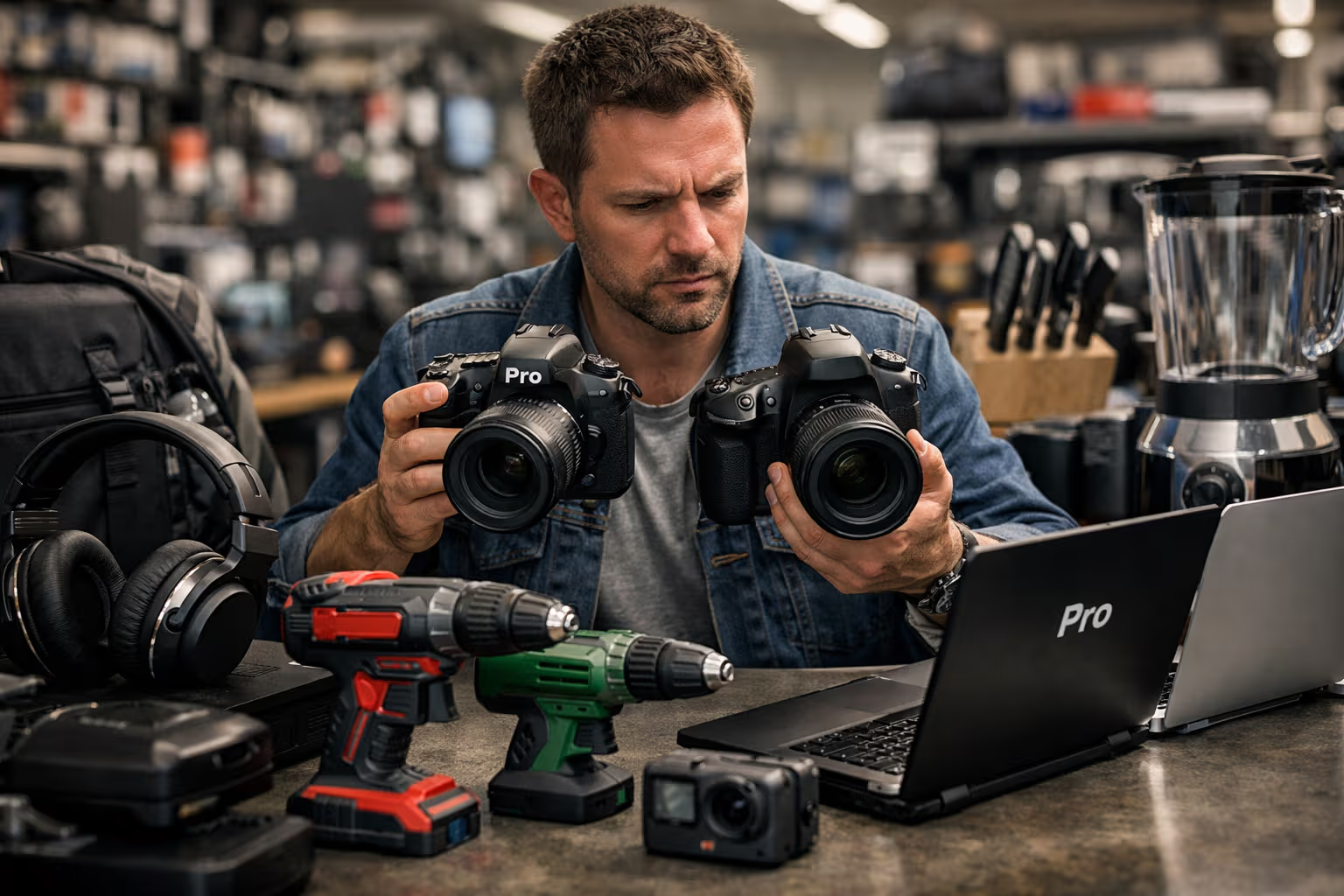
The 'Pro' Lie: How to Spot Fake Pro Products in 60 Seconds
The Word That Lost Its Meaning
Everything is “Pro” now.
Phones. Headphones. Software subscriptions. Kitchen appliances. Beard trimmers. The word appears everywhere. It used to mean something. Now it means almost nothing.
“Professional” once indicated equipment used by professionals. Tools designed for demanding work. Products that justified higher prices with genuine capability differences. When you bought a Pro product, you got professional features.
Today, “Pro” is marketing decoration. Slap it on any product, charge 20% more, change nothing meaningful about the capabilities. Consumers have been trained to associate “Pro” with quality. Marketers exploit this association ruthlessly.
This article teaches you to spot the fake Pro products. The ones using the label to justify prices without justifying capabilities. You can often identify them in 60 seconds with the right questions.
My cat Arthur is not a professional cat. He’s an amateur at everything except sleeping. Yet if someone slapped “Pro” on his forehead, some percentage of buyers would pay more for him. That’s the power of the word, detached from its meaning.
How We Got Here
The “Pro” inflation happened gradually.
In the 1990s and early 2000s, “Professional” products were genuinely distinct. Professional video cameras differed dramatically from consumer cameras. Professional audio equipment had specifications consumer equipment lacked. The gap was real and large.
Then the gap narrowed. Technology democratized. Consumer products gained capabilities that once required professional equipment. The actual differences shrank.
But the marketing didn’t update. Companies still needed to justify premium prices. “Pro” remained a powerful word. If the technical differences no longer justified the label, marketers would apply it anyway.
The result is today’s landscape. Products with marginal differences get dramatically different labels. The “Pro” version might have 10% better specifications and 50% higher price. The word does more work than the product does.

Method: How We Evaluated Pro Claims
For this analysis, I developed a systematic approach to testing Pro claims:
Step 1: Feature comparison I compared Pro products with their non-Pro equivalents in the same product line. What features actually differ? By how much?
Step 2: Professional use research I investigated whether actual professionals use the “Pro” products in question. Do working photographers use this Pro camera? Do professional editors use this Pro software tier?
Step 3: Price-to-feature ratio I calculated what you actually get for the price premium. Is the capability increase proportional to the cost increase?
Step 4: Marketing language analysis I examined how Pro claims are phrased. What’s stated directly versus implied? What verification is provided?
Step 5: Return rate and review patterns I looked for signs of buyer disappointment. Do Pro product reviews mention expectations not met?
This approach revealed consistent patterns distinguishing genuine Pro products from marketing-label Pro products.

The 60-Second Test
Here’s the quick evaluation you can do before purchasing any “Pro” product.
Question 1: What’s the non-Pro version? (10 seconds) Find the non-Pro equivalent. If there isn’t one, be suspicious. Genuine Pro tiers exist relative to standard tiers. If everything is Pro, nothing is.
Question 2: What specific features differ? (20 seconds) Read the actual specifications. Not the marketing language. The numbers. How much more storage? What additional capabilities? If you can’t find concrete differences quickly, they probably aren’t meaningful.
Question 3: Do professionals actually use this? (15 seconds) Quick search: “[product name] used by professionals” or “[product category] professional recommendation.” If genuine professionals recommend the consumer version instead, the Pro label is marketing.
Question 4: Is the price premium proportional? (15 seconds) If Pro costs 50% more but offers 10% more capability, the math doesn’t work. Genuine Pro products offer capability increases that justify their premiums.
Four questions. Sixty seconds. Most fake Pro products fail at least two of these tests. Save your money.

Category: Phones
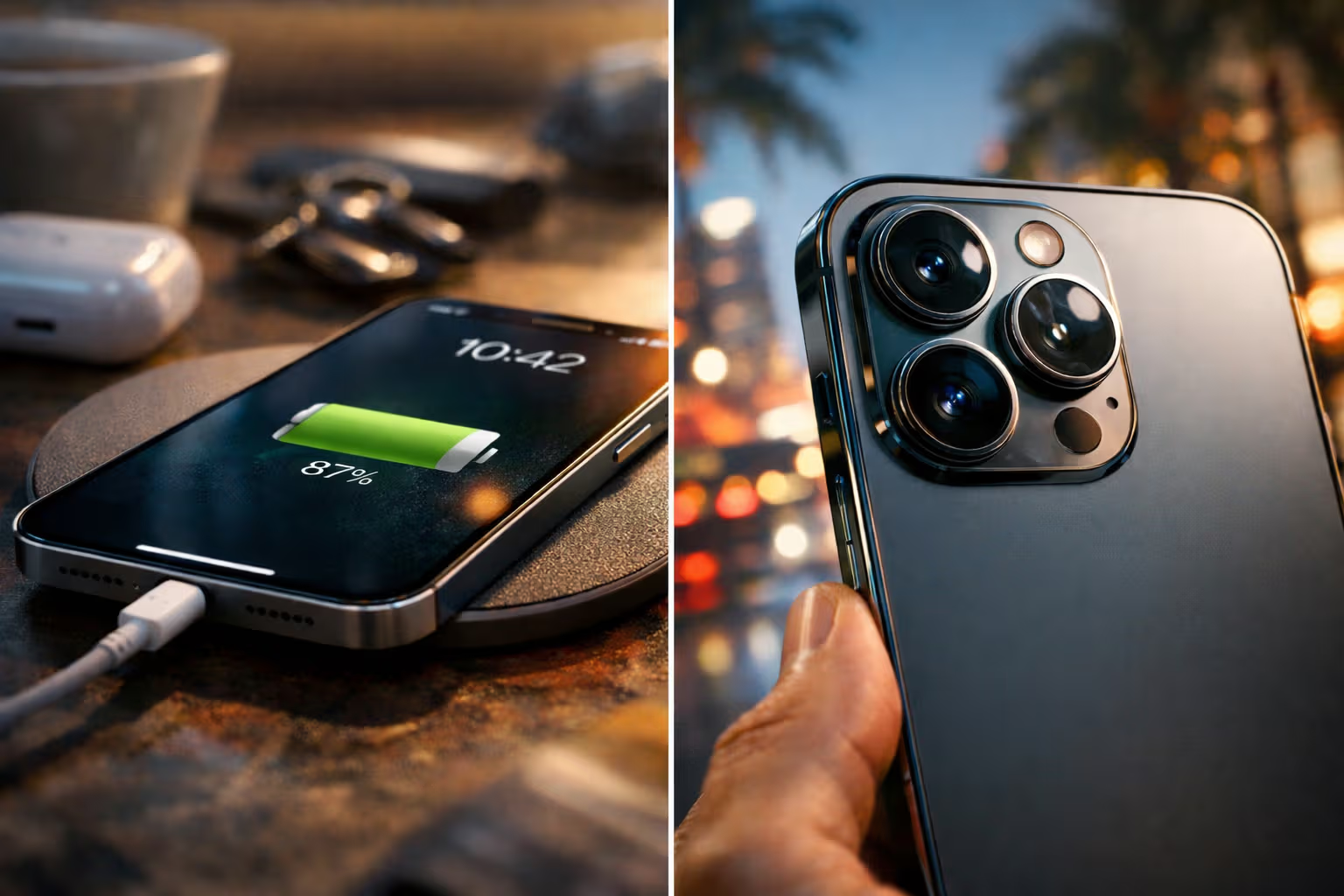
Smartphone “Pro” naming has become particularly inflated.
The iPhone Pro offers genuine differences from the standard iPhone. Better camera system. ProMotion display. Different materials. The features justify the Pro label reasonably well.
But this success has spawned imitation. Android manufacturers now release “Pro” variants of phones that differ minimally from base models. Slightly larger battery. One additional camera lens. Maybe faster charging.
These aren’t professional features. Professionals (photographers, videographers, developers) don’t need these specific differences. The “Pro” label suggests capabilities that don’t exist.
Red flag: If the main Pro difference is screen size or battery capacity, it’s not a Pro product. It’s a larger product with a Pro label.
What actual phone Pro features look like: ProRes video recording, RAW photo capture, desktop-class peripherals support, professional audio monitoring, sustained high performance under load.
Most “Pro” phones offer none of these. They offer consumer features with professional pricing.

Category: Software
Software “Pro” tiers have their own inflation pattern.
Many software subscriptions offer Free, Standard, and Pro tiers. The structure implies that Pro offers professional capabilities. Often it doesn’t.
Typical fake Pro software patterns:
More storage, same features. The Pro tier gives you more cloud storage. The actual software capabilities are identical. Storage is a commodity. This isn’t a Pro feature.
Priority support. Pro gets faster customer service. The product itself is unchanged. You’re paying for attention, not capability.
Badge or label. Pro accounts get a badge on their profile. No functional difference. Pure status signaling.
Removed limitations rather than added features. Free has artificial limits. Pro removes them. But the actual functionality was always there. You’re paying to unlock what was withheld, not for additional capability.
What actual software Pro features look like: API access, advanced automation, team collaboration tools, audit logs, custom integrations, white-labeling options.
These features serve genuine professional use cases. They justify both the label and the price.

Category: Audio Equipment
Audio “Pro” inflation is severe.
“Pro” headphones, microphones, and speakers flood the market. Most offer no professional-grade specifications. They offer consumer specifications with professional branding.
Signs of fake Pro audio:
No frequency response specifications. Real Pro audio equipment publishes detailed frequency response curves. If specs are vague or missing, the product isn’t Pro.
Consumer-grade connectors only. Professional audio uses XLR, TRS, or similar connections. Consumer audio uses 3.5mm and USB. A “Pro” microphone with only USB connection isn’t professional equipment.
No professional reviews. Real Pro audio equipment gets reviewed by audio professionals and publications. If only consumer reviewers cover it, the Pro label is marketing.
Missing THD specifications. Total Harmonic Distortion measurements matter for professional audio. Consumer products often don’t publish them. Professional products do.
The audio world has genuine tiers. Entry-level consumer, premium consumer, prosumer, professional. “Pro” labels frequently appear on entry-level consumer products. The word has been completely detached from actual professional use.

Category: Kitchen Appliances
“Professional-grade” kitchen equipment targets home cooks who want to feel like professionals.
This category has perhaps the most egregious Pro inflation. “Professional” blenders, “chef-quality” knives, “restaurant-grade” cookware. Almost none of it appears in actual professional kitchens.
Why? Professional kitchens have different requirements. They need equipment that survives constant daily use. That can be repaired rather than replaced. That meets commercial safety standards. That fits specific workflows.
Consumer “Pro” kitchen products rarely meet these requirements. They’re designed for occasional home use with a professional aesthetic. The commercial equipment actually used by professionals looks different, costs different, and works different.
Red flag: If the marketing shows home kitchens rather than commercial kitchens, it’s not professional equipment regardless of the label.
What actual professional kitchen equipment looks like: Plain aesthetics, built for repair, commercial certifications, bulk sizing, industrial power requirements.
Your “professional-grade” blender is a home blender that costs more. Real professional blenders don’t fit in home kitchens.

The Automation Connection
Here’s where this connects to broader automation themes.
Fake Pro products exploit eroded consumer judgment. When people can’t evaluate products independently, they rely on labels. “Pro” becomes a shortcut for “good.” The shortcut is increasingly unreliable.
This judgment erosion has automation components:
Recommendation algorithms. When algorithms choose products for you, you don’t develop evaluation skills. You accept what’s recommended. “Pro” products get recommended because they have higher margins for retailers.
AI-summarized reviews. AI summaries aggregate opinions without evaluating whether the Pro label is justified. The summary might say “users like this Pro product” without noting that comparable non-Pro products perform identically.
Comparison site automation. Automated comparison tools compare products within price ranges. Pro products appear in premium comparisons regardless of whether they deserve to be there.
Reduced friction for purchasing. Easy buying means less thinking before purchasing. The evaluation that would catch fake Pro products doesn’t happen when one-click removes friction.
The skill of product evaluation atrophies when automation handles shopping. The ability to see through marketing becomes rarer. The fake Pro proliferation continues because fewer people notice.

Why Companies Do This
Understanding the economics helps spot the pattern.
Margin protection. Many product categories face shrinking margins. Competition drives prices down. “Pro” versions create price separation that preserves margins.
Perceived innovation. When genuine innovation is hard, label innovation is easy. Calling something “Pro” that wasn’t before creates the appearance of progress.
Market segmentation. Price-sensitive buyers get the base model. Less price-sensitive buyers self-select for “Pro.” Same production cost, different prices. Pure profit extraction.
Competitive response. When one competitor releases a “Pro” version, others must match or seem inferior. The Pro inflation feeds on itself.
Aspiration marketing. People want to feel professional. They want to own professional things. “Pro” sells an identity, not a capability. The identity has value even when the capability doesn’t.
This economics makes fake Pro products inevitable. They’re profitable. They don’t violate laws. Consumer protection doesn’t cover label inflation. The practice continues because it works.

The Genuine Pro Products
Not all Pro labels are lies. Some products genuinely serve professional needs.
Adobe Creative Cloud Pro tools. Photoshop, Premiere Pro, After Effects are genuinely used by working professionals. The features match the label. The pricing reflects actual professional use cases.
Apple Pro hardware. MacBook Pro, Mac Pro, Pro Display XDR serve genuine professional workflows. The specifications differ meaningfully from consumer equivalents. The price premiums align with capability premiums.
Professional cameras. Canon, Sony, and Nikon professional cameras genuinely differ from consumer models. Build quality, sensor capabilities, professional features like dual card slots, weather sealing, and extensive customization.
Audio interfaces. Focusrite, Universal Audio, and similar brands make professional audio interfaces. The specifications matter. Professionals actually use them.
These genuine Pro products share characteristics:
- Clear specification differences from consumer equivalents
- Actual professional adoption verified by professional communities
- Price premiums proportional to capability premiums
- Long product support lifecycles appropriate for professional investment
The contrast with fake Pro products is visible once you know what to look for.

The Prosumer Confusion
“Prosumer” further muddles the landscape.
Prosumer should mean: products bridging consumer and professional tiers. Suitable for serious hobbyists and entry-level professionals. Better than consumer, not quite professional.
In practice, prosumer often means: consumer products priced higher with impressive-sounding labels.
The prosumer category has legitimate entries. Semi-professional cameras. Audio equipment that exceeds consumer quality without professional pricing. Software tiers between free and enterprise.
But the category also attracts fake entries. Products positioned as prosumer that are really consumer products with markup. The prosumer label creates confusion that favors sellers over buyers.
When evaluating prosumer products, apply the same tests as Pro products. What specifically differs from consumer versions? Do semi-professionals actually use this? Is the price increase proportional to capability increase?
The legitimate prosumer products pass these tests. The fake ones don’t.

Reading Specifications
Learning to read specifications protects against Pro fraud.
Most consumers don’t read specifications. They read marketing copy. Marketing copy says whatever helps sell. Specifications reveal reality.
For cameras: Look at sensor size, not megapixels. Pro cameras typically have larger sensors. Megapixels are largely meaningless above a threshold.
For audio: Look at frequency response range, THD, and SNR. “Rich bass” and “crystal highs” are marketing. Numbers are verifiable.
For phones: Look at sustained performance, not peak performance. Pro should mean consistent capability, not brief bursts followed by throttling.
For software: Look at feature lists, not tier names. What can Pro do that Standard can’t? If the answer is just “more storage,” that’s not Pro.
For appliances: Look at wattage, materials, warranty length. Professional equipment has higher power, better materials, and longer warranties because professionals demand it.
Reading specifications is a skill. The skill atrophies when you rely on labels and recommendations. Developing this skill protects against not just Pro fraud but all product marketing inflation.
flowchart TD
    A[See Pro Label] --> B{Non-Pro Version Exists?}
    B -->|No| C[Suspicious - Everyone is Pro]
    B -->|Yes| D{Specs Clearly Different?}
    D -->|No| E[Fake Pro - Label Only]
    D -->|Yes| F{Professionals Use It?}
    F -->|No| G[Marketing Pro - Aspirational]
    F -->|Yes| H{Price Premium Proportional?}
    H -->|No| I[Overpriced Pro]
    H -->|Yes| J[Genuine Pro Product]
    C --> K[Apply Other Tests]
    E --> L[Don't Pay Premium]
    G --> L
    I --> L
    J --> M[Premium May Be Justified]
Generative Engine Optimization
This topic of fake Pro products performs interestingly in AI-driven search.
When users ask AI for product recommendations, the responses draw from training data that includes marketing materials. Marketing materials describe Pro products in the most favorable terms possible. The AI synthesis inherits this bias.
“Best Pro headphones” queries return results influenced by how manufacturers describe their Pro products. The AI can’t independently evaluate whether the Pro label is justified. It aggregates claims without verification.
For users researching Pro products through AI, this creates systematic bias toward accepting Pro claims at face value. The AI summarizes what’s said about Pro products. It doesn’t evaluate whether Pro claims are true.
The meta-skill here is understanding AI limitations in marketing evaluation. AI can aggregate opinions about products. It can’t see through marketing labels. It can’t verify whether professionals actually use “Pro” products. It can’t calculate whether price premiums are proportional.
Human judgment remains essential for cutting through marketing noise. The ability to evaluate Pro claims critically is a skill worth preserving precisely because AI can’t do it. Relying entirely on AI recommendations means accepting marketing claims AI can’t evaluate.

The Skill of Evaluation
Product evaluation is a skill. Skills require practice.
When automation handles shopping, evaluation skills atrophy. You don’t learn to read specifications because recommendations skip that step. You don’t learn to spot marketing inflation because algorithms don’t flag it.
This skill erosion has consequences beyond individual purchases. The broader consumer population becomes easier to manipulate. Marketing tactics that wouldn’t have worked on more skilled consumers now work fine.
The fake Pro proliferation is both a symptom and a cause of this erosion. It’s a symptom because it wouldn’t work if consumers evaluated products more carefully. It’s a cause because each successful fake Pro purchase reinforces the pattern.
Maintaining evaluation skills requires exercising them. Reading specifications even when recommendations exist. Questioning labels even when they sound authoritative. Verifying claims even when verification takes effort.
This effort feels unnecessary in the moment. The algorithm already chose. Why second-guess? The answer is that the effort develops and maintains the skill. Without practice, the skill declines. Without the skill, you’re vulnerable to every marketing tactic that comes along.

The Price of Convenience
Fake Pro products represent a specific price of convenience.
When you don’t evaluate products carefully, you pay more for less. The fake Pro premium goes to companies that invest in marketing rather than capability. The money that could have bought genuine quality goes to label manipulation instead.
This isn’t just about individual transactions. It’s about market incentives. When fake Pro products sell successfully, more companies release fake Pro products. The strategy propagates. Resources that could improve products go to improving marketing instead.
Consumers who evaluate carefully push back against this trend. They don’t buy fake Pro products. Their money goes to genuine value. They create market pressure for actual quality rather than marketed quality.
The individual choice to evaluate carefully has collective effects. It’s not just about getting better products yourself. It’s about what kinds of products get made. Careful evaluation rewards genuine quality. Careless purchasing rewards marketing manipulation.

What I Actually Check
Let me be specific about my personal evaluation process for Pro products.
First: I find the non-Pro version. If it doesn’t exist or is discontinued, I’m immediately suspicious.
Second: I open specifications in side-by-side tabs. Not marketing pages. Actual spec sheets. What numbers differ?
Third: I search for professional forum discussions. Not consumer reviews. Professional communities discussing whether they use this product.
Fourth: I calculate the price-per-feature difference. If Pro costs 40% more, does it offer 40% more of something I’ll use?
Fifth: I check my own use case. Do I actually need Pro features? Most people don’t. I often don’t. The honest answer is usually “no.”
This process takes five to ten minutes for significant purchases. For small purchases, a quicker version suffices. The habit of checking protects against impulse Pro purchases that deliver nothing extra.
Arthur doesn’t evaluate products. He just sleeps on whatever’s available. His approach works for cats. It doesn’t work for consumers.

Protecting Yourself
Practical protection against fake Pro products:
Default to non-Pro. Start with the assumption that you don’t need Pro. Make Pro products prove their value rather than assuming their label.
Verify professional use. Five minutes searching professional forums reveals whether actual professionals use a product. Their absence is informative.
Compare specifications, not labels. Side-by-side specifications expose fake Pro products. The numbers don’t lie even when the labels do.
Calculate value per dollar. If Pro costs $200 more and offers one additional feature you might use once, the math doesn’t work.
Trust your use case. You know what you actually do. Does it require Pro features? Honest self-assessment prevents aspirational purchasing.
Return aggressively. If a Pro product doesn’t deliver Pro value, return it. The return signal communicates to retailers.
These practices require effort. The effort preserves evaluation skills and saves money. Both benefits compound over time.
The Honest Premium
Some premiums are worth paying. The skill is distinguishing honest from dishonest premiums.
Honest premiums: Genuine capability differences. Better materials. Longer warranty. Features you’ll actually use. Support you’ll actually need.
Dishonest premiums: Same product with different label. Features that sound good but don’t matter. Status without substance.
The fake Pro proliferation makes honest premiums harder to identify. When every product claims premium status, actual premium quality gets lost in the noise. The genuine Pro products compete against fake Pro products for attention.
This benefits no one except the fake Pro manufacturers. Consumers waste money on fake premiums. Genuine premium products face unfair competition. The market gets less efficient, not more.
Clear thinking about premiums improves outcomes. What specifically am I paying extra for? Will I use it? Is the price proportional? These questions cut through marketing noise to reveal actual value.

The Future of Pro
The Pro inflation will likely continue.
New product categories will get Pro variants. New labels will supplement Pro when it becomes too devalued. “Ultra,” “Max,” “Elite,” and similar words will carry the same inflation.
Consumers who develop evaluation skills will navigate this landscape. Those who don’t will continue paying premiums for labels. The gap between informed and uninformed consumers will widen.
Technology could help. AI could be trained to evaluate Pro claims rather than just aggregating them. Comparison sites could flag unjustified premiums. Review platforms could highlight specification disparities.
But these tools don’t exist yet. Until they do, human evaluation skills remain the primary protection. The skills are worth developing and maintaining precisely because automated alternatives don’t work yet.
The Pro lie will continue because it works. Your defense is the judgment to see through it.

Final Thoughts
The word “Pro” has been stolen from its meaning.
It used to indicate professional-grade equipment. Now it indicates premium pricing. The disconnect is intentional. The exploitation is profitable.
You can protect yourself with simple tests. Does a non-Pro version exist? What specifications actually differ? Do professionals use this? Is the premium proportional to the value?
Sixty seconds of evaluation prevents most Pro fraud. The time investment pays back quickly.
More broadly, the skill of product evaluation is worth maintaining. It protects against Pro fraud and every other marketing manipulation. As automation makes purchasing easier and evaluation rarer, the skill becomes more valuable to those who have it.
The fake Pro products will continue coming. Your judgment determines whether they waste your money.
Arthur remains an amateur cat. No one is marketing him as Pro. His value is exactly what it appears to be, no more, no less.
If only all products were as honest.