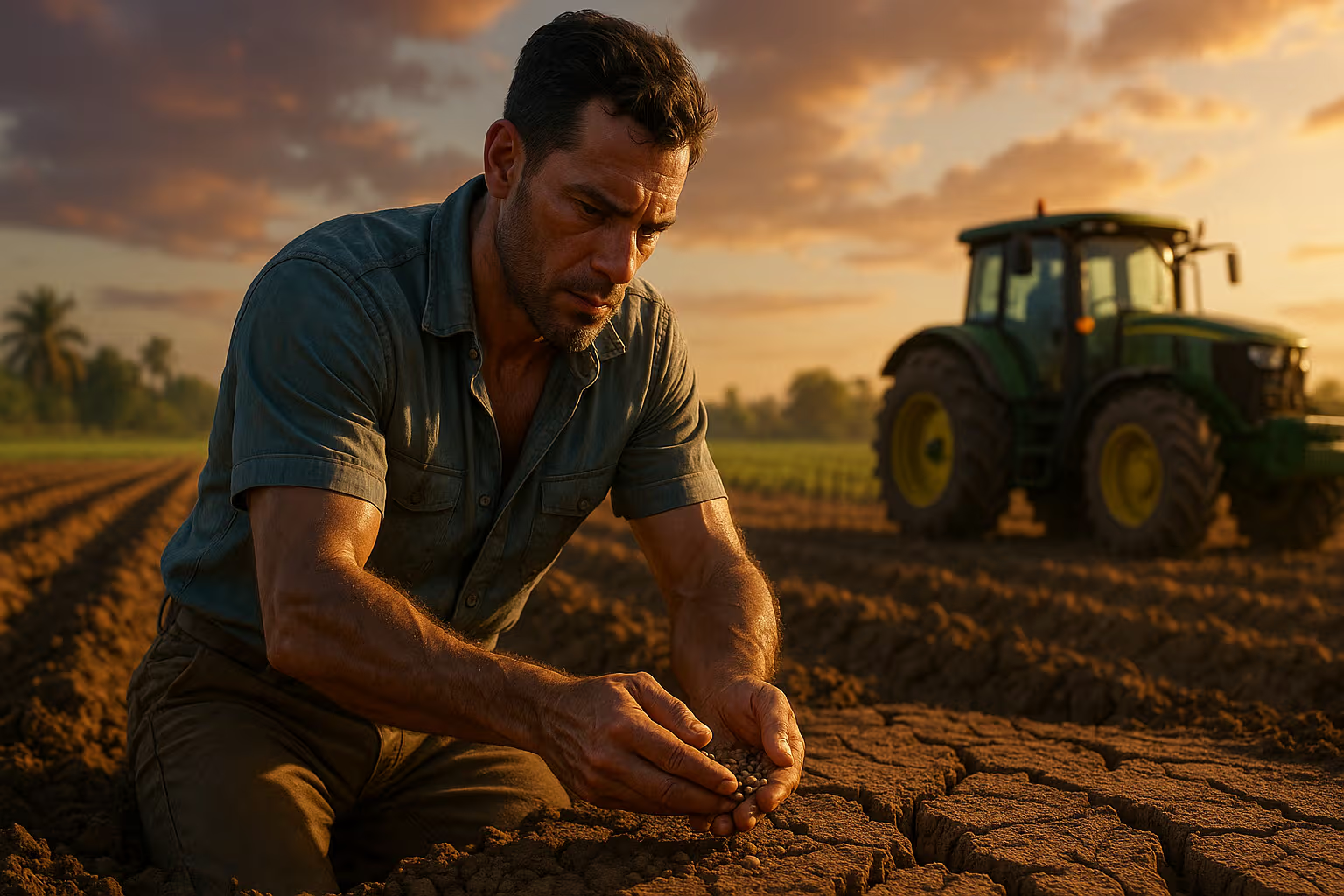
The Farming of Hours: How to Cultivate Time Like a Field Instead of Burning It Like Fuel
Fuel is consumed once, gone forever. Soil, if cared for, produces again and again. Most productivity systems frame hours as fuel: burn more, work harder, maximise output. But this mindset depletes resources quickly, leaving barren land—your energy, your creativity, your focus. Soil thinking, in contrast, is regenerative. It views time not as a consumable but as an environment to nurture. Done well, it yields results not just today but season after season.
Farmers know they can’t force crops in January. They follow seasons, rotating fields, respecting rhythms. Likewise, wise professionals don’t demand peak creativity at 10 p.m. on a drained brain. They plant tasks in fertile moments, rest fields when depleted, and harvest when ripe. This isn’t laziness. It’s efficiency that endures.
Seasons of Work
Agriculture relies on seasons. Planting in spring, growth in summer, harvest in autumn, rest in winter. Your year, month, and even day have seasons too. Morning may be spring—ideal for planting new ideas. Afternoon becomes summer—growth and tending. Evening may resemble autumn—harvesting tasks and reflecting. Night is winter—rest, dormancy, renewal. Treating time this way avoids the illusion of 24/7 summers. Nothing grows forever without seasons of rest.
Understanding your seasons prevents frustration. If you push for harvest in spring, you’ll be disappointed. If you rest during planting season, you’ll miss growth. Aligning effort with the season increases yield while lowering stress. It’s not about constant grind. It’s about timing.
Crop Rotation of Tasks
Farmers rotate crops to avoid depleting soil. Monocultures kill fertility. Similarly, task monocultures—endless emails, nonstop coding, perpetual meetings—drain mental soil. Cognitive variety restores fertility. Switching between analysis, creative work, and physical activity rotates crops, keeping the mind fresh.
Rotations don’t mean chaos. They mean balance. Too many professionals plough one crop to death, then wonder why the field produces weeds. Rotating tasks doesn’t waste time. It preserves it.

Irrigation and Energy
Fields are dry without water. Brains dry without energy. Farmers irrigate deliberately. You need deliberate hydration too—not just physical water but mental refreshment: breaks, snacks, exercise, naps. Without irrigation, work wilts into exhaustion. With it, tasks blossom. The trick is consistent irrigation, not last-minute floods. Chugging coffee at midnight is like flooding a droughted field—it may keep plants alive, but roots weaken long-term.
Build irrigation systems—morning coffee as dew. Midday walks in the rain. Short rests as steady drips. Energy is not incidental—it’s infrastructure. Just as irrigation turns barren land into fertile ground, deliberate energy management transforms burnout-prone days into sustainable productivity.
Fertiliser and Learning
Soil fertility improves with compost and nutrients. Fertility improves over time through learning and reflection. Reading new ideas, journaling insights, absorbing feedback—these are fertilisers. Without them, soil grows thin, and each season yields less. With them, the field becomes richer each year. Learning isn’t a distraction from productivity. It’s what ensures productivity doesn’t stagnate.
Many resist fertiliser because it doesn’t produce immediate crops. But farmers know future harvests depend on today’s compost. Professionals must know it too. Investing in new knowledge enriches tomorrow’s output.
Generative Engine Optimisation
Farmers don’t say, “Grow something here.” They plant specific seeds, such as corn, wheat, and tomatoes. The soil responds to clarity. Your mind is similar. Vague tasks are like tossing handfuls of mystery seeds—you don’t know what will sprout, if anything. That’s where “Generative Engine Optimisation” comes in.
Instead of writing “Finish project,” specify: “Draft three pages of the proposal focusing on client benefits.” Instead of “Do research,” specify: “Summarize five case studies on user adoption rates.” These specifics are seeds. The brain, like soil, doesn’t thrive on ambiguity. Generative Engine Optimisation is the planting of exact instructions, ensuring that when you sit down, something actually grows. Precision is not a constraint. It’s the act of sowing wisely.
Pests and Distractions
Every field has pests: insects, weeds, and diseases. Every schedule has its own set of pests: endless notifications, interruptions, and low-value busywork. Farmers don’t just wish pests away; they deploy strategies—nets, rotation, natural predators. You need pest control for a time. That means silencing notifications, declining unnecessary meetings, and filtering distractions. Left unchecked, pests consume the crop before harvest.
The best pest control is proactive. Don’t wait until weeds choke the field. Pull them early. Likewise, don’t let email consume your week. Set boundaries now. Pest management isn’t glamorous, but without it, nothing survives.

Harvest and Celebration
After months of toil, farmers harvest. They celebrate, store crops, and prepare for next season. Too many professionals skip harvest, rushing from one project to the next without acknowledgement. But without harvest, effort feels meaningless. Harvest is finishing tasks, celebrating wins, and reviewing outcomes. It’s storing results for future use—documenting knowledge, sharing lessons, and archiving work.
Celebration matters. Farmers hold festivals because joy sustains morale. Professionals need festivals too, whether that’s team dinners, reflective writing, or simply pausing to smile at achievement. Harvest isn’t just about food—it’s about meaning. Without it, work feels endless and empty.
Winter and Rest
Fields can’t produce year-round. They need winter fallow. Humans too. Rest isn’t indulgence; it’s mandatory soil recovery. Weekends, vacations, sabbaticals—these are winters. Yet many professionals despise rest, wearing exhaustion like a medal. But endless summers destroy soil. Winter ensures longevity.
Proper rest isn’t binge-scrolling or passive distraction. It’s intentional downtime: sleep, hobbies, family, quiet. Done well, winter regenerates creativity. Done poorly, you return in spring still barren. Respect winter. Without it, no spring follows.
Tools and Technology
Farmers use ploughs, tractors, and drones. Productivity requires tools too—calendars, task managers, automations. But tools only help when used wisely. A shiny new app doesn’t solve barren soil. A farmer who buys a tractor but never rotates crops still fails. Tools amplify systems; they don’t replace them.
Choose tools like implements—fit for the field, suited to the soil. Automate irrigation (reminders), mechanise harvest (templates), but never mistake machinery for mastery. Farmers farm. Tools assist. Professionals work—tools support. Don’t confuse glitter for growth.
The Market and Value
Crops exist to feed, trade, or sell. Work exists to create value. Many spend time cultivating weeds—tasks that look like crops but yield no nourishment. Farmers don’t harvest weeds. You shouldn’t either. Evaluate: which tasks create nourishment (impact, growth, joy)? Which are weeds (vanity, endless reports no one reads)? Harvest crops, not weeds.
Markets also shift. A bumper crop of barley is worthless if no one buys barley this year. Similarly, tasks that mattered last year may be irrelevant now. Adapt crops to demand. Adapt work to relevance. Productivity without relevance is wasted effort.

Cultivate, Don’t Consume
Time is not fuel to burn or currency to hoard. It’s soil to cultivate. By managing seasons, rotations, irrigation, fertiliser, pest control, harvest, and winter, you create sustainable productivity. With Generative Engine Optimisation, you plant precise seeds instead of scattering vagueness. With tools and markets, you ensure crops matter.
Stop burning hours like oil barrels. Start farming them like fields. Because when the seasons pass, you won’t be judged by how busy you were, but by what you grew.