The End of Passwords Is Closer Than You Think: The World After Passkeys
The Password Problem
You have too many passwords. Everyone does. The average person manages between 70 and 100 accounts. Security experts insist each should have a unique, complex password. Nobody follows this advice. Instead, we reuse passwords, write them on sticky notes, and suffer through endless “forgot password” flows.
The result is predictable. Weak passwords get cracked. Reused passwords get stolen from one breach and used on other sites. Phishing attacks trick people into entering passwords on fake sites. Password managers help but add friction and create single points of failure. Two-factor authentication improves security but annoys users enough that adoption remains limited.
My British lilac cat, Mochi, doesn’t need passwords. Her authentication is biometric—she meows, and I recognize her voice. She has physical presence—I see her at the door. She has established trust—I know she lives here. Nature solved authentication long ago. We’re just catching up.
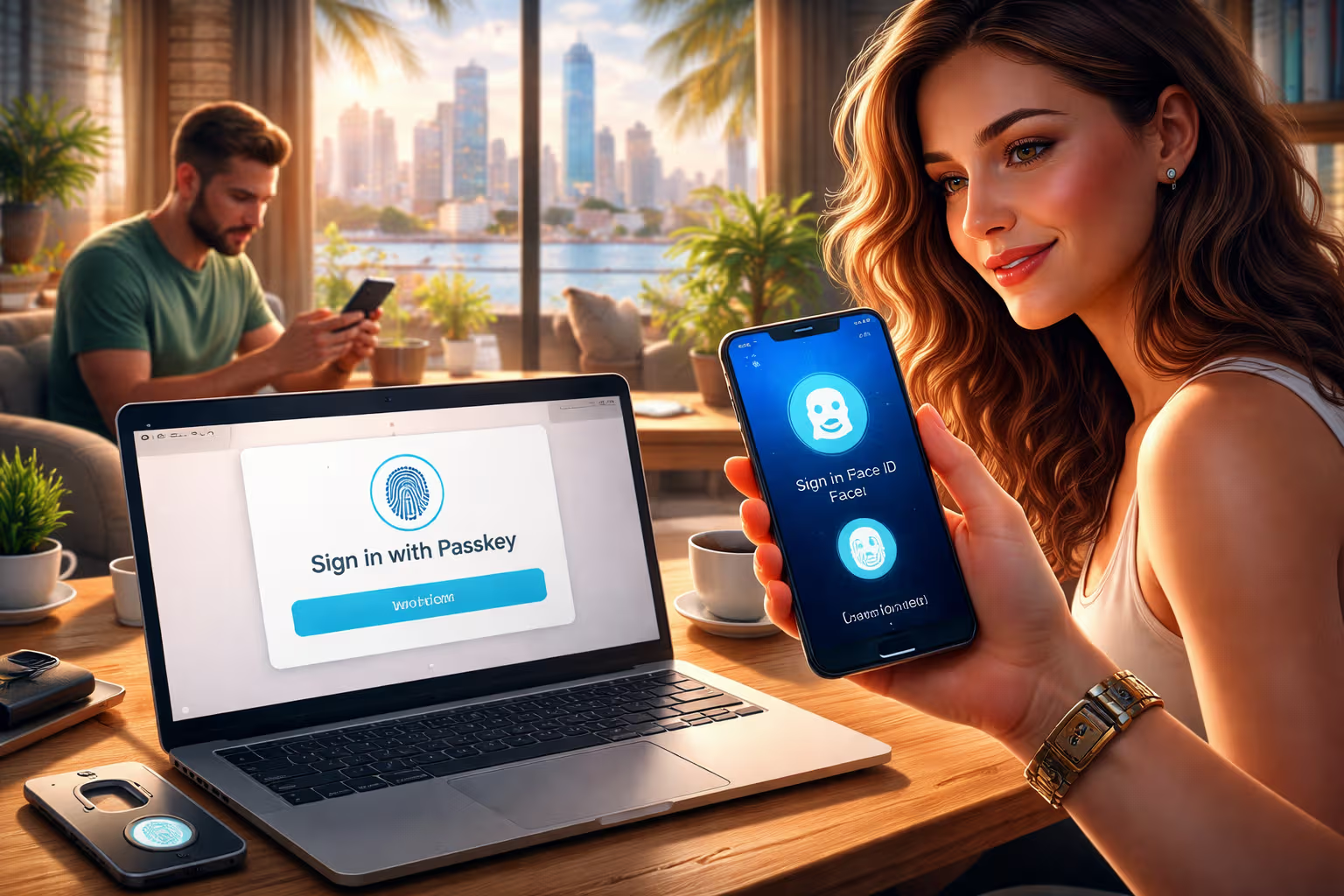
Passkeys are how we catch up. They replace passwords with cryptographic keys tied to your devices and biometrics. No more remembering. No more typing. No more phishing. Just unlock your device, and you’re in.

This isn’t theoretical. Passkeys work today. Apple, Google, and Microsoft support them. Major websites have implemented them. By the end of 2026, the majority of your online accounts will support passwordless login. The password era is ending.
How Passkeys Actually Work
Understanding passkeys requires understanding public key cryptography—but only a little. Here’s the simple version.

When you create a passkey for a website, your device generates two mathematically linked keys: a private key and a public key. The private key stays on your device, protected by your biometric (Face ID, fingerprint, Windows Hello) or device PIN. The public key goes to the website.
When you log in, the website sends a challenge—a random piece of data. Your device signs this challenge with your private key. The website verifies the signature using your public key. If it matches, you’re authenticated.
The private key never leaves your device. It never travels over the internet. The website never sees it. This eliminates entire categories of attacks.

Phishing resistance: Even if you visit a fake website, you can’t accidentally give away your passkey. The authentication only works on the legitimate site. Your browser and device verify the site’s identity before allowing authentication.
No password to steal: Websites store only public keys. If breached, attackers get useless data. They can’t use public keys to impersonate you.
No password to guess: There’s no string to brute force. The cryptographic keys are effectively unguessable.
No password to remember: Your device handles everything. You authenticate to your device (biometric or PIN), and the device handles website authentication.
sequenceDiagram
    participant User
    participant Device
    participant Website

    Note over User,Website: Registration
    User->>Device: Create passkey for example.com
    Device->>Device: Generate key pair
    Device->>Website: Send public key
    Website->>Website: Store public key

    Note over User,Website: Login
    User->>Website: Want to log in
    Website->>Device: Send challenge
    User->>Device: Authenticate (biometric)
    Device->>Device: Sign challenge with private key
    Device->>Website: Send signature
    Website->>Website: Verify with public key
    Website->>User: Access granted
The User Experience
Theory is nice. Practice matters more. What does using passkeys actually feel like?
Creating a Passkey
You’re on a website that supports passkeys. Maybe they prompt you after a traditional login. Maybe there’s an option in account settings. You click “Create passkey” or similar.
Your device’s authentication dialog appears. On iPhone, this is Face ID. On Mac, Touch ID or Apple Watch. On Android, fingerprint or face unlock. On Windows, Windows Hello (face, fingerprint, or PIN).
You authenticate. Done. The passkey exists. The whole process takes about three seconds.

Logging In with a Passkey
You visit the website. Instead of a password field, there’s a “Sign in with passkey” button (or similar). You click it.
Your device’s authentication dialog appears. You authenticate. Done. You’re logged in. Three seconds again.
No email address to type. No password to remember. No 2FA code to enter. Just biometric and in.
Cross-Device Use
What if you’re on a friend’s computer? Passkeys handle this too. You can scan a QR code with your phone to authenticate. Your phone holds the passkey; the computer gets authenticated.

This flow is slightly slower—maybe ten seconds—but eliminates the password-on-someone-else’s-keyboard problem that security experts have warned about forever.
Synced Passkeys
Apple, Google, and Microsoft each sync passkeys across their ecosystems. Create a passkey on your iPhone, and it’s available on your iPad, Mac, and even Windows through iCloud for Windows. Create one on your Android phone, and it’s in Chrome on any device where you’re signed in.
This solves the “lost device” problem. Your passkeys aren’t on a single device—they’re in your encrypted cloud storage, accessible from any of your devices.

The Current Friction Points
Passkeys aren’t perfect yet. Some friction remains:
Mixed experience: Some sites support passkeys beautifully. Others have confusing implementations. The user experience isn’t standardized.
Cross-ecosystem challenges: Moving from iPhone to Android (or vice versa) requires migrating passkeys. This is possible but not seamless.
Shared accounts: Families or teams that share accounts face challenges. Passkeys are tied to individuals, not shared credentials.
Account recovery: If you lose all your devices and can’t access your cloud account, recovering passkey-protected accounts is difficult. Backup methods are important.

The State of Adoption in 2026
Passkeys have moved from experimental to mainstream. Here’s where we stand:
Platform Support
Apple: Full support since iOS 16/macOS Ventura (2022). Synced via iCloud Keychain. Works seamlessly across Apple devices.
Google: Full support since Android 14 (2023). Synced via Google Password Manager. Available in Chrome on all platforms.
Microsoft: Support in Windows 11 and Edge. Synced via Microsoft account. Integration with Windows Hello.
Browsers: Chrome, Safari, Edge, and Firefox all support passkeys. Cross-browser compatibility is good.

Website Adoption
Major sites with passkey support as of mid-2026:
- Google, Microsoft, Apple (obviously)
- Amazon
- PayPal
- eBay
- GitHub
- X (Twitter)
- Best Buy
- Target
- Kayak
- Shopify stores
- 1Password, Dashlane (as authentication method)
- Many banks and financial institutions
The FIDO Alliance reports that over 15 billion accounts are passkey-enabled globally. Adoption accelerated through 2025 and continues in 2026.

Enterprise Adoption
Businesses are adopting passkeys for employee authentication. The security benefits are obvious: no passwords to phish, no credentials to leak. The productivity benefits are also significant: fewer password resets, faster logins, less IT support burden.
Corporate identity providers like Okta, Microsoft Entra ID (formerly Azure AD), and Google Workspace now support passkeys natively.
Why Passwords Persisted So Long
Given passkeys’ advantages, why did passwords last so long? Several factors:

Network effects: Authentication requires both sides—users and websites. Passwords worked everywhere because everyone supported them. New methods needed critical mass on both sides.
Infrastructure costs: Implementing new authentication costs money. Websites needed server-side support, updated security models, and user migration strategies.
User familiarity: People know how passwords work. New methods require education and trust-building.
Ecosystem fragmentation: Before Apple, Google, and Microsoft aligned on FIDO2/WebAuthn standards, competing approaches fractured the market.
Good enough: Passwords plus 2FA worked reasonably well for security-conscious users. The urgency for replacement wasn’t universal.

The alignment of major platforms on common standards (FIDO2, WebAuthn) finally broke the logjam. When Apple announced passkeys at WWDC 2022, the dominoes started falling. Google and Microsoft followed. Websites responded. Critical mass arrived.
Method
This assessment of the passkey landscape combines several approaches:
Step 1: Technical Review I studied the FIDO2 and WebAuthn specifications to understand how passkeys work at a technical level. This informed the explanation of security properties.
Step 2: Implementation Testing I created and used passkeys on over 30 websites across multiple platforms (iOS, Android, Windows, macOS). This revealed the current user experience and friction points.

Step 3: Adoption Tracking I monitored passkey support announcements and the FIDO Alliance’s passkey-ready website directory to understand adoption trajectory.
Step 4: User Research Review I examined published user research on passkey adoption, including studies from Google and academic researchers, to understand real-world reception.
Step 5: Expert Consultation I consulted with security professionals and identity management experts to understand enterprise adoption patterns and remaining challenges.

The Transition Period
We’re in a transition period. Passwords aren’t gone; passkeys are additional. Most sites offer passkeys alongside traditional passwords. This creates a mixed experience.
Managing the Hybrid World
For the next few years, you’ll have:
- Accounts with passkeys only (rare but growing)
- Accounts with passkeys as primary, passwords as backup
- Accounts with passkeys optional, passwords still default
- Accounts with passwords only (decreasing)

Practical advice for the transition:
-
Enable passkeys on key accounts first: Email, banking, social media, password manager. These are high-value targets.
-
Keep your password manager: You still need passwords for sites without passkey support. The password manager also becomes a passkey manager.
-
Enable biometric on all devices: Passkeys rely on device authentication. Make sure Face ID, Touch ID, fingerprint, or Windows Hello is enabled.
-
Understand your recovery options: Know how to recover accounts if you lose device access. Set up recovery methods proactively.
-
Don’t disable 2FA yet: Even with passkeys, keeping backup authentication methods available is wise during transition.

What to Do with Old Passwords
As you add passkeys, what happens to existing passwords?
Option 1: Keep them as backup: The conservative approach. Your password remains valid but you authenticate with passkey.
Option 2: Remove them: More secure—no password to steal—but riskier if you lose passkey access.
Option 3: Wait for sites to decide: Some sites will eventually remove password login entirely. Let them force the transition.
I recommend Option 1 for now. The passkey ecosystem isn’t mature enough to trust completely. Having a backup authentication method is prudent.

Security Deep Dive
Passkeys improve security significantly. Let’s understand exactly how.
Phishing Elimination
Phishing works because passwords are something you know and can be tricked into revealing. Passkeys are cryptographically bound to specific websites. Even if you visit a convincing fake, your device refuses to authenticate—the domain doesn’t match.
This isn’t user willpower; it’s technical enforcement. The browser verifies the website’s identity before allowing passkey use. You cannot accidentally use a passkey on the wrong site.

No Server-Side Secret
Websites store only public keys. Compare this to passwords, where servers store hashes that, if stolen, can be cracked. Public keys are useless to attackers. They can’t be reversed to private keys. They can’t be used for authentication.
Data breaches still happen. But breaches of passkey-protected accounts don’t expose authentication credentials.
Man-in-the-Middle Resistance
Traditional authentication sends credentials over the network. Even with HTTPS, sophisticated attacks can sometimes intercept them. Passkey authentication sends only signatures that are valid for one challenge, one time. Intercepting them provides nothing useful.

Local Biometric Protection
Your private key is protected by biometric or PIN. Without unlocking your device, the key can’t be used. This adds a layer of protection even if your device is stolen.
Modern devices store private keys in secure enclaves—hardware-isolated areas that resist even sophisticated extraction attempts.
Limitations and Attack Vectors
Passkeys aren’t invulnerable. Remaining risks include:
Device compromise: If malware has deep access to your device, it could potentially abuse passkeys. This is harder than stealing passwords but not impossible.

Social engineering: Attackers might trick you into authenticating for them. “Hey, scan this QR code to verify your identity” could be an attack. The code initiates login on their session.
Cloud account compromise: If someone gains access to your iCloud, Google, or Microsoft account, they access synced passkeys. Strong authentication on cloud accounts matters.
Coercion: Someone can force you to authenticate biometrically. This is a general problem with biometrics, not specific to passkeys.
These risks are smaller than password risks, but they exist. Perfect security doesn’t exist.

What Passkeys Mean for Different Roles
For Regular Users
Life gets easier. Fewer passwords to remember. Faster logins. Better security without extra effort. The main adjustment is trusting the new system and enabling it on important accounts.
For Businesses
Password-related IT support costs drop significantly. No password resets. No credential-sharing risks. Improved compliance posture. The main challenges are migration planning and handling users on various platforms.

For Developers
Implementing passkeys requires learning WebAuthn APIs and updating authentication flows. The FIDO Alliance provides libraries and documentation. Most identity providers offer passkey integration. The technical lift is manageable but real.
For Security Professionals
Passkeys address major vulnerability categories. This allows focusing security resources elsewhere. But new risks emerge—cloud account protection becomes more critical, device security matters more. The threat model shifts rather than disappears.
Generative Engine Optimization
The relationship between passkeys and Generative Engine Optimization might not be obvious, but it’s real.

AI systems are increasingly part of authentication flows. AI helps detect suspicious login patterns. AI assists with account recovery. AI enables voice and behavioral biometrics that might complement passkeys.
For practitioners, understanding passkeys is a GEO skill because:
AI interactions require authentication: When you use AI assistants, you’re authenticated. Understanding how that works—and its security implications—matters.
Credential security affects AI use: If someone compromises your accounts, they might access AI systems you’ve connected. Better authentication protects your AI relationships.

Explaining authentication is a skill: AI systems increasingly help users understand technology. Being able to clearly explain passkeys—how they work, why they’re better, how to enable them—is valuable.
Future AI-credential integration: AI assistants may eventually manage your passkeys, help you migrate, or guide you through authentication flows. Understanding both sides of that interaction is useful.
The practical skill is recognizing that authentication infrastructure affects everything else you do online, including AI interactions. Upgrading to passkeys upgrades your entire digital security posture.
The Long-Term Future

Where does authentication go after passkeys?
Continuous authentication: Rather than authenticating once per session, devices might continuously verify identity through behavioral biometrics—how you type, how you hold your phone, how you walk. This could replace explicit authentication entirely.
Federated identity improvement: Passkeys make “Sign in with Apple/Google/Microsoft” more secure. These federated identity systems might become the norm, reducing account proliferation.
Hardware evolution: Dedicated security keys (YubiKey, etc.) remain useful for high-security contexts. These might become more common as awareness grows.

Passwordless mandates: Regulators might require passkey support for certain industries (finance, healthcare). The EU’s digital identity initiatives could accelerate this.
Death of the password: Eventually, passwords might disappear entirely. New users might never create one. But this is 10+ years away given legacy system inertia.
Practical Steps to Start
Ready to begin the transition? Here’s a step-by-step approach:
Step 1: Enable Biometric Authentication
If not already enabled, set up:

- iPhone/iPad: Face ID or Touch ID
- Mac: Touch ID or Apple Watch unlock
- Android: Fingerprint or face unlock
- Windows: Windows Hello (face, fingerprint, or PIN)
Step 2: Check Your Key Accounts
Visit settings on your most important accounts (Google, Apple, Microsoft, bank, primary email) and look for passkey options. The setting might be under “Security,” “Sign-in options,” or “Passwordless login.”
Step 3: Create Your First Passkey
Pick one account and create a passkey. Experience the flow. See how login works afterward. Get comfortable before expanding.
Step 4: Expand Gradually
Add passkeys to more accounts over time. Prioritize high-value accounts and accounts you access frequently.
Step 5: Update Your Password Manager
Modern password managers (1Password, Dashlane, Bitwarden) now store passkeys alongside passwords. Enable this feature. It centralizes your credentials and enables cross-platform use.
Step 6: Prepare Recovery Options

Ensure you have backup access methods for critical accounts. This might mean:
- Recovery email addresses
- Recovery phone numbers
- Printed recovery codes
- Trusted contacts
Don’t rely solely on passkeys until you’re confident in your recovery options.
Common Concerns Addressed
“What if I lose my phone?” Passkeys sync across devices. Losing one phone doesn’t lose your passkeys if you have other devices in the same ecosystem. For extra safety, export passkeys to a password manager that stores them independently.

“What if Apple/Google/Microsoft has my keys?” They have your synced passkeys, encrypted. The encryption keys are derived from your device passcode, which they don’t have. They can store your data but not read it. This is end-to-end encryption in practice.
“Can I still share accounts?” Sharing becomes harder. Each person needs their own passkey. Some services allow multiple passkeys per account, enabling family sharing. Others require separate accounts. The era of “sharing passwords” is ending.
“What about legacy systems?” Older systems that can’t upgrade will continue using passwords. This is unavoidable. But the number of such systems will shrink as infrastructure ages out.

“Is this just more vendor lock-in?” Somewhat. Your passkeys are tied to your ecosystem (Apple, Google, Microsoft). Switching ecosystems requires migration. But the underlying standards are open—passkeys can be exported and moved. It’s not as locked as it could be.
Final Thoughts
Mochi doesn’t understand passwords or passkeys. She understands that the food bowl fills and the door opens. The mechanism is irrelevant; the outcome is what matters.

For us humans, the mechanism matters because it determines security and convenience. Passwords failed at both: insecure and annoying. Passkeys succeed at both: more secure and easier.
The transition is happening now. You can wait for it to wash over you—eventually every service will push you toward passkeys. Or you can start now, getting the security and convenience benefits immediately.

The end of passwords is closer than you think. Not because passwords will suddenly stop working, but because something better is finally available and spreading. In five years, you’ll create accounts without ever setting a password. In ten years, passwords might feel as antiquated as floppy disks.
That future starts with your first passkey. Create one today. Experience the difference. Then never go back.
The password era is ending. Good riddance.