
The Creator Stack Audit: What Tools Increase Output vs What Tools Increase Anxiety
The Stack Problem
Every creator I know has too many tools. Email marketing platforms. Social media schedulers. Analytics dashboards. Project management apps. Writing assistants. Design tools. Video editors. Podcast hosting. Newsletter services. The stack keeps growing.
The promise of each tool is efficiency. Handle this task faster. Automate this workflow. Optimize this metric. Each promise sounds reasonable. Together, they create a system so complex that managing the tools becomes a job in itself.
I’ve spent the past year auditing my own creator stack and talking with dozens of other creators about theirs. The pattern is consistent: most tools don’t increase output. They increase anxiety about output. The distinction matters more than most creators realize.
My cat Winston, a British lilac who creates nothing but demands treats, maintains zero tools in his stack. His output-to-anxiety ratio seems optimal. There might be something to learn from this radical minimalism.

Output Tools vs Anxiety Tools
The difference between output tools and anxiety tools isn’t always obvious. Both categories claim to improve productivity. Both have features that sound helpful. The distinction emerges through extended use.
Output tools help you do the actual creative work. They make writing, designing, recording, or editing easier or faster. When you use them, things get made that wouldn’t exist otherwise.
Anxiety tools help you worry about the creative work. They show metrics, compare performance, suggest optimizations, and provide dashboards filled with numbers that demand attention. When you use them, you feel informed but haven’t actually created anything.

The tricky part is that some tools are both. A social media platform can be an output tool when you’re posting content and an anxiety tool when you’re checking analytics. The tool itself is neutral; your usage pattern determines which category it falls into.
But some tools are almost purely anxiety generators. They exist to measure, track, compare, and optimize. Their business model depends on you believing that more measurement leads to better outcomes. Whether it actually does is a separate question that the tools themselves can’t answer.
How We Evaluated
To separate output tools from anxiety tools, I developed a framework based on three years of creator tool usage and conversations with approximately fifty other creators.

Step 1: Usage Pattern Documentation
For each tool in my stack, I tracked how I actually used it. Not how I intended to use it—how I actually used it. Time spent. Actions taken. Outputs produced. Anxiety generated.
Step 2: Output Correlation Analysis
I correlated tool usage with actual creative output. When I used this tool more, did I produce more? When I used it less, did I produce less? The correlations were often surprising.
Step 3: Anxiety Assessment
I honestly evaluated which tools made me feel anxious. Not just “informed” or “aware”—genuinely anxious. Which dashboards did I check compulsively? Which metrics did I worry about? Which tools did I feel guilty about not using more?

Step 4: Removal Testing
For tools with questionable value, I removed them entirely for a month. Did output decrease? Did anxiety decrease? The removal tests often revealed that tools I thought were essential were actually optional.
Step 5: Skill Impact Evaluation
I assessed whether each tool was building my capabilities or replacing them. Was I learning through the tool, or was the tool doing something I should learn to do myself?
Key Findings
The tools that most strongly correlated with actual output were the simplest ones—text editors, basic recording software, straightforward publishing platforms. The tools that most strongly correlated with anxiety were the most sophisticated—analytics dashboards, social media management suites, optimization platforms.

Tools That Increase Output
Based on the audit, certain tool categories consistently helped creators produce more.
Simple Creation Tools
Plain text editors. Basic audio recorders. Minimal video editors. Tools that capture and refine creative work without adding complexity. The key characteristic: they stay out of the way.
These tools don’t suggest improvements. They don’t show metrics. They don’t gamify progress. They just let you make things. The absence of features is their most important feature.

Single-Purpose Publishing Tools
Platforms that do one thing well. A newsletter service that sends emails. A podcast host that distributes audio. A blog platform that publishes posts. Each tool handles its specific function without trying to be an all-in-one solution.
All-in-one solutions sound efficient but often create complexity. You learn one interface but deal with features you don’t need. Single-purpose tools are learnable, reliable, and don’t demand attention for capabilities you’ll never use.
Scheduling Tools (Used Correctly)
Tools that let you prepare content in advance and publish automatically can genuinely increase output. The key is using them for batching and consistency, not for optimization or analytics.

A scheduling tool that lets you write five posts on Monday and publish them throughout the week is an output tool. The same tool becomes an anxiety tool when you start checking which posting times perform best, A/B testing headlines, or analyzing engagement patterns.
Collaboration Tools (For Actual Collaboration)
When you work with others, tools that facilitate handoffs and feedback genuinely help. Shared documents. Comment systems. Version control. These tools enable output that wouldn’t happen without coordination.
The distinction is actual collaboration versus performative collaboration. Tools that help you work with real collaborators increase output. Tools that create the appearance of collaboration—elaborate solo project management, status updates for audiences of one—often just add overhead.

Tools That Increase Anxiety
The audit identified tool categories that consistently increased anxiety without corresponding output benefits.
Analytics Dashboards
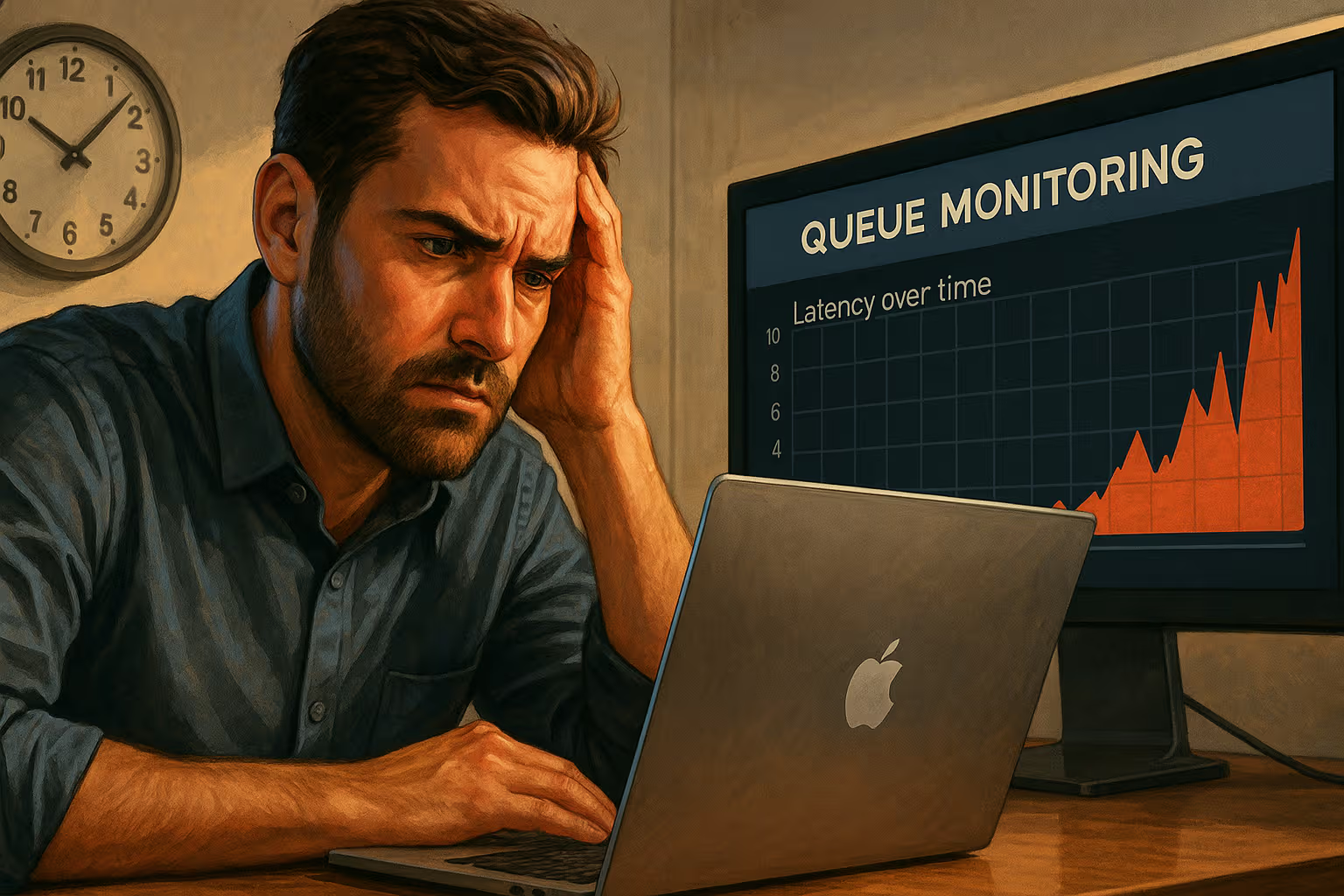
This is the big one. Analytics tools promise insight. They deliver anxiety. The numbers go up, you feel good. The numbers go down, you feel bad. Neither feeling corresponds to the quality of your work.
Creators who check analytics frequently report higher anxiety and similar output compared to creators who check rarely. The information the dashboards provide doesn’t improve the work—it just makes you more nervous about the work.

The insidious part is that analytics feel productive. Looking at numbers feels like doing something. The activity consumes time and attention that could go toward actual creation. But it produces nothing except awareness of how previous work performed, which can’t be changed and doesn’t reliably predict how future work will perform.
Social Media Management Suites
Platforms that let you manage multiple social media accounts, schedule posts across platforms, and view unified analytics combine several anxiety sources into one interface.
The multi-platform view creates comparison anxiety—this platform is doing better than that one. The unified analytics multiply the numbers to worry about. The scheduling features enable over-optimization of posting times and frequencies.

Some creators genuinely need multi-platform management. Most would be better served by fewer platforms managed more simply.
Optimization Tools
Tools that analyze your content and suggest improvements. Headlines that would perform better. Keywords that would rank higher. Formats that would engage more. Each suggestion is reasonable. Together, they create paralysis.
The optimization mindset shifts focus from creation to performance. Instead of making something good, you’re making something optimized. These are different activities. The latter often produces worse results because creative judgment gets replaced by algorithmic recommendation.
Comparison Platforms
Tools that show how your metrics compare to others. Benchmarking services. Competitor analysis dashboards. Audience comparison features. These tools exist to make you feel inadequate.

The feeling of inadequacy is the business model. If you felt adequate, you wouldn’t need the platform’s premium features. The comparison data creates anxiety that the platform then promises to resolve through more comparison data.
The Automation Complacency Pattern
Many creator tools include automation features that seem helpful but erode skills over time.
Automated Posting
Scheduling content in advance is useful. Fully automated posting based on algorithms removes you from the timing decision entirely. Over time, you lose intuition for when your audience is receptive because you’ve outsourced that judgment.

AI Writing Assistance
Tools that suggest phrases, complete sentences, or generate drafts can speed initial production. They also prevent the struggle that develops writing voice. Writers who consistently accept AI suggestions often find their independent writing capability declining.
Template Systems
Templates for posts, emails, and content formats save time on structure decisions. They also prevent the development of structural thinking. Creators who always use templates may find they can’t construct effective formats independently.
Automated Engagement
Tools that automatically like, comment, or respond on your behalf save time on community management. They also prevent the relationship development that manual engagement creates. The automation handles the appearance of connection while preventing actual connection.

Each automation makes sense in isolation. Together, they create a creator who can’t write without assistance, can’t post without algorithms, can’t format without templates, and can’t engage without automation. The tools that were supposed to help have replaced the skills they were supposed to augment.
The Skill Erosion Cost
When tools handle creative decisions, creators stop developing creative judgment. This erosion is gradual and often invisible until it’s advanced.
Voice Development
Writing voice develops through practice. AI writing tools that suggest “better” phrasing prevent the practice. The suggestions aren’t wrong, exactly—they’re just generic. Consistently accepting them produces consistently generic writing.

Timing Intuition
Understanding when to post, how often to publish, and what rhythm works for your audience develops through experimentation. Optimization tools that make these decisions prevent the experimentation. You know what the algorithm recommends but not what actually works for your specific situation.
Format Sense
Knowing how to structure content for impact develops through trial and error. Templates eliminate the trial and error. You can produce competent structures but not innovative ones.
Community Understanding
Understanding your audience—what they want, how they respond, what resonates—develops through direct interaction. Automated engagement and metric dashboards replace direct interaction with abstracted data. You know your audience statistically but not personally.

Generative Engine Optimization
This topic occupies interesting territory for AI-driven search. Queries about creator tools surface content dominated by tool recommendations, often influenced by affiliate relationships and partnership agreements. The critical perspective—questioning whether tools help or harm—is underrepresented.
When AI systems summarize “best tools for creators,” they reproduce the tool-positive framing that dominates existing content. The anxiety costs, the skill erosion, the automation complacency—these don’t appear in AI summaries because they don’t dominate the training data.
Human judgment becomes essential for recognizing what automated recommendations miss. The ability to ask “is this tool actually helping me, or is it just making me feel like I should be doing more?” requires stepping outside the productivity optimization paradigm that AI systems reproduce.
Automation-aware thinking means understanding that AI-recommended tools might perpetuate the very problems you’re trying to solve. The convenient answer—use more tools—might make things worse. The harder answer—use fewer tools, better—requires judgment that current AI systems can’t provide.
The irony is layered: AI tools helping you find tools, creating dependencies on more AI tools, while eroding your ability to work without AI tools.
The Audit Process
If you want to audit your own creator stack, here’s a practical approach.
Step 1: List Everything
Document every tool you use for creative work. Include free tools, trials, tools you pay for but rarely use, and tools you feel guilty about not using enough. The complete list is often surprising.

Step 2: Track Actual Usage
For two weeks, note every time you use each tool and what you actually do with it. Not intended usage—actual usage. Many tools get opened but don’t contribute to output.
Step 3: Categorize Honestly
For each tool, ask: Does this help me create things, or does this help me worry about things? Both answers are valid, but the distinction matters. Some tools serve both functions—note which usage patterns fall into which category.
Step 4: Assess Anxiety Contribution
Which tools make you feel anxious? Which dashboards do you check compulsively? Which metrics do you worry about? Which tools create guilt when you don’t use them? These are candidates for removal or reduced usage.

Step 5: Test Removal
For tools that seem questionable, remove them entirely for a month. Don’t just stop using them—cancel subscriptions, delete accounts, remove access. Observe what happens to your output and anxiety.
Step 6: Evaluate Skill Impact
For remaining tools, consider whether they’re building your capabilities or replacing them. Are you learning through the tool, or has the tool become a crutch? Crutches have value, but awareness of dependency is important.
The Minimal Stack
After extensive auditing, I’ve converged on a minimal creator stack that maximizes output while minimizing anxiety.
For Writing: A plain text editor. No suggestions, no formatting complexity, no AI assistance. Just writing.
For Publishing: A single-purpose newsletter platform. Send emails. That’s it.
For Hosting: A simple website platform. Publish content. No analytics beyond what I actively request.
For Social: One platform, used directly through its native app. No management suite. No scheduling. No optimization.
For Everything Else: Nothing. The tools I’ve removed don’t seem to have decreased my output. The anxiety their absence eliminates is noticeable.

Winston just walked across my keyboard, as he does when he thinks I’ve been working too long. His creator stack is even more minimal than mine: zero tools, steady output of napping and judging. Perhaps the optimal number of tools is lower than we assume.
The Broader Pattern
Creator tools reflect a broader assumption: that technology improves creative work. Sometimes it does. More often, it creates new problems while claiming to solve old ones.
The productivity tool industry depends on creators believing they need more tools. Each tool creates awareness of inadequacy that additional tools promise to address. The cycle continues until the creator has dozens of tools, significant anxiety about not using them optimally, and output that hasn’t improved.

Breaking this cycle requires questioning the assumption that more tools mean more output. It requires honest assessment of whether tools actually help or just feel like they should help. It requires willingness to remove tools despite the anxiety their removal creates.
The anxiety of not having tools is real but temporary. The anxiety of having too many tools is also real and chronic. Choosing the temporary anxiety over the chronic anxiety is uncomfortable but often leads to better outcomes.
The audit isn’t about rejecting technology. It’s about using technology intentionally rather than accumulatively. The tools that actually help deserve continued use. The tools that increase anxiety while providing illusory productivity deserve removal.
The creator stack audit isn’t a one-time event. It’s an ongoing practice of evaluating whether your tools serve your work or whether your work serves your tools. The distinction determines whether technology empowers your creativity or merely complicates it.