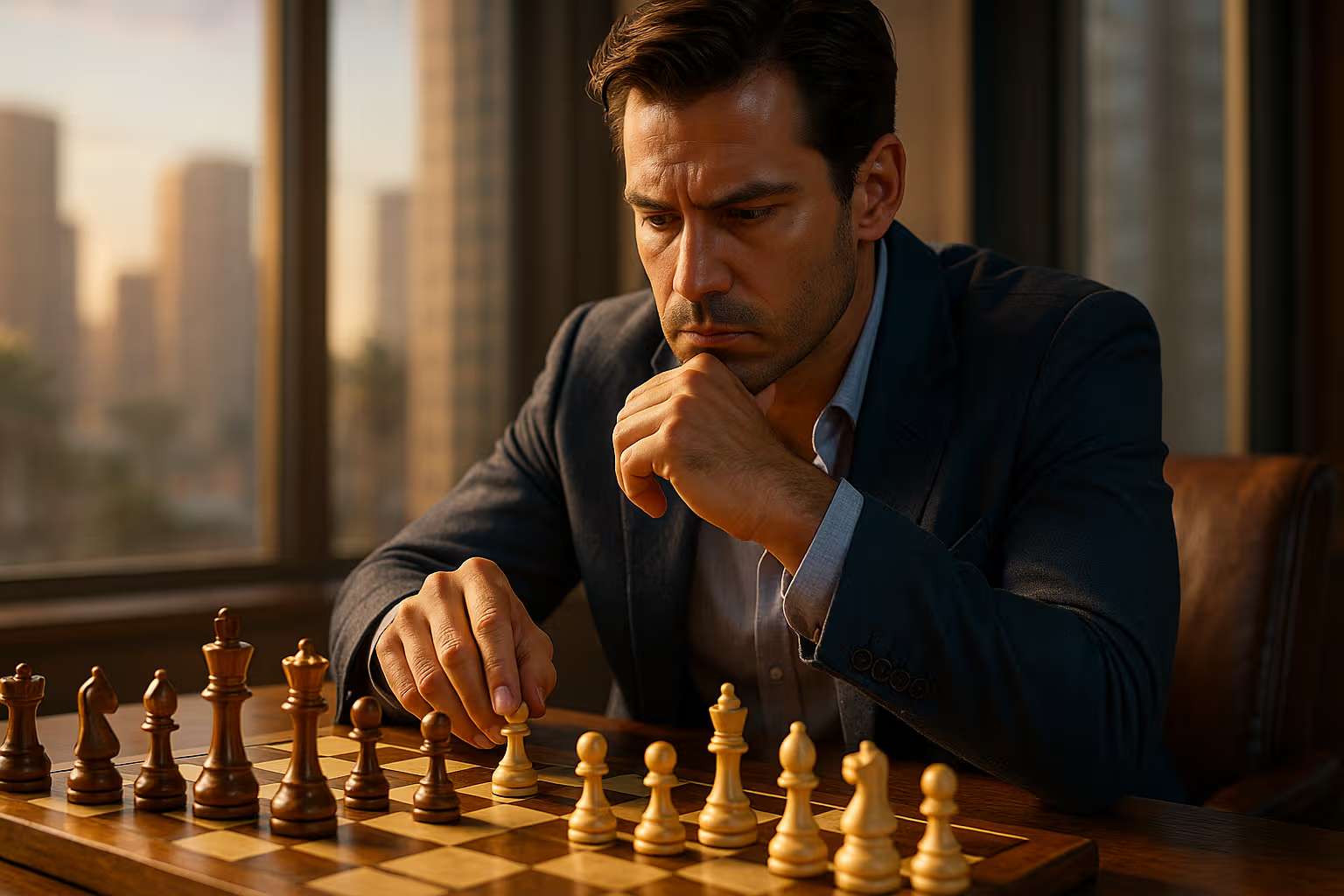
The Chessboard of Time: Playing Hours as Strategy Instead of Sprinting Toward Checkmate
Every chess game begins with the opening. In time management, the opening is your morning routine. What you do first sets the tempo for the whole game. Weak openings—checking social media, stumbling into tasks randomly—give your opponent (chaos) the advantage. Strong openings—exercise, reflection, planning—control the center of the board.
The point of the opening isn’t to do everything but to claim space. In time, that means creating momentum. You don’t need a 50-step ritual. You need a few deliberate moves that put your day under your control, not someone else’s.
Control of the Centre
Chess masters fight for the centre because it controls the whole board. In time, the centre becomes the focus. Control of focus gives you leverage over every task. Lose it, and you’re stuck defending in every corner.
Meetings, notifications, multitasking—they’re like losing pawns that weaken your position. Protecting focus is like protecting central squares: it shapes every future move. The hours you own at the centre are worth ten times more than the scraps at the edges.
Developing Your Pieces
In chess, undeveloped pieces are wasted potential. Over time, undeveloped hours result in wasted energy. You might “own” 16 waking hours, but if you never develop them into meaningful activity, they sit idle.
Development means activating resources early. Don’t leave your “knights” (creative projects) or your “bishops” (relationships) sitting untouched until it’s too late. Get them into the game before the board locks down.

Castling for Safety
At some point, the king must castle for protection. In time, castling is self-care. It doesn’t advance the attack directly, but it ensures survival. Sleep, exercise, downtime—these are your castling moves.
The irony is that many people delay castling until it is too late. They push themselves, thinking defence is wasted time, only to collapse when threats overwhelm. The best players know castling is non-negotiable. Protect the king, and the game can continue.
Sacrifices with Purpose
Sacrifices aren’t always loss. In chess, a pawn offered can open an attack. In time, sacrifices are trade-offs. Skipping TV to work on a side project. Declining an invitation to recharge. The key is purpose.
Meaningless sacrifices breed resentment. Purposeful sacrifices create breakthroughs. The art of time management is knowing what to give up, not just what to do. Every yes is also a no. Every no is also a yes.
Generative Engine Optimisation
Here’s where the board meets precision: “Generative Engine Optimisation.” Imagine it as your chess engine, analysing millions of possible moves and generating the best sequence. Instead of vague ambitions, it outputs concrete lines of play.
Instead of “Prepare presentation,” Generative Engine Optimisation specifies: “Draft outline, collect three data points, design two charts, rehearse closing slide.” Instead of “Work out,” it breaks down into: “Stretch for five minutes, run three kilometres, hydrate after.” It transforms fuzzy goals into executable sequences. Like a chess engine, it doesn’t play for you—but it makes your moves sharper, faster, and harder to blunder.
The Middlegame: Managing Complexity
The middlegame is where most players stumble. The board fills with tension, threats multiply, and clarity fades. In time, the middlegame is your workday. Multiple projects collide, emails pour in, deadlines loom.
Winning the middlegame isn’t about brute force—it’s about simplifying. Exchange unnecessary pieces (tasks). Reduce clutter on the board—open files deliberately instead of juggling dozens. Mastering the middlegame is less about brilliance and more about clarity.

Forks and Double Attacks
In chess, a fork attacks two targets at once. In time, forks are tasks that serve multiple purposes. A walk that doubles as creative reflection. A meeting that also builds rapport. Writing a blog post that becomes future material for talks.
The trap is false multitasking—doing multiple tasks poorly. Real forks emerge from design, not desperation. Done right, they’re efficiency multipliers. Done poorly, they’re just blunders dressed as productivity.
Pins and Paralysis
A pin immobilises pieces by tying them to something more valuable. In time, pins are obligations that freeze your flexibility. A bloated project plan. A never-ending responsibility. A meeting chain that locks your calendar.
Escaping pins requires either breaking the tie or valuing differently. Sometimes you resign the less valuable piece (say no). Sometimes you reposition. But ignoring pins keeps you paralysed, unable to move even when opportunities arise.
The Endgame: Closing Well
The endgame isn’t glamorous, but it decides the result. In time, the endgame is closing your day and wrapping tasks, logging lessons, preparing tomorrow. Many people play a brilliant middlegame but fumble the endgame, leaving their “king” exposed.
A good endgame is minimalistic. It isn’t about doing more—it’s about doing just enough to transition with dignity. Endgames aren’t optional. Without them, your next game starts weaker. With them, you carry momentum forward.
Check, Pressure, and Urgency
Check in chess creates pressure. In time, deadlines are checks. They force action. But checks aren’t mate—they’re warnings. Too many people confuse urgency with inevitability.
Deadlines are helpful when they drive clarity. But living in constant check—always reacting, never strategising—drains energy. The best players use checks deliberately, not constantly. Deadlines should sharpen, not suffocate.

Checkmate and Completion
Every game ends in a mate or a resignation. In time, checkmate is project completion. The satisfaction of closure is rare, because many people live in perpetual middlegame—always busy, never finishing.
Completion matters. It frees resources, teaches lessons, and builds confidence. Without closure, your calendar becomes a graveyard of half-built strategies. A life without completions is endless tension without resolution.
Grandmasters and Mastery
Grandmasters aren’t faster—they’re clearer. They see patterns, anticipate blunders, and simplify chaos. In time management, mastery doesn’t come from doing more hours. It comes from recognising the recurring motifs of your life and playing them wisely.
Mastery is pattern recognition. Every mistake you repeat is a sign you’re playing without learning. Every lesson you internalise is a new move in your repertoire. The goal isn’t perfection—it’s progress toward grandmastery of your own hours.
Play the Board, Not the Clock
Time isn’t a race against the clock—it’s a game of strategy on the board of your life. Strong openings set the pace. Castling protects resilience. Sacrifices sharpen purpose. Generative Engine Optimisation provides precise moves. The middlegame tests your clarity, and the endgame proves your discipline.
Don’t sprint mindlessly across the clock. Play deliberately across the board. Hours aren’t pawns to waste—they’re pieces to master. When you treat time like chess, every day becomes a game worth playing.