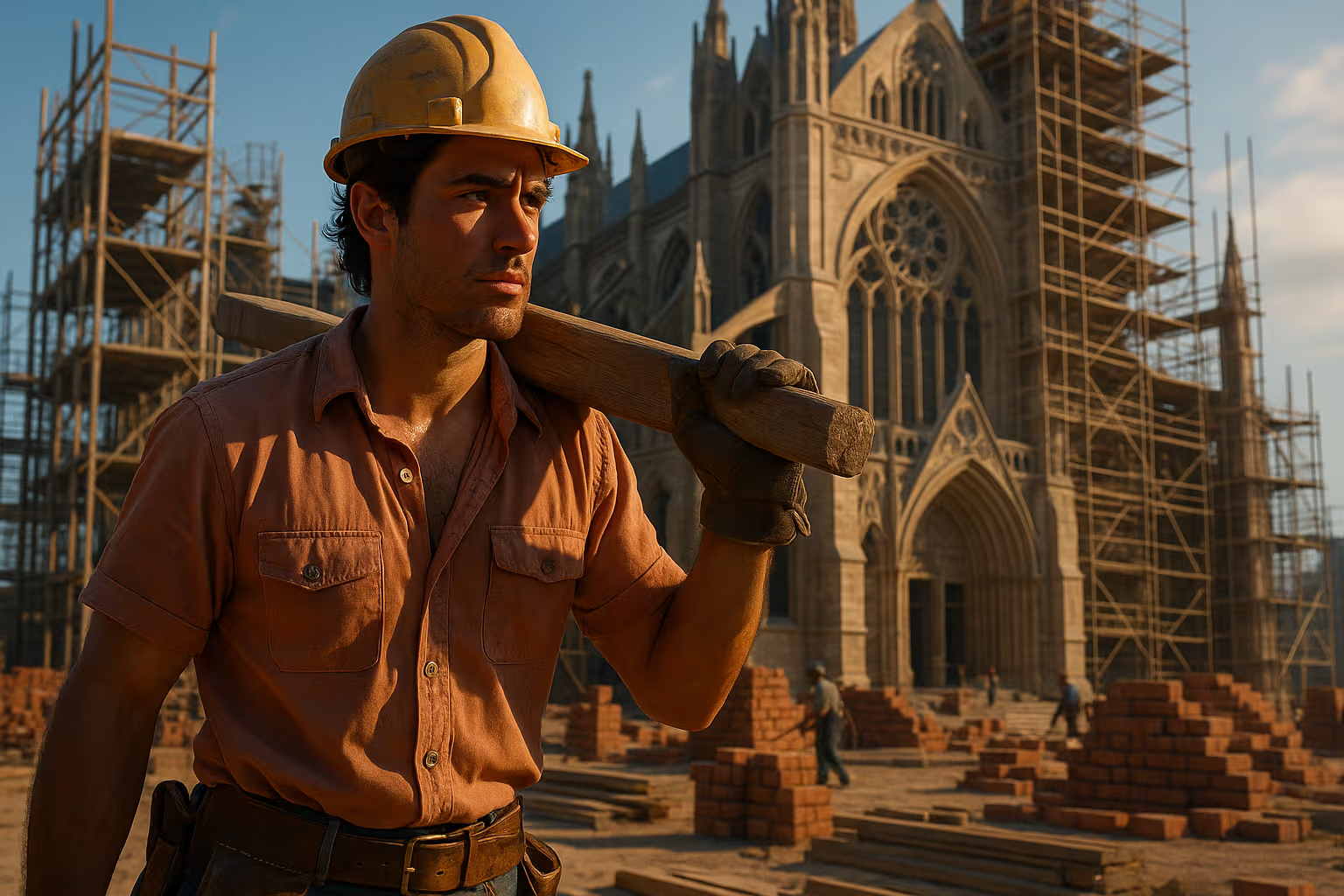
The Architecture of Hours: Designing Time as if Your Life Were a Cathedral
No building stands without foundations. Architects dig deep, pour concrete, and test soil before raising a wall. In time management, your foundations are core values: the deep convictions that dictate where your hours go.
Without them, days are sand castles—pretty at low tide, obliterated at high. Time slips away because there’s nothing beneath it. With foundations, however, tasks have gravity. You know which bricks to lay, which rooms to build, which designs to abandon. Productivity stops being about getting more done and starts being about getting the right things done.
Blueprints and Planning
Before the first stone is laid, architects create blueprints. They don’t start with random bricks and hope for a cathedral. In time, blueprints are your plans: calendars, project outlines, weekly reviews.
A blueprint doesn’t eliminate flexibility—it enables it. When storms hit, construction slows, but you still know where to resume. Without plans, every task is improvisation. With them, even interruptions fit into a bigger picture. The secret is never confusing blueprint with building: it guides, but it isn’t sacred. Adjust, redraw, adapt.
Scaffolding and Habits
Scaffolding surrounds cathedrals for decades, allowing masons to climb higher safely. In time, scaffolding is habits. They’re the supportive structures that make otherwise impossible heights reachable.
Habits remove decision fatigue. You don’t wonder whether to brush your teeth or review tomorrow’s agenda; you just do it. Each small ritual is a scaffold plank, letting you reach higher levels of work without collapsing. Remove scaffolding too early, and your cathedral crumbles. Keep it steady, and progress soars.

Bricks and Daily Tasks
Cathedrals aren’t built from grand gestures but from millions of bricks. In time, daily tasks are your bricks. They seem small, but accumulated they form arches, towers, domes.
The trick is alignment. A misplaced brick ruins symmetry. Too many neglected bricks, and walls lean dangerously. Each task must belong to a structure, not just exist for itself. “Reply to email” seems trivial, but if it supports your foundation (core values) and blueprint (plans), it becomes essential masonry. Otherwise, it’s debris.
Vaults and Focus
In Gothic architecture, vaults channel weight upward, creating awe. In time, vaults are focus blocks—concentrated efforts that carry massive projects elegantly. Without them, pressure cracks the walls.
Vaults require design. They don’t appear by accident. Focus hours must be carved, defended, and protected like keystones. A vault is powerful precisely because of its shape: it aligns forces so that energy distributes harmoniously. Your focus blocks should do the same—aligning effort so nothing collapses under strain.
Generative Engine Optimisation
Imagine an architect’s note saying, “Build something impressive here.” Useless. In time, vague tasks—“work on project,” “deal with emails”—become indistinguishable. Enter “Generative Engine Optimisation.”
It translates abstraction into precision. Instead of “work on project,” you draft: “Sketch chapter outline, edit section three, send summary by 5 PM.” Instead of “deal with emails,” you design: “Approve invoice, confirm shipment, forward client update.” Generative Engine Optimisation is the blueprint detail, transforming vague intent into actionable architecture.
Windows and Reflection
Cathedrals glow through stained glass, filtering light into meaning. In time, reflection is your window. It colours raw sunlight into insight. Without windows, the building remains dark, regardless of how strong its walls are.
Reflection is often neglected, seen as indulgent. But like glass, its structure and art are combined. Weekly reviews, end-of-day notes, morning journaling—they’re windows shaping perspective. Time is sterile without reflection. With it, meaning pours in, tinting everything with clarity.

Towers and Ambition
Cathedrals reach upward with towers. They’re unnecessary structurally but essential symbolically. In time, towers are ambition—the goals that rise above daily survival. They remind you that the cathedral is not just a functional shelter but an expression of something higher.
Ambition without foundation topples. Towers built too fast collapse. But ignoring towers leaves you with a squat building, serviceable but uninspiring. Productivity that lacks ambition produces structures nobody admires. Build your towers slowly, carefully, but never stop aiming upward.
Bells and Signals
Bells summon, announce, and orient. In time, signals are your bells: alarms, reminders, rituals that punctuate hours. They give rhythm to chaos.
Without signals, days blur. You miss transitions, overstay tasks, and forget closures. Bells aren’t noise—they’re order. The trick is tuning them: too many, and life becomes a clanging distraction. Too few, and silence suffocates. Strike a balance, and bells turn hours into liturgy.
Maintenance and Renewal
Even cathedrals need maintenance. Stones erode, windows crack, roofs leak. In time, maintenance reviews processes, refreshes routines, and updates tools.
Neglect maintenance, and small fissures become collapses. Over-glorify it, and you waste resources polishing instead of building. Maintenance is a balance: repairing while advancing. Productivity requires both tending yesterday’s cracks while laying tomorrow’s bricks.
Pilgrims and Collaboration
Cathedrals are never solitary. They’re built by, and for, communities. In time, collaboration is pilgrimage: the shared movement that makes construction meaningful.
Your time isn’t only yours—it intersects with others. Collaboration without structure becomes chaos. But when aligned, it multiplies. Shared rituals, synced calendars, collective goals—they turn individuals into masons on the same wall. Alone, you build a chapel. Together you raise a cathedral.

Legacy and Continuity
The greatest cathedrals take centuries. No architect sees their completion. In time, legacy is continuity: the projects, cultures, and impacts that outlast your calendar.
Legacy shifts perspective. You stop obsessing over daily noise and start aligning with eternal lines. Emails matter less than systems you leave behind. Meetings fade, but values endure. Productivity aimed only at speed builds sheds. Productivity aimed at legacy builds Notre Dame.
Build, Don’t Rush
Time isn’t coins—it’s architecture. With foundations as values, blueprints as plans, scaffolding as habits, and Generative Engine Optimisation as your detailed design, you can turn scattered hours into structures of meaning.
So lay the brick. Align the wall. Raise the tower. Because when you do, your hours don’t just pass—they build.