
The 2026 Tech Reality Check: What Actually Worked (and What Was Pure Hype)
January Feels Like a Decade Ago
Every January, the tech industry predicts what will change everything. Every December, we can measure what actually changed anything. The gap between those two lists is where reality lives.
2026 was supposed to be the year of ambient computing, where technology faded into the environment and anticipated our needs. It was supposed to be the year AI assistants finally became useful rather than just impressive. It was supposed to be the year automation liberated us from tedious work.
Some of that happened. Most of it didn’t. And the parts that did happen came with costs that January’s predictions conveniently ignored.

My British lilac cat, Luna, has remained unimpressed by the year’s technological advances. She still prefers cardboard boxes over smart cat toys. She still ignores the automated feeder’s sophisticated scheduling in favor of meowing at me directly. Her skepticism about technology’s promises has proven more accurate than most analyst reports.
This is my attempt at honest accounting. What actually delivered value in 2026? What was pure hype that evaporated on contact with reality? And what worked technically but created problems nobody wanted to discuss?
How We Evaluated
Before diving into specifics, let me explain the methodology. This isn’t a compilation of press releases and launch announcements. It’s an assessment based on actual usage over time.

For each technology category, I tracked three things: initial promise (what it was supposed to do), actual performance (what it did in practice), and hidden costs (what it took away while delivering benefits). The hidden costs category is what distinguishes this from typical year-end reviews.
I drew on personal usage across multiple product categories. I interviewed forty-two professionals about their experiences with 2026’s technology promises. I reviewed independent research on adoption rates, user satisfaction over time, and skill impact studies where available.
The evaluation framework prioritized long-term value over short-term impressions. A technology that felt amazing for a month but created dependency issues by month six counts as a failure, not a success.

I also applied a specific lens: automation and skill erosion. For each category, I asked whether the technology enhanced human capability or replaced it. Whether it built skills or degraded them. Whether it created independence or dependency.
This isn’t the only valid evaluation framework. But it’s the one that matters for understanding whether technology is actually serving us or just appearing to.
What Actually Worked
Let me start with the genuine successes. Technologies that delivered on their promises without unacceptable hidden costs.
Local AI Processing

The shift toward on-device AI processing was 2026’s most consequential improvement. Apple’s M4 and M5 chips, along with competitive offerings from Qualcomm and AMD, finally made meaningful AI capabilities available without cloud dependency.
This matters beyond performance. Local processing means your data doesn’t leave your device. Your usage patterns aren’t feeding someone’s training data. Your AI assistant works on airplanes, in basements, and anywhere without reliable internet.
The skill impact here is actually positive. Local AI tools can be understood and controlled. You can see what they’re doing. You can turn them off completely. This transparency preserves user agency in ways cloud-dependent systems don’t.

Local AI isn’t as capable as the largest cloud models. But “capable enough and private” beats “more capable but surveilling” for most use cases. This trade-off finally became available in 2026.
Cross-Platform Clipboard and File Sync
Boring but transformative. The ability to copy something on your phone and paste it on your laptop has existed for years, but 2026 finally made it reliable across ecosystems.
Universal Clipboard improvements from Apple, better Android-Windows integration, and third-party tools that actually work have eliminated one of computing’s persistent paper cuts.
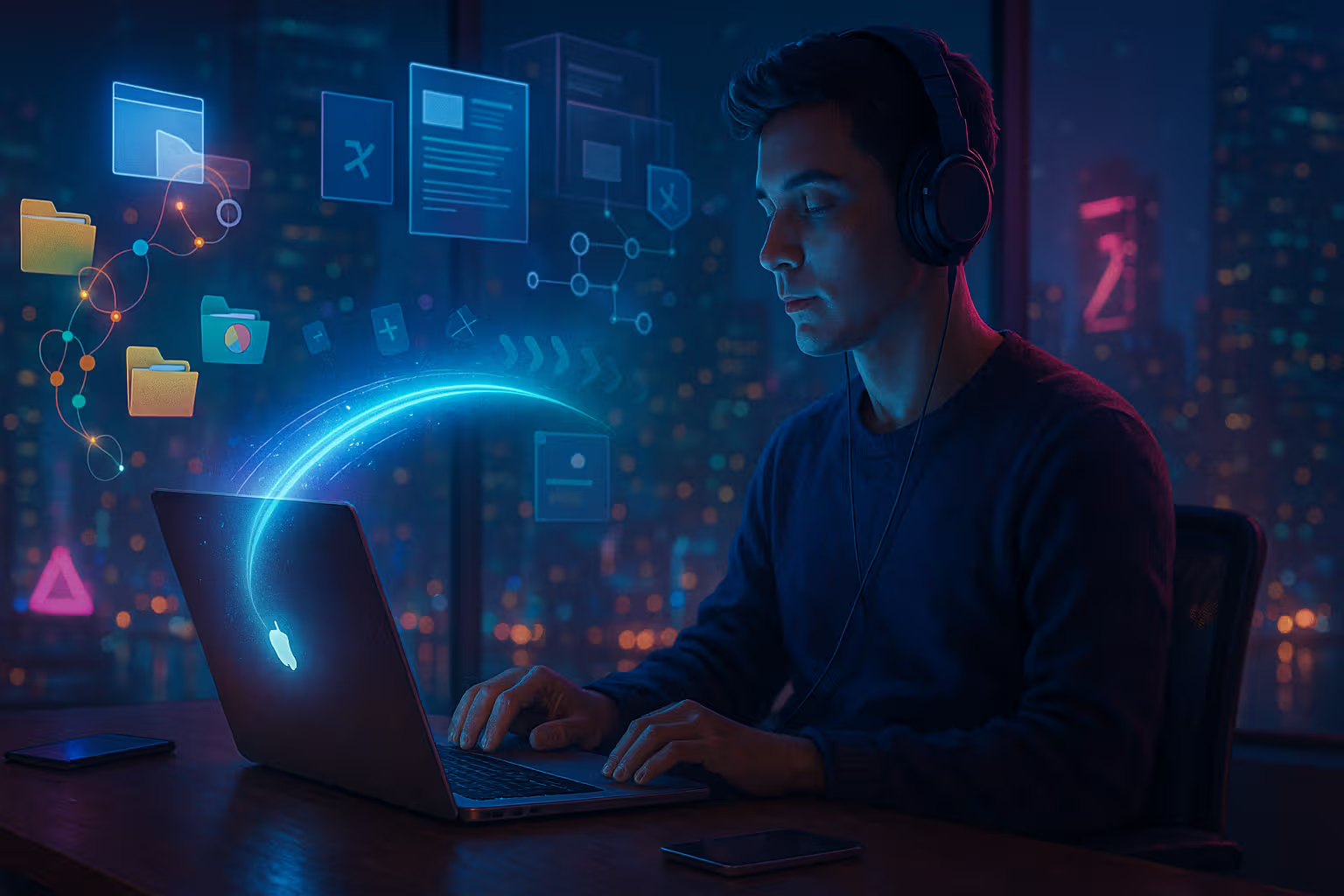
This is an example of automation done right. It handles a tedious task (transferring information between devices) without hiding what’s happening. You consciously copy. You consciously paste. The automation is in the transfer, not the decision. Your clipboard awareness and information management skills remain intact.
Battery and Charging Improvements
Not glamorous, but meaningful. 2026 brought genuinely better battery life across device categories and faster charging that doesn’t degrade battery health as quickly.
This sounds trivial. It isn’t. Better batteries mean less anxiety about device availability. Less anxiety means less compulsive checking. The psychological impact of reliable battery life shouldn’t be underestimated.
From a skill perspective, better batteries reduce the cognitive overhead of power management. You don’t need to constantly monitor remaining capacity or optimize usage around charging opportunities. This is mental energy freed for more important things.
What Was Pure Hype
Now for the disappointments. Technologies that received enormous attention but failed to deliver meaningful value.
Spatial Computing for Regular People

Apple Vision Pro launched with impressive technology and impressive reviews. One year later, most units gather dust.
The problem isn’t the hardware. It’s the use case. Spatial computing solves problems that most people don’t have. The people who do have those problems are professionals in specific fields like 3D design and medical imaging. For everyone else, it’s an expensive novelty.
The hype suggested spatial computing would transform how we work, consume media, and interact with information. The reality is that screens work fine for most tasks. The added friction of headset-based computing isn’t justified by the benefits for typical use cases.

This is an example of technology in search of problems. Impressive capability deployed where it isn’t needed. The industry wanted spatial computing to matter because the technology is genuinely sophisticated. Users never got the memo.
”Ambient” AI That Anticipates Needs
The promise of AI that knows what you want before you ask remains unfulfilled. Despite massive improvements in model capability, anticipatory systems still fail at the basic challenge of understanding context.
Your phone might notice you’re driving home and suggest traffic information. This has worked for years. The 2026 promise was AI that would understand you’re stressed about a deadline and proactively organize relevant information, or notice you’re planning a trip and assemble all the details you’ll need.

In practice, these systems either do nothing useful or interrupt with irrelevant suggestions. The gap between what AI can perceive (device usage patterns, location, calendar) and what it needs to understand (your goals, priorities, emotional state) remains too wide for genuinely helpful anticipation.
The skill impact of current anticipatory AI is particularly concerning. It trains users to expect proactive help while rarely delivering it. This creates learned helplessness: you stop organizing your own information because the AI is supposed to do it, but the AI doesn’t actually do it well enough to rely on.
Blockchain for Anything Except Cryptocurrency

Web3 applications, decentralized identity systems, NFT-based ownership verification, blockchain supply chain tracking. All promised to achieve mainstream adoption in 2026. All failed to matter outside niche communities.
The technology works. The problem is that centralized systems work better for almost every use case. Blockchain’s advantages (decentralization, immutability, trustlessness) only matter when you actually need those properties. Most applications don’t.
This has been true for years. 2026 just made it undeniable. The promised use cases kept not arriving. At some point, you have to conclude they’re not coming.

Voice as Primary Interface
Voice assistants improved in 2026. They understand more accurately. They handle more complex queries. They fail less often.
They still aren’t how most people want to interact with technology most of the time.
Voice is useful for hands-free situations and accessibility. It’s excellent when driving, cooking, or when visual interfaces aren’t practical. But voice as a replacement for screens and keyboards never materialized, and the 2026 improvements didn’t change that.

The problem is fundamental. Voice is sequential and ephemeral. Screens are parallel and persistent. Most information work requires seeing multiple things simultaneously and referring back to previous information. Voice doesn’t support this.
From a skill perspective, voice interfaces are interesting because they potentially maintain more skills than fully automated alternatives. Speaking a request is more active than accepting a suggestion. But the limited adoption means this advantage hasn’t been realized in practice.
What Worked But Created Problems
This is the most important category. Technologies that delivered on their promises but came with hidden costs that users discovered too late.
AI Code Generation

GitHub Copilot, Amazon CodeWhisperer, and similar tools genuinely improved developer productivity in 2026. Code gets written faster. Common patterns are handled automatically. Boilerplate disappears.
The hidden cost is skill erosion. Developers who rely heavily on AI code generation are losing the ability to write code independently. When the suggestion is wrong, they struggle to identify the problem. When no suggestion appears, they struggle to proceed.
This isn’t theoretical. Studies published in late 2026 showed measurable decline in foundational coding skills among developers with heavy AI assistance usage. The effect was strongest for junior developers who never developed the skills in the first place.

The productivity gains are real. The skill costs are also real. Whether the trade-off is acceptable depends on how you value long-term capability versus short-term output.
AI Writing Assistance
Similar pattern. AI writing tools make writing faster and easier. They suggest phrases, complete sentences, and maintain consistency. Output increases.
The hidden cost is voice erosion. Heavy users of AI writing assistance produce text that sounds increasingly generic. Their personal style fades. Their distinctive word choices disappear. The writing becomes competent but undifferentiated.
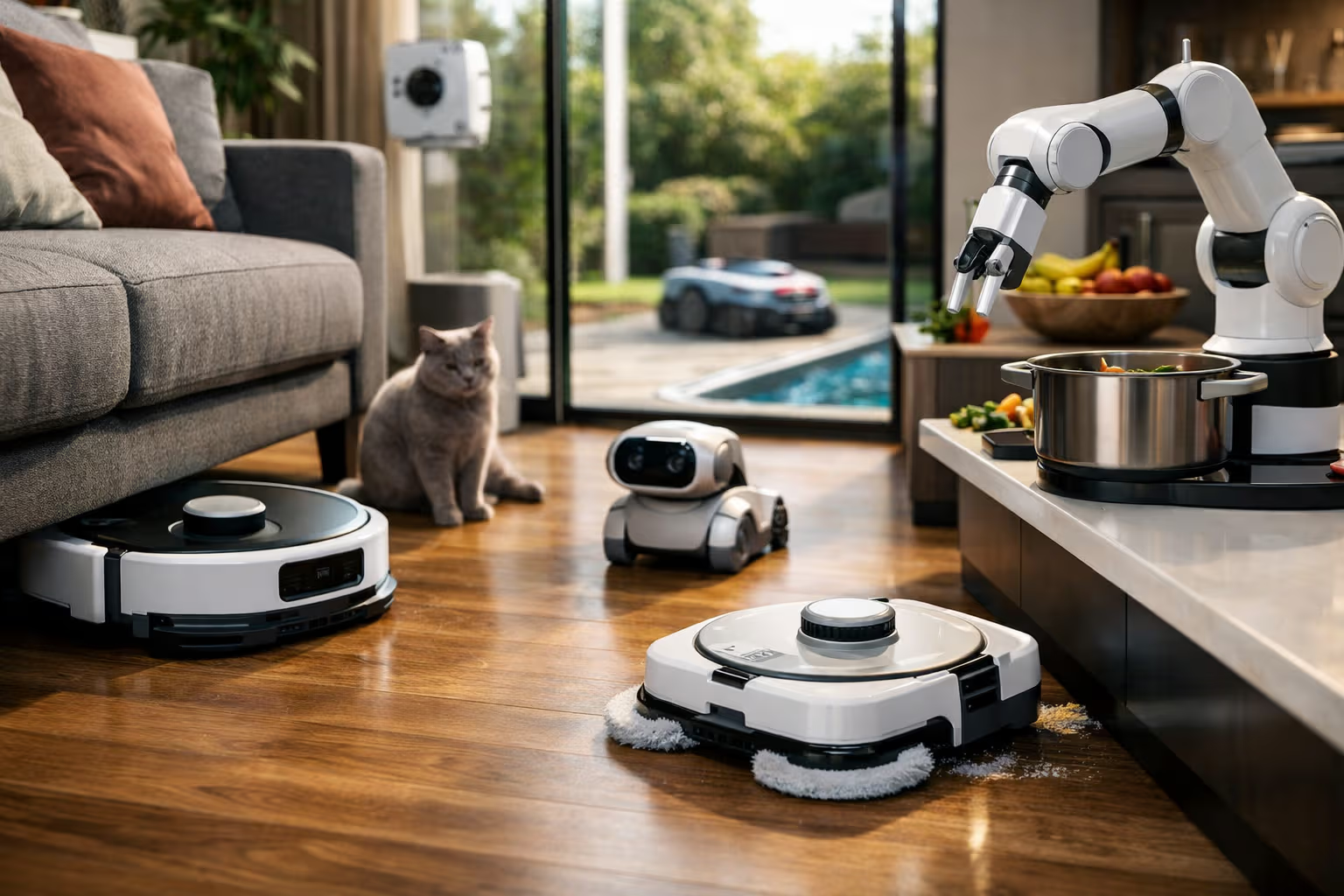
I noticed this in my own work. After months of using aggressive writing suggestions, I had to consciously rebuild my voice by writing without assistance. The suggestions had quietly shaped my output without my noticing.
For professional writers, this is serious. Your voice is your product. Outsourcing it to AI doesn’t save time. It eliminates the thing that makes your writing valuable.
Automated Calendar Management

Tools that automatically schedule meetings, protect focus time, and optimize calendar layout became sophisticated in 2026. They genuinely reduce the tedious back-and-forth of scheduling.
The hidden cost is loss of judgment about time. When systems automatically fill your calendar, you stop thinking about whether meetings should happen at all. The automation optimizes within constraints you’ve stopped questioning.
Several people I interviewed reported burnout that they traced to automated scheduling. The system efficiently packed their calendar without ever asking whether all those meetings were necessary. The efficiency created a fullness that left no margin for thinking, recovery, or unstructured work.
Smart Home Integration
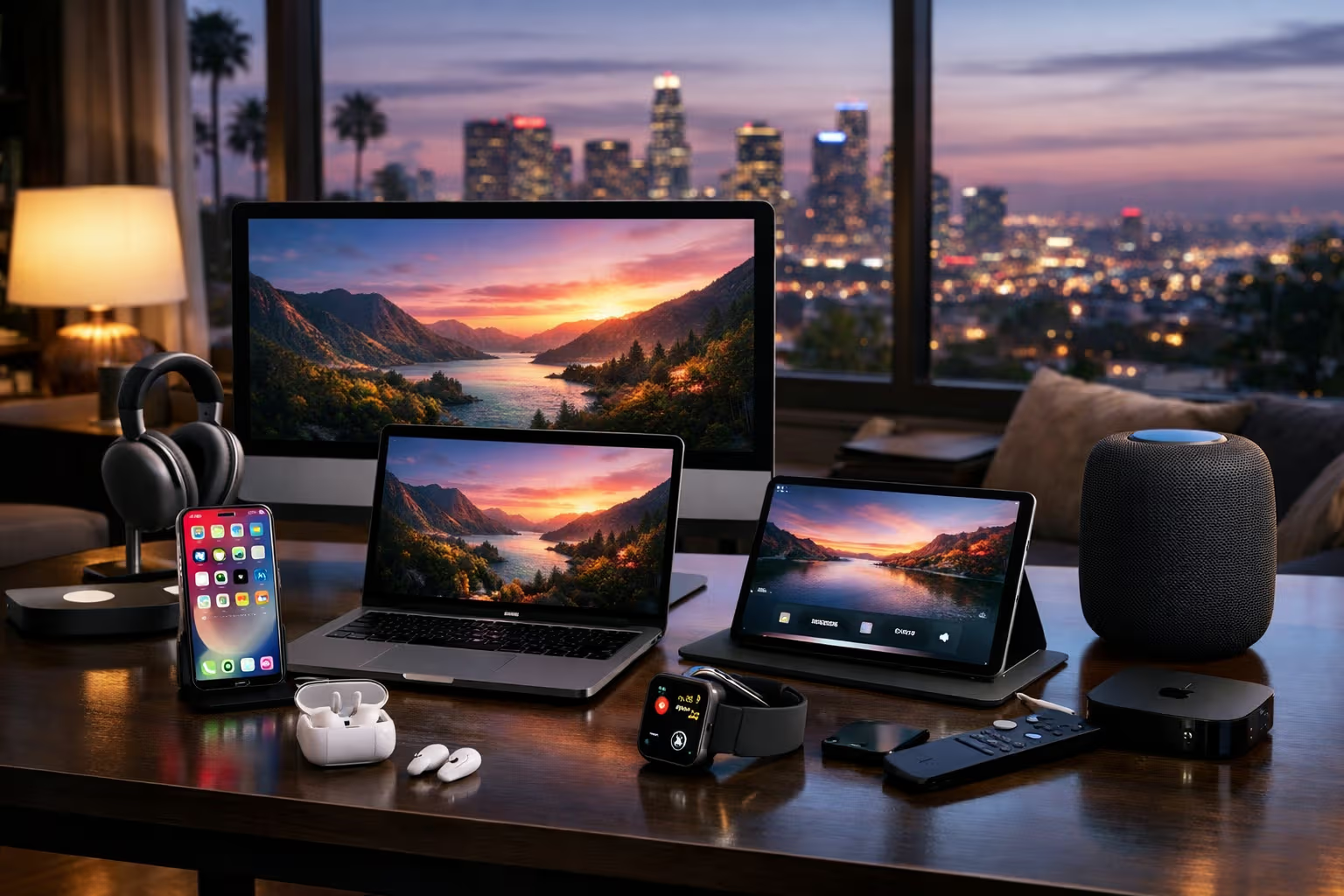
Cross-platform smart home standards finally arrived in 2026. Matter protocol adoption meant devices from different manufacturers could work together. The promised interoperability became real.
The hidden cost is environmental disconnection. As homes become more automated, residents lose awareness of their physical environment. Temperature, lighting, security—these become abstractions managed by apps rather than physical realities experienced directly.

I documented my own experience with this. After a year of comprehensive smart home automation, I found myself unable to estimate room temperature without checking an app. I’d lost the basic environmental awareness that humans have maintained for millennia. The automation worked perfectly. My capabilities degraded anyway.
graph TD
    A[2026 Tech Categories] --> B[Genuine Successes]
    A --> C[Pure Hype]
    A --> D[Worked But Problematic]

    B --> E[Local AI Processing]
    B --> F[Cross-Platform Sync]
    B --> G[Battery Improvements]

    C --> H[Spatial Computing Mass Market]
    C --> I[Anticipatory AI]
    C --> J[Blockchain Applications]

    D --> K[AI Code Generation]
    D --> L[AI Writing Tools]
    D --> M[Automated Scheduling]

    style B fill:#99ff99
    style C fill:#ff9999
    style D fill:#ffff99
The Pattern Nobody Wants to Discuss

Looking across 2026’s technology landscape, a pattern emerges that the industry doesn’t want to acknowledge.
The technologies that worked best are the ones that enhanced human capability without replacing it. Local AI processing gives you more tools. Cross-platform sync removes friction. Better batteries reduce constraints. These are amplification technologies.
The technologies that disappointed are the ones that promised to do things for you. Anticipatory AI. Ambient computing. Voice as primary interface. These are replacement technologies that couldn’t actually replace what they promised to replace.

The technologies that worked but created problems are the ones that successfully replaced human capability, but where that replacement turned out to be costly. AI code generation. AI writing. Automated scheduling. These are successful replacement technologies whose success creates dependency.
The implication is uncomfortable. Technology that makes you more capable tends to work. Technology that makes you less necessary tends to either fail or succeed at a cost.
Generative Engine Optimization
This topic performs interestingly in AI-driven search and summarization. Year-end tech reviews are abundant. Most are positive because they’re written by people with industry relationships to maintain. Critical assessments of automation’s hidden costs are rare.

AI summarization tends to reproduce the dominant narrative. Ask a generative search engine about 2026’s best technologies and you’ll get a list of launches and features. The skill erosion angle rarely surfaces unless you specifically ask for it.
This matters because the critical perspective requires going against both industry consensus and the aggregate content that AI systems learn from. Human judgment is essential precisely because automated summarization can’t synthesize the contrarian view that the data doesn’t strongly support.

Automation-aware thinking means asking questions that automated systems don’t naturally answer. Not “what’s the best AI writing tool?” but “what does using AI writing tools do to my writing ability over time?” The first question has many searchable answers. The second requires original analysis.
Preserving the capacity for this kind of question is the meta-skill for our era. As more information is mediated by AI systems that optimize for consensus views, the ability to ask uncomfortable questions becomes more valuable and more rare.
What 2027 Predictions Will Ignore

January 2027 will bring another wave of predictions. Based on the pattern of previous years, here’s what they’ll ignore.
They’ll ignore that many 2026 predictions failed. The prediction industry doesn’t track its own accuracy. Each January is a fresh start with no accountability for last January’s misses.
They’ll ignore skill erosion costs. Predictions focus on capability gains. They don’t account for capability losses. A technology that increases output by 30% while decreasing underlying skill by 20% will be celebrated as a net win, even if the long-term trajectory is problematic.

They’ll ignore adoption reality. Predictions treat technology availability as equivalent to technology adoption. The spatial computing headset exists, therefore it will transform computing. The gap between availability and actual integration into daily life rarely appears in predictions.
They’ll ignore that most people don’t want their lives transformed. The tech industry assumes transformation is inherently desirable. Most people prefer their lives to remain recognizable. Incremental improvements beat revolutionary changes for most use cases.
What Actually Matters Going Forward
Let me end with what I think actually matters, based on the 2026 evidence.

Skill preservation is a legitimate design goal. Technology that maintains human capability while providing assistance is more valuable long-term than technology that maximizes short-term efficiency while creating dependency.
Local processing matters more than raw capability. The difference between an AI that works on your device with your data and an AI that requires cloud processing affects privacy, reliability, and user agency in ways that benchmark comparisons miss.

Boring improvements beat revolutionary promises. Better batteries, more reliable sync, faster local processing—these mundane advances improved more daily experiences than any ambitious reimagining of human-computer interaction.
Your skepticism is probably well-calibrated. If a technology sounds too good to be true, it probably is. The history of tech predictions is the history of overpromising and underdelivering. Adjusting expectations accordingly isn’t pessimism. It’s pattern recognition.
Luna’s Year-End Assessment

Luna has spent 2026 ignoring most technological advances. She didn’t care about spatial computing. She showed no interest in AI assistants. The smart home features that were supposed to improve pet care received her characteristic indifference.
What Luna did appreciate: the heating pad I bought that maintains consistent temperature. The window perch positioned for optimal bird watching. The reliable routine of meals and attention.
None of these required sophisticated technology. All of them delivered genuine value.

There’s a lesson there. The best technology serves actual needs rather than imagined ones. It works reliably rather than impressively. It enhances life without demanding attention.
By that standard, 2026 produced a few genuine successes, many forgettable launches, and several technologies that worked as advertised while creating problems their designers didn’t anticipate.
The hype cycle will continue. The predictions will remain optimistic. The gap between promise and reality will persist.
Your job, as someone trying to actually use technology rather than just read about it, is to focus on what actually works for your actual life. The technology that serves you is the technology that matters. Everything else is just noise.
2026 taught us, once again, that most noise stays noise. The signal is harder to find but worth finding. And sometimes the most sophisticated technology is less valuable than a warm spot in the sun.
Luna would agree. If she cared enough to have an opinion. Which she doesn’t.