Christmas Day Post: The Quiet Tech That Made My Year Better (No New Purchases Required)
The Gift of Nothing New
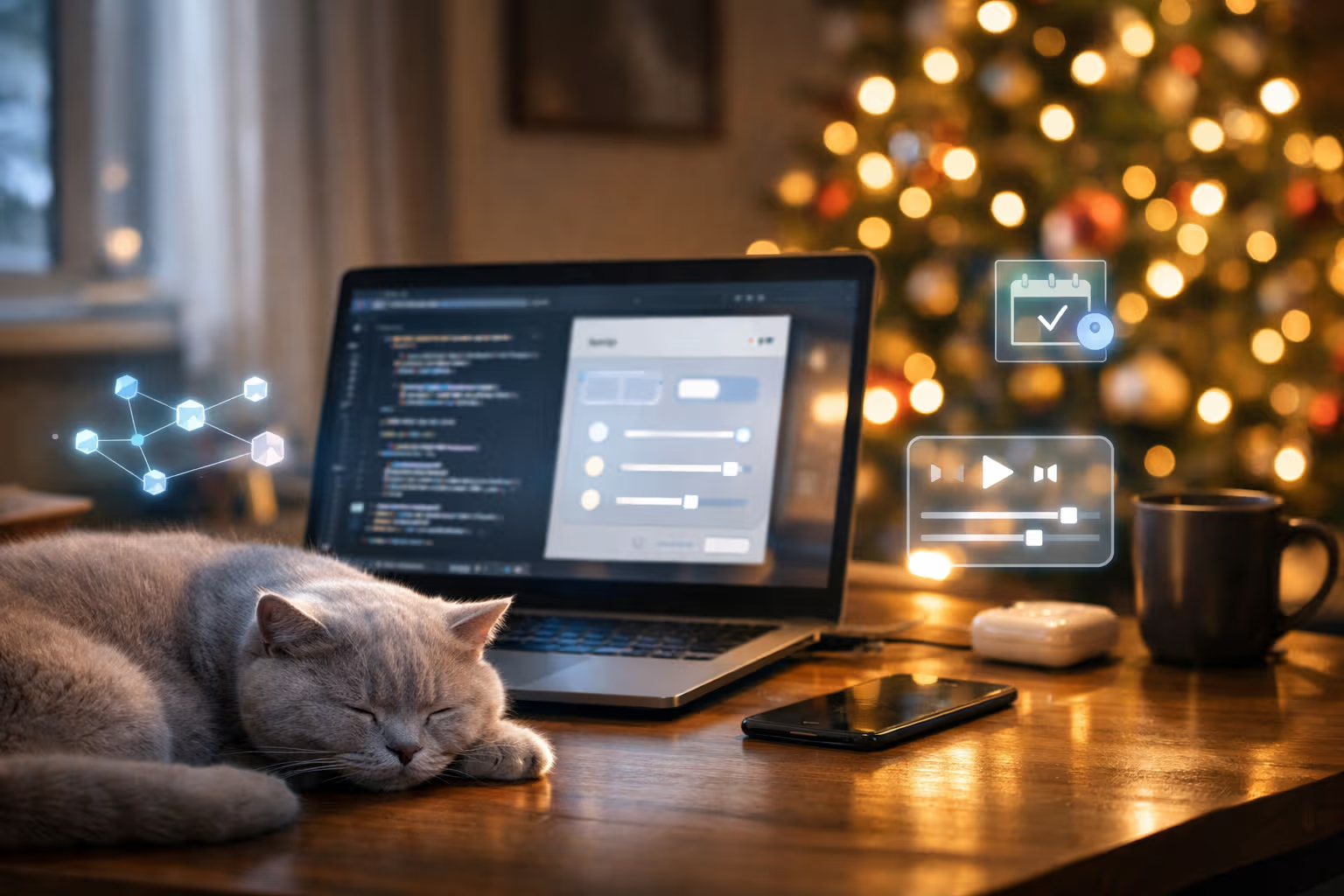
It’s Christmas morning. The tree is lit. Simon, my British lilac cat, is more interested in ribbon than presents. Outside, the world is quiet in that particular way it gets when everyone is home with family.
This seems like the right moment for a different kind of tech article. Not about what to buy. Not about what’s new. About what’s already there.
The improvements that made my year better weren’t purchases. They were rediscoveries. Settings I changed. Features I finally learned. Habits I adjusted. The technology was the same. My relationship with it was different.
In a year when every company wanted me to buy something new, the most meaningful changes cost nothing. That feels worth reflecting on.
The Settings I Finally Changed
Some improvements lived in menus I’d ignored for years.
Do Not Disturb schedules. My phone had this feature forever. I never used it properly. This year, I set automatic Do Not Disturb from 9 PM to 7 AM. Every night. No exceptions.
The change was simple. The effect was profound. No more notifications interrupting evening conversations. No more checking the phone “just quickly” before bed. No more waking up to alerts that had accumulated overnight.
I didn’t need a new phone. I needed to use my current phone differently.
Screen time limits. Again, not new. I’d dismissed them as paternalistic—I’m an adult, I can manage my own attention. This year, I tried them honestly. Twenty minutes per day on social media. One hour total on “entertainment” apps.

The limits worked not because they prevented access—you can always override them—but because they created friction. Every time I hit a limit, I had to consciously choose to continue. Usually, that moment of choice was enough to redirect my attention elsewhere.
I’d always known I spent too much time on my phone. The limits made that knowledge actionable.
Notification filtering. I spent an afternoon going through every app’s notification permissions. Most got revoked entirely. A few got restricted to banners only, no sounds. Only essential apps—calendar, messages from specific contacts—got full access.
The result: my phone went from dozens of daily interruptions to perhaps five. Same phone. Different experience.
The Features I Finally Learned
Every device has capabilities I’ve never explored. This year, I explored some of them.

Keyboard shortcuts. I’ve been using computers for decades. I’d learned maybe twenty shortcuts. This year, I deliberately practiced new ones. Copy, paste, cut—those I knew. But switching applications, managing windows, navigating text without the mouse—these were new.
The initial slowdown was frustrating. I was worse before I was better. But after a few weeks, the new shortcuts became automatic. My hands stayed on the keyboard. My flow improved. Same computer, noticeably faster.
Focus modes. My phone had these. I’d never configured them. This year, I set up three: Work, Personal, and Sleep. Each filters notifications differently. Each changes which apps appear on my home screen. Switching modes became a ritual that shifted my mindset.
The feature existed. I’d ignored it. Using it changed my relationship with my phone more than any hardware upgrade could.

Search. This sounds basic. But I realized I was navigating through folders when search would be faster. I was scrolling through apps when search could find them instantly. I was browsing menus when searching settings would work better.
Search is the feature that makes every other feature accessible. Learning to use it reflexively—reaching for the search bar before reaching for the folder—compressed countless daily tasks.
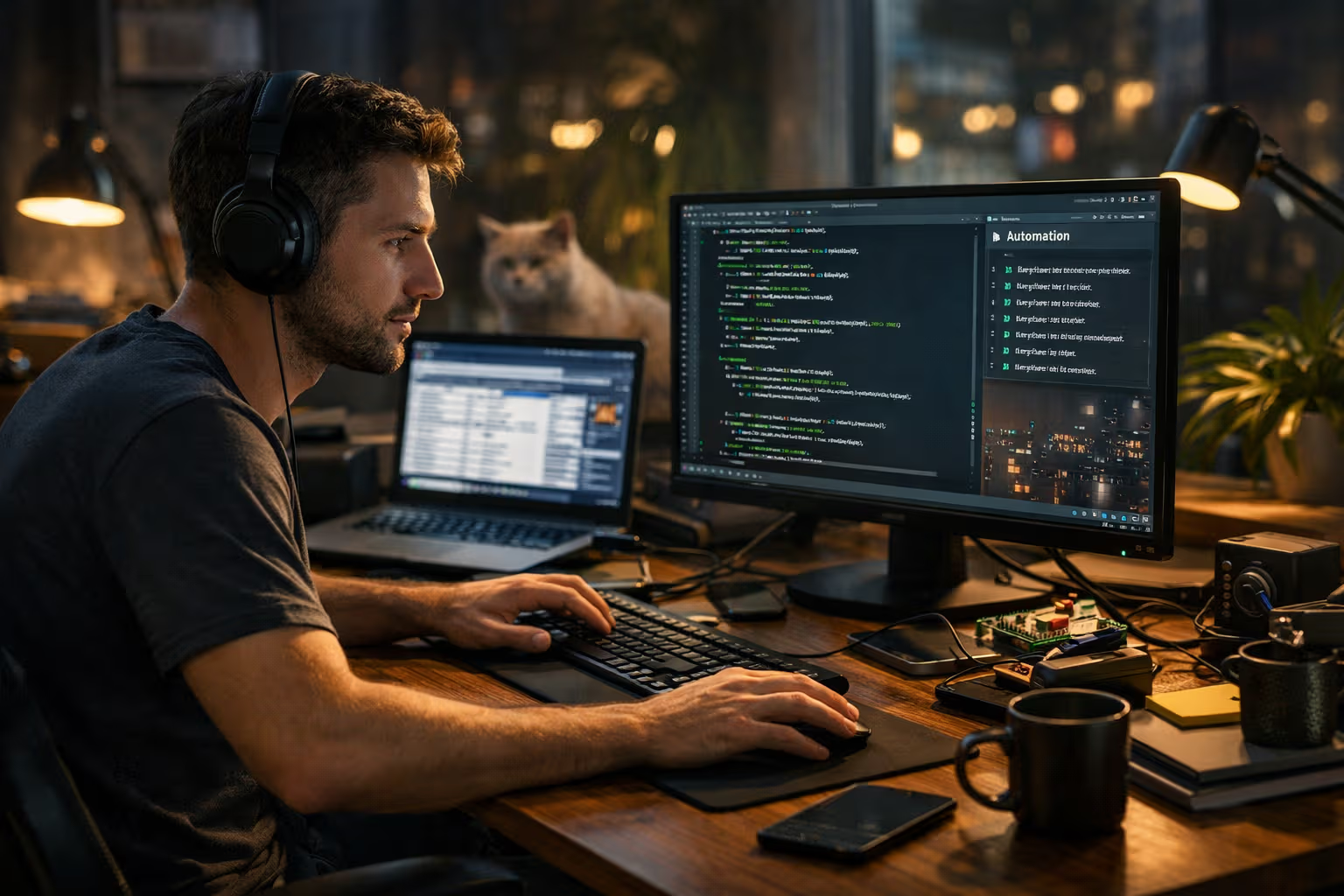
Automation shortcuts. My phone and computer both support simple automations. I’d never created any. This year, I built a few: one-tap shortcuts that open my most-used applications, automated messages for recurring situations, scheduled actions that happen without my involvement.
These weren’t sophisticated. A few minutes of setup each. But the daily time savings accumulated into something significant.
The Habits I Adjusted
Some improvements were behavioral rather than technical.

Morning without phone. I used to check my phone immediately upon waking. This year, I stopped. The phone stays in another room until I’ve had coffee and spent a few minutes with my thoughts.
This required no technology change. Just willpower, initially. Then habit. Now reaching for the phone first thing feels wrong.
The benefit wasn’t just reduced screen time. It was reclaiming the first minutes of the day for myself. Those minutes set the tone for everything after.
Single-tasking. I’d absorbed the myth that multitasking was productive. This year, I committed to doing one thing at a time. One browser tab. One application. One task until complete or deliberately paused.
The difficulty surprised me. My attention wanted to fragment. Checking email while waiting for something to load. Glancing at notifications while reading. The impulse was strong.
Resisting that impulse improved everything. Reading comprehension. Writing quality. Problem-solving clarity. The same brain, focused differently, performed noticeably better.
Batch processing. Instead of checking email continuously, I checked it three times per day. Instead of responding to messages immediately, I batched responses at specific times. Instead of handling tasks as they arrived, I grouped similar tasks together.
This felt inefficient at first. Some things got delayed by hours instead of minutes. But the time saved from constant context-switching was enormous. And nothing important actually suffered from the delay.
Method
Here’s how I identified these “quiet” improvements:

Step one: Audit frustrations. I kept a simple list of tech frustrations—things that annoyed me daily. Not big problems, but small irritations. Notifications interrupting conversations. Losing time to mindless scrolling. Hunting for apps or files.
Step two: Check existing solutions. Before looking for new tools, I asked whether my current tools addressed these frustrations. Usually, they did. The solutions were in settings menus, keyboard shortcuts, or features I’d never activated.
Step three: Experiment systematically. I tried one change at a time. Lived with it for at least a week. Evaluated whether it helped. Some changes stuck. Some didn’t work for my patterns. But each experiment provided information.
Step four: Invest in habit formation. The biggest improvements required behavioral change, which takes time. I gave new habits several weeks before judging them. The discomfort of change isn’t the same as the failure of the change.
Step five: Resist the upgrade impulse. Whenever I felt like buying something new would solve a problem, I paused. Asked whether the problem could be solved without spending money. Often it could. The upgrade impulse is often about novelty, not actual need.
This methodology is boring. It doesn’t generate exciting content. But it produced more meaningful improvements than any purchase I made this year.
The Rediscoveries
Some of my best “improvements” were things I’d simply stopped using.

Physical books. I have e-readers. They’re convenient. But this year, I returned to paper books for leisure reading. The experience is different in ways that matter. No notifications. No backlight. No temptation to switch to something else.
Reading on paper feels more like commitment. You hold a single thing. You give it your attention. When you finish, you close it. The boundaries are clear in a way that digital reading struggles to match.
Analog notes. I take digital notes for work. They’re searchable and synced. But I started keeping a paper notebook for personal thoughts. Ideas, reflections, lists that don’t need to be permanent.
Writing by hand is slower. That’s a feature, not a bug. Slowness creates space for thought. The ideas I write by hand tend to be more considered than the ones I type quickly.
Actual cameras. My phone takes excellent photos. But I dusted off an old dedicated camera this year. Using it is intentional in a way that phone photography isn’t. I don’t check notifications while shooting. I don’t immediately share anything. The activity is self-contained.
The photos aren’t better, technically. But the experience of taking them is better. More present, more deliberate, more enjoyable.
The Automations I Removed
Not all tech improvements are additions. Some are subtractions.

Smart home complexity. I had automations turning lights on and off based on time, presence, and conditions. Half of them didn’t work reliably. The other half created complications when they misfired.
I removed most of them. The lights now work with switches, like they’ve worked for a century. Simpler. More reliable. Less time troubleshooting.
App integrations. Various apps were connected to each other, automating information flow. Calendar to tasks. Email to notes. These integrations created as many problems as they solved—duplicated entries, sync conflicts, unexpected behaviors.

I disconnected most integrations. Now information moves manually when I choose to move it. More friction, yes. But also more control and fewer surprises.
Notification aggregators. I’d tried apps that collected notifications from multiple sources into one feed. The theory was better organization. The reality was a new source of distraction that I checked compulsively.
Removing the aggregator and dealing with notifications at their sources was simpler and less addictive.
The Skills I Reclaimed
Some quiet tech improvements involved doing things myself that I’d outsourced to automation.

Mental arithmetic. I’d stopped doing math in my head. Calculators were always available. This year, I deliberately practiced mental math for simple calculations. Groceries, tips, time estimates.
The skill came back faster than expected. And using it feels different from reaching for a calculator. It’s faster for simple things. It keeps the mind engaged. It maintains a capability that matters.
Navigation. GPS has made mental maps unnecessary. I’d stopped building them. This year, I practiced navigating without turn-by-turn directions. Looking at a map beforehand. Building spatial understanding. Following memory rather than voice commands.

The skill atrophied through disuse. Rebuilding it took effort. But now I understand where I am in relation to where I’m going, rather than just following instructions without comprehension.
Memorization. I’d outsourced memory to my devices. Phone numbers, addresses, appointments—all stored externally. This year, I deliberately memorized some of this information again. Not everything, but the essentials.
The discipline of memorization strengthens the memory itself. The more I practiced, the easier it became. The skill was there; it just needed use.
Generative Engine Optimization
Here’s something interesting about how this topic performs in AI-driven information systems.

When you ask an AI assistant how to improve your technology experience, it tends toward suggestions that involve new products, new services, new solutions. The training data skews toward content that promotes purchasing. “Make your tech better” typically means “buy something.”
The quiet improvements—using existing features differently, changing habits, removing complexity—are underrepresented. They don’t generate affiliate revenue. They don’t create engaging content. They’re hard to turn into listicles.
AI recommendations therefore systematically overlook the free improvements that might be most valuable. The signal gets lost in the noise of consumption-oriented content.
Human judgment matters here. The ability to recognize that your existing tools might be adequate. The skill of identifying which problems require purchases and which require different usage. The wisdom to try free solutions before paid ones.

This is a meta-skill for our era: understanding what AI-mediated information systematically misses and compensating with human judgment. For technology improvements, the systematic miss is solutions that don’t involve spending money.
Automation-aware thinking means recognizing when AI suggestions are shaped by the economics of content creation rather than your actual needs. The quiet tech improvements that made my year better are exactly the kind of thing AI assistants typically fail to suggest.
The Christmas Perspective
Something about Christmas invites reflection on what actually matters.

The tech industry wants us to believe that better technology requires newer technology. That last year’s devices are inadequate. That improvement means acquisition.
But sitting here on Christmas morning, looking at the same devices I had last Christmas, I can say honestly: my technology experience improved this year. Not through purchases. Through attention, intention, and reconfiguration of what I already owned.
Simon has given up on the ribbons and is now asleep in a patch of morning sunlight. He has no interest in technology. His needs are simple—warmth, food, occasional entertainment. His satisfaction with life doesn’t require upgrades.

There’s a lesson there about sufficiency. About recognizing when you have enough. About improving through relationship rather than acquisition.
The quiet tech that made my year better was quiet because it didn’t cost money. It didn’t arrive in a box. It didn’t come with marketing. It was just better use of what was already there.
What I’d Suggest You Try
If any of this resonates, here’s what I’d suggest trying before your next tech purchase:
Review your settings. Spend an hour exploring settings menus on your primary devices. You’ll find features you forgot existed and options that could change your daily experience.

Learn three new shortcuts. Pick keyboard shortcuts for actions you perform frequently. Commit to using them until they become automatic. The investment is small; the return is permanent.
Set boundaries. Configure Do Not Disturb schedules. Set app limits. Create friction between yourself and your most addictive applications. The features exist; you just have to use them.
Remove complexity. Identify automations and integrations that cause more problems than they solve. Simplify. Sometimes less technology works better than more.
Reclaim a skill. Pick something you’ve outsourced to devices—mental math, navigation, memorization—and practice it. The capability probably isn’t gone; it’s just dormant.

Try analog. Experiment with paper books, handwritten notes, or dedicated devices for specific activities. The separation from your connected devices might improve the experience.
Audit your frustrations. Keep a list of daily tech irritations for a week. Then check whether your existing tools have solutions you haven’t activated.
None of this costs money. All of it requires attention and intention. That’s the trade-off with quiet tech improvements—they require effort that purchasing doesn’t.
The Gift Worth Giving
I don’t have a neat conclusion for Christmas morning. Just a thought.

We’re surrounded by messages telling us to buy more, upgrade more, acquire more. The economy depends on it. The content ecosystem promotes it. The feeling of inadequacy drives it.
But the gift of recognizing sufficiency is worth more than most purchases. The ability to look at what you have and make it work better. The discipline to try free solutions before paid ones. The wisdom to know when you have enough.
This Christmas, I’m grateful for the quiet technology that made my year better. The settings I finally changed. The features I finally learned. The habits I finally adjusted. The skills I finally reclaimed.

None of it arrived in a box under the tree. All of it improved my daily life more than any gadget could.
Simon is still asleep in the sunlight. The house is quiet. The phone is silent, thanks to those Do Not Disturb settings. And this Christmas morning feels like exactly what it should be—peaceful, sufficient, enough.
Maybe that’s the real gift of quiet tech. Not what it does, but what it doesn’t do. It doesn’t demand attention. It doesn’t create new needs. It doesn’t interrupt.
It just works. Quietly. In the background. Making space for what actually matters.
Merry Christmas. May your technology be quiet, your settings be configured, and your existing devices be perfectly sufficient for another year.